No products in the cart.
According to the British Cleaning Council, the UK’s cleaning sector is far bigger than most people realise. Cleaning, hygiene, and waste together are worth about £66.9 billion a year and support around 1.49 million jobs across the country. This means demand stays steady when you offer a clear, reliable service. In this guide, we’ll walk through everything you need to know about “How can I start my own cleaning business?”
There is a high demand for good, honest cleaners. Therefore, if you work hard, you can succeed. Start lean to keep your risks low. A domestic micro-business is a great first step. You only need a basic kit and insurance. This costs a few hundred pounds. Later, you can scale up to commercial work. Let us explore the steps together.
How Can I Start My Own Cleaning Business?
The first step is planning. You cannot just buy a mop and start. You need a clear direction. First, pick a specific niche. A niche is a special area of focus. For example, domestic cleaning involves cleaning private homes. This is usually the easiest place to start. Alternatively, you could try end-of-tenancy cleaning. This happens when people move out of rented flats.
Maybe you prefer cleaning offices. Or, you might like managing Airbnb turnovers. This means cleaning before new guests arrive. Pick one area and a specific launch location. Do not try to cover the whole city yet. Start in your local neighbourhood. Next, write a simple one-page plan. You do not need a complex book. Just write down your services. Decide on your prices. Plan your marketing strategy. Also, decide your weekly capacity.
After that, choose a business structure. In the UK, you may be a “sole trader”. This is the simplest option. Or, you can form a “limited company“. We will explain these later. Finally, set up your tax and admin tasks. You must follow the rules on GOV.UK. This keeps you safe and legal.
Steps to Launch
- Choose a niche: Homes, offices, or deep cleans.
- Pick an area: Choose a postcode near your home.
- Write a plan: List services and prices clearly.
- Register: Sign up as a sole trader or company.
- Open a bank account: Keep business money separate.
What Type of Cleaning Services Should You Offer?
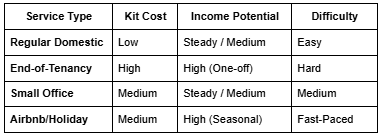
Choosing your service is a big decision. It changes what equipment you need to buy. It also changes how much money you earn. Many youngsters ask, “How can I start my own cleaning business with little money?” The answer is domestic cleaning.
Start with domestic weekly or bi-weekly visits. This has the lowest kit cost. You mostly use the client’s vacuum. You just bring sprays and clothes. This work is steady and regular. You get to know the families well.
Alternatively, offer end-of-tenancy cleans. This is harder work. You need stronger chemicals. You might need a steam cleaner. However, these jobs pay more money. They are “high ticket” items. Landlords need a place perfect for new tenants. Small office contracts are another good option. You usually clean these on weekdays. The work is very predictable. You empty bins and wipe desks. It is less personal than home cleaning.
You must use local pricing data. Do not guess your prices. In the UK, domestic rates are £12 to £25 per hour. London is more expensive. Rates there are £20 to £30 or more. Commercial rates are often higher per hour. Sometimes, you charge a fixed price per site.
Service Types and Benefits
Do You Need Qualifications to Start a Cleaning Business?
Do you need a degree? The answer is no. There is no mandatory trade qualification to start. You can learn the skills by doing the work. However, you must be safe.
You must manage chemicals safely. In the UK, this law is called COSHH. It is a code name for Control of Substances Dangerous to Health. You must know what is in your bottles. For example, never mix bleach with other cleaners. It can create dangerous gas. Short COSHH training is strongly recommended. It is cheap and fast online. Clients see it as a sign of professionalism. Also, it proves you care about safety.
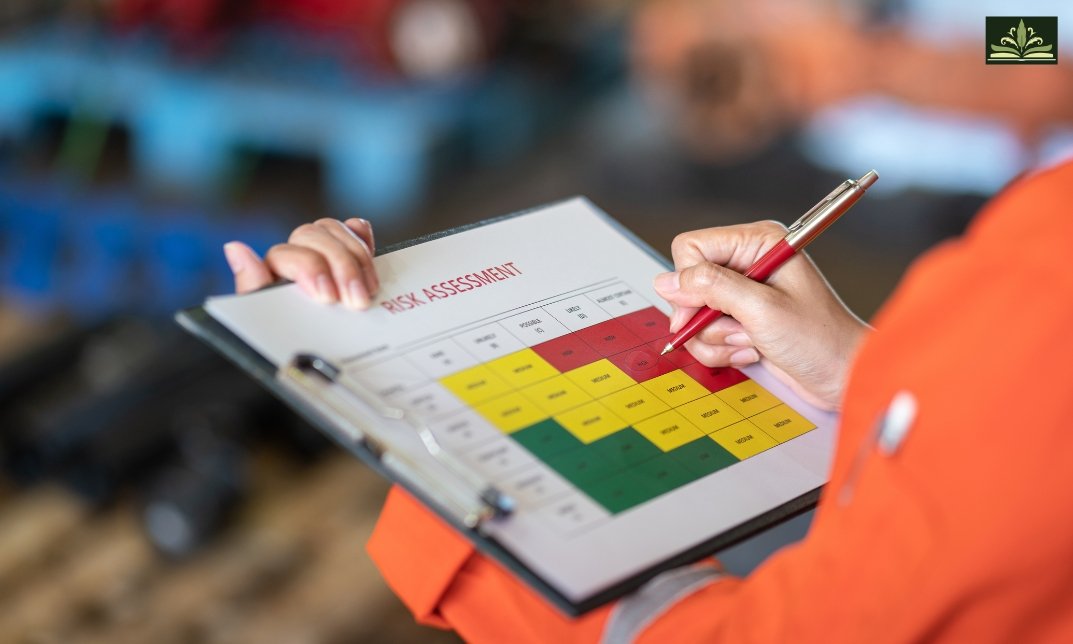
Also, you must complete risk assessments. This is a simple check of the area. You look for dangers. Is there a loose wire? Is the floor slippery? This is especially important for commercial sites.
Why Safety Matters
- Protects your health during daily tasks.
- Keeps clients and their families safe.
- Reduces the risk of property damage.
- Builds a professional image with businesses.
- Meets common insurance requirements.
What Equipment Do You Need?
Buying equipment is exciting. However, do not spend too much. Remember, we want to start lean. So, how can you start your own cleaning business with the right tools? Focus on the domestic starter kit first. You need a good vacuum. Next, get a mop and bucket. Flat mops are often better than string mops. They are easier to wash.
You need microfibre cloths. Use a colour-coded system. This is very important for hygiene. Use red cloths for toilets and blue cloths for general areas. Again, use green for kitchens. This stops germs from spreading.
Buy good sprays for glass, surfaces, and bathrooms. You also need PPE. PPE stands for Personal Protective Equipment. This means gloves and masks. Get a caddy to carry your bottles. An extendable duster helps with cobwebs. Expect starter kit costs to be around £200 to £1,000. It depends on the quality. If you add carpet machines, it costs more. You can add specialist tools later. Scale up as you earn profit.
Essential Starter Kit List
- Vacuum Cleaner: Reliable and strong suction.
- Mop and Bucket: Easy to carry and squeeze.
- Microfibre Cloths: Buy many packs in different colours.
- Cleaning Sprays: Multi-purpose, glass, and bathroom.
- Scrubbing Sponges: For tough dirt and grime.
- Protective Gloves: Rubber gloves protect your skin.
- Carrying Caddy: Keeps everything organised and tidy.
How Do You Set Prices for Cleaning Jobs?
Pricing is difficult for new business owners. If you are too cheap, you lose money. If you are too expensive, you get no clients. So, how may I start my own cleaning business with the right prices?
First, set a minimum call-out. This should be 2 or 3 hours. Do not travel for just one hour of pay. It wastes your time and petrol. For recurring domestic jobs, price by the hour. This is simple for everyone to understand.
For deep cleans, use fixed quotes. A fixed quote is a total price for the whole job. Base this on the property size. A 3-bedroom house takes longer than a studio flat. Also, look at the condition. A very dirty house costs more.
Benchmark locally. Look at other cleaners in your town. UK domestic averages are £15 to £20 per hour. Many areas now advertise £20 per hour. London often charges £25 to £30 per hour. You must adjust for your costs. Think about your travel time. Also, think about the cost of your sprays. Think about your insurance price.
Pricing Strategy Tips
- Research: Check online ads for local prices.
- Calculate: Add up your costs per hour.
- Decide: Pick a profit margin you want.
- Review: Increase prices once a year.
- Quote: Always give the price in writing.
How Do You Find Your First Clients?
Now you are ready to work. But where are the customers? Finding clients requires effort. You need to be visible.
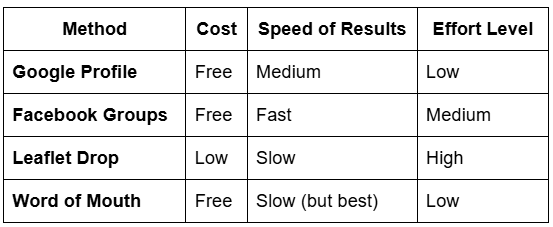
Launch a Google Business Profile, which is free. It puts you on Google Maps. When people search “cleaner near me“, they see you. Add photos of your work. Before and after photos are very powerful. They show your skill instantly. Collect 3 to 5 reviews quickly. Ask friends or family to help first.
Post intro offers in local groups. Facebook and Nextdoor are great for this. Join groups for your town. Write a friendly post. Say, “Hello, I am a new local cleaner.” Offer a discount for the first visit.
Partner with letting agents. These are companies that rent out houses. They always need end-of-tenancy cleans. Send them an email or visit their office. Also, talk to Airbnb hosts. They need frequent cleaning.
Bring a simple service checklist to every quote. Show the client what you will do. This builds trust. Try to “upsell” extra services. Offer to clean the fridge or oven. Also, offer to clean the inside windows. This brings in extra money.
Marketing Ideas Table
What Insurance Does a Cleaning Business Need?
Accidents can happen to anyone. You might spill bleach on a carpet. You might knock over a vase. Therefore, insurance is vital. It protects your money.
You need public liability insurance. This is not a strict legal requirement. However, most clients will ask for it. Landlords definitely require it. It covers injury to people. It also covers property damage. If you break a TV, insurance pays.
Employers’ liability is different. It is a legal requirement if you employ anyone. Even if they are casual workers, you need them. The minimum cover is £5 million. If you work alone, you do not need this.
Consider product liability, too. This covers damage caused by your cleaning liquids. Also, think about your vehicle. Normal car insurance might not cover business use. Check with your provider. Tell them you are a cleaner.
Insurance Types Explained
- Public Liability: Covers damage to the client’s home.
- Employers’ Liability: Mandatory if you hire staff.
- Tool Cover: Replaces your vacuum if stolen.
- Vehicle Insurance: Must include “business use” on the policy.
Should You Register as Self-Employed or a Limited Company?
This is the “admin” part of the business. It can feel confusing. However, in the UK, it is quite logical. You have two main choices.
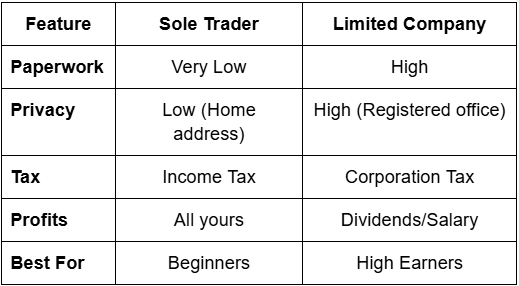
First, the sole trader. This is the simplest route. It is easy to set up. You keep all the profits after tax. Besides, you are personally responsible for the debts. Additionally, you must register with HMRC for self-assessment. Do this by 5 October after your first trading year. This is how most cleaners start.
Second, the Limited Company. This has more paperwork. Your company is a separate legal “person”. This offers protection if the business fails. It can have tax benefits if you earn a lot. You must register with Companies House. You must pay corporation tax.
Watch out for VAT, which is a tax on sales. You must register if you earn over £90,000 a year. This is a rolling 12-month total. Most new cleaners are below this. However, voluntary VAT registration can help. It lets you claim back tax on equipment you buy.
Comparison: Sole Trader vs. Limited Company
How Do You Market Your Cleaning Business?
Marketing is how you grow. You cannot just wait for the phone to ring. You must be active. How can I establish my own cleaning business branding? The answer is to start with the basics. Nail the basics first. Choose a clear name. Make sure it is easy to spell. Create a simple service list. Put your prices from £X/hr clearly. Create a service area map. Have a “Contact Us” button on your site.
Use social media video reels. People love watching cleaning videos. Show a dirty sink becoming shiny. It is very satisfying to watch. Ask clients for referrals. Give them credit if they bring a friend. For example, “Get £10 off for referring a neighbour.”
Request reviews automatically. Send a text after the clean. Ask, “Were you happy?” Include a link to Google. Good reviews are like gold. They make strangers trust you. Track your leads. Use a simple spreadsheet. Write down who called. Write down where they found you. This tells you what marketing works. Test introductory bundles. For example, offer a deep clean plus the first weekly visit for a set price.
Tips for Social Media
- Be Consistent: Post once or twice a week.
- Be Real: Show your face and smile.
- Use Hashtags: Use local tags like #LondonCleaner.
- Share Tips: Teach people how to remove stains.
- Engage: Reply to every comment you get.
Managing Your Day-to-Day Operations
Once you have clients, you must be organised. If you miss a cleaning job, you lose the client. Reliability is the most important thing.
Use a calendar app on your phone. Put every job in there. Add the address and the code for the gate. Set an alarm for travel time. Being late is very unprofessional. If there is traffic, call the client. Manage your supplies. Do not run out of spray on a job. Check your kit every evening. Refill your bottles for the next day. Wash your clothes every night. Clean cloths clean better.
Communicate clearly. If English is not your first language, use text. It is easier to translate. Be polite and friendly. British people value politeness very much. Always say “please” and “thank you”.
Daily Checklist for Cleaners
- Check Schedule: Look at tomorrow’s jobs.
- Prep Kit: Clean the vacuum and wash mops.
- Charge Phone: You need it for maps and calls.
- Pack Lunch: Saves money and time on the road.
- Check Uniform: Look smart and clean.
Expanding Your Business
Eventually, you will be too busy. You will have too many clients. This is a good problem! When this happens, you can grow. You can hire a helper. This allows you to do two jobs at once. Or, you can work in a team. Teams work faster. Remember, if you hire, you need insurance. You also need to run payroll.
You can increase your prices. If you are full, charge more for new clients. Your experience is worth more money. Drop the difficult, low-paying clients. Replace them with better ones.
Look for commercial contracts. Offices pay monthly. This gives you a guaranteed income. Therefore, it helps you plan your budget. However, they take longer to pay than homeowners. Homeowners usually pay on the day.
Signs You Are Ready to Grow
- Turning away new jobs has become common.
- Feeling worn out most weeks is a clear sign.
- Savings are in place to support growth.
- The goal is to earn more than hourly pay.
- Managing a small team now feels achievable.
Final Thoughts on Starting a Cleaning Business
We have covered a lot of ground. Starting a cleaning business in the UK is very possible. You can keep overheads low and still build a high income. Therefore, begin with simple domestic work, a basic kit, and clear pricing. As you grow, systemise your work with checklists and routines.
Always keep enough supplies and monitor quality carefully. Good reviews and safety compliance will help you stand out. Remember, the sector is already very large and still growing. The British Cleaning Council reports around £66.9 billion in value. There are also about 1.49 million workers in related roles.
So there is space for reliable, honest, hard‑working cleaners. If you do these things, your business can grow fast. If you do these things, your business can grow fast. Good luck with your new venture.
FAQ on How Can I Start My Own Cleaning Business
- What qualifications do I need to start my own cleaning business?
You don’t need formal qualifications. Basic cleaning skills, reliability, and good customer service are enough to begin.
- How much money do you need to start up a cleaning business?
Most small cleaning businesses start with £200–£500 for supplies, insurance, and basic marketing.
- What do you need legally to start a cleaning business?
Register as self-employed, get public liability insurance, and keep clear financial records.
- How much to pay a cleaner for 3 hours?
Most UK cleaners charge £15–£20 an hour, so roughly £45–£60 for 3 hours.
- How much do self-employed cleaners make?
Many earn £15–£25 per hour, depending on location and experience.
- What can a cleaner do in 2 hours?
A standard tidy: bathrooms, kitchen surfaces, hoovering, mopping, dusting, and quick resets of main rooms.
- What are the 7 stages of cleaning?
Prepare, remove debris, wash, rinse, disinfect, dry, and check the area.
- What is the 80/20 rule for cleaning?
Focus on the 20% of tasks that create 80% of the visible difference — high-impact areas first. - How long should a cleaner take to clean a house?
A regular two-bed home often takes 2–3 hours. Larger homes take longer.