No products in the cart.
The UK logistics sector is worth billions, and the Traffic Commissioners are strictly enforcing compliance. This means there are many trucks on the road today. It also means the government watches them very closely. They want to make sure every vehicle is safe. Therefore, companies need skilled people to follow the rules. This is a great chance for you to find a good job. Our guide will show readers exactly how to become a transport manager, from skills to qualifications and jobs.
First, we must ask, what is a transport manager exactly? It is a person who keeps vehicles and drivers safe. This role is in demand because every trucking company needs one. This guide is for everyone, including career changers, logistics staff, and graduates. You might be new to the UK, but you can still do this. The goal is simple. We will outline the path from zero experience to holding a Level 3 Certificate of Professional Competence (CPC).
What Does a Transport Manager Do? (DVSA Standards)
To understand transportation management solutions, you must know the daily tasks. It is a very serious job with legal duties.
The Legal Role
Your main job is a statutory responsibility to the Traffic Commissioner. The Traffic Commissioner is a government official. They permit companies to run trucks. This permission is called the Operator Licence (O-Licence). It isn’t just logistics; it’s about protecting the Operator Licence (O-Licence). If you make a mistake, the company could lose this licence. If they lose the licence, they cannot work. Therefore, you are the protector of the business.
Key Duties
You will have many different tasks every day.
- Managing driver hours (WTD): Drivers cannot drive all day. They get tired. You must watch their hours closely. This follows the Working Time Directive rules.
- Tachograph analysis: Trucks have a device called a tachograph. It records speed and distance. You must check this data to ensure drivers obey the law.
- Vehicle maintenance scheduling: Trucks break down sometimes. You must plan when to fix them.
- Ensuring vehicles are roadworthy (MOTs): You must check that tyres and brakes are safe. This keeps everyone safe on the road.
Internal vs. External
You can work in two different ways.
- Internal: This means you are a full-time employee. You work for one company only. You go to the same office every day.
- External: This is a freelance consultant named on the licence. You can work for yourself. You help smaller companies that need a manager. You are allowed up to 4 operators/50 vehicles.
Step-by-Step: How to Become a Transport Manager
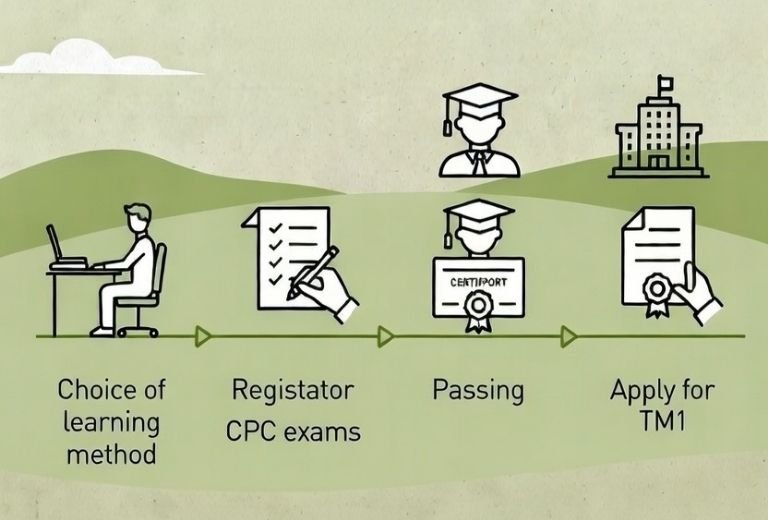
The path to becoming a transport manager is clear. All you have to do is follow these four instructions.
Step 1: Choose Your Learning Method
First, you need to learn the rules. You cannot just guess the answers.
- Intensive classroom courses: These usually take 8 to 10 days. You go to a classroom with a teacher. This is great if you like to ask questions. You meet other students, too.
- Home Study/E-learning: You can take a transport manager course online. This lets you study at home. You can study after work or on weekends. It requires good self-discipline.
Step 2: Register for the Exams
Next, you must sign up for the test. The test is called the CPC exam. There are two parts.
- Paper 1 (Multiple Choice): This has 60 questions. It covers UK and international law. You pick the right answer from a list.
- Paper 2 (Case Study): This is an open-book scenario based on running a UK haulage company. They give you a story about a fake company. You must use your books to fix their problems.
Step 3: Pass and Certify
Now, you must take the test and pass. Achieving the 70% (approx.) pass mark is your goal. It is not easy, but you can do it. When you pass, you get a certificate. Therefore, it proves you know the process.
Step 4: Apply for the TM1
Finally, you apply for the job formally. You must fill out the TM1 form. This form adds you to a company’s O-licence. It tells the government that you are in charge. Once the Traffic Commissioner accepts it, you are officially a manager.
Is a Career as a Transport Manager Right for You?
You know how to be a transport manager, but is it a good fit? Let’s look at the skills you need.
Core Skills and Personal Qualities
You need to be a certain type of person.
- Organisational skills and attention to detail: You handle many papers. You cannot lose important documents.
- Communication and people management: You talk to drivers every day. Drivers can be stressed. You must be calm and kind.
- Problem-solving and decision-making: Sometimes a truck breaks down. You must decide what to do fast.
- IT and data literacy: You will use computers often. You might use a transportation management system (TMS) to track trucks. You also need to know spreadsheets.
Pros and Cons of the Job
Every job has good parts and bad parts.
- Benefits: You have good progression. You can get promoted. The work is varied. You have a big impact on the business.
- Challenges: You have a lot of responsibility. There is time pressure to get deliveries done. Sometimes, the working hours are long.
Entry Requirements and Qualifications
The rules on how to become a transport officer can change by location. However, the basics stay the same.
Education and Background
You do not need a university degree for this job.
- Typical education level: Most managers have GCSEs or A levels. A high school diploma is fine. The most important things are reading and maths.
- Useful degrees/diplomas: If you do go to college, some subjects help. Logistics, supply chain, business, and transport management are useful. But remember, a degree is optional.
Mandatory Professional Qualifications
The most important thing is the CPC.
- Overview of the Certificate of Professional Competence (CPC): This is the main licence. You cannot work without it.
- Types: There is one for road haulage (trucks). There is one for passenger transport (buses). You usually choose one.
- How to obtain it: You go to approved training courses. Then, you pass the exams. Later, you do refresher courses to stay smart.
Legal and Regulatory Requirements
You must be a person of good character.
- Good repute and financial standing: This is required if acting as a named transport manager on an operator’s licence. You cannot have a bad criminal record.
- Understanding local regulations: You must know transport, safety, and environmental regulations. This keeps the air clean and roads safe.
Salary, Career Progression and Job Outlook
Learning about becoming a transport manager is a smart financial move. The pay is usually quite good.
Typical Transport Manager Salary Ranges
Your salary depends on how much you know.
- Entry-level: When you start, you earn less. But it is still a good wage.
- Experienced: After a few years, you earn more.
- Senior/operations manager: If you run a big office, you earn the most.
- Regional differences: Jobs in big cities pay more. Jobs in the countryside pay less. Large firms pay more than small ones.
Career Pathways
There are many transport manager roles and responsibilities to explore.
- From the transport manager: You can move up. You can become an operations manager.
- Depot manager: You could run a whole building.
- Logistics manager: You could plan routes for the whole country.
- Regional director: This is a very high job.
- Consultancy: You can work for yourself. You help other companies follow the rules.
Future of the Profession
The job is changing with the times.
- Impact of technology: Robots and computers help us. Automation makes paperwork faster.
- Sustainability: We must protect the Earth. Green logistics is growing. Electric trucks are becoming popular.
Entry Requirements and Qualifications
Note: We need to re-examine the particular requirements as we proceed with this guide on becoming a transport manager. This section serves as a checklist for your journey.
Education and Background
Let’s review the school requirements one more time.
- Typical education level: As stated, GCSEs or A levels are standard. You need to write clear emails. You need to count hours correctly.
- Useful degrees/diplomas: While optional, a degree in business helps. It teaches you how to manage money. Logistics degrees teach you about moving goods.
Mandatory Professional Qualifications
The CPC is the key to your success.
- Overview of the Certificate of Professional Competence (CPC): This certificate proves you are a professional. It is recognised all over the UK and Europe.
- Types: Most people choose road haulage. This is for moving boxes and goods. Passenger transport is only for moving people.
- How to obtain it: You must book a test at a centre. You study hard. Then you take the test. If you pass, you are qualified.
Legal and Regulatory Requirements
The law is very strict for managers.
- Good repute: You must be honest. You cannot lie to the police.
- Financial standing: If you are a freelance manager, you must be stable.
- Understanding regulations: You must know the rules for safety. You must know the rules for the environment. This is part of the transport manager responsibilities you face daily.
How Much Does it Cost to Become a Transport Manager?
Investing in becoming a transport manager costs some money. However, it is an investment in your future.
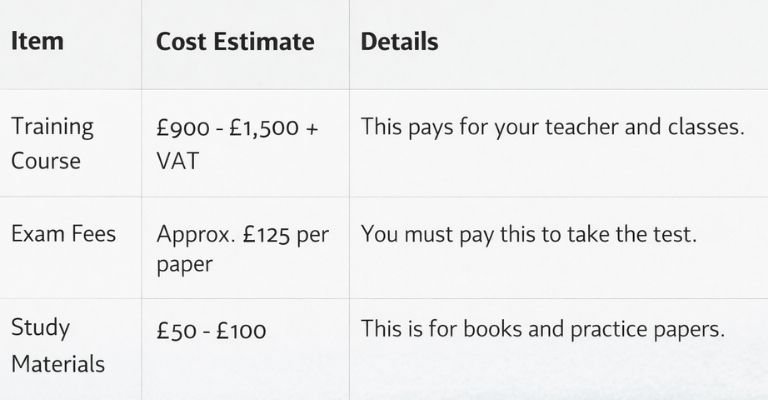
This table helps you plan your budget. The prices can change, so check first. Sometimes, your boss might pay for you. This helps you save money.
How to Get Your First Transport Manager Job
You know how to be a transport manager, but now you need a job. Here is how to get hired.
Writing a CV That Highlights Relevant Skills
Your CV is a paper about you. It must look good.
- Emphasise planning: Show that you can organise things.
- People management: Show you can lead a team.
- IT systems: Mention if you know computer programmes.
- Compliance awareness: Say that you know the rules.
- Non-transport roles: Explain how your old jobs help. If you worked in a shop, you know customer service. This counts.
Crafting a Strong Cover Letter
A cover letter introduces you to the boss.
- Show understanding: Talk about the company’s fleet. Do they have big trucks or small vans?
- Mention your commitment: Say you care about safety. Say you want to help them follow the law. Employers like to hear this.
Succeeding at the Interview
The interview is your chance to shine.
- Common interview questions: They will ask, ‘What does a transport manager do in a crisis?’ They will ask about safety rules.
- Using examples (STAR method): Use the STAR method. S is for Situation. T is for Task. A is for Action. R is for Result. Tell a story about a problem you solved. This shows you are smart. You can mention typical transport manager job responsibilities during your story.
Common Mistakes Aspiring Transport Managers Make
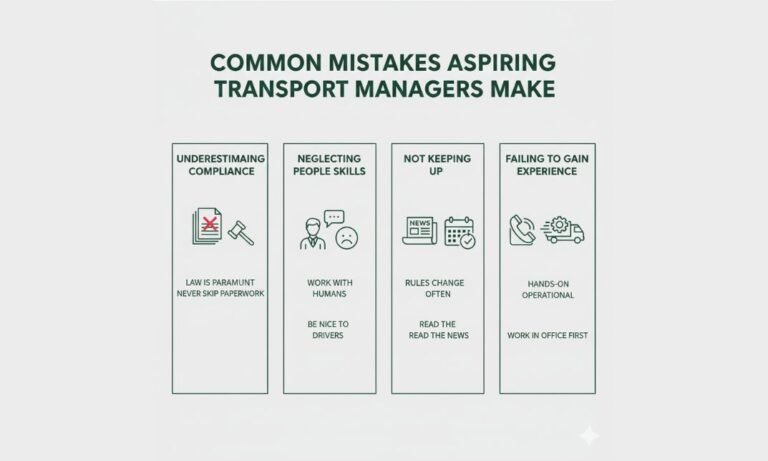
When learning how to become a transport manager, try to avoid these errors.
- Underestimating compliance: The law is the most important thing. Never skip the paperwork.
- Neglecting people skills: You work with humans, not just trucks. Be nice to drivers. If you are mean, they will not listen.
- Not keeping up: Rules change often. You must read the news.
- Failing to gain experience: You need hands-on operational experience. Try to get a job in a transport office first. Even answering phones helps you learn.
Final Thoughts on How to Become a Transport Manager
To summarise the main steps, you must first decide to study. Next, choose a course and pass your CPC exams. Then, you must get your certificate. Finally, you can apply for jobs with confidence. It takes hard work, but it is worth it.
We encourage readers to start with industry research. Look at what is transportation management system software online. Look for entry-level experience. The UK needs good managers. With the right training, you can build a great career. Good luck on your journey!
FAQs
- What does it take to be a transport manager?
Strong organisation skills, legal knowledge, problem-solving ability, and a Transport Manager CPC. - How do you become a transportation manager?
Pass the Transport Manager CPC, gain industry experience, and apply for roles with licensed operators. - How to get a job as a transport manager?
Get CPC qualified, build experience in logistics or fleet work, and apply to haulage or transport firms. - What does a transport manager get paid?
In the UK, salaries usually range from £30,000 to £50,000+, depending on experience and company size. - Is the transport manager exam hard?
Yes. It’s challenging and tests law, finance, and operational knowledge. - How hard is the CPC exam?
Moderately hard. With proper study and practice, most people pass. - How long is the transport manager course?
Typically 6–10 weeks, depending on study pace and provider. - Is there a demand for transport managers?
Yes. Qualified transport managers are in steady demand across the UK logistics sector.