No products in the cart.
The PIES Model Explained
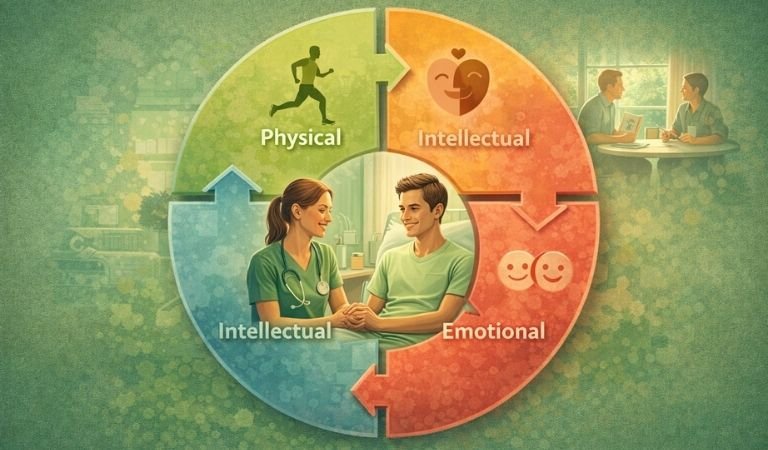
The PIES model looks at more than just physical health. It also reminds carers to check how someone feels, how their mind works and how they connect with others. This makes care personal and balanced. It helps people feel supported in every part of their life, not just their body.
Think about a patient recovering from an illness. Traditional care might focus only on medicine and exercise. At the same time, using the PIES model, a carer asks how the patient is feeling, keeps them busy with hobbies, and encourages visits from friends or family. Caring for emotional and social needs helps the patient get better faster and feel happier.
You can imagine the model as a circle that connects all four areas. Each part affects the others. This is why PIES health and social care works so well. It improves wellbeing and builds trust between carers and patients.
Why P.I.E.S Is Important in Health and Social Care
The PIES model is important because it looks at the whole person. It helps carers notice what someone needs and also see small problems before they grow. At the same time, it helps carers keep track of progress and work together as a team. This approach also supports families and makes care feel personal and meaningful.
Key benefits of P.I.E.S
- See the whole person: Looks at body, mind, feelings and social life. Every part counts.
- Plan better care: Helps carers give the right support for each person.
- Spot problems early: Small changes are noticed before they become bigger.
- Connect and communicate: Makes it easier to understand people and help them well.
- Learn and improve: Carers grow their skills and feel more confident.
- Include everyone: Ensures even vulnerable or isolated people get support.
Applying P.I.E.S in Everyday Care
The reason to use P.I.E.S is to make sure no part of a person is ignored. It is not just about the body, but also the mind, feelings, and social life. First, carers help with diet, exercise, and hygiene to keep the body healthy. Next, they encourage hobbies, learning, and brain games to keep the mind active. Carers also listen, give reassurance, and help people feel safe and confident. Finally, joining family time, group activities or community events keeps people happy and connected.
This approach works in real life in many settings. In care homes, staff plan gentle exercises, memory games, emotional check-ins and social activities. In schools or children’s services, teachers mix active play, puzzles, praise and teamwork to help children grow. Using health and social care PIES every day makes care balanced, practical, and focused on the whole person.
P.I.E.S Across Life Stages
As we grow, our P.I.E.S needs change. In health and social care, P.I.E.S supports every stage of life by caring for our body, mind, emotions, and social wellbeing.
- Children & Teens: Kids need play, learning and friends to grow strong and happy. At the same time, teachers or carers can plan games, puzzles, and group activities. This keeps their body active, mind curious, and friendships strong.
- Adults: Adults have to balance work, family, health and personal goals. At this point, carers can suggest small exercises, healthy meals, or joining a hobby group. This keeps them healthy, focused and socially connected.
- Older Adults: As people get older, moving around can become harder, memory may change and social life may shrink. At this stage, care staff can plan gentle walks, memory games, or tea with friends. This helps older adults stay independent, mentally active, and connected.
Benefits of Using P.I.E.S
Using P.I.E.S in health and social care changes the way we look after people. This makes care more personal, helpful, and meaningful. Such as:
Supports every part of life
Carers focus on Physical, Intellectual, Emotional, and Social needs. This helps people feel strong, happy, and balanced. A care home resident who takes part in gentle exercises, memory games, and social activities feels more active and connected. This way, life becomes brighter and more enjoyable.
Stops small problems from growing
Looking at all areas helps carers notice problems early. A teenager having trouble making friends can join hobbies or group activities. Then, they feel more confident and loneliness or stress does not take over.
Keeps mind, feelings, and social life healthy along with the body
Using health and social care pies, carers help people stay active, think clearly, and feel emotionally safe. An adult recovering from surgery can exercise safely, try a hobby and spend time with family or friends. As a result, their mood improves and recovery is faster.
Matches care to the person
P.I.E.S lets carers give support that fits each person. A child with learning difficulties can enjoy puzzles, movement games, and social activities made just for them. This way, care feels personal and works better.
Challenges in Using P.I.E.S in Health and Social Care
Care teams work hard to meet P.I.E.S needs each day. Still, many problems make this difficult.
- Limited time for assessments – Staff often feel rushed during their work. Because of this, they may not check physical, intellectual, emotional, and social needs properly.
- Lack of resources or staff – Care work needs enough people and basic tools. When these are missing, it becomes hard to give full care.
- Insufficient training – Staff need training to understand P.I.E.S. clearly. Without training, some needs may stay hidden.
- Personal biases – Everyone has opinions and habits. Sometimes, these can affect fair care.
How to Make Care Better
PIES in health and social care works best when staff get the right support. First, training helps staff know what to do and feel confident. Next, teamwork makes it easier to share tasks and ideas.
At the same time, staff should look at the whole person. This means caring for the body, mind, feelings and social life. When teams do this at every stage, people get care that feels complete and supportive.
Real-Life Examples of P.I.E.S in Action
Situation
Alex fell off his bicycle and broke his hand. Even though his hand is hurt, taking care of him is more than just fixing the bone. P.I.E.S looks at all parts of his needs, like:
- Physical (P) – Alex needs treatment for his hand, pain relief, and rest. Later, he will need exercises or physiotherapy to move his hand properly again.
- Intellectual (I) – He needs simple instructions on how to take care of his hand. This helps him understand what to do and recover faster.
- Emotional (E) – Alex may feel upset, frustrated, or worried because he cannot do his normal activities. At the same time, support from family, friends, or a counsellor helps him feel calm and confident.
- Social (S) – He might miss school, hobbies, or time with friends. With help from teachers and friends, he can stay included and feel part of the group.
How It Works
All parts of Alex’s care are connected. How he feels affects how well he recovers. Support from others keeps him encouraged. Also, understanding his treatment helps him follow it properly. Using P.I.E.S in health and social care makes sure Alex gets care for his body, mind, feelings, and social life, not just his broken hand.
Consequences of Ignoring P.I.E.S
Ignoring any part of P.I.E.S can affect a person’s whole life. Even one missing area can cause problems in daily life.
- Physical – If the body is not looked after, like skipping exercise or eating poorly, it can lead to illness. This also affects feelings and can make someone sad or frustrated.
- Emotional – If feelings are ignored, a person can feel upset, worried, or withdrawn. As a result, they may become lonely and avoid social contact.
- Intellectual – Without learning or mental activities, confidence can go down. This also makes it harder to make decisions or solve problems.
- Social – If social needs are ignored, people can feel disconnected. At the same time, lack of interaction can reduce motivation and enjoyment in life.
Final Thoughts on P.I.E.S
P.I.E.S health and social care helps us care for the whole person. When we look after the body, mind, feelings, and social life together, care becomes stronger and more meaningful. Using P.I.E.S makes people feel confident, independent and happy. At the same time, carers get clear guidance, feel less stressed, and can do their work better.
PIES in health and social care are tools we can use every day. Even small actions in each area can make a big difference. By using P.I.E.S in daily care, people feel safe, supported, and valued. Also, exploring health and social care courses helps you learn how to use P.I.E.S health and social care effectively and make a real positive impact.
FAQs
- What do the PIES stand for?
P.I.E.S stands for Physical, Intellectual, Emotional, and Social – the four key parts of a person’s wellbeing.
- What does “Physical” stand for in PIES?
Physical is all about the body – exercise, nutrition, rest, and staying healthy.
- What are the health benefits of PIES?
Using P.I.E.S keeps your body strong, mind sharp, emotions balanced, and social life active.
- What is the emotional meaning of PIES?
Emotion is about feelings – feeling happy, safe, confident, and supported.
- What are the 5 principles of PIES?
Focus on body, mind, feelings, social life, and balance to promote overall wellbeing.
- Why are PIES important in health and social care?
P.I.E.S helps carers look after the whole person, not just one part of their health.
- What are the four PIES in health and social care?
The four P.I.E.S are Physical, Intellectual, Emotional and Social, used to guide care at every stage of life.