No products in the cart.
Food safety matters to all of us. Whether you’re cooking for your family at home or preparing meals in a busy kitchen, knowing “what is the temperature for food danger zone” can really keep you safe. This danger zone is where bacteria love to grow, and leaving food there too long can make it unsafe to eat. In fact, according to UK food safety data, Campylobacter infections have stayed between 66,000 and 71,710 cases each year, while Salmonella infections have been around 9,400 to 10,250 cases per year. That shows just how common foodborne illnesses can be—and why keeping food at the right temperatures matters so much.
But don’t worry—once you understand the danger zone and follow the correct temperatures, you can prevent food poisoning and enjoy meals without stress.
In this article, we’ll walk you through everything about the temperature danger zone for food. Also, we’ve included a free temperature danger zone chart you can download and put up in your kitchen. It greatly simplifies food safety!
What is the Temperature Danger Zone?
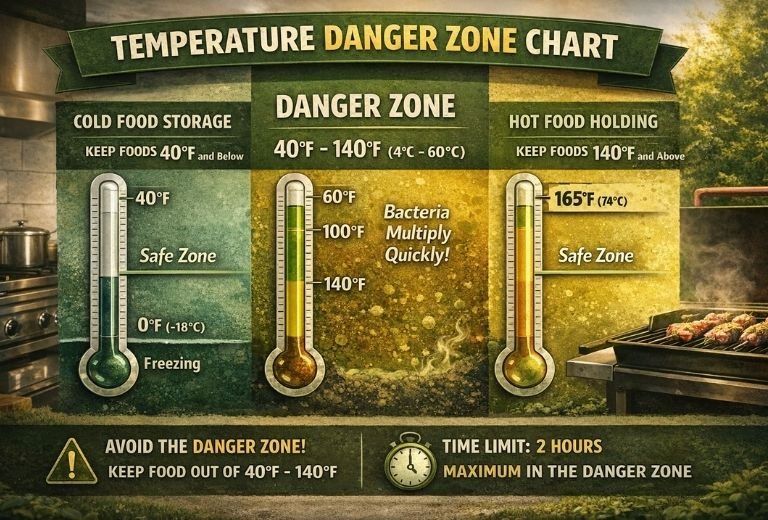
The temperature danger zone is the range where bacteria in food grow fastest, making it unsafe to eat. As per the UK Food Standards Agency (FSA), this range is between 8°C and 60°C. For example, if cooked food cools too slowly after cooking, or raw food warms up too much before storing, bacteria can multiply very quickly. This is why even small mistakes in temperature control can lead to foodborne illness.
Bacteria grow fastest between 20 °C and 50 °C, and their ideal temperature is around 37 °C, which is close to our body temperature. This means leaving food in this range, even for a short time, can make it risky to eat. That’s why knowing the danger zone helps you protect yourself, your family, and anyone you cook for.
Here’s a simple guide to stay safe:
- Safe chilled temperatures: Keep your fridge below 5°C. This slows bacterial growth and keeps food fresh. Always check that your fridge isn’t too warm, and try not to open it too often.
- Safe frozen practices: Freeze food at –18 °C or lower. Freezing stops bacteria from growing completely. Also, label your frozen food with the date so you use it in time.
- Safe cooking temperatures: Cook food above 70°C. High heat kills bacteria and makes meals safe. Use a food thermometer if you’re unsure, especially with meat, poultry, and ready-to-eat foods.
By keeping food out of unsafe locations and following those simple steps, you can enjoy meals safely without worry. In addition, being aware of these temperatures makes storing, reheating and cooking food much easier and safer every day.
Why Staying Out of the Danger Zone Matters?
It can be dangerous to leave food in the danger zone. Bacteria multiply very quickly in this range, and even food that looks, smells, or tastes fine can make you sick. For example, cooked meat left out on the counter for just a couple of hours can grow harmful bacteria that cause food poisoning. The most vulnerable are children, the elderly, and those with weaker immune systems.
By keeping food away from the harmful area, you can prevent foodborne illnesses like Salmonella, Campylobacter, and E. coli. These illnesses can cause stomach cramps, vomiting, diarrhoea, and serious dehydration. This shows how important it is to follow safe food practices.
Using correct temperatures for chilling, freezing, and cooking food is simple, yet it makes a huge difference. For instance, storing leftovers in the fridge within two hours, cooking chicken above 70°C, or freezing food at –18°C keeps bacteria from growing. Over time, these small steps protect your health, save money by reducing waste and give you peace of mind when cooking for yourself or loved ones.
Remember, staying out of the danger zone isn’t just about rules—it’s about keeping your meals safe and tasty.
How to Keep Food Out of the Danger Zone?
You might be surprised at how simple it is to keep food out of the dangerous temperature range. With a few changes in habits, you can protect yourself and your family from harmful bacteria.
- Frozen foods: Always keep frozen items like ice cream, raw meat, and ready meals at –18 °C or lower. Also, to prevent cross-contamination, make sure raw meat does not come into contact with any other foods in the freezer. When defrosting, never leave food on the counter. Instead, defrost it in the fridge, in cold water, or in the microwave if you plan to cook it right away.
- Chilled foods: Keep your fridge between 1 °C and 5 °C. Dairy products, cooked meat, and ready-to-eat food should stay in the fridge until you need them. For example, don’t leave leftovers on the counter for more than two hours.
- Safe defrosting: As mentioned, always defrost food safely. First, move frozen meat to a plate in the fridge the night before cooking. If you are short on time, use cold water in a sealed bag or the microwave. Never defrost at room temperature because bacteria can grow quickly.
- Cooking tips: Cook food until it reaches at least 70°C. Using a food thermometer helps make sure meat, poultry, and leftovers are hot all the way through. Finally, when reheating food, make sure it reaches these temperatures again to stay safe.
By following those simple steps, you can keep food out of the danger zone. Then, your meals stay safe, and cooking feels much easier and less stressful.
How Long Should You Cook Food For?
Cooking food properly is one of the easiest ways to stay safe. The UK Food Standards Agency (FSA) gives clear rules. In England, most food should reach 70°C, while in Scotland, the safe temperature is a bit higher at 82°C. This shows that different areas have slightly different standards, but the goal is the same: kill harmful bacteria and keep food safe.
First, temperature matters because it controls how fast bacteria die. For example, if food is at 60°C, it needs about 45 minutes to be safe. However, at 70 °C, it only takes 2 minutes. Even better, at 80°C, bacteria can be killed in just 6 seconds. This shows that higher temperatures work faster and make food safer in less time.
Also, cooking time is important depending on the type and size of the food. Thick cuts of meat or large roasts take longer to reach the right temperature than small pieces. For instance, a small chicken breast may cook quickly, but a whole chicken needs more time to be safe all the way through.
Finally, using a food thermometer is the best way to check. It removes guesswork and makes sure every meal is safe to eat. Then, you can cook with confidence and enjoy your food without worry. By following these simple rules, you can keep your meals safe, tasty, and stress-free every day.
What is the temperature for food danger zone? A Guide to Checking Food Temperature
One simple technique to protect yourself and your loved ones is to check the temperature of food. First of all, a food thermometer or temperature probe helps you know exactly how hot or cold your food is. This is important for cooked meals, frozen food and chilled items. For example, a thermometer can tell you if chicken is fully cooked, so you don’t risk food poisoning.
Also, frozen and chilled foods need careful attention:
- Frozen food: Keep at –18 °C or lower to stop bacteria from growing.
- Chilled food: Keep between 1 °C and 5 °C for safety.
- Cooked food: Use a thermometer to ensure it reaches safe temperatures.
Sometimes, you can check food using other signs too:
- Colour: Chicken should be white inside, not pink.
- Texture: Vegetables should feel soft but not mushy.
- Tip: However, a thermometer is the safest way to be sure.
Finally, it’s important to monitor your storage and hygiene:
- Check fridge and freezer temperatures with a gauge regularly.
- Wash your hands before and after handling food.
- Clean surfaces and utensils to avoid contamination.
- Keep raw and cooked foods distant to prevent bacteria from spreading.
Then, you can cook, store and enjoy meals safely, knowing your family is protected.
Common Mistakes to Avoid
Even skilled chefs can make mistakes. But food may be kept safe with a few basic guidelines.
- Leaving food out too long: Bacteria grow fast if cooked food stays at room temperature. For example, a roast left on the counter for hours can become unsafe. Always put leftovers in the fridge within two hours.
- Refreezing thawed food: Once food thaws, bacteria can start to grow. So, never freeze it again unless you cook it first.
- Overcrowding the fridge: A full fridge can’t cool food properly. This means some items may stay in the danger zone even if the fridge is on. Keep space between foods for air to circulate.
- Using a broken thermometer: If your thermometer is wrong, you may think food is safe when it isn’t. Instead, check it often so you know food is cooked or chilled correctly.
Then, by avoiding these mistakes, you can keep your meals safe, protect your family, and cook with confidence.
Tips for Different Types of Food
Different foods need different care to stay safe:
Meat, poultry, and fish:
- Keep in the fridge at 1 °C to 5 °C or freeze at –18 °C.
- Store raw meat away from other foods to avoid spreading bacteria.
- Cook thoroughly, and use a food thermometer if unsure.
Dairy products:
- Store milk, cheese, and yoghurt in the fridge.
- Always check the use-by date.
- For example, don’t leave milk on the counter for too long, or it may spoil.
Cooked meals:
- Cool leftovers quickly, ideally within two hours.
- Store in shallow containers to help them cool faster.
- Reheat until very hot to kill bacteria.
Ready meals and fresh ingredients:
- Pay close attention to the directions on the packaging for prepared meals.
- Wash fresh vegetables and fruit before storing or eating.
- By doing this, you keep food safe, tasty, and ready to enjoy.
Time & Temperature Control for Buffets and Catering
Serving food at events or buffets needs extra care. For example, food left out too long can grow bacteria. Also, guests expect meals to be safe and tasty.
- Hot holding: Keep hot food above 60°C. This stops bacteria from growing.
- Cold holding: Keep cold food below 5°C. This is important for salads, desserts, and drinks.
- Avoid the danger zone: Try not to leave food between 8 °C and 60 °C for a long time. Even short periods in this range can make food unsafe.
- Check temperatures: Use a thermometer to make sure food stays safe.
By doing this, you protect your guests and make sure the food stays fresh. Then, everyone can enjoy the meal safely without worry.
Final Thought on what is the temperature for food danger zone
Knowing the temperature safety zone helps keep your meals safe and healthy. Bacteria grow quickly between 8°C and 60°C, so chilling, freezing, cooking, and reheating food at the right temperatures is very important. Also, using a food thermometer and storing leftovers in small, shallow containers makes a big difference every day.
Plus, our free temperature danger zone chart in this blog shows safe temperatures for meat, poultry, fish, dairy, cooked meals, and ready-to-eat foods. Keep it in your kitchen to check food quickly and make cooking, storing, and serving much safer. Then, you can enjoy meals without worry and protect your family from foodborne illnesses.
Frequently Asked Questions
- What is the food danger zone temperature in the UK?
The food danger zone is between 8°C and 63°C. In this range, bacteria can grow quickly and make food unsafe to eat. - What is the temperature danger zone for food?
The temperature danger zone is the range where harmful bacteria grow fastest in food that needs careful temperature control. This range is between 41 °F and 135 °F (about 5 °C to 57 °C). - What is the 2‑2‑2 rule for food?
The 2‑2‑2 rule helps keep leftovers safe. Put food in the fridge within 2 hours, eat it within 2 days, or freeze it for up to 2 months. This stops bacteria from growing and prevents food poisoning. - Is chicken safe to eat at 70°C?
No, at 70°C (158°F), chicken is not completely safe. To kill harmful bacteria like Salmonella, it should reach 74°C (165°F). For home cooking, this is the safest temperature to make sure all parts of the chicken are fully cooked. - Can food be hot held for 6 hours?
No, hot food should not be kept below 63°C for long periods. You can only keep it hot for up to 2 hours safely. After that, bacteria can grow and make the food unsafe to eat.