No products in the cart.
The UK needs nearly 1 million new trade workers by 2030, and electricians are in very high demand. As a result, knowing how to become an approved electrician can give you a stable and rewarding career. Electricians work in homes, offices, and construction sites, making the field very practical. To achieve this, you need recognised qualifications and on-site experience, and you must pass key tests such as NVQ Level 3 and AM2. Once complete, approval schemes such as NICEIC or NAPIT allow you to work safely and independently.
Moreover, there are specific stages involved in becoming an authorised electrician. First, your chosen route decides how long it takes and how much it costs. Then, you can train through apprenticeships, adult courses, or full-time study. Each path gives you the skills, safety knowledge, and certificates needed to work confidently.
Now, let’s see step by step how to become an electrician UK and begin your career.
What Does an Approved Electrician Mean in the UK?
An approved electrician has the right training and experience to do electrical work safely in the UK. This means people can trust their work. A qualified electrician has the skills, but only an approved electrician can legally sign off on their work. They do not need extra checks from anyone.
Electricians obtain approval through schemes such as NICEIC or NAPIT. This lets them work alone, follow UK rules, and show that their work is safe. Customers and employers prefer approved electricians because approval is mandatory. As a result, it gives access to bigger projects, specialist jobs, and better pay.
What Qualification Do You Need to Be an Electrician?
To work as an electrician, you need the right qualifications to stay safe and do the job well. First, the Level 2 Diploma teaches basic skills you will use every day. Next, the Level 3 Diploma gives more advanced knowledge and prepares you for real work.
After this, you complete NVQ Level 3, which proves you can handle electrical jobs on your own. Then, the AM2 assessment tests your practical skills to make sure you meet industry standards. Finally, you understand the 18th Edition Wiring Regulations, the safety rules for all electrical work. Following these steps gives you the skills, confidence, and official recognition to start your career as an approved electrician in the UK.
Routes to Becoming a Qualified Electrician in the UK
There are a few main ways to become a qualified electrician in the UK. First, apprenticeships let you learn while working, which is great if you like practical experience. Next, full-time college courses teach all the skills in a classroom, which works well if you like step-by-step learning. Finally, adult courses are good for people changing careers or learning later in life.
Each route works differently. For example, apprenticeships give real job experience while you train. College courses move faster but need full-time study. Adult courses allow you to learn without rushing. But, in the end, the best path depends on your priorities and learning speed.
How to Become an Approved Electrician Step-by-Step
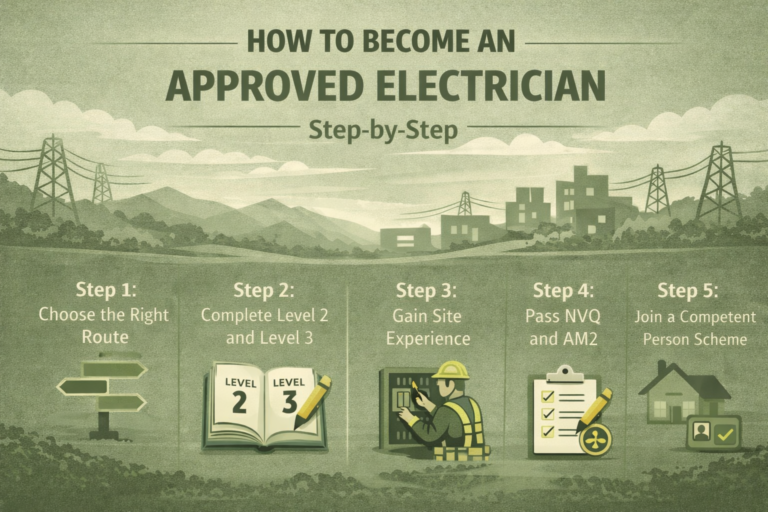
It needs the proper education, experience, and certifications to become an authorised electrician. To start, take these steps to set up a successful career.
Step 1: Choose the Right Route
Choose the path that fits you best. Apprenticeships combine learning with earning. Full-time courses take you through every skill from start to finish. Fast-track courses are the best option if you want to switch careers quickly. The path you pick will affect how long it takes and the kind of experience you gain.
Step 2: Complete Level 2 and Level 3
Level 2 teaches the basic skills you need every day. Next, Level 3 gives advanced knowledge and prepares you for real electrical work. You need both levels to become fully qualified.
Step 3: Gain Site Experience
Practice your abilities and keep to safety regulations by working on real-life assignments. At the same time, this experience helps you feel confident and ready for your assessments.
Step 4: Pass NVQ and AM2
NVQ Level 3 validates your ability to do real electrical work alone. Meanwhile, the AM2 assessment checks your practical skills to make sure you meet industry standards. Passing both is important to become fully approved.
Step 5: Join a Competent Person Scheme
Sign up with a scheme like NICEIC, NAPIT or CPS. This lets you work independently and approve your own jobs. Being part of a scheme also shows clients and employers that your work is safe and reliable.
Apprenticeship Route
Apprenticeships let you learn while you work. During this time, you learn from seasoned electricians and assist with actual tasks. You usually need basic maths and English or a Level 2 electrical course to start. Most apprenticeships last 3 to 4 years. During this period, you learn practical skills, safety rules, and important electrical knowledge.
One big advantage is that you get paid while learning. At the same time, you make useful contacts in the industry. The challenge is that balancing work and study can be hard, and it takes longer than full-time courses.
Adult Learner Route (Fast-Track Courses)
Fast-track courses are perfect for people who want to switch careers quickly. To begin with, they teach all the skills you need in a shorter time than regular courses. Along the way, you learn in class and also practise real electrical work. First, you earn certificates such as City & Guilds, then move on to NVQ qualifications. During training, you build a portfolio and complete assessments to show you can work safely and handle real electrical jobs. Overall, these courses give you the skills to become a qualified electrician faster. They are intense, but with focus and effort, you can succeed.
Experienced Worker Assessment Route
The Experienced Worker Assessment route is for electricians who already have a lot of work experience. First, you need to show proof of your skills and years of practical work. Next, you collect documents like project records and evidence of your abilities. Then, you take a final test to meet UK standards. After passing, you get official approval without doing a full course. This way, your experience becomes a recognised qualification quickly and safely.
Full-Time College Route
Beginners and those under 19 should consider the Full-Time College option. First, you start with Level 2 and then move to Level 3, learning skills step by step. During the journey, you practise experiential tasks and follow safety rules carefully. At the same time, you get real work experience, so you know how to handle jobs safely. In the end, this route gives you the skills and confidence to become a qualified and approved electrician.
Domestic vs Professional Electrician Courses
All the electrician courses are not the same, so it’s important to understand the differences before you choose. Domestic courses teach you how to work in homes and small buildings. You learn to install, fix, and maintain wiring, lights, and small circuits. Professional courses are different because they focus on bigger projects, like offices, factories and commercial buildings. You also learn to handle more advanced systems and follow safety rules, which prepares you for bigger jobs.
Many beginners start with domestic courses because they give experience quickly. Professional courses, on the other hand, prepare you for commercial and industrial jobs, which can pay more and offer bigger projects. Domestic electricians usually work on house wiring, lights and small appliances. On the other side, professional electricians work on complex systems, machines, and large electrical networks. Most electricians start with domestic training and then move to professional courses as they get more experience. This helps them do bigger jobs and earn more money.
How Long to Become an Electrician in the UK?
Becoming an electrician can take more or less time depending on your route and experience. Some paths are faster, while others take longer but give more experience and skills.
Apprenticeship Timeline
Typically, apprenticeships range from three to four years. During this time, you work on real job sites and learn Level 2 and Level 3 diplomas. At the same time, you complete your NVQ and AM2 assessments. Even though it takes longer, you earn money while learning and get experience that employers trust.
Adult Learner Fast-Track Timeline
Fast-track courses are good if you want to start quickly or change your career. In this path, you finish City & Guilds and NVQ assessments in 1 to 2 years. You spend some time in class and some time practising real electrical work. Because the course is fast, you can start working sooner and feel ready for the job.
Fast Routes vs Full Qualification
Short courses can teach basic skills, but they do not give official approval. Only completing Level 3, NVQ, and AM2 lets you work on your own. This is important because a full qualification gives you better pay, bigger projects, and specialist jobs.
How Much Does It Cost to Become an Electrician UK?
The cost to become an electrician depends on the path you choose. First, let’s look at apprenticeships.
- Apprenticeship Costs: Apprenticeships are the cheapest route. Usually, your employer or college pays for your training. At the same time, you earn money while learning, which helps cover your daily expenses.
- Adult Course Costs: If you take a fast-track or adult course, it will cost more. You pay for lessons, practical work, and assessments. The good news is that you can finish faster and start working sooner.
- NVQ and AM2 Fees: You need to pay for the NVQ Level 3 and the AM2 assessment. These fees are separate, but they are required if you want to work on your own and get official approval.
Ways to Save Money: There are ways to reduce costs. You can choose an apprenticeship to earn while you learn. Look for grants or funding for adult learners. Buy second-hand tools or borrow them. Also, compare courses to find ones that include assessments and materials in the price.
Can You Become an Electrician Without Experience?
You can start from zero and still become an electrician. In fact, many people begin their careers with no experience at all. Beginner courses teach you the basic skills you need, like wiring, lights, safety rules, and simple repairs. At the same time, you gain experience by training, practising, and completing real projects.
People believe that you have to be young or have experience in the construction industry. However, this is not true. With dedication and the right training, you can become a skilled electrician. Practice regularly, follow safety rules and stay determined, and soon you can succeed in this career.
Key Cards, Schemes, and Industry Bodies
Electricians need the right cards and approvals to show they are trained and trustworthy. This makes it easier to get work and prove that their work is safe.
ECS and CSCS Cards
The ECS card shows that you are a skilled electrician and can work safely on construction sites. The CSCS card proves you are trained for general construction work. Most employers will ask for these cards before you can start a job.
NICEIC, NAPIT, and CPS Schemes
Schemes like NICEIC, NAPIT and CPS officially approve electricians. They check that your work meets UK safety rules. Being part of a scheme shows clients and employers that you are reliable and qualified.
When You Need Them
You need an ECS or CSCS card to work on most construction sites. Approval from NICEIC, NAPIT, or CPS is needed if you want to work on your own or sign off on your own jobs. Having the right cards and approvals helps you get bigger projects, earn more money, and build trust with clients.
Common Mistakes to Avoid When Training
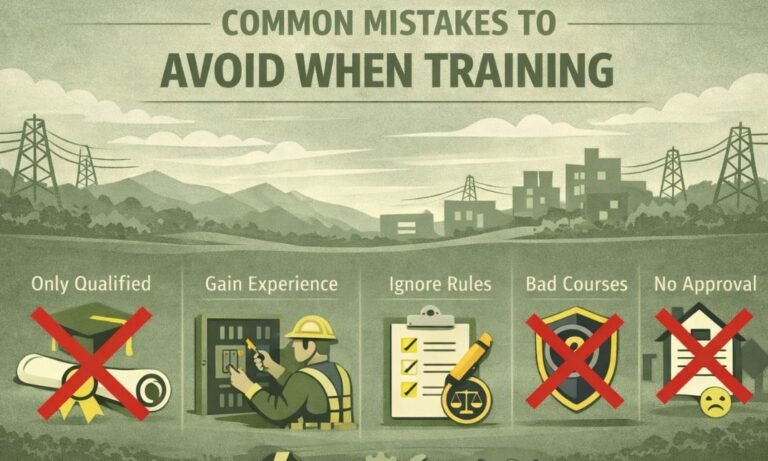
Here are the key mistakes to watch out for:
- Doing only short courses: Short courses teach the basics, but they do not give full approval. This can stop you from getting bigger jobs.
- Skipping real work experience: Working on actual projects is very important. Without it, you may find it hard to do the job or pass assessments.
- Ignoring approval rules: You need the right approvals to work safely and legally. Without them, you cannot take on bigger projects.
- Not checking courses properly: Picking the wrong course can waste your time and money. Always check the course reputation, content, and recognition.
Final Thoughts on Becoming an Approved Electrician
So, how to become a qualified electrician? It’s an easy procedure that you can follow in order. First, learn the basics and understand how to do electrical work safely. Next, get real experience by working on projects and preparing for assessments. Beginners or people changing careers may feel unsure at first. But with the proper training and effort, anyone can succeed.
Next, decide which path best suits your needs. Apprenticeships, full-time courses, or fast-track programmes all give the skills you need. Choosing the right path saves time and makes learning easier. Finally, take the first step, stay focused and practise regularly. In the end, you can build a safe, rewarding and well-paid career as an approved electrician.
FAQs
- How to become an approved electrician in the UK?
Get the right qualifications, gain experience, pass NVQ & AM2, and join a scheme like NICEIC or NAPIT.
- How long does it take?
Usually 3–4 years via apprenticeship. Fast-track courses take 1–2 years.
- Electrician vs Approved Electrician – what’s the difference?
A qualified electrician can do the work. An approved electrician can also sign it off legally.
- How to apply for an approved electrician card?
Join a scheme like ECS, CSCS, NICEIC, or NAPIT and submit your documents.
- Do you need 2391 to be approved?
No, 2391 is optional. Core qualifications, NVQ, AM2 and scheme approval are what matter.
- How much does a NICEIC certificate cost?
It depends on the scheme and job type; it’s usually a few hundred pounds for registration and inspections.
- What’s the hourly rate for an approved electrician?
Rates usually range from £15 to £30 for beginners and up to £40+ for experienced pros.
Basic Electrician Course
Course Description :
- Certificate: Yes(Free)
- Accreditation: CPD Accredited
- Access: Lifetime