No products in the cart.
Do you know who signals drivers and saves lives on construction and industrial sites? The answer is simple: a banksman. But what’s the real story? What is the in-depth meaning of banksman? Simply put, a banksman is the person who guides drivers and operators of vehicles or heavy machines. They work in areas where drivers cannot see clearly. In other words, a banksman keeps people and machines safe while work moves smoothly.
Moreover, a banksman uses banksman signals and banksman hand signals to communicate with drivers. Each signal tells the driver exactly what to do. This method works even in noisy areas or when the driver’s view is blocked. Therefore, learning the meaning of the term ‘banksman’ and how they use these signals helps us see why the role is so vital. In fact, it is more than a job – it is a safety lifeline that ensures vehicles, machinery and workers operate safely on construction, industrial, and transport sites.
So, let’s dive in and explore what a banksman is and why this role is so important.
What is a Banksman?
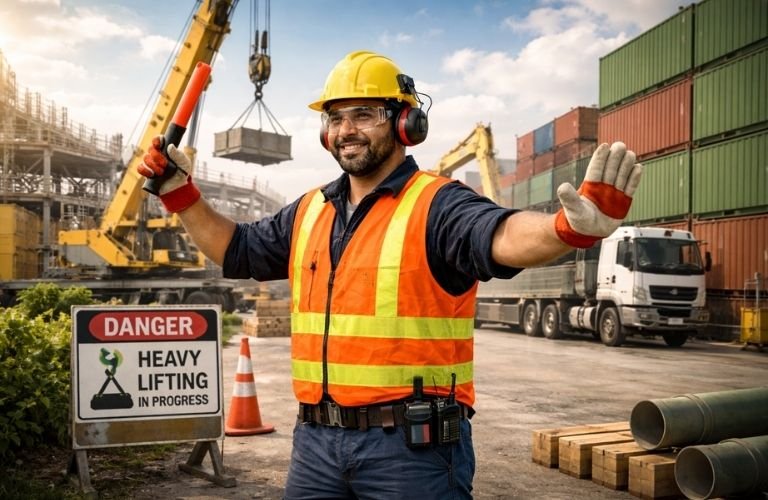
A banksman is a trained worker who guides vehicles and heavy machines when drivers cannot see well. To define banksman meaning in simple words, a banksman helps drivers move safely and stop accidents. At first, the term came from mining. In the past, a banksman stood at the top of a pit and guided movement. Today, the role exists in construction, industrial, and transport work. Even now, the main focus is safety.
Different countries use different names for this role. For example, in Australia and New Zealand, people call it a dogman. In the United States, it is called a spotter. Banksmen work on construction sites, in warehouses, offshore areas, and on public roads. They use banksman hand signals to guide vehicles safely. Because of this, drivers understand what to do quickly, even in noisy or busy places.
Meaning of Banksman and Why They Are Important
Work sites are full of vehicles and heavy machines moving all day. Every year, thousands of accidents happen in the UK during vehicle and mobile plant operations. Research shows that around 25% of all workplace vehicle deaths occur while reversing. This highlights why a trained banksman is vital for keeping everyone safe on site.
- Protection from blind spots: Large vehicles have areas the driver cannot see. As a result, workers nearby are at risk. At this point, a trained banksman watches these areas and guides the driver safely. This way, accidents are avoided.
- Safe control of heavy machines: Cranes, lorries, forklifts, and other machines often work in small or tight spaces. For this reason, clear guidance is very important. Using hand signals, banksmen help drivers move safely and stay in control.
- Stopping accidents before they happen: Being alert makes a big difference. By spotting risks early, a banksman can stop unsafe moves before anyone gets hurt. Because of this, small mistakes do not become serious problems.
- Extra safety when other measures are not enough: Signs, barriers, and mirrors help, but they do not cover all risks. In these situations, a banksman gives live guidance and keeps the area safe.
Banksman Duties and Responsibilities
A banksman has an important job on busy work sites. First, they guide drivers of vehicles and heavy machines using banksman signals. At the same time, they use banksman hand signals to give clear instructions that everyone can follow. In addition, they make sure all safety rules are followed and risk assessments are checked. They also keep the work area clear of dangers and stop anyone from entering unsafe zones. Whenever a risk appears, banksmen report it straight away to prevent accidents.
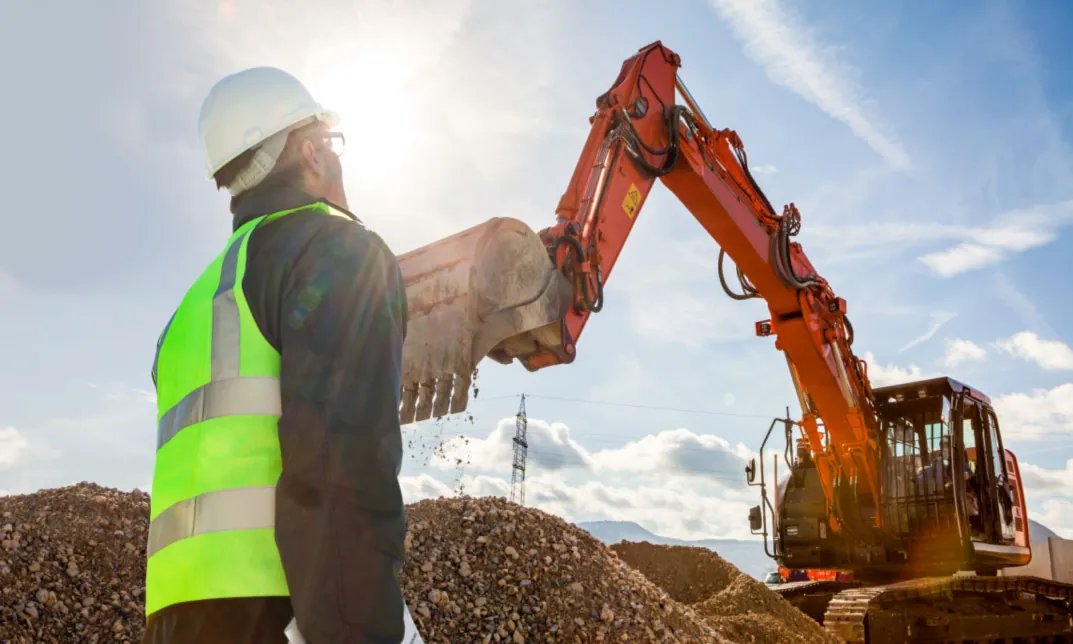
What banksmen do can change depending on the site. On construction sites, they may guide cranes or control an excavator bucket. In warehouses, they direct forklifts and other vehicles safely through busy areas. Offshore or in forests, they help drivers move mobile machines where it is hard to see. Even though the work is different, the main goal stays the same. Banksmen keep people, vehicles, and machines safe while helping work run smoothly.
Common Banksman Signals
On busy work sites, banksman hand signals are very important. In fact, they help drivers and machine operators understand instructions when they cannot see or hear clearly. This makes work safer for everyone on site.
Large vehicles and machines have blind spots. As a result, drivers cannot always see what is around them. That is why banksmen use hand signals. They make sure communication is quick, clear, and easy, even in noisy or crowded areas.
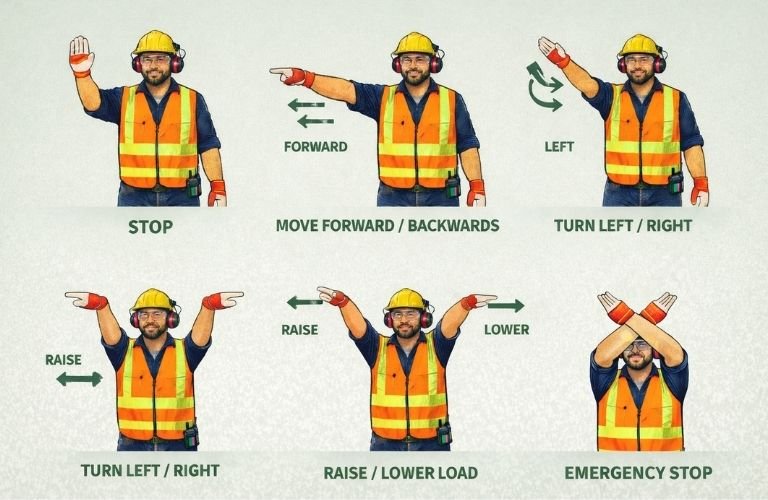
Here’s a look at the most important signals banksmen use:
- Stop: A clear hand signal to make the driver halt immediately. This stops accidents before they happen.
- Move Forward/Backwards: Shows the driver which way to go. This keeps vehicles moving safely.
- Turn Left/Right: Guides drivers when they cannot see properly. It helps them make safe and correct turns.
- Raise/Lower Load: Used for cranes or forklifts. This makes sure heavy loads are lifted or lowered safely.
- Slow Down/Speed Up: Controls the vehicle’s speed. Because moving too fast or too slow is risky, the banksman guides the pace.
- Emergency Stop: Only for urgent danger. It tells the driver to stop immediately to avoid serious accidents.
Banksman Skills, Knowledge, and Experience
These are the main abilities that make them effective on-site:
- Communication: Signals are important, but a banksman also makes sure drivers understand what to do.
- Observation: Always watching the area to spot dangers before accidents happen.
- Patience: Busy and noisy sites can be stressful. Staying calm keeps work safe.
- Quick Decisions: Hazards can appear fast. Acting quickly stops accidents.
- Technical Knowledge: Knowing how vehicles and machines work, understanding the site, and following safety rules keep everyone safe.
- Experience: Learning on site, shadowing senior banksmen, and training builds confidence and skill.
- Keeping Skills Up to Date: Practising regularly and attending refresher courses keeps skills ready for any situation.
How to Become a Banksman in the UK
Becoming a banksman starts with learning and gaining practical experience. First, many people take apprenticeships or courses in construction or plant operations. Next, working on-site with vehicles and heavy machinery helps you understand how they move and where dangers can appear. After that, formal banksman training teaches the right-hand signals, safety rules and how to guide drivers safely. Finally, completing a site-specific induction prepares you to work confidently on real sites.
Then, learning never stops. Banksmen need to keep up with the latest hand signals, safety rules, and Health and Safety Executive (HSE) guidelines in the UK. It is important to know there is no single qualification to become a banksman. What really matters is having the skills, knowledge, and experience. With the right training, every action you take on site becomes safer and smarter.
Difference Between Banksman, Traffic Marshal, and Slinger Signaller
Banksman
A banksman guides vehicles and heavy machines safely on site. They use clear hand signals so drivers understand exactly what to do. For example, a banksman may help a lorry reverse into a tight space or guide a crane operator moving a heavy load. Because they control vehicle movement and watch for dangers, banksmen prevent accidents and keep work moving smoothly.
Traffic Marshal
Traffic marshals look after traffic in and around work areas. Their duties sometimes overlap with banksmen, especially when vehicles need careful direction. For instance, a traffic marshal may help lorries move around a construction site or keep public roads safe while work is happening. Unlike banksmen, traffic marshals focus more on general traffic flow rather than controlling machines directly.
Slinger Signaller
Slinger signalers work with cranes to lift and move heavy loads safely. They attach loads and guide the crane operator carefully. For example, on a building site, a slinger signaller makes sure steel beams or machinery are lifted without hitting people or other equipment. While banksmen focus on guiding vehicles, slinger signalers focus on lifting safely to prevent accidents.
Legal Requirements and Safety Standards
In the UK, the Health and Safety (Signs and Signals) Regulations 1996 set rules to keep work sites safe. First, employers must provide clear safety signs, proper training, and the right equipment. At the same time, a banksman has an important role. A banksman guides vehicles and machines to prevent accidents. Together, employers and banksmen make sure the workplace follows the law.
Next, everyone must follow safety rules. Workers should wear PPE, do regular risk checks, and use visibility tools like mirrors and alarms. Also, certified training helps banksmen and staff stay skilled and confident. As a result, when all these steps are followed, the workplace stays calm and accidents stay away.
Career Opportunities and Salary Insights
Banksmen are needed wherever vehicles and heavy machines move around busy work sites. For example, construction sites hire the most banksmen, but warehouses, ports, logistics centres and offshore sites also need them. Some banksmen guide cranes while others help forklifts or control traffic in tight spaces. Because of this, learning the job well can help you move into higher roles like senior banksman, site supervisor, or traffic management coordinator. In fact, some people even move into wider health and safety jobs.
When it comes to pay, new banksmen usually earn £15–£18 per hour. With experience, they can earn £20–£22 per hour, which is around £26,000–£35,000 per year. On bigger projects, senior banksmen can earn £35,000–£40,000, plus extra pay for overtime.
Final Thoughts on the Meaning of Banksman
The meaning of banksman is more than guiding vehicles and machines. In fact, banksmen are the people who keep work sites safe every day. They watch out for dangers, give clear instructions using banksman hand signals, and make quick decisions to stop accidents. Because of this, they help protect workers, machines, and keep the work running smoothly.
Also, training and practical experience are very important. By learning all the signals, following safety rules, and practising on-site, banksmen gain confidence and skill. For anyone starting this job, focusing on learning and staying capable opens the door to better opportunities. Overall, the meaning of banksman is about responsibility, safety, and making every move count.
FAQs
What is another name for a banksman?
- Some call a banksman a dogman in Australia/New Zealand or a spotter in the US.
What is the role of a banksman?
- A banksman guides vehicles and machines safely on busy sites using hand signals.
How much do banksmen earn in the UK?
- Entry-level banksmen earn £15–£18 per hour, while experienced ones make £20–£22 per hour.
What qualifications does a banksman need?
- No single qualification is required, but training courses, certificates and site experience are essential.
What is a banksman’s salary?
- Annual salaries usually range from £26,000–£35,000, rising to £40,000+ for senior roles.
How long is a banksman course?
- Most courses take 1–3 days, depending on the provider and type of training.
Is a banksman the same as a rigger?
- No. A rigger lifts and moves loads with cranes, while a banksman guides vehicles and machines safely.
Level 3 Banksman Course
Course Description :
- Certificate: Yes(Free)
- Accreditation: CPD Accredited
- Access: Lifetime