No products in the cart.
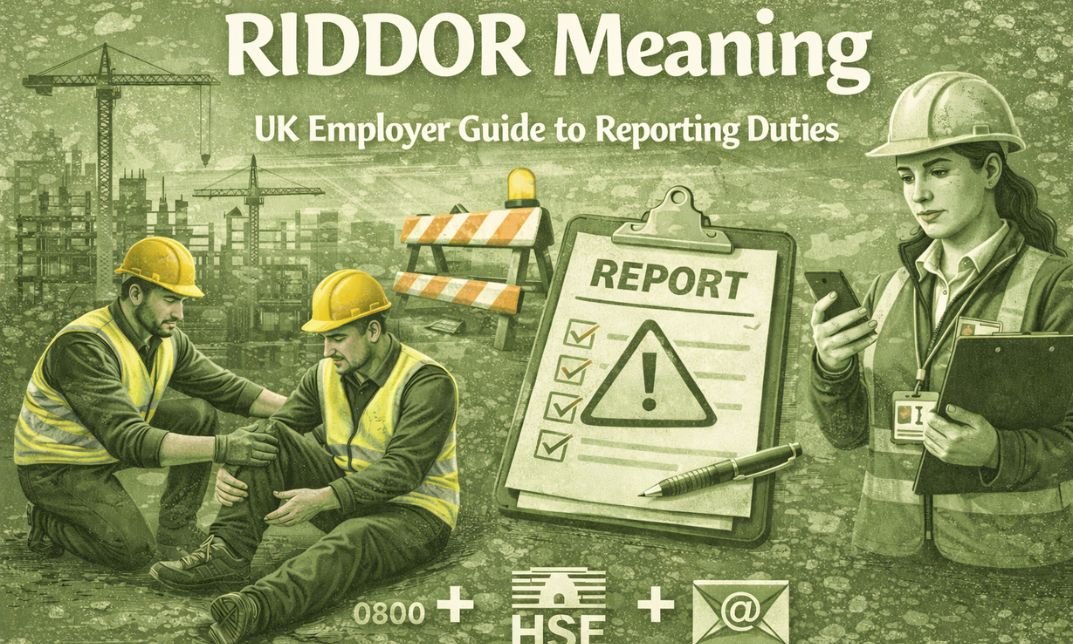
A workplace accident can happen in a second. It can hurt someone badly or even cause death. That’s why it is important to know what RIDDOR is. This law requires employers and managers to report serious injuries, illnesses, and dangerous work events. In simple words, RIDDOR’s meaning is keeping track of accidents to keep workers safe. So, what does RIDDOR do? It makes sure the authorities know about serious incidents and can take action to stop them from happening again.
In the UK, employers must report serious workplace accidents. For example, this includes deaths and major physical injuries, such as broken bones or limb loss. On top of that, it covers injuries that prevent someone from working for more than a week. Also, people must report work-related illnesses like asthma or skin problems. Moreover, dangerous events, gas leaks, or accidents that could cause serious harm are included under RIDDOR. That is why employers must report quickly and keep clear records. In short, knowing RIDDOR helps workplaces stay safe, prevent accidents, and comply with the law.
Now, let’s look closely at what is the definition of RIDDOR and what is RIDDOR reportable.
What is the Meaning of RIDDOR?
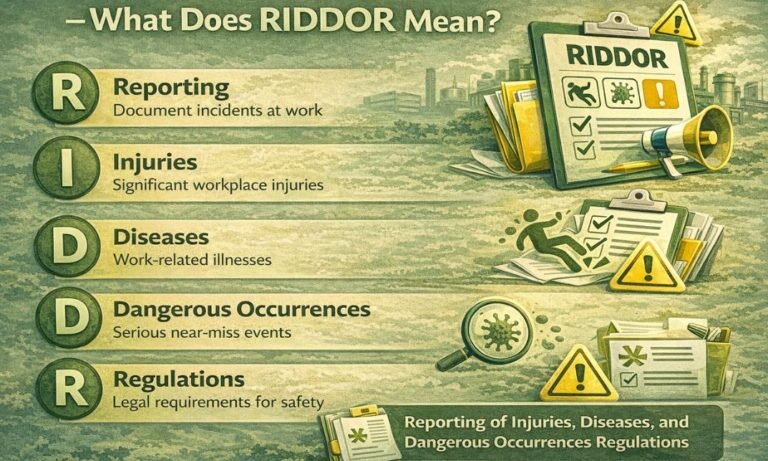
RIDDOR definition comes from UK law called the Reporting of Injuries, Diseases and Dangerous Occurrences Regulations. This law was last updated in 2013 to make workplace reporting clearer and easier to follow. It says that employers, self-employed people, and anyone in charge of a workplace must report serious accidents. In addition, they must report work-related illnesses and dangerous events. In simple terms, RIDDOR makes sure people report, record, and act on serious incidents at work. This helps stop the same accidents from happening again.
RIDDOR applies to almost every workplace in the UK. For example, offices, schools, hospitals, shops, and construction sites must follow these rules. It includes deaths and major injuries like broken bones or the loss of a limb. Besides that, it covers work-related illnesses such as asthma or skin problems, as well as dangerous events like gas leaks or broken machines. By reporting these incidents, workplaces become safer, risks are lower and employers follow the law. Overall, knowing RIDDOR is not just about rules. It also helps protect people and keep everyone safe at work.
Why RIDDOR Was Introduced
Why was RIDDOR created, and why is RIDDOR important? Let’s find out:
- Keep workers safe: RIDDOR was made to stop serious accidents and deaths at work.
- Spot risks quickly: By reporting incidents, authorities can find hazards before they cause more problems.
- Learn from mistakes: Each report shows what went wrong so workplaces can fix dangers and stay safer.
- Follow the law: Employers meet their legal duty and show they care about staff safety.
- Understand workplace problems: Thousands of accidents happen in UK workplaces each year. Reporting them shows where risks are highest.
- Raise safety awareness: Workers and employers become more careful and reduce future accidents.
- Improve safety rules: Reports help authorities make better safety guidance and stronger rules for everyone.
Who Must Report Under RIDDOR?
Under RIDDOR, a “responsible person “must report serious incidents at work. This means employers, self-employed people, and anyone who controls a workplace. Their job is to report big accidents, work-related illnesses, and dangerous events quickly. Also, employers responsibilities for RIDDOR include keeping clear records and following the law. Preventing the same accidents from happening is also part of their duty.
Not everyone should report incidents. For example, injured workers, visitors, or members of the public should tell the responsible person about the incident. Instead of sending a report themselves, they should let the responsible person handle it. This way, the report comes from the right person who knows the rules and has all the details. Because of this, workplaces stay safer, people handle incidents correctly, and everyone follows the law.
What is RIDDOR Reportable?
RIDDOR shows what does RIDDOR do. It makes sure people report serious accidents, injuries, and dangerous events at work. Here’sHere’sa clear guide with examples:
Work-related deaths
Any death caused by work must be reported straight away.
- Example: A construction worker falls from scaffolding and dies. This helps the authorities check what went wrong and stop it from happening again.
Specified injuries to workers
Serious injuries like broken bones, loss of a finger, loss of sight, or severe burns.
- Example: A factory worker loses a finger in a machine. Also, reporting helps improve safety rules.
Injuries causing over a 7-day absence
Any work injury that stops someone from doing their job for more than a week.
- Example: An office worker strains their back lifting boxes and cannot work for 8 days. Because of this, workplaces can spot risks early.
Injuries to non-workers
Accidents affecting visitors, volunteers, or the public that need hospital treatment.
- Example: A customer slips in a shop and breaks their arm. So, reporting protects everyone, not just workers.
Occupational diseases
Health issues that develop over time at work.
- Example: A hairdresser develops skin problems from the chemicals used daily. This means hazards can be managed better.
Dangerous occurrences (near misses)
Events that could have caused serious harm, even if no one is hurt.
- Example: A gas cylinder falls in a warehouse but no one is injured. Then, workplaces can fix hazards before someone gets hurt.
Gas-related incidents
Accidents with flammable gas that cause injury, fainting, or hospital treatment.
Example: A gas leak in a restaurant makes a worker faint and need hospital care. Thus, proper action prevents future accidents.
Understanding Work-Related Accidents and Incidents
A work-related accident is a sudden event that hurts someone, like a fall or a burn. At the same time, an incident could cause harm, even if no one gets hurt. An injury is the actual damage to the body. Under RIDDOR, accidents and incidents only count if they happen because of work. This means the job, the workplace, or work activities must cause them.
Not every accident must be reported. For example, a worker falling from scaffolding or a burn from chemicals must be reported. Similarly, you must report a gas leak that makes someone faint. But small cuts, slips with no injury, or accidents at home do not count. Gradual injuries, like back pain from lifting many times, do not need reporting straight away. However, you must record and report serious work-related illnesses, like hand-arm vibration syndrome. This way, RIDDOR helps workplaces focus on real risks and keeps workers safe.
How to Submit a RIDDOR Report
Make reporting incidents simple with these steps:
Report serious incidents straight away
- If someone dies, has a major injury, or a dangerous event happens, tell the authorities immediately.
- Acting fast keeps people safe and avoids legal trouble.
Choose the right way to report
- Online: Fill in the HSE RIDDOR form. It is quick, simple and saves a record.
- Phone: For serious injuries or deaths, call HSE or your local authority. Make sure they know right away.
Collect all the important details
- When and where: Write the date, time and place of the incident.
- Who got hurt: Note the name and contact details of the injured person.
- What happened: Explain clearly what the injury or accident was and how it happened.
- Why it matters: This helps prevent similar accidents in the future.
Keep proper workplace records
- Use an accident book or incident log for every event, big or small.
- Include near misses because they show risks before someone gets hurt.
- Good records make reporting easier and show you care about safety.
Check and follow up
- Make sure your report reaches HSE or the local authority.
- Keep a copy for your own records.
- Look at past incidents to find patterns and stop them from happening again.
Simple tips for smooth reporting
- Check all information before sending. Mistakes can slow things down or cause fines.
- Teach your staff what incidents must be reported.
- Review reports regularly to make the workplace safer.
Employer Responsibilities Under RIDDOR
Employers must report serious incidents and keep proper records. For example, this includes deaths, major injuries, dangerous events, and work-related illnesses. To do this properly, keep an accident book or digital record for every incident. Clear records help spot risks and make reporting easier. If employers do not report, they can get fines, legal action, or even jail. For instance, hiding a serious injury can lead to prosecution from the HSE.
Employers also need to stop accidents from happening again. First, check the workplace for risks and make sure staff follow safety rules. Next, give proper training so everyone knows what to do. Then, look at past incidents to find patterns and prevent the same injuries. Taking these steps keeps staff safe, reduces costs from accidents, and shows the company cares about safety. In short, correct RIDDOR reporting helps prevent accidents and stops trouble.
Benefits of RIDDOR Reporting
The main reasons to report incidents under RIDDOR:
- Stop Accidents Early: Reporting incidents quickly helps spot hidden dangers. This helps employers act fast and prevent the same accidents from happening again.
- Use Reports to Improve Safety: Every RIDDOR report gives useful information about workplace risks. Using this information helps companies and authorities make rules better and the workplace safer.
- Help Staff Be Careful: Sharing incident reports shows workers what risks exist. Because of this, staff follow safety rules more carefully and avoid accidents.
- Work Together for Safety: RIDDOR brings employers, staff, and authorities together. By talking about problems and solutions, everyone can make the workplace safer.
- Show You Care, Not Just Follow the Law: Reporting incidents properly is more than a legal duty. It also shows the company cares about safety and takes real steps to protect its people.
Final Thoughts on RIDDOR
So, what is RIDDOR? It is the law that makes employers report deaths, serious injuries, dangerous events, and work-related illnesses. Also, many people do not realise that it covers near misses, where no one gets hurt but an accident almost happens. By reporting these events, employers can stop accidents before they happen and find hidden risks. This way, the workplace becomes safer for everyone.
Employers and responsible people must always follow the rules. For example, keeping clear records is not just paperwork. It protects the company and shows that it follows safety rules if a legal problem comes up. Also, learning from past incidents stops the same accidents from happening again. For that reason, reporting properly keeps staff safe, avoids fines, and builds trust. At the end of the day, following RIDDOR protects people, improves safety, and creates a responsible workplace.
FAQs About What is RIDDOR
1. What 5 things must be reported to RIDDOR?
- Deaths, major injuries, dangerous occurrences, work-related illnesses, and over-7-day injuries must all be reported.
2. What is the RIDDOR reporting procedure?
- Tell HSE online or by phone, include date, place, the injured person’s info, and what happened. Keep a record for your workplace.
3. Is RIDDOR part of the Health and Safety Act?
- Yes. RIDDOR is a law under UK health and safety rules that ensures workplace incidents are reported.
4. What does RIDDOR mean?
- RIDDOR means Reporting of Injuries, Diseases and Dangerous Occurrences Regulations. It shows employers what they need to report.
5. What are the five major safety regulations?
- Workplace safety rules cover: risk assessment, accident reporting, fire safety, hazardous substances, and equipment safety.
6. What are the 3 C’sC’sof safety?
- Check, Care, and Communicate. Check risks, care for yourself and others, and communicate hazards clearly.
7. What are 10 basic safety rules?
- Wear PPE, report hazards, follow signs, keep exits clear, use tools properly, avoid shortcuts, lift safely, stay alert, keep clean, and follow procedures.

RIDDOR Training
Course Description :
- Certificate: Yes(Free)
- Accreditation: CPD Accredited
- Access: Lifetime