No products in the cart.
Understanding what the definition of RIDDOR is is essential for every UK employer.RIDDOR is not just paperwork. It is a legal duty to report serious accidents at work. Many employers do not know when an accident must be reported. As a result, they may think writing it in the accident book is enough. Employers must report certain incidents to the HSE or local authority. Failing to do this can lead to fines, investigations, or court action.
This guide explains the definition of RIDDOR in clear, simple English. As a result, you can clearly understand your legal responsibilities.
What Is the Definition of RIDDOR Under UK Law?
Under UK law, RIDDOR stands for the Reporting of Injuries, Diseases and Dangerous Occurrences Regulations. The current version is RIDDOR 2013. It is a legal requirement that says employers, self‑employed people, and those in control of work premises must report certain serious workplace incidents to the Health and Safety Executive (HSE) or the local authority.
In simple terms, RIDDOR is the law that requires you to report:
- Work-related deaths
- Serious injuries
- Certain diagnosed diseases
- Dangerous near-miss events
Its purpose is to help the HSE investigate risks, improve workplace safety, and prevent similar accidents from happening again. Failure to comply with RIDDOR is a criminal offence.
What Does RIDDOR Actually Stand For?
The full name explains its purpose clearly:
- Reporting – Certain incidents must be formally reported.
- Injuries – Serious work-related injuries must be reported.
- Diseases – Some diagnosed occupational illnesses must be reported.
- Dangerous Occurrences – Specific near-miss events, such as major equipment failures or gas explosions, must also be reported.
- Regulations – These are legal rules that businesses must follow.
The law is currently known as RIDDOR 2013. It replaced earlier regulations. Furthermore, it clearly sets out what must be reported, who is responsible, and the reporting deadlines. Under RIDDOR, employers, self-employed people and those in control of work premises must report certain incidents to the Health and Safety Executive (HSE) or, in some cases, the local authority.
In simple terms, RIDDOR is the UK law that requires businesses to report serious workplace injuries, diseases, and dangerous incidents. This helps authorities monitor risks and prevent future accidents.
What Is the Purpose of RIDDOR?
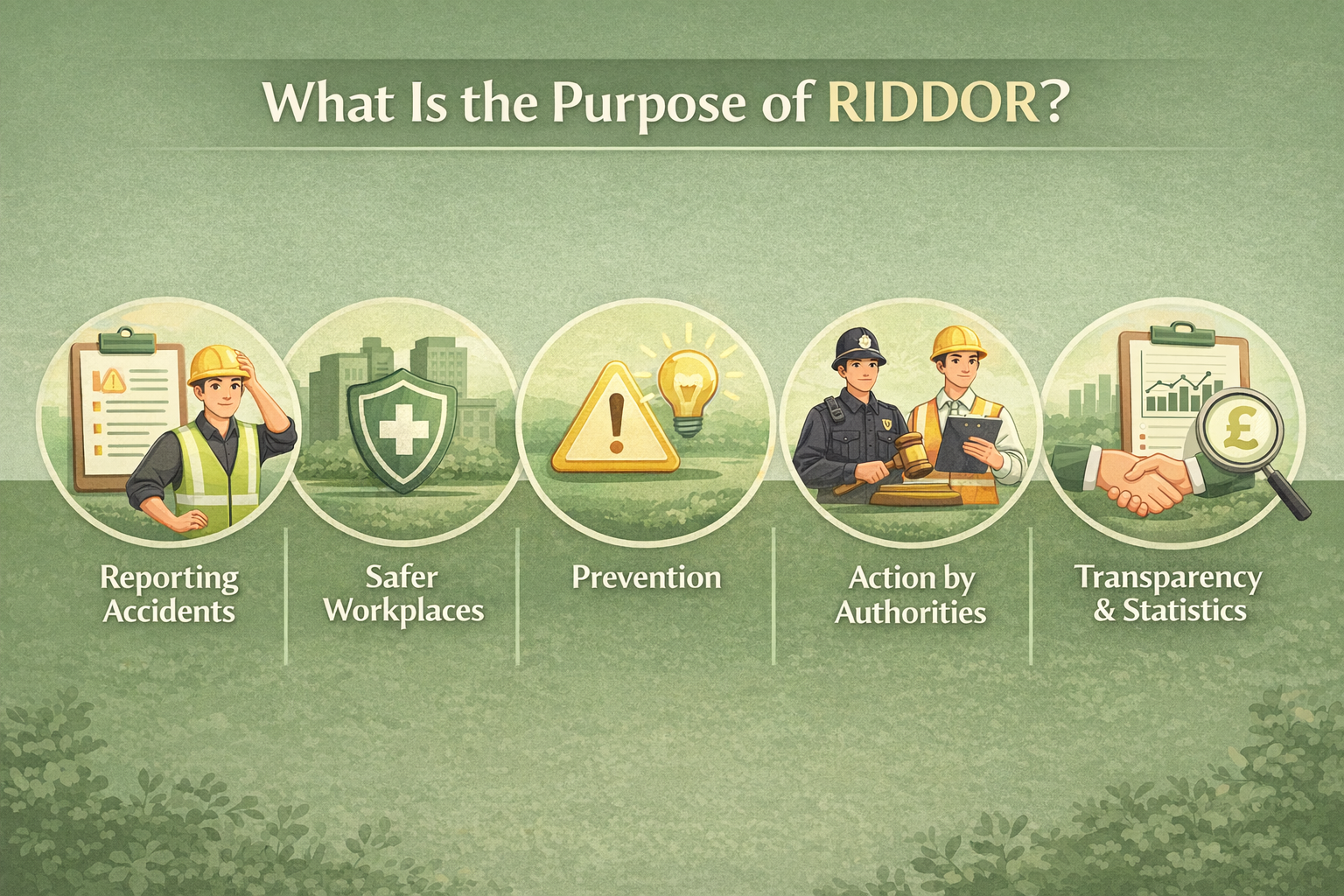
- Reporting Accidents – RIDDOR makes sure serious injuries, illnesses, and dangerous events are reported. First, this stops accidents from being hidden.
- Safer Workplaces – Reporting incidents helps workplaces stay safe. Next, authorities can check rules and investigate if needed.
- Prevention – Reports show patterns in accidents. For example, many similar accidents in one industry can show a bigger safety problem.
- Action by Authorities – The HSE can give guidance, inspect workplaces, or take action. Also, they can warn other businesses.
- Accountability – Employers and managers must take responsibility for safety. In addition, businesses are encouraged to improve training and fix hazards.
- Transparency and Statistics – Reports create accurate national data on injuries. Finally, this helps improve safety rules and protect workers.
Who Enforces RIDDOR?
- Health and Safety Executive (HSE) – Main regulator for most industries. For example, construction, manufacturing, agriculture, and engineering.
- Local Authorities – Enforce RIDDOR in retail, hospitality, catering, offices, leisure, and other consumer services. Also, they make sure these workplaces follow the rules.
- Inspectors – HSE and local authority inspectors can check reported accidents. They can visit workplaces, request documents, and ask questions.
- Enforcement Powers – Inspectors can give improvement notices, prohibition notices, fines, or even prosecute businesses. Because the law must be followed, these powers are strong.
- Shared Responsibility – In some cases, enforcement depends on the type of business. In addition, both HSE and local authorities may share responsibility.
- Importance – Following RIDDOR keeps workers safe. Finally, it helps businesses avoid legal trouble. Therefore, employers must understand who enforces the rules.
Why is RIDDOR Important?
RIDDOR is important because it helps keep people safe at work. Therefore, when serious incidents are reported, the Health and Safety Executive (HSE) and local authorities can identify failures and risks. This system helps stop similar accidents from happening again. It also helps the government track safety trends across the UK and improve workplace laws where necessary.
Furthermore, for employers, following RIDDOR reduces the risk of fines, legal action, and reputational damage. For workers and the public, it supports safer workplaces and higher safety standards nationwide.
Key RIDDOR Updates Timeline
1995 – The first RIDDOR rules were introduced. At first, they helped standardise how serious accidents at work were reported across the UK.
2013 – RIDDOR 2013 started. This time, the rules were simpler. They clearly explained which injuries, illnesses, and dangerous events must be reported.
Ongoing – The HSE keeps improving online reporting. Now, employers can submit reports faster and more easily. Also, the digital system helps reduce mistakes. In addition, it makes tracking accidents simpler.
Finally, these updates help workplaces stay safer. Because the rules are clearer and reporting is easier, more employers follow the law.
What Incidents Must Be Reported Under RIDDOR?
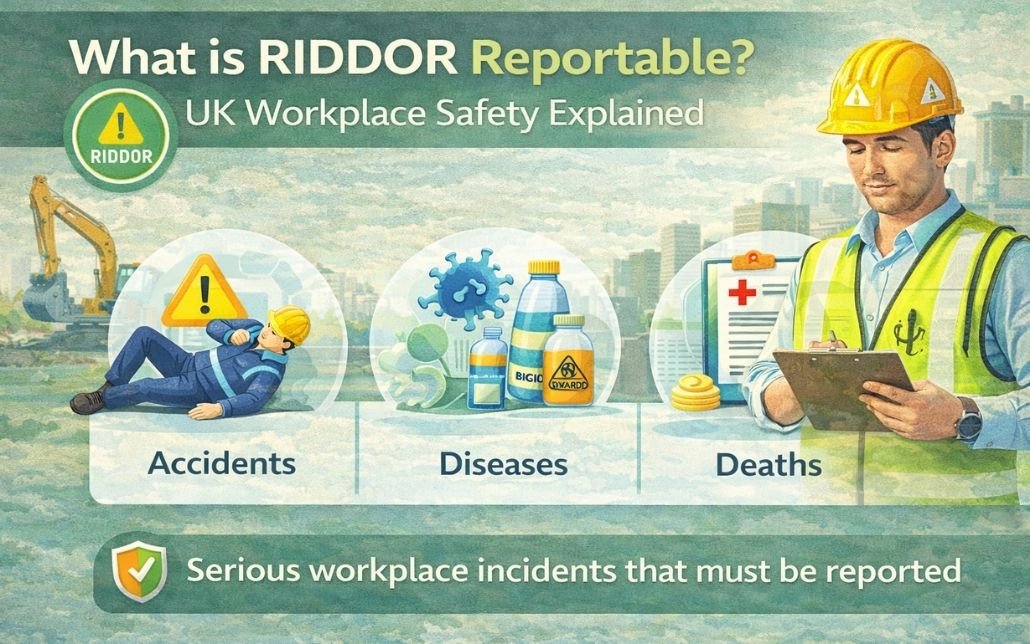
Not all workplace accidents require reporting. However, serious work-related incidents must be reported to the HSE under RIDDOR.
Here are the main types of reportable incidents:
1. Work-Related Deaths
Any death resulting from work activities or workplace conditions must be reported. This includes employees, self-employed workers, and members of the public.
2. Specified (Serious) Injuries
These are serious injuries specified by law, including:
- Fractures (except fingers and toes)
- Amputations
- Serious burns (over 10% of the body)
- Permanent loss of sight
- Crush injuries damage internal organs
- Serious head or brain injuries
3. Over-7-Day Injuries
Additionally, if a worker cannot perform their normal duties for more than seven consecutive days, employers must report it within 15 days.
4. Occupational Diseases
Furthermore, some diagnosed illnesses linked to work must also be reported, including:
- Occupational asthma
- Carpal tunnel syndrome
- Hand-arm vibration syndrome (HAVS)
- Occupational dermatitis
A doctor must confirm the condition.
5. Dangerous Occurrences
Moreover, these are serious near-miss events that could have caused harm, such as:
- Scaffolding collapse
- Gas leaks or explosions
- Lifting equipment failure
- Major electrical faults
In simple terms, if a work-related incident is serious, causes long-term harm, or could have caused major danger, it likely needs to be reported under RIDDOR.
What Are Dangerous Occurrences?
Dangerous occurrences are serious “near-miss” events that could have caused major harm. An injury is not required for an incident to be reportable under RIDDOR. Therefore, these events must still be reported to the Health and Safety Executive because they indicate a serious failure occurred.
Examples include:
- Scaffolding collapse
- Gas leaks or explosions
- Failure of lifting equipment (such as cranes)
- Major electrical system failures
Reporting these incidents helps prevent future accidents.
What Does NOT Need Reporting?
Not every workplace issue needs a RIDDOR report. However, the following usually do not require reporting:
- Minor cuts and bruises
- Injuries unrelated to work activities (for example, a worker trips over their own shoelaces in the car park)
- Self-certified sickness
- Non-work-related illnesses, such as the flu
This ensures the HSE focuses only on serious and significant incidents.
In Simple Terms, What Is the Definition of RIDDOR for Employers?
RIDDOR is the law that says employers must report serious accidents at work to the HSE or local authority. For example, if a worker is badly injured, develops a work-related illness, or a dangerous near-miss happens, it must be reported. Deaths at work or injuries that stop someone from working for several days also count.
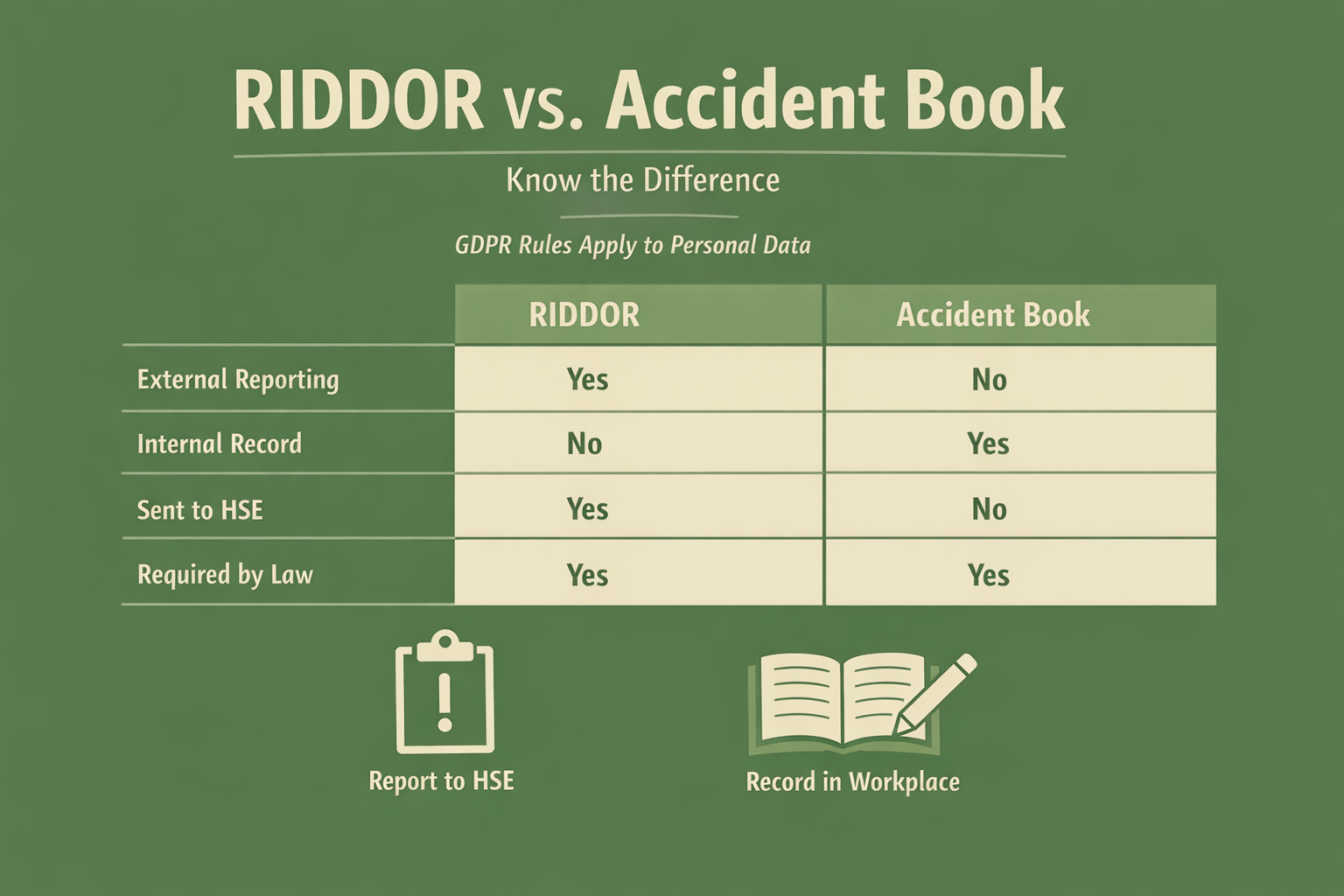
Also, writing the accident in your accident book is not enough. That is only for internal records. A RIDDOR report is a formal notice sent to the HSE. It can be done online or by post, depending on the type of accident. Because the law wants workplaces to be safe, reporting helps authorities check what went wrong. They may review equipment, training, and safety rules to stop future accidents.
In addition, reporting serious incidents shows that your company cares about safety. It also protects the business from fines, legal trouble, or a bad reputation. Finally, RIDDOR helps control risks and protect workers. Following the rules keeps your workplace safe and ensures your company meets the law.
Who Is Responsible for Reporting a RIDDOR Incident?
The person responsible for reporting a RIDDOR incident is usually the employer. If you run a business and control the workplace, it is your legal duty to tell the HSE or the local authority about serious accidents. Also, other people may need to report incidents:
- Self-employed people must report if they get injured while working for themselves.
- Person in charge of the workplace, like a site manager or landlord in some situations, must report accidents. In addition, they need to make sure safety rules are followed.
- Contractors must report incidents that involve their own workers. Furthermore, they should inform the employer if the accident happens on someone else’s site.
Because the law wants workplaces to be safe, the person who controls the work or place usually has the duty to report. Therefore, it is important to know who must act. Finally, reporting accidents helps protect workers and the business.
How Do You Report a RIDDOR Incident?
Under RIDDOR, employers must tell the HSE about accidents at work. They must also report serious injuries, illnesses, or dangerous events.
How to Submit a Report
- Online (most cases):
Employers submit reports through the HSE website using the appropriate RIDDOR online form. - Telephone (only in specific cases):
Employers reserve phone reporting for:- Fatalities
- Specified (major) injuries
Reporting Deadlines
- Death: Report immediately
- Specified injury: Within 10 days
- Over-7-day injury: Within 15 days
Important Record-Keeping
- Always keep the confirmation email or reference number.
- Maintain internal accident records as required by law.
- Ensure details are accurate and factual before submission.
What Happens If You Don’t Comply with RIDDOR?
RIDDOR is a law. It says bosses must tell the government (HSE) if a serious accident happens at work. If they hide it or forget, they break the law. This can cause big problems and even risk workers’ safety.
1. Going to Court and Paying Fines
If a company does not report an accident, it can go to court. The judge can give unlimited fines. This means the company could pay millions of pounds. Also, managers or directors could get a criminal record. In addition, the court may order them to fix safety problems quickly.
2. The HSE Will Watch You Closely
The HSE is like the police for work safety. First, they will investigate the accident. Then, they will check everything else. Because the company tried to hide something, they will look at all equipment, training, and rules. They may also interview staff to make sure everyone is safe.
3. Losing a Good Reputation
News spreads fast. If a company breaks RIDDOR, people may stop trusting them. Customers may avoid them, and other businesses may not hire them for future work. This can make it very hard to grow the company.
4. Paying More for Insurance
Companies need insurance, like car insurance. If they have accidents or break the law, their insurance costs go up. This can make running the business much more expensive.
In short, not following RIDDOR can lead to fines, trouble with the HSE, a bad reputation, and higher costs. Therefore, it is very important to report accidents properly and protect everyone at work.
Why Is Reporting So Important?
You might think, “Why not just hide the accident so nobody gets in trouble?”
- It proves you care: Reporting shows that the company is honest and wants to fix the problem so it doesn’t happen again.
- It prevents future accidents: If the HSE knows about an accident, they can help warn other companies so the same thing doesn’t happen to someone else.
- Hiding it makes it worse: If you don’t report it, it looks like the company has “poor safety management” (which means they are bad at keeping people safe). This gets the company in much more trouble than the accident itself would have.
What Is the Difference Between RIDDOR and the Accident Book?
Although both are legal requirements, they serve different purposes. You likely need both for full compliance. Remember: GDPR rules apply when storing personal data in either format.
Common RIDDOR Mistakes Employers Make
RIDDOR reporting is a legal duty to tell the HSE about serious accidents at work. Also, it helps keep workplace incidents safe.
- Confusing accident book entries with RIDDOR reporting.
- Missing the 10- or 15-day reporting deadlines.
- Assuming contractors will report incidents automatically without checking.
- Failing to keep investigation evidence, such as photos or CCTV footage.
Not reviewing safety procedures after an incident.
Avoiding these mistakes ensures legal compliance, reduces enforcement risks, and protects your organisation from financial and reputational damage.
Final Thoughts
RIDDOR is not just a reporting formality. The law places a legal duty on employers. They must record and investigate serious workplace incidents. Where required, they must report them to the Health and Safety Executive. Understanding what must be reported, meeting deadlines, keeping accurate records, and reviewing procedures after an incident are all essential parts of effective health and safety management.
Good compliance is not about avoiding penalties. It is about protecting people, strengthening safety culture, and safeguarding your organisation from unnecessary legal, financial, and reputational risk. Staying informed and proactive makes RIDDOR compliance straightforward and manageable for any business.
Frequently Asked Questions (FAQs)
1. What defines a RIDDOR?
- RIDDOR makes employers report serious accidents at work. Also, they must tell the HSE when these happen.
2. What 5 things must be reported to RIDDOR?
- Deaths, specified injuries, over-7-day injuries, occupational diseases, and dangerous occurrences must be reported.
3. What is the correct definition of a three day injury as defined by RIDDOR?
- It occurs when a worker cannot perform their normal duties for more than three consecutive days after an accident.
4. How does RIDDOR define a reportable injury?
- It is a work-related injury that meets specific legal reporting criteria.
5. Who is responsible for making a RIDDOR report?
- The employer or responsible person in control of the premises must report it.
6. Is a broken finger a RIDDOR?
- A broken finger is only reportable if it results in more than seven days off work.
7. What are the 8 types of reportable incidents?
- They include deaths, serious injuries, over 7-day injuries, diseases, dangerous occurrences, gas incidents, non-worker injuries, and exposure incidents.
8. What are the four types of incidents?
- The four types are injuries, ill health, dangerous occurrences, and damage incidents.