No products in the cart.
Do you know how the UK keeps its millions of workers safe from harm every day? The answer lies in a special rule called RIDDOR. But what is the real story behind this name? What is the meaning of RIDDOR in our daily lives? Simply put, it is the law that makes bosses report serious workplace accidents and illnesses. Currently, over 600,000 workers get hurt at work each year in the UK. This high number is a major problem that leads to lost time and pain. Therefore, using RIDDOR acts as the perfect solution to track these dangers and stop them.
Additionally, following these guidelines guarantees that each “near miss” and injury teaches us something. Every report provides the government with specific recommendations on how to improve working conditions for all. This blog covers the history of the law, the reporting process, and employer duties.
So, let us dive in and explore the meaning of RIDDOR and why it is so important.
What Exactly is RIDDOR?
First, we need to look at the basics of this topic. RIDDOR is a very special safety law in the UK. But what is a RIDDOR exactly when we look closer? Think of it as a huge rulebook for every employee. This rulebook tells them what to do when something goes wrong.
This law did not just appear out of thin air. It started to help protect workers from accidents. Before this law, managers did not always report when people got hurt. This made it hard to fix dangerous problems in factories or offices. Consequently, the government made these rules to ensure everyone stays honest.
Breaking Down the Letters: R-I-D-D-O-R
Now, let us break the word apart. We can see the true meaning of riddor this way. Each letter stands for a different part of the safety law.
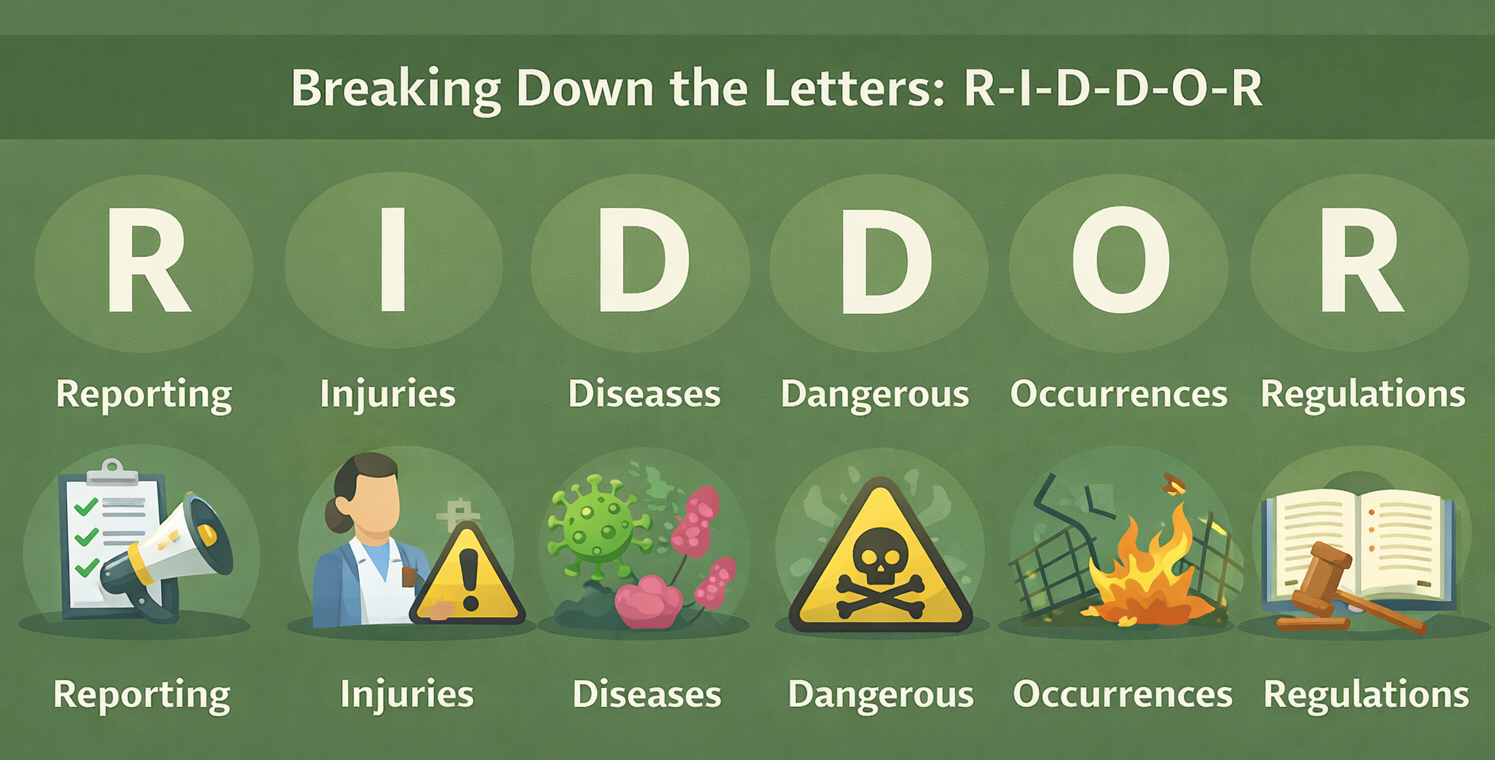
- Reporting: Telling the right people about an accident quickly.
- Injuries: This happens when someone gets hurt while working.
- Diseases: Sometimes, a job can make a person feel very sick.
- Dangerous: This refers to things that are very risky or scary.
- Occurrences: These are events that happen at a workplace.
- Regulations: These are the official rules for everyone to follow.
When you put it all together, you get a giant tracking system. It tracks every bad thing that happens at work. If you ask what does RIDDOR mean, it means tracking danger. This helps the government keep everyone safe from harm.
Why the Law Changed?
To truly understand the meaning of RIDDOR, we have to look at how much the UK has changed. Before these regulations were introduced in 1995, many workplace injuries were invisible because there was no central way to track them. If a worker was hurt in a small northern town, a factory in the south might make the same mistake a week later because the information wasn’t shared.
Today, the meaning of RIDDOR is centred on shared knowledge. By turning every accident into a digital report, the government can see national patterns. If a specific type of ladder starts failing across the country, RIDDOR data allows safety experts to identify the trend and issue a nationwide warning. It transforms a private mistake into a public lesson that saves lives.
Why is RIDDOR Meaningful for Everyone?
Some people ask why we need so many rules. They think safety is just common sense. However, why is RIDDOR important for a normal office or a farm?
Safety Fact: Without records, we cannot learn from our mistakes. RIDDOR acts as a memory for the whole country.
The main reason is to stop accidents from repeating. If a boss reports a trip, they can fix the floor. Then, no one else will fall in that same position. Also, it helps the government see the big picture. They can see if builders get hurt more than farmers. This data helps them create better laws for the future.
Finally, it gives workers a very strong safety net. It ensures that their bosses take health seriously. Without RIDDOR, some bosses might ignore dangerous, broken tools. We need these rules to hold people accountable for safety.
What Kind of Things Get Reported?
Not every tiny scratch needs a big report. So, what is RIDDOR reportable in a normal day? The law focuses on serious things that change lives.
The “Big Three” Report Types:
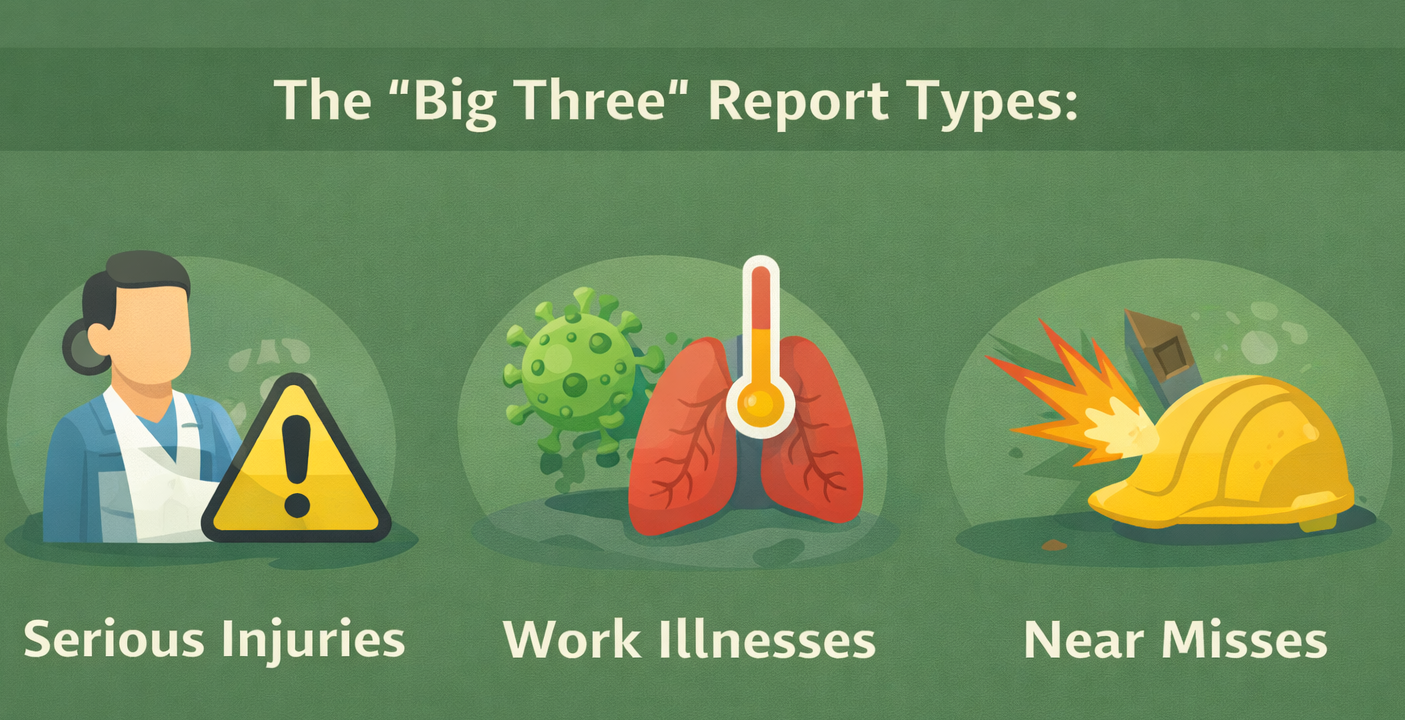
- Serious Injuries: This includes broken bones or loss of sight. If someone goes to the hospital, the HSE needs to know.
- Work Illnesses: This might include breathing problems from dusty air. It could also mean skin rashes from strong chemicals used at work.
- Near Misses: These are dangerous events where no one got hurt yet. For example, a big crane might fall over suddenly in a field.
Even if the crane missed everyone, it was still very scary. The law calls these dangerous occurrences. We report them so we can prevent a real tragedy later on.
Who is the “Reporter” at Work?
In every workplace, someone must do the paperwork. We call this person the Responsible Person. Usually, this is the boss or a top manager. They have many employers responsibilities for RIDDOR to handle every week.
Regular workers do not usually send the official reports themselves. However, they still play a very big role in the process. They must tell their boss about an accident immediately. If a worker stays silent, the boss cannot fix the danger.
Therefore, helping your boss stay safe is a team effort. Everyone works together to make the workplace better. Even a young person can help by spotting a trip hazard. If you see something dangerous, always tell a grown-up right away.
How Does the Reporting Process Work?
Reporting an accident follows a few simple steps. It is like a checklist for the boss to follow.
- The Event: An accident or a dangerous near miss happens at work.
- The Care: Everyone must focus on first aid right away. Helping the person is the most important part.
- The Record: The boss writes the details in the company accident book.
- The Report: The boss fills out a form on the HSE website.
- The Fix: The company changes the rules to stop it from happening again.
This helps them look back and learn from their past mistakes. By following these steps, the company stays lawful and kind. It shows they care about their staff members and their families.
What Happens if Someone Breaks the Rules?
Following the law is not optional for companies in the UK. The HSE Inspectors act like the safety police for everyone. If a boss hides an accident, they face big trouble.
- Large Fines: The government can charge the company a lot of money.
- Court Dates: A boss might have to talk to a judge.
- Jail Time: In very bad cases, someone might go to prison.
- Closures: The safety police might shut the business down.
Being honest is always the best path to take for a boss. Most managers want to do the right thing for their team. They want their workers to feel safe and happy every day. Honesty helps build trust in the whole company and the community.
RIDDOR in Different Places
These rules apply almost everywhere you can imagine. Every job has different risks that people must manage.
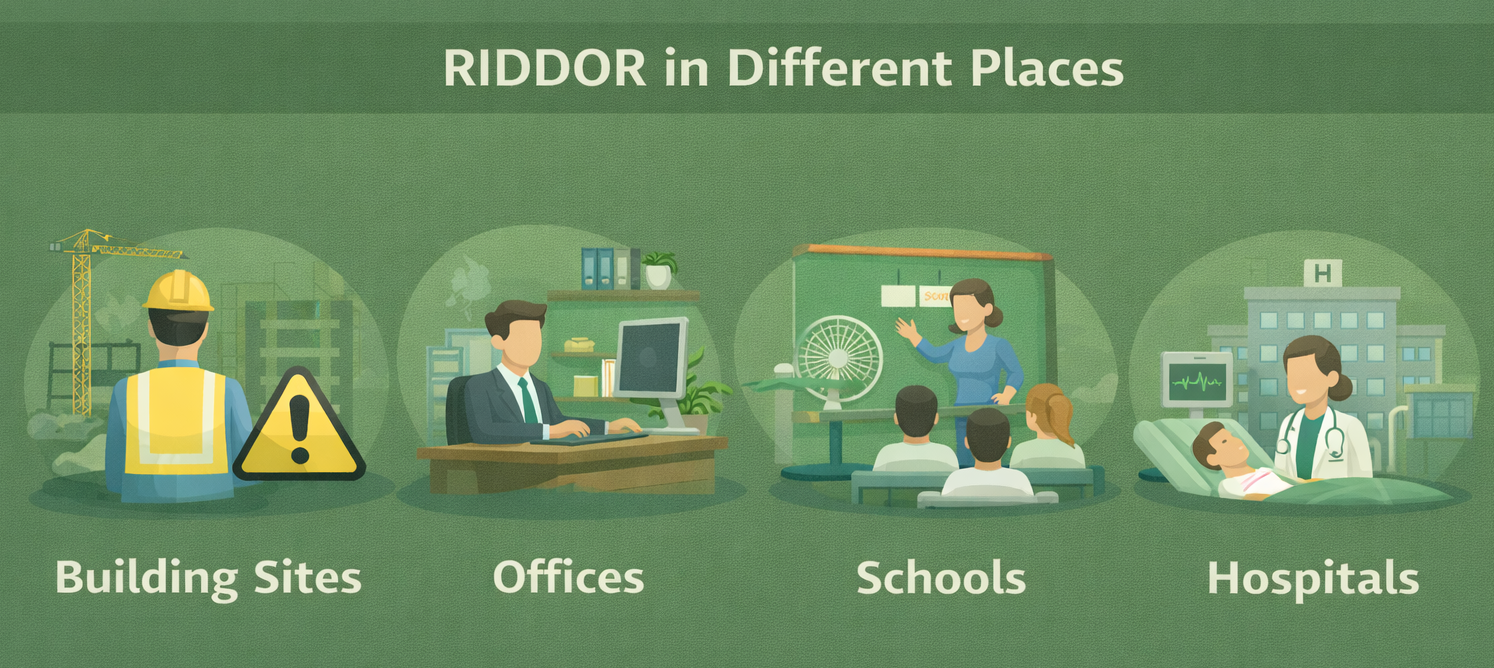
- Building Sites: Workers wear hard hats and heavy boots. They report falling bricks or shaky ladders to the boss.
- Offices: People might trip over a loose computer wire. Bosses report these trips if the person gets badly hurt.
- Schools: These rules still exist for the teachers and the staff. The school must protect the janitors from strong cleaning chemicals.
- Hospitals: Nurses and doctors must stay safe from germs and sharp tools.
The janitor needs to be safe from slippery floors. The PE teacher needs to be safe on the wet grass. No matter the job, safety is always the number one priority.
Fun Facts About Workplace Safety
Work used to be much more dangerous a long time ago. About 100 years ago, many people got hurt every day. Children even had to work in dirty factories back then.
- Did you know? Workplaces are now 10 times safer than in the 1970s.
- Myth Alert: You do not have to report a tiny paper cut.
- Fact: The HSE website gets thousands of reports every year.
Today, laws like RIDDOR make our lives much better than before. We are much safer than our great-grandparents ever were. Some people think safety rules are just boring paperwork. But these rules save thousands of lives every single year. We are very lucky to have these protections today.
What is the Meaning of RIDDOR in Practice?
When people search for what is the meaning of RIDDOR, they are usually looking for more than just a dictionary definition. In a practical sense, the meaning of these regulations is responsibility. It transforms a workplace from a fingers-crossed environment into a transparent system where safety is documented.
The Real-World Impact
Without the legal meaning of RIDDOR, a recurring trip hazard in a warehouse might be ignored for years. Because the law exists, that hazard becomes a data point. When that data point is reported:
- Patterns emerge: The government can see if a specific type of machinery is failing across the whole country.
- Prevention begins: Safety alerts are sent out to other businesses to warn them before someone else gets hurt.
- Justice is served: It ensures that if a company is being reckless, there is a paper trail that can be used to protect workers’ rights.
Final Thoughts on RIDDOR Reporting
We have learned that safety is not just a list of boring rules. So, what is the meaning of RIDDOR for the average person? It is a way to make sure every worker goes home happy. By reporting accidents, we turn scary mistakes into helpful lessons for the future.
Bosses must take their duties seriously to keep their teams healthy and strong. Workers must also speak up if they see a dangerous, broken tool. Therefore, we all play a big part in the UK safety system together. When everyone follows the rules, the whole workplace becomes a much better place.
Frequently Asked Questions (FAQs)
1. What 5 things must be reported to RIDDOR?
- You must report deaths, big injuries, diseases, gas incidents, and dangerous near misses
2. What is the main purpose of RIDDOR?
- It helps the government track work accidents to stop them from happening again.
3. What are the 7 categories of RIDDOR?
- These include deaths, specified injuries, over-seven-day injuries, diseases, and dangerous near misses.
4. What is the RIDDOR 3 day rule?
- You must record any accident that stops a worker for three full days.
5. Who is responsible for RIDDOR reporting?
- The employer or the person in charge of the workplace must send reports.
6. What are the 7 steps of accident investigation?
- Gather facts, check the scene, talk to witnesses, and find ways to fix.
7. Is a broken finger a RIDDOR?
- Yes, any broken bone except for toes and fingers is a big report.
8. How do you prove it’s not your fault?
- Keep clear records, show training logs, and follow all safety signs at work.
9. What are the 8 types of reportable incidents?
- These are deaths, major injuries, diseases, gas issues, and four types of misses.