No products in the cart.
What does ‘RIDDOR stand for’ – and why should every UK employer care?
It stands for Reporting of Injuries, Diseases and Dangerous Occurrences Regulations. These rules exist to protect workers in every UK workplace. Employers must know how to handle and report serious incidents to stay legally compliant. Besides, you have a clear duty to report certain accidents and health risks to the proper authorities. In turn, these reports help the government monitor safety standards across the country and prevent future harm.
Managers and HR staff need to know the law perfectly. Also, self-employed people must follow these reporting rules when working. Correct reporting ensures that your business stays compliant with UK law. Safety records help inspectors decide which industries need more help. Consequently, your data protects other workers from the same accidents. Understanding the RIDDOR meaning helps you build a better workplace.
At a Glance: Key RIDDOR Facts for Employers
- Definition: RIDDOR stand for Reporting of Injuries, Diseases and Dangerous Occurrences Regulations.
- Who Must Report: Employers, managers, and self-employed people must follow it.
- What to Report: Deaths, serious injuries, and dangerous near-miss events.
- Deadlines: You must report most incidents within ten days.
- Method: Most people use the online HSE reporting portal.
What Does RIDDOR Stand For in UK Law?
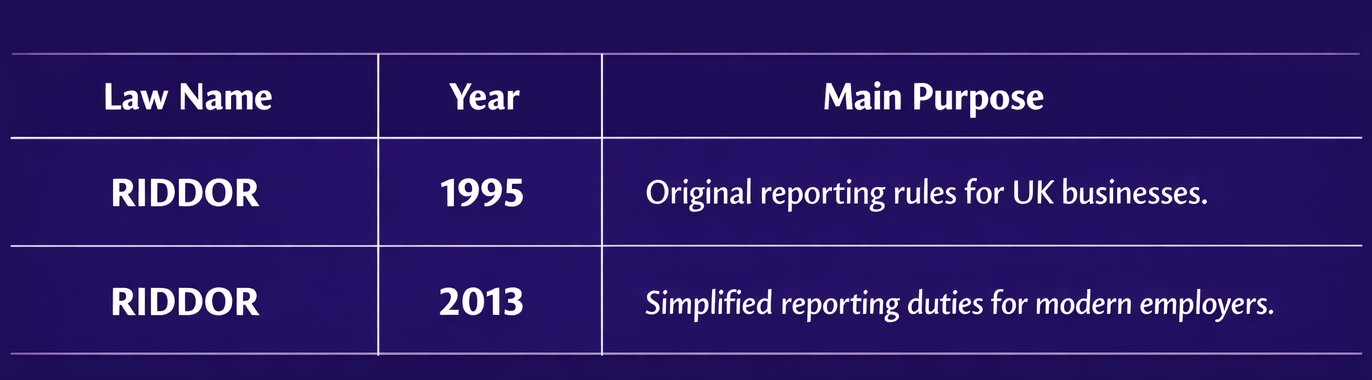
The term ‘RIDDOR’ stands for Reporting of Injuries, Diseases and Dangerous Occurrences Regulations. This is the main RIDDOR UK law for work safety. Specifically, it tells you which incidents you must report to officials. The government first created these rules to collect better safety data. Over time, the laws changed to reflect modern workplace environments.
The government introduced the RIDDOR regulations 2013 to streamline the process. These rules link directly to the Health and Safety Act 1974. Inspectors use this information to stop future deaths and injuries. Furthermore, you can find the official guidance on the HSE website. This data helps the government create new safety campaigns every year.
Local authorities also help enforce these rules in smaller businesses. For example, they might check shops, offices, or leisure centres. In contrast, the HSE focuses on factories and building sites. Both organisations work together to keep the UK workforce healthy. Consequently, you must know which authority monitors your specific industry. Following these rules shows that you take your legal duties seriously.
What Does RIDDOR Stand For and Why Is It Important for Employers?
You might wonder why you need to know what RIDDOR stands for today. Reporting accidents is a legal requirement, not a simple suggestion. Firstly, these reports help you learn from mistakes in your workplace. If you know how an accident happened, you can stop it. This protects your employees and keeps your team very happy.
Secondly, following the law protects your business from expensive legal fines. Insurance companies often look for these reports during a claim. Thus, being honest and quick helps your business reputation stay strong. What happens if you decide to ignore these reporting rules? You might face a visit from a health and safety inspector. They can issue notices that stop your work immediately.
Sometimes, the court might even decide to prosecute the business owners. Additionally, the data helps the whole country improve safety standards. Your report contributes to a bigger picture of UK workplace health. This information guides new safety laws that keep everyone safe. Furthermore, good records help you defend against unfair civil claims.
Meeting your RIDDOR reporting obligations keeps your business safe and successful. You should train your managers to spot reportable events quickly. Consequently, your company will avoid the stress of legal battles. People feel safer when they know you follow the law. This creates a positive culture where workers feel truly valued.
What Incidents Must Be Reported Under RIDDOR?
Not every small scratch needs a formal report to the government. However, you must know which specific events trigger your legal duties. This section explains the different categories of incidents you must record.
1. Reportable Injuries Under RIDDOR
A reportable injury is usually something that is quite serious. For instance, any accident that results in a death is reportable. Additionally, any injury that stops a worker from working counts. You must report incidents that happen because of the work itself. This includes accidents involving machinery or the building’s condition.
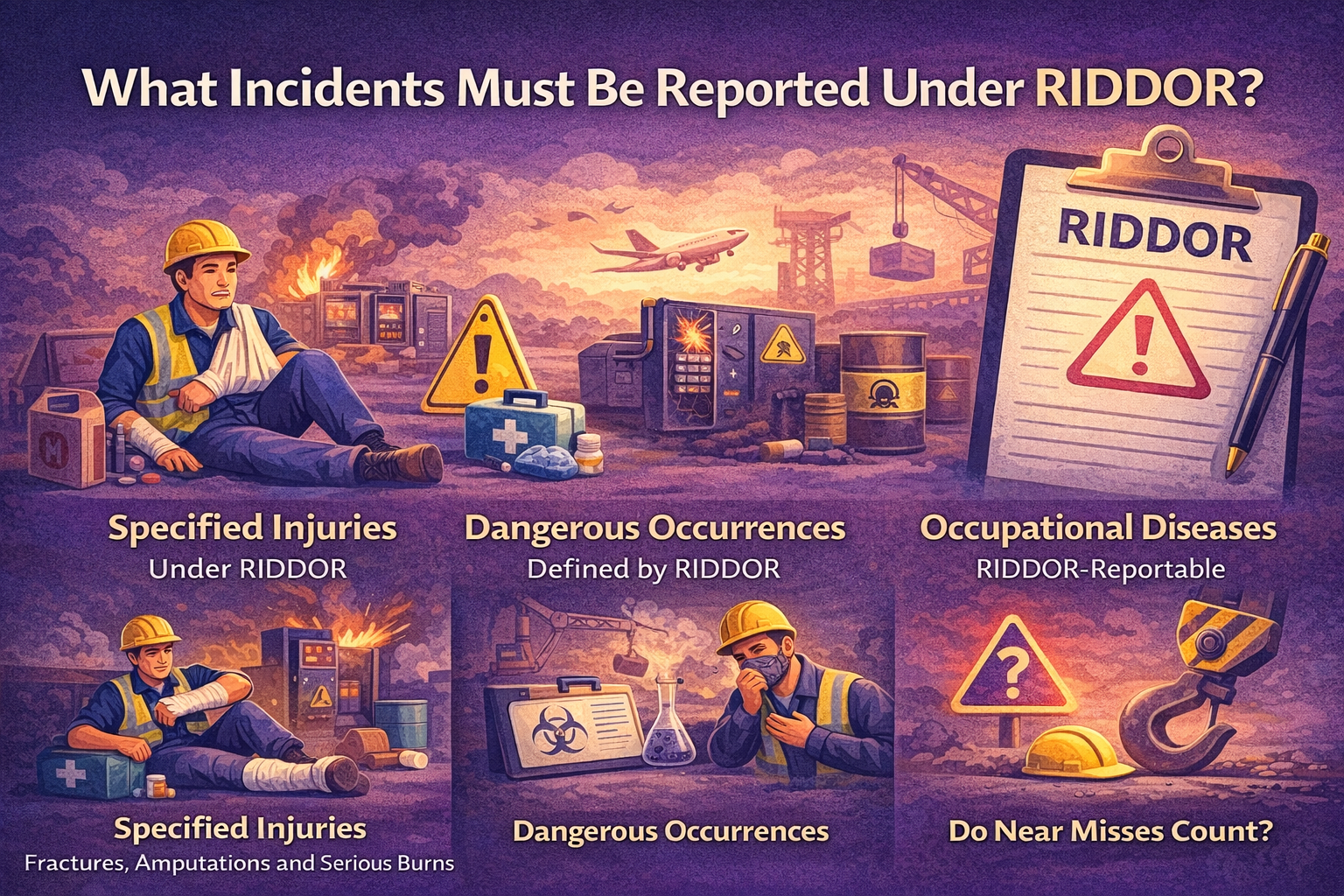
2. Specified Injuries: Fractures, Amputations and Serious Burns
Certain types of harm are always on the “specified” list. For example, most bone fractures require a report to the HSE. However, you do not report broken fingers or minor toes. Amputations are also included because they are life-changing for workers. Serious burns that cover a large part of the body matter. Also, any injury that causes a permanent loss of sight is reportable.
Crush injuries to the head or torso are very dangerous events. Similarly, any injury that leads to unconsciousness must be reported. These rules ensure the most severe accidents get proper attention. Doctors often help by identifying these serious injuries for you. Therefore, you should communicate with medical staff after a workplace accident.
3. Dangerous Occurrences Defined by RIDDOR
Sometimes, an accident happens, but luckily, no one gets hurt. We call these events “dangerous occurrences” or serious near-miss incidents. For example, a crane collapsing on a building site is reportable. Structural failures or explosions also fall into this specific category. Even if the room were empty, you must tell the HSE. Look at these common RIDDOR examples to understand your duties.
4. RIDDOR-Reportable Occupational Diseases
Work can sometimes make people sick over a long period. These are known as ‘occupational diseases’, and they require a diagnosis. For instance, severe skin inflammation called dermatitis is often reportable. Occupational asthma is another common illness caused by breathing fumes. Furthermore, certain cancers linked to work chemicals must be reported. Always wait for a formal doctor’s note before you report.
5. Do Near Misses Count Under RIDDOR?
You might wonder if every small mistake needs a report. Only “dangerous occurrences” listed in the law need a submission. Most small near misses only need your internal records. Keep a separate book for minor slips that caused no harm. This helps you fix small problems before they grow. Understanding the RIDDOR reporting requirements helps you manage daily safety.
Who Is Responsible for Reporting a RIDDOR Incident?
In every workplace, a “responsible person” handles the safety tasks. This person must ensure the government gets the correct information. Identifying this person is the first step in following the law.
Employers, Managers and Health & Safety Officers
Usually, the business owner is the person responsible for reporting. However, they can give this task to a trained manager. Many large companies have a dedicated health and safety officer. This person monitors the site and fills out the forms. Therefore, you should clearly define this role in your company.
Self-Employed Workers and Sole Traders
If you work for yourself, you must handle your reports. For example, if you get hurt, you report the accident. But if you work on a client’s site, they report. Always check who is in control of the premises first. Consequently, you will know who needs to finish the paperwork.
Landlords, Site Controllers and Contractors
Landlords must report accidents that happen because of the building. Additionally, the main contractor on a site often takes the lead. They must coordinate with all the smaller teams working there. This ensures that no accident goes unnoticed by the authorities. Furthermore, it keeps the site organised during a difficult time.
Can Employees Report Directly to HSE?
Most of the time, employees do not send reports to HSE. Instead, they should tell their boss about the accident immediately. If the boss refuses to report, employees can speak up. The HSE has a special way for workers to raise concerns. This ensures that no one hides accidents to avoid trouble. We provide RIDDOR explained for employers so you can avoid this.
What Is the Difference Between RIDDOR and Accident Reporting?
New business owners often get confused between these two tasks. Every workplace should have an internal accident book for small events. This is separate from the formal reports you send away.
Internal Accident Book vs. Legal RIDDOR Reporting
Your internal accident book should list every bump and bruise. For example, a small paper cut or tripped ankle goes here. These records are private and stay inside your office. In contrast, RIDDOR is for the serious events we discussed. You only send these reports when the law requires it. Both systems are important for keeping your workplace safe.
Do All Workplace Accidents Need to Be Reported to HSE?
The simple answer to this question is no, they do not. Only the serious injuries or specific diseases listed count. If you reported every tiny scratch, the HSE would be busy. Therefore, you must learn to distinguish between major and minor. Use your internal book to track the smaller incidents daily. This helps you spot trends before a major accident occurs.
Understanding the 7-Day Rule
There is a special rule for injuries that last a week. If a worker cannot work for seven days, report it. This “over-seven-day” rule includes weekends and rest days too. You do not count the actual day the accident happened. For instance, start counting from the first day they stayed home. This rule helps the government see which accidents cause problems.
Common Employer Misunderstandings
Some bosses think they only report if someone goes to hospital. However, some reportable injuries might not require a long stay. Others believe occupational diseases are not their fault, so they ignore them. Another mistake is forgetting about people who work from home. If a work laptop causes a fire, that is reportable. Always check the rules if you feel confused about a case.
Does RIDDOR Apply to All UK Workplaces?
The law covers almost every type of work in Great Britain. Whether you work in a tall office or a van, it applies. However, the way it looks might change by industry.
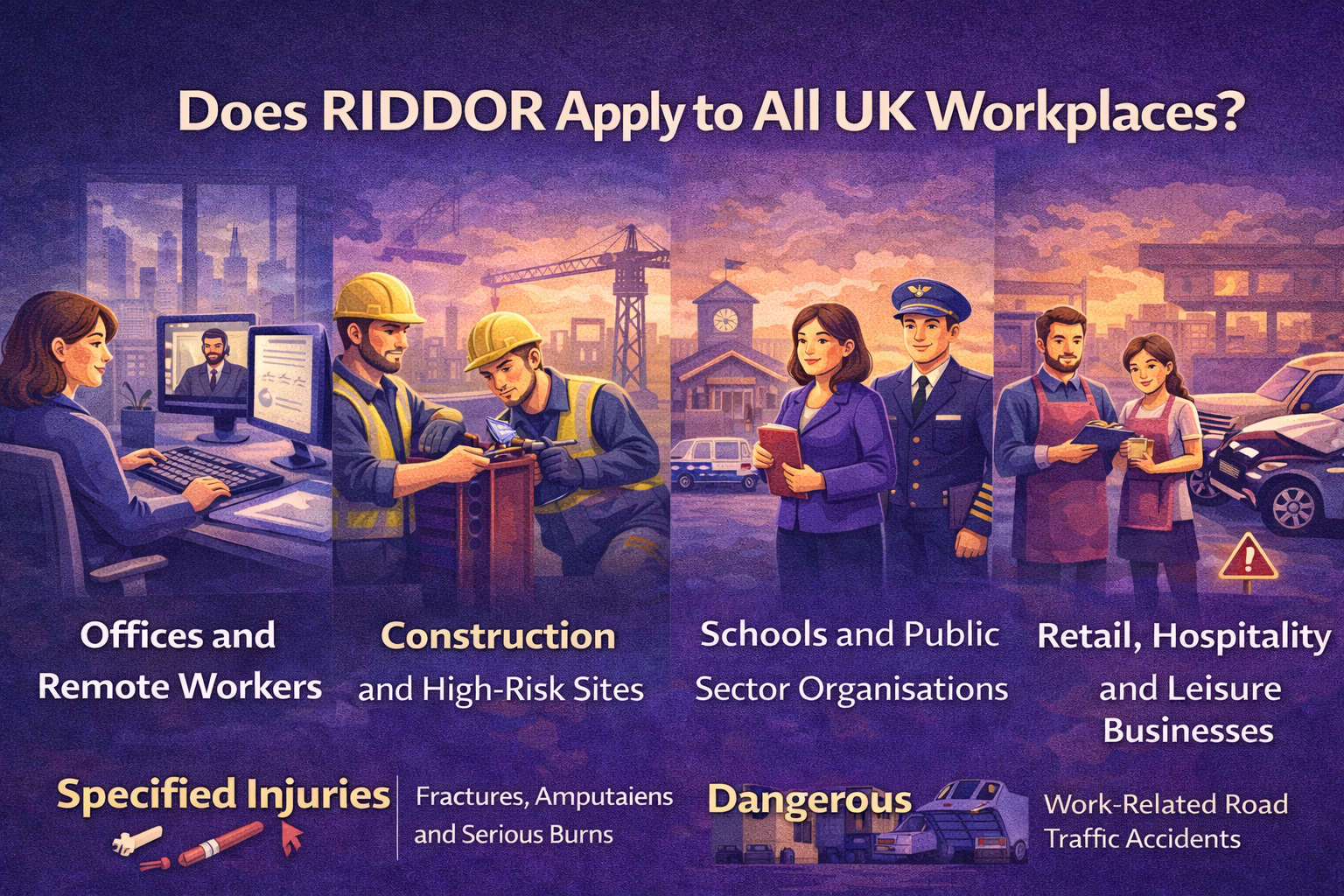
Offices and Remote Workers
Offices are generally safe, but accidents still happen there. For example, a heavy shelf falling on someone is reportable. Even remote workers are covered if work caused the accident. Therefore, you should check on your home-based staff regularly. Safety does not stop just because someone works from their kitchen.
Construction and High-Risk Sites
Construction sites are places where many serious accidents occur. Falling from a ladder or a scaffolding collapse is reportable. These high-risk sites face strict checks from safety inspectors. Additionally, site managers must keep very detailed safety logs. This protects the workers and the company from legal trouble. Furthermore, it helps the team identify hazards before they strike.
Schools and Public Sector Organisations
Schools must report accidents involving teachers, students, or visitors. For instance, if a broken slide hurts a child, report it. Local authorities usually help schools manage these specific tasks. This ensures that schools remain safe places for children to learn. Consequently, headteachers must understand their reporting duties very clearly.
Retail, Hospitality and Leisure Businesses
In a restaurant, a serious burn from a stove is reportable. In a gym, a heavy weight falling on a foot counts. These businesses must protect both their staff and customers. If a customer trips over a rug, you must report it. Therefore, keeping your floors clear is a vital safety task.
Work-Related Road Traffic Accidents
Most car accidents on the road are reported to the police. However, some road incidents do fall under the RIDDOR rules. For example, accidents involving loading a vehicle are often reportable. If a worker gets hurt while fixing a road, report it. You must understand these exceptions to stay fully compliant.
How and When Should You Report a RIDDOR Incident?
Timing is everything when you deal with legal safety reports. You cannot wait months to tell the authorities about events. This section explains the process for submitting your information correctly.
RIDDOR Time Limits: 10-Day and 15-Day Rules
For most serious accidents, you must report within ten days. However, the “over-seven-day” injuries give you a bit more time. You have fifteen days from the accident to finish that report. Do not delay your submission to avoid missing these deadlines. Consequently, your business will stay on the right side of the law.
How to Submit a RIDDOR Report Online
Visit the HSE website to submit your report online today. This portal provides the easiest way to finish your paperwork. You will need to provide the date and time of the event. Furthermore, describe the specific injury and how the accident happened. Most people find the online forms very easy to use. However, you can call the incident centre for fatal accidents.
When to Call the HSE Incident Centre
You should only call the HSE for the most urgent cases. This includes fatalities or accidents where several people were hurt. Their phone lines stay open during normal office hours. Outside of these times, you can use the online portal instead. Only use the phone line for the most serious cases. Ensure you keep a printed copy of the finished report.
RIDDOR Record-Keeping Requirements
The law says you must keep a copy of every report. These records must stay safe for at least three years. This proves to inspectors that you follow the rules correctly. Many businesses keep these files in a secure digital folder. Additionally, you should protect the private data of your workers. Following these steps keeps your office organised and legal.
What Happens If a Business Fails to Comply?
Ignoring your reporting duties is a very risky path. The government takes workplace safety very seriously in the UK. Therefore, the punishments for hiding accidents can be quite severe.
HSE Fines and Enforcement
The HSE has the power to issue very large fines. These fines are often based on how much you earn. Even small businesses can face thousands of pounds in penalties. Additionally, you might have to pay for the inspector’s time. This “Fee for Intervention” can make a small accident very expensive.
Legal Action Against Directors and Managers
In very bad cases, individual managers can go to court. You could face criminal charges if you purposefully hid a death. The owner may be sentenced to prison as a result. Furthermore, you might lose your right to run a business. Consequently, being honest from the start is the best policy.
Impact on Insurance and Civil Claims
If you do not report, your insurance company might walk away. They often require a RIDDOR report before they pay anything. Also, an injured worker might sue you for more money. Without a report, it is very hard to defend yourself. A proper report shows that you took the event seriously. Therefore, following the rules helps you manage these difficult situations.
Conclusion
Now you know exactly what RIDDOR stand for and why it matters. It is the backbone of safety for every employer in the UK. Reporting accidents is a duty that keeps your workers safe. Take a moment to check your current safety procedures today. Ensure your managers know when to fill out a formal report. By staying informed, you create a much safer environment for everyone.
Every worker deserves to go home healthy at the end of the day. Your commitment to reporting helps the whole country reach this goal. Review your accident book and update your training where necessary. Furthermore, keep the HSE website bookmarked for quick access to forms. This simple habit will protect your business for many years to come. Following the law is the best way to show you care.
Frequently Asked Questions (FAQs)
1. What 5 things must be reported to RIDDOR?
- Deaths, specified injuries, over-7-day injuries, dangerous occurrences, and certain work-related diseases must be reported under the Reporting of Injuries, Diseases and Dangerous Occurrences Regulations 2013.
2. What is an example of a RIDDOR?
- An example of a RIDDOR report is when a worker breaks a leg after falling from a height at work.
3. What are the four types of incidents?
- The four common types are accidents, near misses, dangerous occurrences, and work-related illnesses.
4. What is the RIDDOR over 7 days?
- An over-7-day RIDDOR is when a worker cannot perform normal duties for more than seven consecutive days due to a work injury.
5. Is a broken finger a RIDDOR?
- A broken finger is only reportable if it meets the specified injury criteria under RIDDOR, such as a fracture other than to fingers or toes.
6. What are the 5 C’s of incident management?
- The five C’s are confirm, control, contain, communicate, and conclude.
7. What injuries are not reportable to RIDDOR?
- Minor injuries like small cuts, bruises, or sprains that do not cause over-7-day absence are not reportable.
8. What are the 4 categories of injuries?
- The four categories are minor injuries, specified serious injuries, over-7-day injuries, and fatal injuries.

RIDDOR Training
Course Description :
- Certificate: Yes(Free)
- Accreditation: CPD Accredited
- Access: Lifetime