No products in the cart.
Accidents at work cause a lot of stress for everyone. However, you must know what is RIDDOR reportable to avoid big fines. Failing to report correctly can lead to heavy legal action. This law stands for the Reporting of Injuries, Diseases and Dangerous Occurrences Regulations. Our helpful guide explains exactly what you need to tell the government. Furthermore, it helps you understand which incidents do not need reporting. This information is vital for keeping your workplace safe and legal. Consequently, you will feel much more confident about your safety duties.
The main goal of this guide is to help UK employers. You must understand your role under the specific health and safety laws. Therefore, we have broken down the complex rules into simple steps. This guide will clarify what the Health and Safety Executive needs. You will learn about deadlines, types of injuries, and record-keeping. Because of this, your business will stay compliant and protected.
What is RIDDOR Reportable? A Breakdown of the Regulations
First, RIDDOR is a very important law in the United Kingdom. This law requires “responsible persons” to report specific workplace incidents. Usually, the responsible person is the employer or the manager. Also, self-employed people must follow these rules for their own work. In addition, people in control of work premises share this duty. You must tell the authorities when something goes wrong at work.
For an incident to be reportable, it must meet three criteria. Primarily, the accident must be truly work-related to count. This means the work activity itself caused the actual injury. Next, the event must fit into a specific reportable category. Not every small bump or bruise needs a formal report. Finally, the incident must have occurred within Great Britain specifically. However, different rules apply if you are working in Northern Ireland. Consequently, always check your local area rules before you start.
The Key Categories: What is RIDDOR Reportable in the Workplace?
It is vital to know about the RIDDOR reportable incidents in your office. This section explains the different groups of incidents you must record.
Specified Injuries to Workers
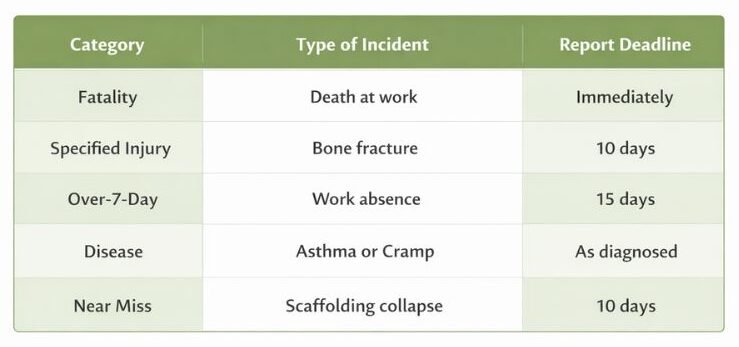
Certain serious injuries always need a report from the employer. For example, most bone fractures are on this specific list. Nevertheless, you do not report broken fingers or broken toes. Amputations and loss of sight are also very serious events. Furthermore, serious burns or scalpings must be reported right away. Any injury requiring a hospital stay of over 24 hours counts. Consequently, you must act fast when these major injuries happen.
Fatalities
Sadly, some accidents result in a person dying at work. Therefore, you must report every death of a worker immediately. This rule also applies to members of the public. However, the death must come from a work-related activity. If a worker dies from natural causes, you usually wait. But for accidents, the report is always a legal requirement.
Over-Seven-Day Incapacitation
If a worker is hurt, they might stay home. Consequently, you must track their time away from work. This rule applies if they cannot work for seven days. However, do not count the day the injury happened. If they are out for eight days, you report. Because of this, keep a very close eye on dates. Even if they work “light duties”, the report is needed.
Occupational Diseases
Work can sometimes cause long-term health problems for staff. Therefore, the law includes certain diseases in the report list. For instance, carpal tunnel syndrome is a very common issue. Furthermore, occupational asthma is another disease you must report. If a doctor confirms the illness, send the report. Consequently, this helps the government track health risks at work.
Dangerous Occurrences (Near Misses)
Sometimes, an accident almost happens, but nobody gets hurt. We call these events “near misses” in the safety world. For example, a scaffold collapse is a very dangerous occurrence. Also, gas leaks or electrical short circuits are reportable events. Even if everyone is safe, you must tell the HSE. This helps prevent a much worse accident in the future.
Who is Responsible for Making a RIDDOR Report?
Employers carry the biggest duty to report these workplace events. If your employee is injured, you must fill out the form. However, you should talk to the worker about the details. This ensures the information you send is very accurate and fair. In addition, you must keep the report for three years.
The self-employed also have duties under these specific safety laws. If you are injured on a job, you report it. This applies even if you are working at home. However, if you are on a client’s site, tell them. The person in charge of the site might report it. Consequently, you should always talk to the site manager first.
Employment agencies often place temporary workers in different local businesses. If a temp worker gets hurt, who makes the report? Usually, the “host” employer takes the lead on the report. However, the agency must also keep a record of it. Therefore, clear communication between both companies is very important. This ensures nobody forgets to submit the required legal paperwork.
How and When Should You Report to the HSE?
Timing is very important when you deal with the government. For most incidents, you have a 10-day limit to report. This starts from the day the actual accident took place. However, the rule changes for over-seven-day injuries specifically. In that case, you have 15 days to finish it. Therefore, you should mark your calendar to avoid missing dates.
The reporting process is mostly done through the HSE website. You will find simple online forms for every incident type. Furthermore, there is a telephone service for very serious events. Use the phone for fatal accidents or major worker injuries. This enables the authorities to promptly begin an inquiry. Most minor reports only need the digital form to comply.
Record-keeping is the final part of your legal duty. You must keep a record of any reportable injury. This record must stay in your files for three years. Also, you can keep a digital or a paper copy. This helps you prove that you followed the law correctly. Consequently, you will be ready if an inspector visits.
What is RIDDOR Reportable: Examples and Scenarios
Some common scenarios are as follows:
- Slips and Falls: Is a slip, trip, or fall always reportable? No, it depends on the injury type. If a worker trips and bruises their knee, ignore it. However, if they break an arm, you must report it. The severity of the injury determines your next legal move. Therefore, always check the list of specified injuries for help.
- Broken Fingers: Interestingly, the law says no for these specific body parts. Fingers and toes are excluded from the “specified injuries” list. However, you might report it if they miss seven days. This shows how the different categories can overlap. Consequently, you must think about the time off carefully.
- Hospital Visits: Going to the hospital does not always trigger a report. For workers, the injury itself must be on the list. In contrast, the rules are different for the public. If a guest goes to the hospital, you must report. Consequently, you need to know who was involved.
- Light Duties: Does returning on “light duties” still count as incapacitated? Yes, this still counts as a reportable event. If they cannot do their normal job, they are “incapacitated”. This rule prevents employers from hiding injuries with easy tasks. Therefore, you must count those days like sick days.
- Work Travel: Generally, the daily trip to work is not reportable. However, it changes if the person is working while driving. For example, a delivery driver in a crash is reportable. Therefore, you must check if the travel was for work.
- Public Safety: Are incidents involving members of the public reportable today? Yes, but only if they are taken to the hospital. The injury must happen on your premises because of work. Consequently, the test is whether your work caused harm.
How do you submit a RIDDOR report correctly?
You must go to the official HSE website to report. There, you will see several different types of online forms. Choose the form that matches your specific incident or disease. Furthermore, make sure you have a quiet place to work. This helps you avoid making small mistakes on the form. Consequently, your report will be much more professional and clear.
What information should you gather before you start the form? First, you need the date and time of the event. Next, collect the personal details of the injured person involved. You also need a clear description of what happened there. Also, mention the location where the accident took place exactly. Having these facts ready makes the process much faster indeed.
Writing a clear incident description is very important for compliance. Use simple words to explain how the injury actually happened. Do not guess or use complex jargon in your writing. Instead, stick to the facts that you saw or heard. Furthermore, mention any equipment that was used during the accident. This helps the HSE understand if a machine is dangerous.
Common mistakes often cause reports to be rejected or wrong. For instance, some people report accidents that are not work-related. Also, people often forget to include the correct business address. Another mistake is waiting too long to send the form. Therefore, you should double-check all your facts before clicking. Because of this, you will save time and avoid stress.
What are the consequences of not reporting under RIDDOR?
The HSE takes the reporting laws very seriously in Britain. If you fail to report, they can take enforcement action. This might start with a simple letter or a warning. However, they can also visit your site for an inspection. If they find you hid an accident, things get worse. Consequently, it is always better to be honest and open.
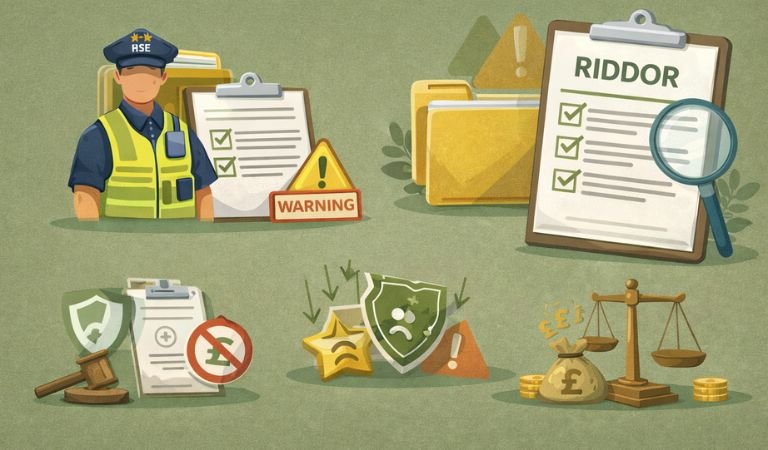
Penalties and prosecutions are possible for businesses that break the rules. You could face very large fines from a local court. In some cases, managers can even go to prison safely. Furthermore, your business reputation might suffer a very big blow. Customers and partners prefer to work with safe, honest companies. Therefore, following RIDDOR is good for your long-term success.
Under-reporting can also affect your insurance and legal claims. If an employee sues you, the insurance company checks the reports. If you did not report the injury, they might not pay. This could cost your business thousands of pounds in legal fees. In addition, it makes you look like a careless employer. Consequently, proper reporting protects your money and your good name.
Conclusion
Deciding what is RIDDOR reportable is much easier with a checklist. First, check if the injury is on the specified list. Next, look at how many days the worker missed work. Finally, see if a member of the public went to the hospital. If you are still unsure, you should seek expert advice. Staying safe and legal is the best path for your business.
Need help determining whether an incident is reportable—what should you do next? Our team can help you manage your health and safety duties. We offer expert advice to keep your UK business fully compliant. Also, you can join our RIDDOR training course today to ensure your workplace is safe for everyone. Let us take the stress out of your RIDDOR reporting!
Frequently Asked Questions (FAQs)
1. What must be reported under RIDDOR?
- Fatalities, specified injuries, over-7-day injuries, dangerous occurrences, and certain work-related diseases must be reported under the Reporting of Injuries, Diseases and Dangerous Occurrences Regulations 2013.
2. What are the 8 types of reportable incidents?
- The eight types include deaths, specified injuries, over-7-day injuries, dangerous occurrences, occupational diseases, gas incidents, injuries to non-workers, and accidents causing hospital treatment.
3. What are the four types of incidents?
- The four common types are accidents, near misses, dangerous occurrences, and work-related illnesses.
4. Which of the following is not reportable under RIDDOR?
- Minor injuries such as small cuts, bruises, or short-term discomfort are not reportable under RIDDOR.
5. What is exempt from RIDDOR?
- Minor workplace injuries that do not cause serious harm or long absences from work are usually exempt from RIDDOR reporting.
6. What types of incidents must be reported?
- Serious injuries, deaths, dangerous workplace events, and certain occupational diseases must be reported.
7. What are 5 examples of unsafe conditions?
- Examples include slippery floors, faulty equipment, poor lighting, exposed wiring, and blocked emergency exits.
8. What happens if RIDDOR is not followed?
- Failing to follow RIDDOR can lead to legal penalties, fines, or enforcement action by UK safety authorities.

RIDDOR Training
Course Description :
- Certificate: Yes(Free)
- Accreditation: CPD Accredited
- Access: Lifetime