No products in the cart.
Safeguarding principles in the UK are a set of six important rules that help protect children and adults from abuse, harm, and neglect. These rules started from the Care Act 2014, and now they are used in health care, social care, schools, and community services. The goal is to keep people safe before problems happen, not only after something goes wrong.
Statistics show why safeguarding is very important in the UK. Every year, local authorities receive over 600,000 safeguarding concern reports, and more than 400,000 adult safeguarding cases are checked by councils. Also, thousands of child protection cases are opened each year, which shows that strong safety rules are needed to protect vulnerable people.
What Are the Main Safeguarding Principles?
To begin, there are six main rules that experts always follow. These rules ensure that help is given in the right way. First, there is the rule of empowerment, which gives people a choice. This means people should be allowed to make their own life decisions. Moreover, we must support them to think for themselves whenever it is possible. If someone needs help, we should ask them what they want. Therefore, empowerment is about giving power back to the individual.
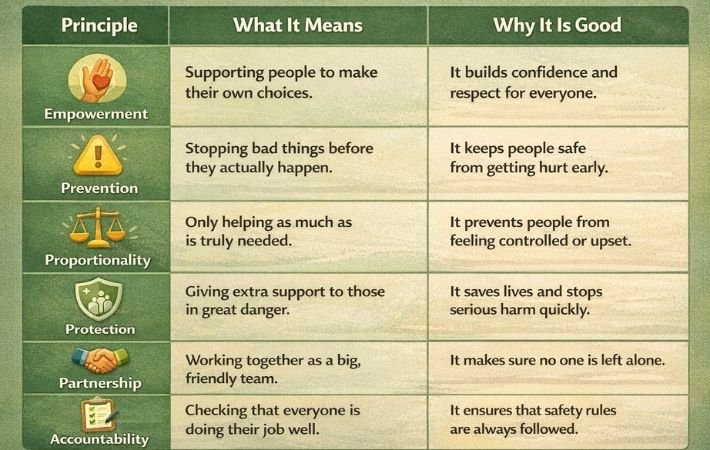
Second, the rule of prevention is very important for every community. We should try to stop abuse or neglect before it starts. For instance, teaching children about safety is a great way to prevent this. Additionally, schools use these rules to create a very kind environment. By noticing small problems early, we can stop them from growing. Most people agree that being careful early is the best path. Clearly, prevention helps to keep our neighbourhoods peaceful and very secure.
Who Is Responsible for Following These Rules?
In the UK, many different people have a special duty. Specifically, any person working with children must follow these safety rules. This includes your local teachers, football coaches, and even library staff. They all have a legal duty of care to protect you. Furthermore, they receive special training to spot any signs of trouble. If they see something wrong, they must speak up right away. This system ensures that help is always available for those in need.
Safeguarding roles and responsibilities
Teachers
Watching over students during the school day and making sure they are safe. They report any worries or signs of danger to the safeguarding officer.
Doctors
Checking the health and well-being of every patient carefully. They make sure patients are safe at home and report risks if needed.
Police
Keeping streets, homes, and communities safe from crime or harm. They take action quickly when someone is in danger or a crime happens.
Neighbours
Looking out for people living nearby and showing care for the community. They can call for help or report concerns if they think someone is not safe.
However, safety is not just a job for professional people. You also have a role to play in your new town. Similarly, you can look out for your friends and your family. If you see someone who looks very sad or hurt, listen. Sometimes, just being a good friend can make a big difference. You do not have to be an expert to show kindness. Every small action helps to make the United Kingdom a better place.
How Do Schools Use These Safety Rules?
Schools are one of the safest places for children in Britain. They use the six pillars to create a very happy space. First of all, teachers make sure that every student feels very included. In addition, they also teach children how to say “no” to things. This is a big part of the empowerment rule we discussed. As a result, children grow up knowing that their voices are very important. Furthermore, schools also have a special person called a safeguarding lead.
In fact, this person is an expert in keeping all the children safe. If needed, a student who feels worried can talk to this leader at any time. Moreover, the school keeps very private and safe records of any help given. At the same time, teachers work closely with parents to ensure everything is okay. Therefore, you should always feel brave enough to talk to teachers when you need help. Overall, they are there to support you and your family every day. Because of this, keeping children happy and safe is the most important goal for every school.
Why Are Safeguarding Principles Vital for Your Community?
Initially, you might wonder why we need so many rules. The answer is that safeguarding guidelines protect the most vulnerable people. Without these rules, some people might be treated very unfairly today. Specifically, they help the elderly who might live all alone. These rules also protect people with disabilities who need extra support. By using these principles, we ensure that everyone gets fair treatment. Similarly, it builds a society where people truly care for others.
Furthermore, these rules help to build trust between different people. When you know the police and doctors follow rules, you feel safe. You feel safe asking them for help during a difficult time. Consequently, the community becomes stronger and much more united over time. People are more likely to help their neighbours when they feel they can. They feel that the system is fair and works for everyone. This is why the UK takes these safety rules so seriously.
What Should You Do if You are Worried?
If you feel that someone is in danger, do not wait. You should speak to a trusted adult as soon as possible. For instance, talk to a teacher or a friendly police officer. They know exactly how to use the safety rules to help. Additionally, there are special phone numbers you can call for free. Organisations like Childline are always ready to listen to your worries. You do not have to give your name if you fear.
- Speak Up: Tell someone you trust about your big worries.
- Be Honest: Explain exactly what you saw or what happened.
- Stay Calm: Remember that there are people who want to help.
- Call 999: Use this number if someone is in immediate danger.
- Trust the Process: The safety rules are there to protect you.
Moreover, keep in mind that you are never in trouble. Reporting a worry is a very brave and kind thing. The professionals will handle the situation with a lot of care. They will follow the rule of partnership to find the best. They find the best solution for the person who is hurting. Therefore, your voice can be the start of a better life. Never be afraid to stand up for what is right.
What Is the Rule of Accountability in Simple Terms?
Accountability means that everyone must take responsibility for their own actions. If a professional makes a mistake, they must explain why. This rule ensures that the safety system stays very honest. Specifically, it means that there are checks on every single worker. Managers look at the work of teachers and doctors regularly. Therefore, they can find ways to make the safety rules even better. It is about being open and being very truthful at work.
Furthermore, accountability helps the public feel more confident in the system. People know that there are consequences for not following the rules. This keeps the standards of care very high for every person. If a rule is broken, the government will investigate the matter. Clearly, this protects the rights of every citizen in the country. It also encourages workers to always do their very best. Honesty is the foundation of a safe and happy UK society.
Can You Use These Rules in Your Own Home?
Actually, you can use these ideas to keep your family happy. For instance, practising empowerment means listening to your siblings’ opinions today. You can also use the rule of prevention by staying safe. When you are playing outside or using the internet, be careful. Additionally, talking to your parents about your day is a partnership. It helps everyone in the house know if things are okay. Small habits can create a very safe and loving home environment.
- Listen: Give everyone a chance to speak their mind.
- Learn: Know the emergency numbers and how to use them.
- Share: Tell your family if something makes you feel uncomfortable.
- Respect: Treat every person in your house with a lot of kindness.
- Check: Make sure the doors are locked, and everyone is safe.
Moreover, knowing these rules helps you understand your own rights better. You will know that no one is allowed to hurt you. If something feels wrong at home, you know who to call. Knowing the laws of the UK makes you a stronger person. It gives you the tools to build a very bright future. Your home should always be the safest place in the world. Using these ideas helps to keep it that way for everyone.
How Does the Rule of Proportionality Work in Reality?
Proportionality is about finding the right balance of help for people. In simple terms, it means that workers should not interfere more than they must. For example, if a small problem happens, a small solution should follow. In most cases, a small solution is better than a very big one. Because of this, we try to protect people without taking away their freedom. Therefore, this rule respects the privacy of every individual and every family. As a result, the help given feels supportive instead of frightening.
Additionally, this principle helps workers focus on the biggest dangers first. For instance, if a person is in serious trouble, they receive help very quickly. On the other hand, if someone only needs advice, a small amount of support is given. In this way, the system stays fair for everyone. Consequently, services do not become overloaded with small problems. Because of that, people get the right help at the right time. Overall, proportionality is a smart way to keep millions of people safe while respecting their rights.
What Are the Rights of Immigrants Regarding Safety?
If you are new to the UK, you have rights. First of all, your rights are the same as everyone else living here. In fact, the law protects you no matter where you were born. Most importantly, you have the right to stay safe from any harm. Therefore, if you face bullying or unfair treatment, you should tell someone. For example, speak to a teacher, police officer, or another trusted adult. In this way, they can use the safeguarding rules to help you. Also, you do not need to worry about your status when reporting a problem.
In addition, the police and schools are here to help every resident. They will not judge you, even if you are new to the country. Furthermore, they can often provide translators if your English is limited. Because of this, you can explain your worries clearly and safely. So, you should never stay silent just because you feel different. Overall, the United Kingdom values every person who lives here. For this reason, your safety is always a top priority for the whole community.
How Can Internet Surfing Be Safe?
Online safety is a big part of the modern safety rules. You should be very careful about who you talk to online. For instance, never give away your home address or your school. Moreover, use the rule of prevention by having very strong passwords. If someone sends you a mean message, do not reply. Instead, show the message to an adult that you really trust. Although it might be enjoyable, using the internet can be dangerous.
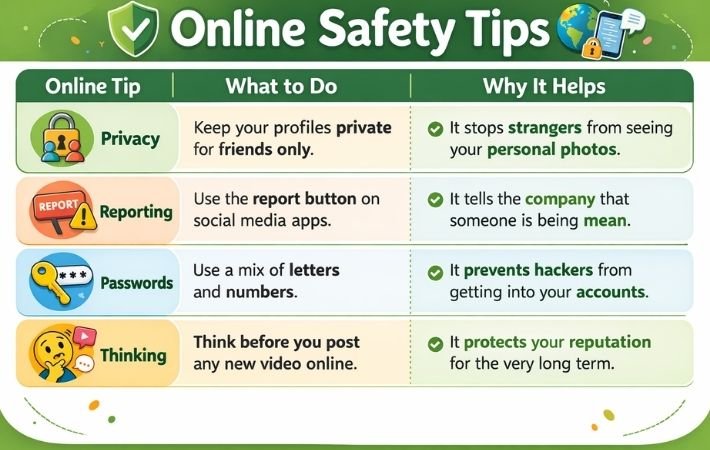
Similarly, you should only add people you know in real life. If a stranger tries to meet you, tell your parents. This follows the rule of partnership to stay very safe. Schools often teach lessons about how to be smart on the web. Pay attention to these lessons as they are very useful today. By being clever online, you can enjoy games and videos safely. Protection in the digital world is just as important as offline.
Why is Training Important for Professionals in the UK?
Every year, millions of workers go through special safety training courses. They learn about new risks and how to handle different situations. This training ensures that they always remember the six core pillars. For instance, they learn how to talk to children who are scared. They also learn how to spot signs of neglect in adults. Regular training keeps their skills very fresh and very effective today. It is a mandatory part of their jobs in Britain.
Furthermore, this training helps workers to stay very calm during emergencies. They know the exact steps to take to provide the best help. This prevents panic and ensures that the person in danger is safe. Consequently, you can trust that the people helping you are experts. They have studied the law and know how to protect your rights. Their dedication to learning helps to keep the whole country much safer. It is a sign of a truly professional and caring society.
Final Thoughts on Staying Safe in Your New Home
In conclusion, this guide explained safeguarding principles in the UK using simple words, including the six main rules, responsibilities, legal duties, and safety tips to protect children and adults.
By understanding these principles, you can see how schools, police, doctors, families, and communities work together to keep everyone safe at home, online, and in everyday life.
Frequently Asked Questions (FAQs)
1. What are the 5 R’s of safeguarding?
- The 5 R’s of safeguarding are ‘recognise’, ‘respond’, ‘report’, ‘record’, and Refer, which help people act correctly when someone may be in danger.
2. What is safeguarding in simple words?
- Safeguarding means protecting children and adults from harm, abuse, neglect, and unsafe situations in daily life.
3. What are the 6 Rs of safeguarding?
- The 6 Rs of safeguarding are Recognise, Respond, Report, Record, Refer, and Review, which guide safe and correct action.
4. What are the 3 C’s of safeguarding?
- The 3 C’s of safeguarding usually mean communication, care, and concern, which help people notice and report problems early.
5. What are the 4 C’s of safeguarding?
- The 4 C’s of safeguarding often mean ‘care’, ‘communication’, ‘courage’, and ‘commitment’, which support safe and responsible behaviour.
6. What are the 6 core principles of safeguarding?
- The six core principles are empowerment, prevention, proportionality, protection, partnership, and accountability.
7. How to explain safeguarding in an interview?
- In an interview, you can say safeguarding means protecting people from harm, following rules, and reporting concerns to keep everyone safe.

Safeguarding Vulnerable Adults Training
Course Description :
- Certificate: Yes(Free)
- Accreditation: CPD Accredited
- Access: Lifetime