No products in the cart.
In the UK, safeguarding refers to keeping people secure from violence or abuse. It is vital today to learn about the 6 safeguarding principles. Actually, statistics indicate that local councils handle over 500,000 safety concerns every year. Therefore, these rules help everyone live a life free from scary danger. They ensure that the most vulnerable people receive the best support possible.
These rules originate from the very essential Care Act of 2014. This law makes sure that adults are protected from neglect daily. Accountability is key when professionals handle these very sensitive cases now. Parents, teachers, and carers must understand these important guidelines clearly. Consequently, everyone can work together to create a much safer society. Learning these steps helps us keep an eye out for our friends and neighbours.
What Are the 6 Safeguarding Principles?
The official definition of safeguarding is protecting a person’s right to live safely. This involves preventing neglect and physical or emotional harm in daily life. Every person needs to be treated with dignity and decency at all times.
Furthermore, these principles were made to give staff a clear and helpful guide. They ensure that help is fair and always focuses on the person. Consequently, both children and adults benefit when we follow these six simple steps.
These rules support children by ensuring they grow up in a safe home. Young people feel more confident when they know someone is watching out. Adults at risk receive the specific help they need to stay healthy.
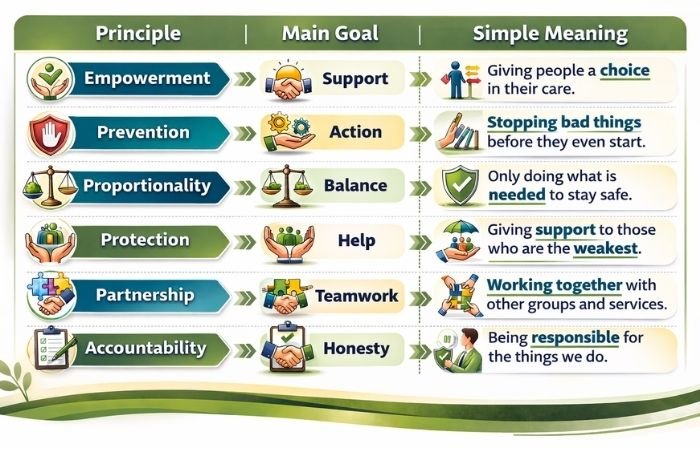
What is the first safeguarding principle: Empowerment?
Empowerment means giving people the power to make their own big decisions. It is important to ask people what they want to happen next. Individuals should feel in control of their own lives and their care.
Moreover, support workers must listen to the wishes of the person involved. People feel much happier when they have a say in their support. This principle ensures that no one feels ignored or pushed around.
Teachers can help students by asking for their opinions on safety matters. Similarly, doctors should explain choices clearly so patients can decide for themselves. This builds a lot of trust between the person and the professional.
What is the second safeguarding principle: Prevention?
Prevention is about taking action before any harm or abuse actually happens. It is much better to stop a problem than to fix it later. Organisations must look for early signs that someone might be in trouble.
Additionally, clear communication helps to stop secrets from becoming bigger problems. Staff should be trained to notice when a person seems very unhappy. Early help can stop a small worry from turning into a crisis.
Specifically, schools use prevention by teaching children how to stay safe online. Community centres might offer clubs to stop people from feeling lonely. Therefore, acting early is the best way to keep the community safe.
What is the third safeguarding principle: Proportionality?
Proportionality means that the response should fit the level of the risk. It is important not to interfere too much in someone’s private life. We must find the least intrusive way to keep a person safe.
However, we must still make sure the person is fully protected from harm. Professionals should think carefully before they make any big life changes. Every situation is different and needs a very special kind of plan.
For example, if someone is slightly confused, they might just need a friend. They do not always need a police officer or a big court case. Balance is the key to making sure people feel free and safe.
What is the fourth safeguarding principle: Protection?
Protection is the act of supporting those who are at the highest risk. Some people cannot easily defend themselves from mean or hurtful behaviour. We must provide help to those who are most likely to suffer.
Furthermore, this includes telling people how to report a crime or abuse. It is vital that victims know where to go for help today. The law protects people who speak up about things that are wrong.
Support should be fast and effective when someone is in real danger. Police and social workers work very hard to keep these people safe. Everyone has the right to live without being afraid of other people.
What is the fifth safeguarding principle: Partnership?
Partnership is about different groups of people working together as one team. Safeguarding is not just the job of one single person or office. Schools, hospitals, and police must share information to help people better.
Additionally, local communities play a huge part in keeping everyone quite safe. When we work together, we can spot problems much faster than alone. It is important to treat every partner with a lot of respect.
Information should be shared safely and only when it is truly necessary. This contributes to creating a safety net for people who need it. Teamwork makes the whole system stronger and much more reliable for everyone.
What is the sixth safeguarding principle: Accountability?
Accountability means being honest and taking responsibility for your own daily actions. Everyone should know exactly what their job is in a safeguarding case. If something goes wrong, we must explain why it happened quite clearly.
Moreover, organisations must have clear rules that everyone can see and read. This helps the public trust that the staff are doing their jobs. We must always learn from our mistakes to make things better later.
Specifically, clear records must be kept so everyone knows what was done. This ensures that no one is forgotten when they need help most. Being open and honest is the best way to keep people safe.
Why Are the 6 Safeguarding Principles Important in the UK?
These principles guide daily work across the UK. Schools use them to protect pupils. Care homes use them to support residents. NHS services apply them during treatment and discharge planning. Workplaces also use them to manage risks and reporting.
UK safeguarding policies rely on these principles because they create a consistent standard. Although settings differ, the goal stays the same: protect people from harm while respecting their rights. Therefore, services can make safer and fairer decisions.
They also improve trust, safety, and wellbeing. People are more likely to speak up when they feel heard and respected. Likewise, staff feel more confident when procedures are clear.
Here is how the principles help different settings:
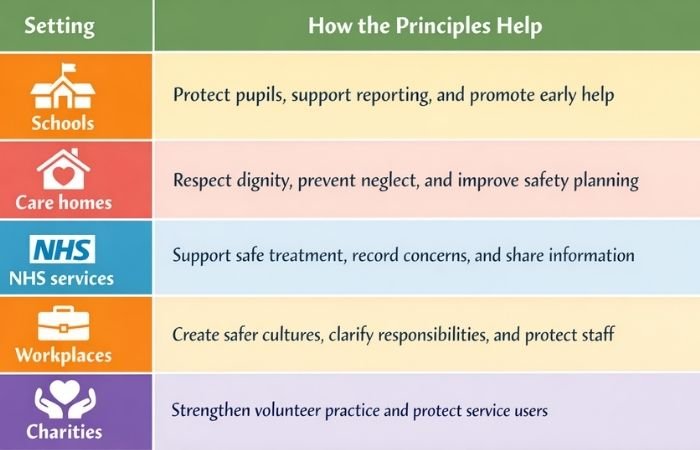
These principles also help reduce unfair treatment. They support dignity, inclusion, and respect for different backgrounds. This is especially important for new arrivals, migrants, and people facing language barriers.
How Are the Six Safeguarding Principles Used in Everyday Settings?
Schools apply these principles by having a special teacher for safety matters. They make sure that every child feels safe enough to speak up. Teachers also watch for signs of bullying or sadness in the classroom.
In health and social care, these rules help doctors talk to patients. They ensure that older people have a choice in their daily lives. Nurses follow these steps to keep the hospital a very safe place.
Employers need to know that they must protect their workers from abuse. This includes making sure that the office is a kind environment. Every boss has a duty of care to keep their team safe.
Community groups and charities follow these steps to help people in need. They often work with volunteers who must also learn these safety rules. Following best practices ensures that the charity remains a trusted place.
What Are Examples of the Six Safeguarding Principles in Practice?
Empowerment looks like a social worker asking a lady where she lives. She gets to choose her own home and her own daily food. This makes her feel respected and very happy with her own life.
Prevention happens when a school holds a meeting about internet safety tips. Parents learn how to keep their children away from bad websites early. This stops problems before the children even see anything scary or bad.
Proportionality is important when a carer notices a small bruise on someone. Instead of calling the police, they first talk to the person calmly. They find out what happened before taking any bigger or louder steps.
Partnership helps when a doctor tells a teacher about a sick child. Together, they make a plan to help the child feel better soon. This joint effort ensures the child gets the best possible help quickly.
Who Is Responsible for Following Safeguarding Principles?
In the United Kingdom, local authorities are legally required to take the lead on safeguarding. They coordinate the different services to make sure everyone is working well. They also check that care homes are following all the safety rules.
Designated safeguarding leads are people in schools who handle all the worries. They are the experts that other teachers go to for some help. These leads ensure that we take every concern seriously today.
Staff and volunteers also contribute by staying alert and being very kind. They should report any worries to their manager as soon as possible. Even small actions can help to keep a person safe from harm.
Organisations must provide training, so everyone knows what to do in emergencies. They are responsible for creating a culture where safety comes first, always. This protects both the people they help and the staff who work.
How Can You Apply the Six Safeguarding Principles Correctly?
Organisations should take steps to build a very strong safeguarding culture. This means talking about safety in every single meeting they have now. Everyone should feel comfortable sharing their worries without any fear of trouble.
Staff training can improve understanding of how to spot signs of abuse. Regular workshops keep the safety rules fresh in everyone’s busy minds today. Well-trained staff are much better at protecting the people they serve daily.
Safeguarding policies should be reviewed every year to stay up to date. The world changes, and our safety rules must change with it, too. New laws might mean we need to update our own office manuals.
Concerns should be reported safely and clearly to the right person quickly. There should be a simple form or a phone number to use. Knowing exactly what to do makes people more likely to help out.
- Read the official safeguarding policy of your own workplace today.
- Attend every training session that your manager offers to you now.
- Listen carefully to the people you are helping every single day.
- Write down any worries you have in a clear, honest way.
- Speak to a supervisor if you see something that looks wrong.
What Are Common Questions About Safeguarding Principles?
People often ask if the 6 safeguarding principles are a legal requirement. Yes, they are part of the Care Act 2014 in England. This means that many organisations must follow them by law.
These principles apply to both adults and children in various different ways. While the words might change, the goals of safety remain the same. Everyone deserves to be kept safe, regardless of how old they are.
The difference between safeguarding and protection is quite simple to understand now. Safeguarding is the whole plan to keep everyone safe and very well. Protection is the specific part that helps people already in danger.
Training should be updated at least every two years for most staff. Some jobs might require training every single year to stay very sharp. It is best to check with your own manager about this.
Conclusion: What Should You Remember About the Six Safeguarding Principles?
These 6 safeguarding principles are the best way to keep people safe. They ensure that every person in the UK is treated with respect. Understanding these rules helps create a much kinder and safer community for us.
If you are keen to learn more, you can take a local course. Always stay curious and ask questions about how to protect others daily. Together, we can make sure that everyone stays happy and very safe!
Frequently Asked Questions (FAQs)
1. What are the 6 P’s of safeguarding?
- The 6 P’s of safeguarding are prevent, protect, partnership, person-centred approach, proportionate response, and accountability.
2. What are the 6 key principles of the Care Act?
- The six safeguarding principles under the Care Act 2014 are empowerment, prevention, proportionality, protection, partnership, and accountability.
3. What are the six pillars of duty to care?
- The six pillars include compassion, competence, communication, courage, commitment, and care.
4. What are the 3 C’s of safeguarding?
- The 3 C’s of safeguarding are communication, cooperation, and coordination.
5. What are the 5 main areas of safeguarding?
- The five main areas include physical abuse, emotional abuse, sexual abuse, neglect, and financial abuse.
6. What are the 4 C’s of safeguarding?
- The four Cs are concern, conversation, consent, and confidentiality.
7. What are the basics of safeguarding?
- Safeguarding basics include protecting vulnerable people from abuse, recognising signs of harm, and reporting concerns.
8. What are the 6 Rs of reporting safeguarding?
- The 6 Rs are: recognise, respond, report, record, refer, and review.