No products in the cart.
Safeguarding means protecting people’s safety, dignity, and wellbeing. It helps people feel safe and live with respect every day. In health and social care, we follow clear rules to do this properly. That is where the 6 principles of safeguarding come in.
These principles come from the Care Act 2014. Because of this, workers can support vulnerable adults in a safe and clear way. Each principle has a simple role. First, empowerment gives people choice and control. Then, prevention focuses on stopping harm early. Next, proportionality makes sure the response matches the risk. After that, protection supports people who are in danger. At the same time, partnership means people and services work together. Finally, accountability makes roles clear and keeps everyone responsible.
Now let’s dive in and explore the 6 principles of safeguarding step by step.
What Is Safeguarding and Why Is It Important?
Safeguarding means stopping harm, abuse, and neglect before they happen to people. It helps people live safely and with respect in their daily lives. In simple words, it makes sure no one gets hurt and everyone gets the right care. It also supports people who cannot always protect themselves.
Because of this, many people need extra support. Elderly people, disabled people, and other vulnerable adults often depend on care and help from others. So, adult safeguarding becomes very important in health and social care. It helps workers notice problems early and act in the right way.
At the same time, safeguarding is not only about safety. It also protects dignity, choice, and respect. That is the real safeguarding meaning in everyday life.
Why Is Safeguarding Important
Safeguarding matters most in daily care because it
- Protects people from abuse, neglect and harm with clear safety steps.
- Supports wellbeing so people stay healthy, safe and well.
- Builds confidence by giving choice, control and independence.
- Helps early action by spotting risks before they get worse.
- Creates a legal duty for care workers and organisations to follow rules.
- Builds trust in schools, care homes and community services.
- Improves teamwork so people get quick and better support when needed.
What Are the 6 Principles of Safeguarding?
The six safeguarding principles set clear rules for safe care in health and social services. They help workers make fair, safe, and simple choices every day. At the same time, they protect people’s rights and keep them safe from harm. In simple terms, the 6 principles of safeguarding are simple but strong rules that guide all safeguarding work in real life.
These principles first came from the UK Department of Health in 2011. After that, they became part of the Care Act 2014. Since then, health and social care services across the UK have used them to protect vulnerable people and improve safety.
Six Safeguarding Principles
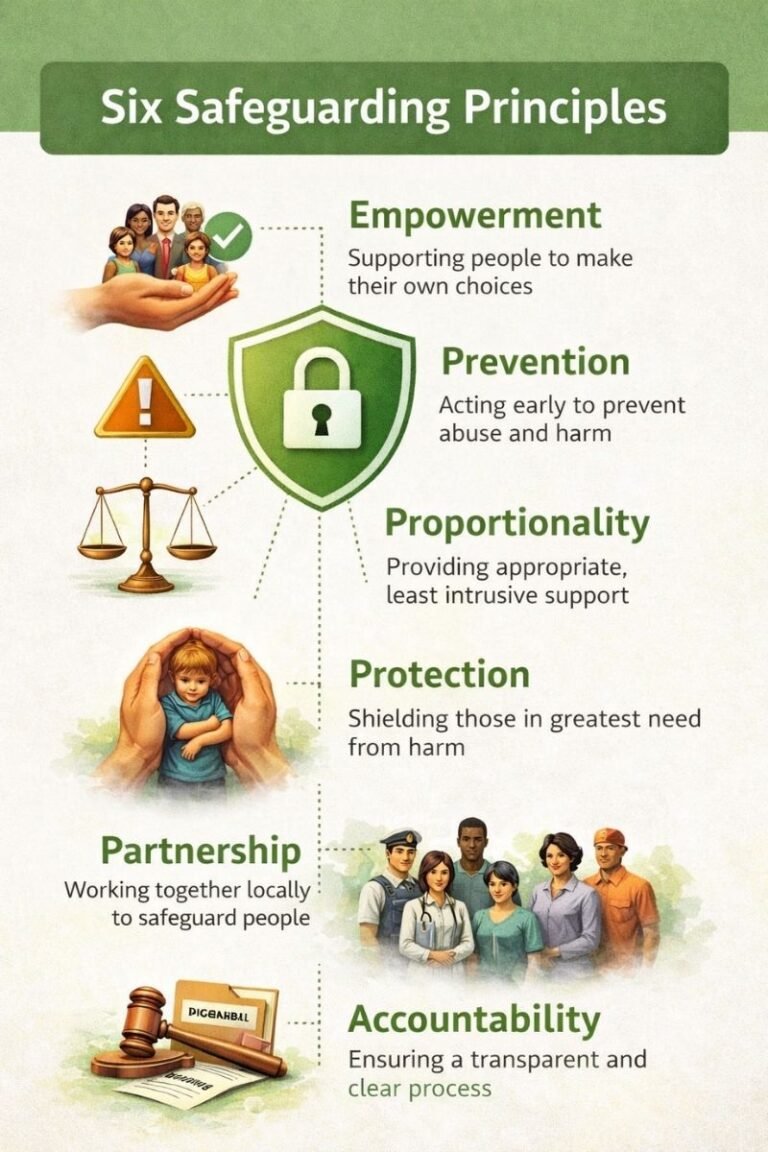
- Empowerment
- Prevention
- Proportionality
- Protection
- Partnership
- Accountability
The 6 Principles of Safeguarding Explained
1. Empowerment – Giving People Choice and Control
The empowerment safeguarding principle puts the person at the centre of care. It means people make their own choices in daily life. Staff support them, but they do not take control. This is the main idea behind the empowerment principle of safeguarding.
First, professionals focus on informed consent. They explain choices in a simple and clear way. Then they check if the person understands. After that, they support the person to make their own decision. Even when someone needs help, they still stay in control of their life.
For example, a care worker may help an older person choose meals. They give simple options and listen carefully. The person then makes the final choice. As a result, the person feels respected and confident. This approach also supports person-centred care in daily life.
2. Prevention – Stop Harm Before It Happens
The prevention safeguarding principle focuses on stopping harm early. It means acting before a problem becomes serious. It follows a clear idea: prevention is better than cure. The aim of safeguarding prevention is to keep people safe from the start.
First, professionals use training and awareness to lower risk. They also give clear information about abuse and warning signs. As a result, people know what to look for and when to ask for help. This early action can stop problems before they grow.
Next, early signs are very important. A person may look scared, quiet, or stay away from others. For example, a teacher may see a child avoiding friends. Then the teacher reports it quickly. After that, support teams step in and help early. This helps stop harm at the right time.
3. Proportionality – Respond in the Right Way
The proportionality safeguarding principle means responding based on the level of risk. It keeps actions fair, simple, and balanced. The proportionality principle safeguards safety while also respecting independence.
First, professionals choose the smallest action needed. They start with simple help, like advice or extra support. Then they check if things improve. If the risk grows, they take stronger action. This helps avoid too much control.
For example, low risk may mean extra visits or safety advice. However, high risk may need urgent help or emergency services. So, professionals match the action to the situation. As a result, people stay safe and still keep their freedom.
4. Protection – Support Those Most at Risk
The protection safeguarding principle has one clear aim. It keeps vulnerable people safe from harm. These people may not always protect themselves. So, safeguarding protection means fast action when danger shows up.
First, staff must act the moment they suspect abuse. They do not wait. They do not ignore signs. Instead, they report concerns straight away and follow the correct steps. This quick action helps stop harm before it grows.
Next, support systems move in quickly. Safeguarding teams, managers, and social services work as one team. As a result, they share responsibility and plan the next steps together. At the same time, training helps staff spot risks early and respond with confidence.
5. Partnership – Working Together to Keep People Safe
The partnership safeguarding principle means everyone works as one team. No service can do safeguarding alone. So, safeguarding a partnership brings shared action and stronger protection.
First, communication keeps everything linked. Schools, health services, police, care workers and families share key information. However, they only share what is needed and safe. This protects privacy and still keeps people safe.
Next, communities strengthen safeguarding even more. People often notice problems first. When they report concerns early, action starts faster. As a result, risks drop and support reaches people sooner. Together, this teamwork makes safety stronger every day.
6. Accountability – Clear Roles and Responsibilities
The accountability safeguarding principle means everyone owns a role in keeping people safe. No one can ignore it or pass it on. So, safeguarding accountability makes sure people act. It also stops people from avoiding their responsibility.
First, organisations set clear roles for staff. Everyone knows what they must do in safeguarding situations. As a result, this removes confusion and speeds up action when it matters most.
Next, transparency builds real trust. Staff report concerns honestly and record every step they take. This creates a clear trail of action. It also helps others understand what happened and why.
Finally, accountability builds confidence. When people see clear action and responsibility, they feel safer. It proves safeguarding stays active, serious and part of everyday care.
Why the 6 Principles of Safeguarding Are Important
The importance of safeguarding principles goes beyond basic safety. Here’s what they do in real life:
- Stop small problems from turning into serious harm because early signs can look simple at first.
- Protect people from hidden abuse, where fear or control stops them speaking out.
- Support fair decisions under pressure, when stress can lead to wrong choices.
- Protect dignity in every step of care, even during checks or difficult times.
- Create one clear system across services, so care does not depend on personal opinion.
- Reduce missed warning signs, especially when staff work alone without support.
- Build safe spaces to speak, where people feel safe to report concerns without fear.
How to Apply the 6 Principles of Safeguarding in Real Life
Applying safeguarding principles means using them in daily work. It turns learning into action. The idea of applying safeguarding principles helps protect people in real situations. This is what safeguarding in practice looks like.
First, listen to people with full attention. Give them time to speak and show respect. Next, look out for early signs like fear, silence, or sudden behaviour change. These signs often show that something is wrong.
After that, act quickly. Report concerns to the right person without delay. Do not ignore small warning signs. At the same time, work with others like managers, social workers, and health teams. This teamwork helps protect people in a stronger and safer way.
For example, a care worker may notice a person becoming quiet and worried. First, they listen carefully and note the concern. Then, they report it straight away. As a result, support starts early and risk stays under control.
Common Mistakes to Avoid in Safeguarding
Some small mistakes can lead to big safeguarding risks. Here are the main ones to avoid:
- Missing early signs that something is wrong
- Not listening properly to the person
- Waiting too long before reporting a concern
- Poor communication between staff and teams
These safeguarding mistakes can delay help and make situations worse. Good safeguarding needs quick action, clear communication, and close attention to warning signs.
Final Thoughts on 6 Principles of Safeguarding
The 6 principles of safeguarding are not just work rules. They shape how people think and act in real situations. To start with, many people think safeguarding only begins when harm happens. That is not true. It starts much earlier in small daily actions.
After that, small actions make a big difference. A simple talk, a quick check, or early reporting can stop bigger problems. These steps can protect someone before harm grows. At the same time, safeguarding is not only for hospitals or care homes. It also matters in schools, workplaces, and local communities. Wherever people live and work, safeguarding is needed.
Finally, good safeguarding becomes a daily habit. People notice warning signs early and act fast. When everyone follows the principles of safeguarding, safety becomes part of everyday life.
FAQs
1. What are the 6 key safeguarding principles?
- The 6 key safeguarding principles are Empowerment, Prevention, Proportionality, Protection, Partnership, and Accountability. They are the main rules that guide safe care and protect vulnerable people.
2. What are the 6 R’s of safeguarding?
- The 6 R’s of safeguarding are Recognise, Respond, Report, Record, Refer, and Review. These are the steps staff follow when they spot possible harm.
3. What are the 6 laws of safeguarding?
- The 6 laws of safeguarding are key UK rules that support safe care, such as the Care Act 2014 and other protection laws. They are made to keep adults and children safe from abuse and neglect.
4. What are the 6 principles of safety?
- The 6 principles of safety are simple rules that help prevent harm and reduce risk. They are used in care, schools, and workplaces to protect people.
5. What are the six basic principles?
- The six basic principles are Empowerment, Prevention, Proportionality, Protection, Partnership, and Accountability. They are the foundation of safe and fair support.
6. What are the 5 safeguarding principles?
- The 5 safeguarding principles are commonly seen as Empowerment, Prevention, Proportionality, Protection, and Partnership. Some guidance also includes Accountability as the sixth principle.
7. What are the 5 P’s in safeguarding?
- The 5 P’s in safeguarding are Prevention, Protection, Proportionality, Partnership, and Accountability. They are used to guide safe decisions and actions in care.

Level 2 Safeguarding Children Training Course
Course Description :
- Certificate: Yes(Free)
- Accreditation: CPD Accredited
- Access: Lifetime