No products in the cart.
Social work is a rewarding career. It gives you the chance to make a real difference in people’s lives. However, salaries can vary depending on experience, location, and employer type. For many starting out, pay begins around £33,000–£37,000. In the middle of a career, understanding a social worker income helps you compare opportunities and plan for growth. Meanwhile, experienced professionals in senior roles, especially in London, can earn over £50,000–£57,000. Therefore, knowing the pay range is important for choosing the right career path.
What is the Average Income of a Social Worker?
The average salary for a social worker in the UK is about £48,197 per year, according to Indeed. For example, new social workers usually earn between £32,000 and £37,000. Meanwhile, experienced or senior staff can earn from £37,000 to over £57,000. Also, social workers in London, the NHS or special roles often get higher pay. In addition, agency workers can earn extra money with hourly rates from £20 to £48. Finally, salaries can rise with experience, extra training, or specialised skills.
Key Salary Details for Social Workers:
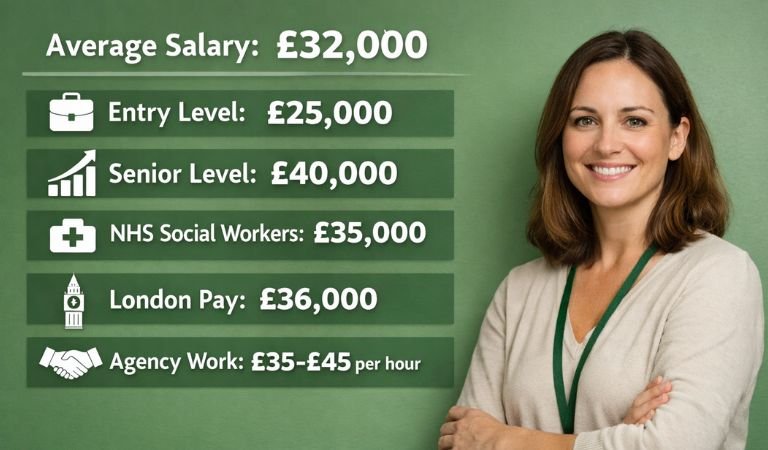
- Average Salary: Around £48,197 per year (Indeed).
- New/Entry Level: £32,000 – £37,000 per year.
- Experienced/Senior: £37,000 – £57,000+ per year.
- NHS Social Workers: Usually start on Band 6 (£38,682–£46,580). Band 7 can reach £47,810–£54,710.
- London Pay: Salaries are higher. Senior roles can reach £57,000+.
- Agency Work: Hourly rates often range from £20 to £48.
What do Social Workers do, and What are the Key Responsibilities of Social Workers
Social workers in the UK help protect people who need support. They are registered with Social Work England or similar bodies. Also, they make sure children, adults, and families stay safe. In addition, they promote well-being and protect people’s rights.
They work in councils, hospitals, and charities. Then, they join teams with other professionals to provide complete care. Social workers focus on preventing problems, supporting communities, and reducing inequality. Furthermore, they use data to make better decisions. Next, they plan personalised support for each person. Finally, they keep improving services to help more people.
Key Responsibilities of Social Workers:
- Preventing Harm: Social workers act early to stop problems from becoming crises. They help people live safely and independently.
- Assessing Needs: They check the strengths, needs, and wishes of individuals and families. Then they make support plans.
- Working with Teams: They work with health services, housing, and charities to give full care.
- Protecting and Advocating: They use legal powers to keep children and adults safe from abuse or neglect.
- Supporting Communities: Social workers help local groups build systems that respect culture and empower residents.
- Using Data: They study information to improve services, track results, and provide better care.
What Factors Influence a Social Worker’s Salary?
In the UK, social worker salaries depend on many things. For example, experience, location, and employer type are very important. Pay is usually higher in London and for private jobs. Also, senior staff with more responsibility often earn more. Salaries for experienced social workers usually range from £33,000 to £40,000. In addition, special skills like child protection or mental health work can increase pay. Meanwhile, agency workers may earn higher hourly rates but have less job security. Finally, extra payments or bonuses are sometimes offered to attract staff in hard-to-fill roles.
Key Factors That Affect Social Worker Salaries:
- Experience and Seniority: Higher responsibility roles, like Team Managers, get better pay. For instance, leading a team adds extra salary.
- Employer Type: Private jobs often pay more than local councils. NHS jobs follow set pay scales.
- Location: London and the South East usually offer higher salaries because living costs are higher. Meanwhile, other regions may pay less but provide extra incentives.
- Special Skills: Child protection, mental health or fostering roles often earn more.
- Agency vs Permanent: Agency workers may get higher hourly pay but less job security.
- Extra Payments: Local councils sometimes give temporary bonuses for hard-to-fill roles.
- National Pay Reviews: Public sector pay is checked each year. A 3.3% rise is planned for some areas.
- Qualifications: Degrees and extra training can increase salary. In addition, advanced courses can help you get promoted.
Full-Time vs. Part-Time Income for Social Workers
Social workers in the UK can work full-time or part-time. Full-time jobs usually mean 36–37.5 hours or more each week. These jobs pay more and help you move up faster. Salaries for full-time NHS staff are usually £32,000 to £48,000. Also, full-time workers get better benefits and pensions.
Part-time jobs give more free time and flexibility. However, pay is lower because it is pro-rata. Still, hourly rates for part-time jobs can sometimes grow faster than full-time jobs. Agency or locum work pays more per hour than permanent jobs. For example, agency workers can earn higher rates. But there are limits on agency pay to control costs.
Private vs Public jobs affect income, too. Private jobs can pay £60,000–£70,000+ for experienced staff. Also, these high-paying jobs usually need full-time hours.
Job availability matters. Only about 18–20% of social work jobs are part-time. So, full-time work is the normal choice for higher and steadier pay. Benefits depend on the contract. Full-time staff usually get better pensions and perks. Meanwhile, part-time jobs can give flexible hours to balance work and life.
Can Social Workers Make More with Extra Skills or Certifications?
Yes, social workers can earn more by learning new skills or getting certificates. For example, courses in child protection, mental health or fostering can increase pay. Some employers also give extra money for completing these special qualifications.
Skills in demand can make a big difference. Social workers who work with vulnerable people, handle difficult cases or support high-risk families often earn higher pay. Also, learning leadership or team management skills can lead to promotions and extra income.
Professional development is important too. Attending training, workshops, or extra courses improves knowledge and confidence. In addition, some employers give extra money or bonuses for advanced certificates or specialist skills. Social workers who continue learning are more likely to reach senior roles. Finally, extra skills and training help social workers provide better support and take on more responsibility.
Overall, gaining new skills, completing certifications, and doing professional development can help social workers earn more, grow in their careers, and work more effectively with the people they support.
How Does Location Affect Social Worker Income?
Where you work can change how much you earn as a social worker in England. For example, some regions pay more because the cost of living is higher. Also, areas with many job openings or high demand may offer extra money or bonuses.
Regional Salary Differences
Social workers in London usually earn the most. For instance, Inner London often gives up to 20% extra pay as a High Cost Area Supplement. This can mean around £7,000 more each year compared to other regions. The South East also offers higher pay, while the Midlands and North of England usually pay less.
City vs Rural Jobs
Big cities often give higher salaries and extra bonuses for jobs that are hard to fill. Meanwhile, rural areas may have lower pay but sometimes provide extra benefits, like travel allowances or more flexible hours.
Other Factors
Some councils add extra payments to attract skilled workers. In addition, moving to a high-demand area or taking a specialist role can increase your total income. Finally, knowing how location affects pay helps social workers plan their careers and make smart choices.
What Bonuses, Overtime, and Benefits Can Social Workers Get?
Social workers in the UK can get good pay and extra benefits. For example, many councils give annual retention bonuses. Also, working overtime can pay extra. In addition, benefits include pensions, flexible hours, and plenty of annual leave. Furthermore, some areas offer extra incentives for hard-to-fill roles.
Bonuses and Extra Money
Experienced social workers can earn extra through retention or market bonuses. For instance, some councils pay 7–15% more for staff in certain children’s teams. Also, newly qualified social workers may get £1,000–£2,000 when they start or after their first year. In addition, annual performance bonuses are common for good work. Finally, NHS social workers sometimes get one-off payments.
Overtime and Extra Pay
Working unsocial hours, like evenings, Sundays, or bank holidays, can increase pay by 60–100%. Also, bank rates in busy areas like London can reach £33 per hour. In addition, social workers may get time off instead of extra pay, called TOIL. Furthermore, senior roles often have more overtime opportunities. Finally, overtime helps staff earn extra money for busy periods.
Benefits and Perks
Employers often add a lot to pension schemes, sometimes over 16%. Also, social workers usually get 29+ days of annual leave plus bank holidays. In addition, they can buy extra leave. Social workers get time for training, usually 4+ hours per month. Furthermore, they may have a personal training budget for extra courses. Finally, other perks include flexible hours, help with moving, and support for work-life balance.
Tips to Increase Your Income as a Social Worker
If you want to earn more as a social worker, there are some easy steps. First, ask for better pay. For example, when starting a new job or new role, talk about salary, bonuses, and benefits. Also, show your skills, experience, and any special training.
Second, keep learning. Extra courses, workshops, and certificates can improve your skills. In addition, courses in child protection or mental health can help you get higher pay. Finally, learning new things makes you ready for bigger roles. Third, try higher-paying jobs. Jobs in child protection, mental health, fostering, or healthcare often pay more. Also, senior jobs or team leader roles give bigger salaries.
Meanwhile, agency or private work can give higher hourly pay if you want flexible hours. Overall, by asking for better pay, learning new skills, and finding higher-paying jobs, you can earn more. Plus, you will feel proud that your hard work and learning are helping your career grow.
Final Thought
Being a social worker is more than a job; it is about helping people and making a difference. First, understanding social worker income helps you plan your career. Also, your pay can grow with experience, extra skills, and qualifications. For example, taking courses in child protection or mental health can increase your earnings. Finally, learning new things, asking for fair pay and taking bigger roles can boost both your income and career. In the end, your effort not only improves your life but also helps the people you support live better lives.
FAQs about Social Worker Incomes
1. How much do social workers earn in the UK?
- Social workers in the UK earn between £32,000–£57,000 per year, depending on experience, location and role.
2. What jobs pay £200 a day?
- Jobs like freelance writing, delivery driving, tutoring, and admin temp work can pay around £200 a day.
3. Is a social worker a high paying job?
- Social work is moderately paid. Senior roles or specialist jobs can earn more, but it is not the highest-paying careers.
4. How much do social workers earn an hour?
- Hourly pay ranges from £15–£28, higher for agency or London-based roles.
5. Is social work a stressful job?
- Yes, social work can be stressful due to heavy workloads and emotional demands.
6. What jobs pay £40 an hour in the UK?
- Jobs like IT consulting, specialised nursing, legal work, and some agency social work can pay £40 an hour.
7. How to earn £3,000 a month in the UK?
- Earning £3,000 a month usually means a job with a £36,000 annual salary, freelancing, or agency work.
8. What is a low stress job?
- Low-stress jobs include librarian, data entry, laboratory technician, and some administrative roles.
9. What jobs pay £5K a month in the UK?
- High-paying roles like senior management, specialist IT, finance, and doctors can earn £5,000+ per month.
10. Is social work a 9-5 job?
- Not always. Many social workers work evenings, weekends or on-call shifts.
11. Who is the most paid social worker?
- The highest-paid social workers are usually senior managers, directors, or specialists in London or the private sector.
12. Does social work have a future?
- Yes, social work has a stable future due to ongoing demand for child, adult, and community support services.