No products in the cart.
Understanding the key principles of safeguarding is essential for everyone. In the UK, over 500,000 safeguarding concerns are raised for adults every year. Therefore, you should study because safety matters. In addition to this, you must listen carefully since victims need help. Spot signs; abuse hurts. As a consequence of this, we explain the rules clearly. However, watch carefully because danger is often hidden.
Furthermore, safeguarding stops neglect. Consequently, you must report worries because silence helps abusers. You can prevent harm because you care. Hence, we provide tips because you need help. Start now, as safety matters much. Understanding these ideas will help you feel much more confident.
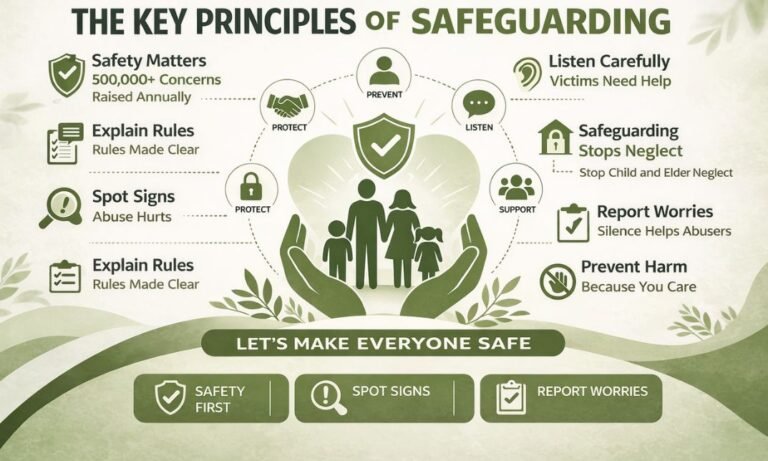
What is the Basic Meaning of Safeguarding?
Safeguarding is a special term we use for protecting people’s health. It also means protecting their human rights and staying safe from abuse. In the UK, everyone has a right to live without fear. Consequently, schools and hospitals have very strict rules to follow every day. They want to make sure that nobody ever treats you badly. If someone is hurting you, these rules help people stop that harm. Therefore, safeguarding is like a big shield for every person here. It keeps the community strong and keeps every individual very happy too.
What are the Six Key Principles of Safeguarding?
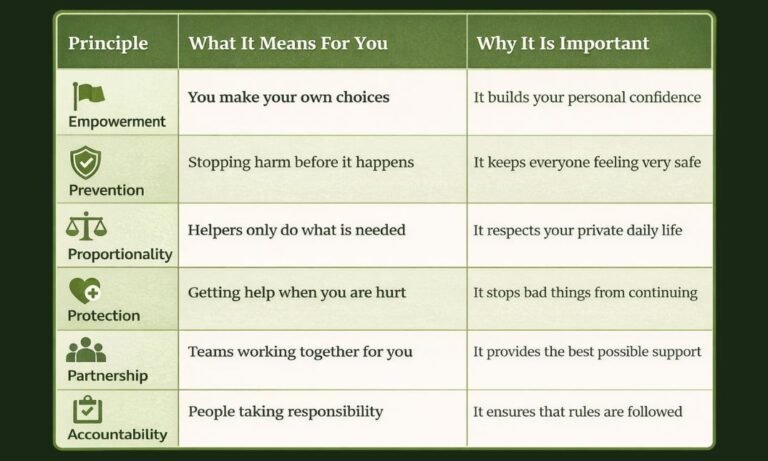
These rules exist because every person deserves to be treated with kindness. Without them, some people might not get the help they need. The six guiding principles of safeguarding are empowerment, prevention, proportionality, protection, partnership, and accountability. These principles create a fair system for everyone in the UK. When everyone follows the same rules, the community becomes much stronger. You can trust your teachers and doctors because they follow these ideas. Also, these principles help adults spot when someone is feeling very sad or unsafe. Because of this, the UK is a very safe place for families.
Why are the Key Principles of Safeguarding Essential?
There are six main ideas that people follow to keep you safe. These ideas come from a very important law called the Care Act. First, we have empowerment, which means you have your own clear voice. Because you are important, people must listen to what you want.
Secondly, we focus on prevention, which stops bad things before they start. It is much better to prevent harm than to fix it later. Thirdly, proportionality means that helpers only do what is really necessary. They do not interfere with your life more than they truly must.
Next, we have the idea of protection for those who need it. This means providing support to people who are in a bad situation. After that, a partnership is about different groups working together as a team. For example, your school might talk to a doctor to help you. Finally, accountability means that everyone is responsible for their own specific actions. If someone makes a mistake, they must explain why it happened clearly.
For more detailed guides, examples, and tips on safeguarding, read our another article, What Are the Key Principles of Safeguarding in the UK?
How Does Empowerment Help You Stay Safe?
Empowerment is all about giving you the power to choose things. For instance, you should decide what happens to your own healthy body. People should ask for your permission before they try to help you. Because you know yourself best, your opinion matters a lot to others.
Therefore, doctors will always explain things to you in a simple way. They want you to understand the choices you are making every day. When you feel empowered, you are more likely to speak up clearly. If something feels wrong, you will feel brave enough to say so.
Can We Prevent Harm Before It Actually Happens?
Prevention is a very smart way to look after every single person. Instead of waiting for a problem, we look for early warning signs. For example, teachers look for students who might be feeling very lonely. By talking to them early, they can stop a bigger problem.
Additionally, schools teach you how to stay safe while using the internet. This is a form of prevention because it stops online bullies. Because we act early, many people stay safe and very happy too. You can also help by telling a friend if you feel worried.
What Does Proportionality Mean in Your Daily Life?
Proportionality sounds like a big word, but it is quite simple really. It means that the help you get should fit your specific problem. If you have a small problem, the response should be small too. For example, a teacher might just talk to you in the hallway.
However, if the problem is big, more people will help you. Professionals try not to make a big fuss over tiny little things. Because of this, you can trust that they will be very fair. They want to respect your privacy while they are helping you out.
Who is Responsible for the Protection of Others?
Protection is a very important duty for all adults in the UK. This includes your parents, your teachers, and even your local police officers. If a person is in danger, these adults must act very quickly. They have been trained to spot when someone is being treated badly.
Furthermore, there are special social workers who help families stay very safe. Because protection is a priority, there are many places to find help. You are never alone if you are feeling scared or very hurt. Always remember that someone is always ready to listen to your story.
- Teachers help you learn and stay safe at school.
- Doctors look after your body and your mental health.
- Police officers keep the streets and the neighbourhood secure.
- Social workers provide extra support to families who need help.
- Parents or guardians care for you in your own home.
How Do Different Teams Work Together in Partnership?
Partnership means that nobody has to solve a big problem all alone. Sometimes, a doctor needs to talk to a school about a child. By sharing information safely, they can provide the best care for you. For example, a local council might work with a local youth club.
Because they work together, they can create a safer place to play. Also, this prevents any important information from being lost or forgotten. When people work as a team, they can help you much faster. This is why partnership is a vital part of the UK system.
Why is Accountability Important for the People Helping You?
Accountability ensures that everyone does their job in the correct way. If a professional does not help you, they might get in trouble. This keeps everyone honest and focused on your safety and your health. Furthermore, you can ask why certain decisions are being made for you. People must be able to explain their actions to their own bosses.
Because of this, the system stays very fair and very transparent too. It gives you peace of mind to know that rules are followed. Every adult in a professional role has a duty of care to you.
How Do These Rules Protect Children Specifically?
Children are very special and need extra care to grow up well. Therefore, the welfare of children is the most important thing in schools. Teachers are trained to look for signs that a child is unhappy. Because children are still learning, adults must guide them very carefully.
These principles ensure that every child has a fair chance in life. For example, every child should have enough food and a warm bed. If a child does not have these, the rules require action. Consequently, children in the UK are looked after by many kind people.
What Should You Do If You Feel Unsafe?
If you feel unsafe, the first step is to tell someone. You can talk to a teacher whom you like very much. Or, you can speak to a doctor at your local medical clinic. Because they know the rules, they will know exactly what to do. You do not have to handle a scary situation by yourself. Also, you can call Childline at a special phone number for help. They are very friendly and will listen to you for a long time. They will not judge you for feeling scared or very worried.
- Find an adult you trust to talk about your feelings.
- Tell them exactly what is happening and why you feel scared.
- Listen to the advice they give you about staying very safe.
- Remember that it is never your fault if someone hurts you.
- Wait for the helpers to do their job and protect you.
Where Can You Find More Information About Safety?
Your school library is a great place to find many helpful books. Furthermore, you can look at the official websites of the UK government. These websites explain your rights in many different and easy languages. Because you are new to the UK, it is good to learn. Most people are very happy to help you understand things more clearly. Therefore, do not be afraid to ask as many questions as you like. Learning about safety makes you a much stronger person in the community.
How Does the Community Stay Safe Together?
A safe community is built on trust and talking to one another. When we look out for our neighbours, everyone feels much more secure. For example, you can tell an adult if a friend is sad. Because we care for each other, the UK stays a nice place.
Additionally, following the law helps everyone live in peace and quiet. We all play a small part in keeping our streets very safe. When we follow these principles, we make our towns better for everyone. Your voice is a part of this big and friendly team.
Summary of the Six Principles
To help you remember, let us look at the list again. Empowerment gives you a voice and a choice in your life. Prevention stops harm before it can even start to happen to you. Proportionality means the help fits the problem in a very fair way. Protection is there for when things are truly going very wrong. Partnership means that everyone works together to support your daily life. Accountability means that people are responsible for what they do for you. These six ideas are the foundation of a very kind society.
Why is the UK a Special Place for Safety?
The UK has many laws that put your safety first every day. Because of these laws, people are treated with a lot of respect. You will see that people are very helpful in this country. Whether you are at school or at a park, safety matters.
Furthermore, the government spends a lot of time training people to help. This means that help is always close by whenever you need it. Because you live here now, these protections belong to you, too. You should feel very proud to be part of this community.
Final Thought
Understanding the key principles of safeguarding is essential for everyone in the UK. These principles help protect, prevent harm, and empower individuals every day. By following them, adults work together to provide safety, support, and care for children and vulnerable people. Everyone has a role, from teachers and doctors to parents and social workers, to ensure a safe community. Learning and applying these rules builds confidence, trust, and well-being, making the UK a secure and friendly place for all.
FAQs
1. What are the 5 key principles of safeguarding?
- The five key principles are protecting people, preventing harm, empowering individuals, responding to concerns, and promoting well-being.
2. What are the 5 P’s in safeguarding?
- The 5 P’s are prevent harm, protect individuals, promote well-being, encourage participation, and provide support.
3. What are the 6 principles of safety?
- The six principles include preventing harm, ensuring welfare, respecting rights, acting responsibly, being accountable, and working together.
4. What are the 6 principles of safeguarding level 1?
- The 6 principles of safeguarding level 1 are empowerment, prevention, proportionality, protection, partnership, and accountability.
5. What are the 5 R’s of safeguarding?
- The 5 R’s are recognise abuse, respond quickly, report concerns, record details, and refer to the right authority.
6. What are the 4 P’s of safeguarding?
- The 4 P’s are protect people, prevent harm, promote well-being, and provide support.
7. What are the 7 golden rules of safeguarding?
- The seven rules are stay alert, listen carefully, report concerns, act responsibly, respect confidentiality, follow procedures, and record incidents.
8. What are the five key principles?
- The five key principles are safety, prevention, protection, partnership, and accountability.