No products in the cart.
Food safety is very important for kitchens, restaurants, and food businesses. The 7 principles of HACCP help keep food safe. This system stops problems before they happen, instead of only checking food at the end. In this blog, we will explain how conducting hazard analysis, finding Critical Control Points (CCPs), setting critical limits, checking food, taking corrective actions, verifying, and keeping records all work together to make food safe for everyone.
In this article, we will talk about the seven HACCP principles and why they matter for a food business. We will also explain how to use a HACCP system at work.
What is HACCP?
HACCP stands for Hazard Analysis and Critical Control Point. It is a food safety system that helps businesses find, check, and control dangers that can make food unsafe. For example, it can prevent contamination before it happens.
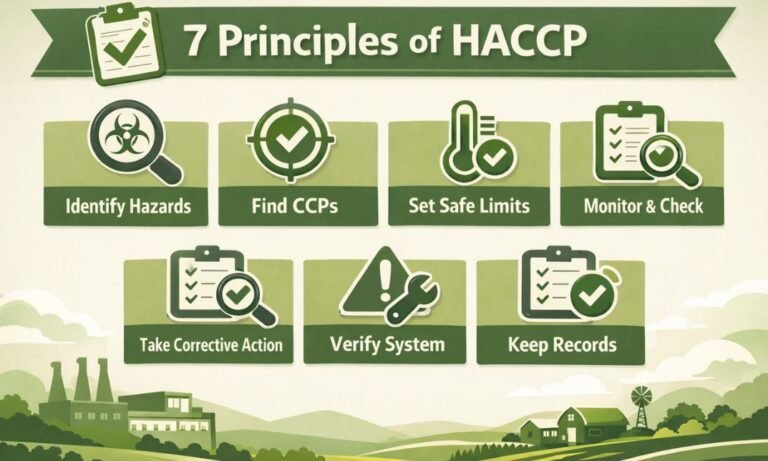
So what are the seven principles in HACCP ?. Let’s know that the name of HACCP:
- Look for possible hazards.
- Find the Critical Control Points (CCPs).
- Set safe limits for each CCP.
- Check and monitor the CCPs.
- Take action if something goes wrong at a CCP.
- Verify that the system is working properly.
- Keep clear records of every step.
Food safety is very important for all food businesses. Therefore, HACCP uses a preventive approach. It checks what could go wrong at each stage of food production. Also, it puts controls in place to stop problems before they happen. Finally, following these principles helps keep food safe for everyone.
Why Understanding HACCP Is Important
Knowing HACCP is very important for anyone who works with food. It helps protect consumers from food hazards. For example, following HACCP stops food poisoning and other risks before they happen. This makes customers feel safe and confident in the food they eat.
Understanding HACCP also keeps your business legal. Food safety rules in the UK are strict. Also, using HACCP shows you care about doing things the right way. It can prevent fines and other problems.
HACCP is helpful for your staff, too. It makes work easier and more organised. In addition, everyone knows what to check and what to do if something goes wrong. Overall, HACCP keeps food safe, your team confident, and your customers happy.
Principle 1: Conduct a Hazard Analysis
The first step in HACCP is to find possible hazards in food. Hazards can be biological, like bacteria or viruses that cause food poisoning. They can be chemical, like cleaning liquids or food additives. They can also be physical, like glass, metal, or stone. For example, raw meat can carry bacteria such as Salmonella. Broken machines can leave small pieces of metal in food. Even fruits and vegetables can have dirt or tiny insects.
Also, checking for hazards early helps prevent problems before the food reaches customers. This way, you can stop risks before they cause harm. Finally, by carefully looking at each step of food preparation, you show that you care about the safety of the food you serve.
Principle 2: Determine Critical Control Points (CCPs)
In your food process, you need to identify the Critical Control Points (CCPs). These are the steps where hazards can be stopped or controlled. Cooking, cooling, or storing food at the right temperature are common CCPs.
Controlling hazards at these points is very important because if you miss a CCP, bacteria or chemicals can reach customers. Paying close attention during these steps keeps food safe and healthy. For example, checking the temperature of cooked meat ensures it is safe to eat.
Knowing your CCPs gives you control over the process. This way, you can act quickly if something goes wrong. Also, focusing on these key points shows that you care about the safety of the food you serve.
Principle 3: Establish Critical Limits
The third step in HACCP is to set critical limits. Critical limits are the maximum or minimum values that keep food safe. They show exactly how hot, cold, or long something should be during cooking, storing, or processing.
For example, cooked chicken must reach at least 75°C, and milk should be stored below 5°C. Also, some foods need a certain pH or cooking time to stay safe. Following these limits stops bacteria or chemicals from making people sick.
Setting clear limits gives you control and confidence in your food. This way, you know the food is safe before it reaches customers. Staff can follow these limits easily, which helps protect everyone who eats your food.
Principle 4: Monitor CCPs
The fourth step in HACCP is to monitor the Critical Control Points (CCPs). Monitoring means checking the important steps regularly to make sure food stays safe. You watch the temperature, time, or other limits that you set earlier.
For example, you can use a thermometer to check cooked meat, a timer for cooling food, or pH strips for acidic foods like sauces. Also, you can visually inspect food for colour, smell, or texture changes. Recording these checks helps you spot problems quickly and prevent hazards. For instance, noticing that a fridge is too warm allows you to fix it before food spoils.
Monitoring may seem like extra work, but it protects your customers and shows that you care about the food you serve. Finally, regular checks help improve your kitchen process. They make work more organised and reduce mistakes.
Principle 5: Establish Corrective Actions
It is important to have corrective actions ready in your kitchen. These are steps you take when a critical limit is not met. For example, if cooked chicken does not reach 75°C, you must cook it longer. If milk goes above 5°C, you must cool it quickly or remove it from use. If a machine breaks, you must check all the food it touched.
Having these actions stops hazards from reaching customers. Also, a clear plan reduces stress for staff because everyone knows exactly what to do. This way, food stays safe and healthy. Corrective actions show that you take food safety seriously. They protect your customers and give confidence to your team that the food they serve is safe.
Principle 6: Verification Procedures
You need to make sure your HACCP system really works. Verification checks that all the safety rules are being followed. It is not enough to just set limits; you must see that people stick to them.
For example, you can do regular audits or look over records. You can also check cooking temperatures, storage conditions, and cleaning logs. Also, this helps you catch mistakes before they become big problems.
Verification gives you confidence that your food is safe. This way, you know your team is doing their job correctly. Regular checks also show your customers and staff that you care about food safety. Finally, verification helps make your kitchen better. You can fix weak points, train staff, and keep food safe every day.
Principle 7: Record-Keeping and Documentation
Keeping good records is the final step in HACCP. Records show that you follow all the food safety rules and limits. They help you track what is done in your kitchen every day.
For example, you can use logs to note cooking temperatures, checklists to track cleaning, and reports to record any problems. Also, these records help you see patterns, so you can fix issues before they become serious.
This way, you can prove to yourself, your staff, and customers that food is safe. Good record-keeping also makes it easier to train new staff and keep your kitchen organised. Finally, clear documentation shows that you care about food safety and the people who eat your food.
What Are Common Mistakes to Avoid in HACCP?
Even with HACCP, mistakes can happen. Common ones are:
- Not checking CCPs regularly: skipping checks can let hazards reach customers.
- Poor record-keeping: without clear logs or checklists, mistakes go unnoticed.
- Ignoring small hazards: even little risks, like dirt on vegetables or a crack in equipment, can cause big problems.
Avoiding these mistakes shows you care about food safety: your team works confidently and your customers trust you more.
What Tools and Technology Help With HACCP?
Using the right tools makes HACCP much easier. Some useful tools and technologies are:
- Thermometers: check that food is cooked or stored at the right temperature.
- pH meters: test acidity in sauces or drinks.
- Digital logs: record checks and measurements clearly and safely.
- Software: track your HACCP plan, remind you to check CCPs, and keep all records in one place.
Also, using these tools saves time and reduces mistakes. This way, you can spot problems before they become serious. Plus, your team feels more confident, and your kitchen stays organised every day.
Final Words
HACCP is a system that helps keep food safe. First, following the seven steps can stop problems before they happen. Also, it protects your customers and keeps your kitchen organised. Finally, using the right tools, checking food carefully, and keeping clear records make work easier. When you follow HACCP, your customers trust your food, your staff feel confident, and your business stays safe
FAQ: What Do People Commonly Ask About HACCP?
1. What are the 7 HACCP principles and their concept?
- Conduct a Hazard Analysis – Identify possible food hazards.
- Determine Critical Control Points (CCPs) – Find points to control hazards.
- Establish Critical Limits – Set safe limits for each CCP.
- Monitor CCPs – Regularly check the CCPs.
- Establish Corrective Actions – Fix problems when limits are not met.
- Verification Procedures – Ensure the system works correctly.
- Record-Keeping and Documentation – Keep clear records of all steps.
2. Which is the last of the 7 HACCP principles to be implemented?
Record-Keeping and documentation are the last principles.
3. What is the HACCP system in the UK?
HACCP in the UK is a legal food safety system that helps businesses prevent, monitor, and control food hazards.
4. What are the 7 steps of food safety?
- Clean – Wash hands and surfaces.
- Separate – Avoid cross-contamination.
- Cook – Cook food to safe temperatures.
- Chill – Store food at safe temperatures.
- Avoid contamination – Keep food safe from hazards.
- Check – Monitor food and hygiene.
- Protect – Keep food safe until served.
5. What is the first step in the 7 principles of a HACCP plan?
The first step is to conduct a Hazard Analysis.
6. What are the 5 C’s of food safety?
Clean, Cook, Chill, Cross-contamination prevention, and Check.
7. How to explain HACCP in an interview?
HACCP is a system to identify, monitor, and control hazards in food production to keep food safe for consumers.
8. What are the 7 steps of hazard?
- Identify hazards
- Assess risks
- Determine control points
- Set limits
- Monitor controls
- Take corrective actions
- Keep records
9. What is the first principle of HACCP?
The first principle is to conduct a Hazard Analysis.

Level 3 HACCP Training Course
Course Description :
- Certificate: Yes(Free)
- Accreditation: CPD Accredited
- Access: Lifetime