No products in the cart.
What metal is used for pipes in plumbing in houses? The simple answer is copper, which stands as the most common and reliable metal found across UK homes in these current days. Its primary job is to safely transport hot and cold water, power central heating systems, and secure key boiler connections.
However, copper is rarely the only material handling a property’s water supply. Brass frequently appears in durable fittings and valves while stainless steel is utilised for specialised plumbing cases. In older properties, homeowners might still uncover legacy systems made of lead or galvanised steel. Meanwhile, modern builds regularly blend these traditional metals with flexible plastic piping.
It is important to know your pipework, both for home maintenance and safety. Knowing if your property is wired with modern copper or old and possibly dangerous materials such as lead can help you make informed decisions when it comes to renovations or repairs. That’s why it’s so important to choose the right plumbing metals.
Let’s take a closer look at where each material fits and how to select the best option for your property.
Which Metal Fits Each Part of a House?
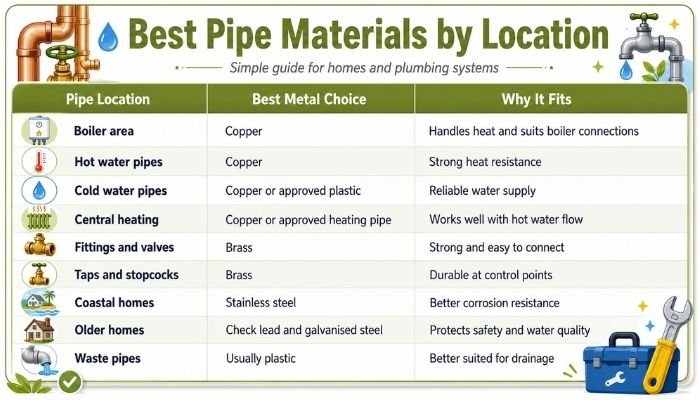
Let’s keep an eye on the details. Well, a good plumbing system does not use one material everywhere. The best material is very much dependent on the pipe location. You have to match the metal to the job, so the system will be reliable.
The table below shows the right metal choice for every part of your house:
Why Is Copper the Most Common Plumbing Metal?
Copper became the industry standard because it offers strength, heat resistance, and long-term reliability. In addition, it does not rust like ordinary steel, and it remains perfectly safe for drinking water when approved for plumbing use. As a result, plumbers like it because it has a long, proven track record, while homeowners appreciate that it can last for decades when fitted well.
Consequently, you can find copper plumbing pipes in a variety of locations, including kitchens, bathrooms, boiler connections, hot water cylinders, radiators, utility rooms, and visible pipe runs. In some cases, installers also use copper for gas pipework, though a qualified professional must always handle that work.
However, copper costs more than many plastic options and requires highly skilled installation. On the other hand, poorly soldered joints can leak and copper may suffer from degradation over time in specific water conditions.
Ultimately, copper is not always the cheapest option, but it remains the best-known all-round metal for house plumbing.
What Other Metals Are Used in Plumbing?
There are a lot, let’s start with Stainless steel. It is not an everyday choice for most homes because it carries a high price tag. However, it provides excellent service where corrosion is a serious concern. Coastal homes or properties with difficult water conditions benefit greatly from stainless steel plumbing pipes. The material is strong, clean, and exceptionally long-lasting, but the higher cost limits its use to specialist situations.
Now, brass also plays a major role, though it appears more often in fittings than in full pipe runs. Homeowners often find brass plumbing fittings in taps, valves, stopcocks, connectors and compression fittings. Brass works beautifully because it resists corrosion and connects neatly with copper systems without causing chemical reactions.
There are also historical materials to consider, like galvanised steel plumbing pipes. These appeared more frequently in older homes built during the mid-twentieth century. This material features a zinc coating that helps slow down rust.
On top of that, the internal rusting causes low water pressure, rusty water, and poor flow. As a result, if a home contains old galvanised steel pipes, a plumber will usually recommend full water pipe replacement during renovation work to ensure modern safety and water quality.
Metal Pipes vs Plastic Pipes: Which Is Better?
In a recent survey, many UK homes use both metal and plastic pipework. It is rarely the case that one material is universally better than the other, as each serves a distinct purpose.
On the one side, Metal pipes, especially copper, are strong, neat, and highly heat-resistant. They suit boiler areas, visible pipework, and high-temperature sections perfectly. On the other side of the debate, plastic pipes, such as PEX or polybutylene, offer excellent flexibility and run easily through tight spaces.
These modern plumbing pipe materials reduce installation time and labour costs significantly. They work best for hidden pipe runs, underfloor heating, and extensive renovation work.
How Long Do Metal Plumbing Pipes Last?
The true plumbing pipe duration depends on more than just the material itself. Local water quality, system pressure, installation skill and regular maintenance all influence the timeline.
- Copper: Can last for fifty to seventy years, or even longer when installed well.
- Stainless Steel: Offers an incredibly long metal pipe lifespan, often outlasting the building, but the high cost limits its use.
- Brass: High-quality fittings last for decades when fitted correctly at control points.
- Galvanised Steel: May physically last for decades, but internal corrosion reduces water flow after thirty to forty years.
- Lead: May last physically for a century, but that durability does not make it safe for drinking water.
When Should Old Metal Pipes Be Replaced?
Old pipes rarely fail all at once, as they usually give small warning signs before a major breakdown occurs. Low water pressure often suggests internal corrosion or scale buildup while brown or rusty water typically points to failing galvanised steel pipework.
However, managing old plumbing requires a targeted approach based on the specific materials involved. Lead pipes always need a safety check and galvanised steel pipes require attention when water pressure drops. While copper pipes may only need a local repair if the rest of the system remains healthy fear of high costs can stop property owners from addressing these issues early.
So, a major bathroom plumbing, kitchen plumbing, or boiler installation upgrade provides the perfect time to inspect old pipework. Property owners need to focus on preventative maintenance and act during renovations.
How Should UK Homeowners Choose the Right Pipe?
The right pipe choice starts with the house, not the material. A homeowner must think about the age of the property, the pipe location, water pressure, water quality, and budget. You must also consider whether the pipe carries drinking water, heating water, gas, or waste.
Protect your health by using approved materials for drinking water. By law, gas pipework must be carried out by a Gas Safe plumbing services engineer. For major plumbing changes, an emergency plumber or qualified installer should inspect the full system first.
You can follow a simple decision process for your home. Choose copper when you want a proven all-round metal pipe for visible runs. Commit to a lead pipe replacement UK project to protect your drinking water safety. Replace failing galvanised steel when pressure drops, and use approved plastic pipework when flexibility in hidden runs matters most.
Final Thoughts on What Metal Pipe Is Best for Your Home?
Understanding what metal is used for pipes in plumbing in houses is the first step toward maintaining a safe, efficient home. While copper remains the gold standard for its heat resistance and longevity, the ideal choice ultimately depends on the specific pipe location.
However, managing residential plumbing involves more than just identifying materials. For older properties it requires urgent checks for hazards like lead or galvanised steel. A skilled plumber can inspect your pipework, break down exactly what you have and safely guide you through necessary upgrades or repairs.
If you want to confidently handle these systems yourself, understanding the theory behind modern pipework is essential. The Professional Plumbing Online Course provides a comprehensive foundation teaching you how to install, maintain and troubleshoot household plumbing systems effectively.
Ultimately, keeping your home’s pipework in top shape is about awareness, timely maintenance, and the right expertise. When you invest in proper care and training, you ensure a safer, leak-free environment for your household.
Frequently Asked Questions (FAQs)
1. What is the healthiest plumbing material?
- Copper and approved plastic pipes like PEX are the healthiest materials for modern home plumbing.
2. What year did they stop using cast iron pipes?
- UK installers generally stopped using cast iron for residential drainage pipes during the mid-1970s.
3. Is water from galvanised pipes safe to drink?
- No, old galvanised pipes leach lead and rust, making the water unsafe for drinking.
4. Why don’t plumbers use copper anymore?
- Plumbers still use copper, but they prefer plastic for hidden runs to save money.
5. What are mains water pipes made of in the UK?
- Modern UK mains water pipes use blue polyethene plastic, while older systems use cast iron.
6. What pipes do you not want in your house?
- You do not want lead or old galvanised steel pipes due to health risks.
7. How to tell if cast iron pipe needs to be replaced?
- Look for frequent blockages, damp patches, foul odours, and visible rust leaks along the pipe.
8. How to tell if wrought iron or cast iron?
- Cast iron looks thick and rough, while wrought iron appears thinner, smoother, and easily bent.
Professional Online Plumbing Course
Course Description :
- Certificate: Yes(Free)
- Accreditation: CPD Accredited
- Access: Lifetime