No products in the cart.
A plumber installs, repairs and maintains water, heating and drainage systems in buildings. Plumbers work in homes, offices, schools and construction sites across the UK. Moreover, skilled plumbers help keep water systems safe and working properly. Because of this, plumbing remains a respected and high-demand trade today. So, how to become a plumber UK?
Many people start with college courses or apprenticeships. After training, learners complete NVQ qualifications and gain practical experience. Meanwhile, beginner plumbers often earn around £18,000 yearly in the UK. Experienced plumbers and business owners can earn much higher salaries later. This guide explains training routes, qualifications, salaries and career steps clearly.
What is a Plumber and What Do They Do?
A plumber installs, repairs and maintains water, heating and drainage systems in buildings. They work in homes, offices, schools and construction sites across the UK. Moreover, plumbers handle many important daily tasks in different work environments.
Plumbers install sinks, toilets, showers and water pipes in new buildings. They also repair heating systems, blocked drains and leaking pipes. In many cases, plumbers attend emergency call-outs for burst pipes or major water leaks. Skilled plumbers also work with boilers, radiators and heat pumps. Furthermore, they cut, weld and fit pipes during plumbing installations and repairs.
What Does a Plumber Do in Daily Work?
Plumbers do both planned work and emergency repair jobs in different places. Some days, they install bathrooms or fit pipes in new buildings. Other days, they fix urgent problems like water leaks, blocked drains or broken heating systems.
Plumbers work indoors and outdoors in all weather conditions throughout the year. The job involves physical tasks like lifting tools, bending pipes and working in tight spaces. Moreover, plumbers use pipe cutters, wrenches, drills and testing equipment every day. They also speak with customers, builders and site managers during projects. In urgent situations, plumbers quickly find problems and repair damaged systems safely.
How Much Do Plumbers Earn in the UK?
Plumbing income grows strongly with experience and skill level. Many plumbers start on lower pay, but earnings rise quickly with training and hands-on work. Location also plays a big role, especially in busy cities where demand stays high. Specialist skills, like boiler repair or heating systems, can push income even higher.
Self-employment gives plumbers more control over their rates and workload. Some choose contract work or start their own business for higher returns.
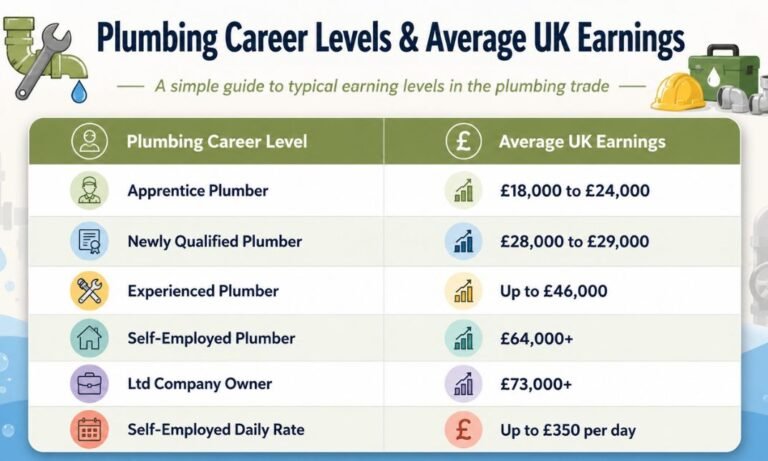
Thinking about plumbing as a career? Check out our other blog on “How Much Does Plumbing Make a Year?”
What are Plumbers Working Hours Like?
Plumbers usually work between 37 and 45 hours each week. Many start early in the morning to reach job sites on time. Some jobs also run into evenings based on project needs. In many cases, plumbers change their schedule depending on customer demand.
However, the job does not always follow fixed hours. Emergency call-outs can happen at night, on weekends or during holidays. This is common when pipes burst or heating systems fail. As a result, plumbers often need to stay flexible with their time.
Work-life balance depends on the type of job. Employed plumbers may have more stable hours. Self-employed plumbers often choose their workload, but they also take more emergency jobs.
What Skills Do Plumbers Need?
Plumber job requirements include both technical skills and practical abilities. Plumbers must work with tools, pipes and systems every day. So, strong hands-on skills are very important for this job.
Maths skills also matter because plumbers measure pipes and calculate sizes. They often read technical drawings to understand building layouts. Moreover, problem-solving helps them fix leaks, blockages and heating issues quickly.
Good communication is also needed when dealing with customers and site teams. Plumbers explain problems and solutions in simple terms. The job also needs physical fitness because it includes lifting, bending and working in tight spaces. Safety awareness and teamwork are important to avoid risks and complete jobs properly.
How to Become a Plumber UK Through Training and Apprenticeships
You can choose different ways based on your situation and goals. The most common way is an apprenticeship. You can earn as you learn by combining classroom instruction with actual job labour.
An apprenticeship usually needs 4 to 5 GCSEs, including English and Maths. A Level 2 apprenticeship teaches basic plumbing skills, safety rules and practical work on-site. After that, learners move to higher levels and gain more experience with real jobs.
You can also start with a college course in plumbing. It helps you get jobs more easily. In this route, you first learn theory in class. After that, you move on to work placements to gain real experience.
Another option is fast-track training. It requires around 6 to 10 weeks for basic skills. Some people also start as junior site workers. They learn on the job with help and support from experienced plumbers.
What Qualifications Do You Need to Be a Plumber?
It totally depends on your career stage and job type. The majority of plumbers receive basic training before developing their abilities via job experience. NVQ qualifications play a key role because they prove real on-site ability. These qualifications help you move from beginner to a fully skilled plumber.
- Level 2 Diploma in Plumbing & Heating: Covers basic plumbing skills, tools and safety training.
- NVQ Level 2: The main industry standard that shows practical plumbing competence on real job sites.
- NVQ Level 3: Advanced qualification for complex plumbing systems and higher-level work roles.
- CSCS Card: Required for most construction site jobs and proves health and safety knowledge.
- Gas Safe Registration: Needed if you want to legally work on gas equipment in the UK.
What is Plumbing Certification in the UK?
Plumbing certification shows that a person has the right skills and training to work safely. In the UK, plumbing certification proves you can handle real plumbing tasks in homes and buildings. It also helps employers trust your ability on the job.
Most plumbers gain certification through a Level 2 Diploma and NVQ system. The NVQ proves real work skills on site, not just classroom learning. This makes it the main industry standard for becoming a qualified plumber.
Plumbing certification is important for legal and safe work in the UK. Without it, you may not get full access to job sites or employers. Certified plumbers get better job chances and higher pay. A trained plumber may know the basics, but a fully qualified plumber holds NVQ certification and can work independently.
How Long Does It Take to Become a Plumber?
A plumber’s job depends on the training route you choose. A fast-track course takes around 6 to 10 weeks. It teaches basic plumbing skills but does not make you fully qualified.
An apprenticeship often takes 2 to 4 years. During this time, you learn on real job sites and earn money while training. You also complete NVQ assessments to prove your skills.
Full qualification often takes around 2 to 5 years in total. This depends on how fast you gain experience and complete NVQ requirements. In short, more hands-on work means faster progress toward becoming a qualified plumber.
What are the Main Plumbing Training Routes?
There are many ways to start a plumbing career in the UK. Each route suits different learning styles and goals. Apprenticeships are the most popular option. You need 4 to 5 GCSEs, including English and Maths. You work on-site and study at the same time, so you earn while you learn.
Theory is taught first in college courses, followed by work experiences to gain experience. Basic skills require 6 to 10 weeks of fast-track instruction, although an NVQ is still required. Some people start as work-based assistants and learn directly on jobsites. This route gives strong flexibility and real industry experience.
What are Plumbing Certification Packages and Costs?
Plumbing certification packages give structured training for beginners who want to enter the trade. These packages combine theory, practical skills and industry standards. They help learners move step by step from basic knowledge to full qualification.
Most training providers offer different levels of packages based on skill depth. The cost and duration also change depending on the package you choose.
- Course cost: £2,995 + VAT.
- Finance option: £99 per month.
- Duration: 6 to 10 weeks.
- Bronze package: Basic plumbing diploma covering core skills in 6 weeks.
- Silver package: Includes NVQ training and water regulations knowledge.
- Gold package: Adds gas and heating system training for advanced work.
- Platinum package: Full advanced package with complete industry-level training.
What Skills Do You Learn During Training?
Plumbing training builds strong hands-on skills for real job work. You learn how to handle tools, follow safety rules and work on different systems found in homes and buildings.
Trainees learn pipe fitting and cutting using the correct tools and methods. They also install heating systems, including boilers and radiators. Hot and cold water systems are another key part of training, so you understand full water flow setups.
Safety procedures play a big role in daily work, especially on job sites. You also gain basic electrical awareness linked to plumbing systems. Most training includes practical workshop sessions so you can practise real tasks before working on site.
What is the Career Path After Becoming a Plumber?
A plumbing career offers clear growth over time. Most people start as an apprentice and slowly move into skilled roles. Plumbers with experience can make a variety of decisions based on their interests and financial objectives.
The journey usually begins as an apprentice and then moves to a qualified plumber’s position. After that, a lot of plumbers have full-time jobs or decide to work for themselves in order to make more money. As experience and skill levels rise, income likewise rises.
From here, plumbers can specialise in gas engineering, heating systems or renewable energy installation. These roles often pay more and require extra certifications. Some professionals move into supervisor roles or start their own plumbing businesses. This allows full control over work and income growth.
What is the Work Environment Like for Plumbers?
Plumbers work in many places, including homes, construction sites and commercial buildings. Each job feels different, depending on the location and task.
The work is often physical. Plumbers bend, lift and move in tight spaces like under sinks or behind walls. Sometimes, they work outside in all weather conditions. Rain or cold weather does not stop urgent jobs.
Emergencies also happen. Burst pipes or heating failures need fast action. Safety is one of the important factors in every job. Plumbers wear protective gear like gloves, boots and goggles. This helps reduce risks and keeps work safe on site.
Final Thoughts
How to become a plumber UK follows a clear path from training to qualification. Some routes take 6 weeks. While apprenticeships take up to 4 years. The job offers strong salary growth and steady demand in the UK. Develop your plumbing talents gradually by beginning with training or an apprenticeship.
Ready to take the first step? Start your plumbing training with our Professional Online Plumbing Course
FAQs on How to Become a Plumber UK
1. How long does it take to become a plumber in the UK?
- It usually takes 6 weeks for basic training or 2 to 4 years through an apprenticeship.
2. Can you become a plumber at 40?
- You can become a plumber at 40 with training or a career change route.
3. Do plumbers get paid well in the UK?
- Plumbers often make between £28,000 and £46,000 or more with experience.
4. Is 30 too old to be a plumber?
- No, 30 is not too old and many people start plumbing at this age.
5. What is the number one killer of plumbers?
- Falls from height and unsafe working conditions are the biggest risks in plumbing jobs.
6. What is the 135 rule in plumbing?
- The 135 rule is a pipe fitting method used to create smooth directional changes.
Professional Online Plumbing Course
Course Description :
- Certificate: Yes(Free)
- Accreditation: CPD Accredited
- Access: Lifetime