No products in the cart.
If you enjoy swimming and helping people, you might consider this career. Lifeguards are very important people in every British community. They keep swimmers safe in leisure centres and on sunny beaches. Private clubs also hire them to watch over their luxury pools. Many new arrivals in the UK look for active jobs. Therefore, you might wonder if this role is right for you. People often ask how much lifeguard jobs pay before they start. Knowing the salary helps you plan your monthly budget carefully. You need to know if the income covers your daily rent.
To become a professional, you must earn a special certificate first. This is usually the National Pool Lifeguard Qualification, or NPLQ. Consequently, the pay often reflects your skills and your official training. Currently, there is a very high demand for these workers. Many fitness clubs are searching for staff to join them today. This guide will explain everything you need to know about money.
How Much Do Lifeguard Jobs Pay on Average in the UK?
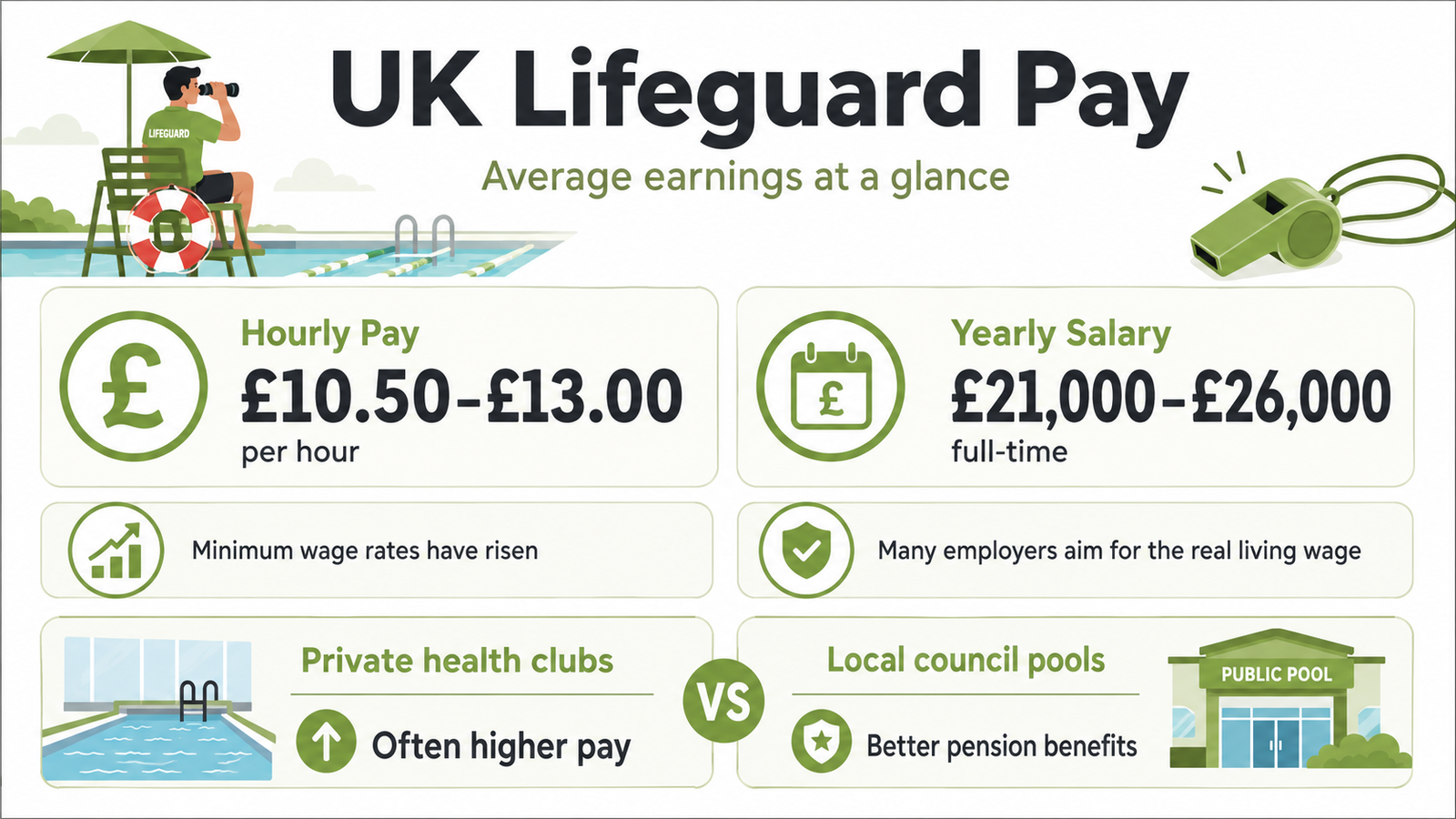
Understanding the average income is the first step for your journey. Generally, most entry-level positions offer a very fair hourly wage. You can expect to earn between £10.50 and £13.00 per hour. However, your age can sometimes change the specific amount you receive.
The government sets a national minimum wage for all UK workers. Recently, these rates have increased to help people with the cost of living. Most employers now aim to pay the real living wage instead. This amount is usually higher than the legal minimum requirement.
If you work full-time your annual salary will be steady. Most full-time staff earn between £21,000 and £26,000 every year. Furthermore, working in a private health club might pay more. These clubs often have more money for their staff members. In contrast local council pools might offer better pension benefits.
How Much Lifeguard Jobs Pay: Key Factors That Influence
Not all lifeguarding roles offer the exact same amount of money. Various factors will change what you see on your monthly payslip. One major factor is the “London Weighting” system used in the capital.
Living in London is very expensive for most people who move here. For this reason jobs in Greater London pay much higher rates. You might earn £2 or £3 more per hour there. This helps workers cover the high cost of rent and travel.
Public vs. Private Sector
The type of building where you work also matters a lot. Local municipal council pools are run by the local government. These often follow strict pay scales and offer very good pensions.
On the other hand you have high-end private health clubs. Examples include famous names like David Lloyd or Virgin Active. These clubs might offer different rates or better bonus schemes. Sometimes private clubs pay slightly less but offer more luxury perks.
Seasonal vs. Permanent Roles
Another factor is whether the job is year-round or seasonal. The RNLI hires many lifeguards to work on UK beaches during summer. These roles are exciting but usually only last for a few months.
Outdoor lidos also open only when the weather is warm and sunny. Seasonal roles sometimes pay a premium because the work is very intense. However, year-round indoor pool staff enjoy more financial security over the winter.
What are the Standard Working Hours and Contract Types?
Working as a lifeguard offers many different types of contracts. Many students prefer casual contracts, which are also called zero-hour contracts. These allow you to choose shifts that fit your busy schedule. However, they do not guarantee a set amount of work.
Part-time contracts are excellent for parents or busy students. You might work sixteen or twenty hours every single week. This provides a very predictable income for your family expenses. Full-time roles are also available for those wanting a career. These positions usually require thirty-five to forty hours of work.
During school holidays, you can often find many overtime opportunities. Leisure centres get very busy when children are not in school. Therefore, you can work extra “bank” shifts to earn more. These extra hours are perfect for saving money for holidays.
Outdoor roles are slightly different because they are usually seasonal. Beach lifeguards usually work from May until the end of September. Once winter arrives, these outdoor jobs often disappear until spring. Indoor pool roles remain available throughout the entire cold winter.
Is the Cost of Certification Worth the Pay?
To start this job, you must invest in your education. The NPLQ course usually costs between £200 and £300 in total. This price often includes your manual and the final exam. While this seems expensive, it is a very good investment.
Most people earn back the course cost within two weeks. If you work forty hours, you will quickly cover the expense. Furthermore, some employers will actually pay for your training course. They might ask you to work for them for one year. This is a great way to start without spending money.
- You gain a qualification that lasts for two years.
- The certificate is recognised in many different countries.
- Training includes vital life-saving skills and first aid.
- Physical fitness improves during the rigorous training process.
Specifically, the NVBLQ is required for those working on beaches. It involves more swimming in the open ocean or lakes. This qualification is very valuable if you live near the coast. Overall, the investment is definitely worth the professional rewards you get.
Where to Search for the Best Lifeguarding Salaries
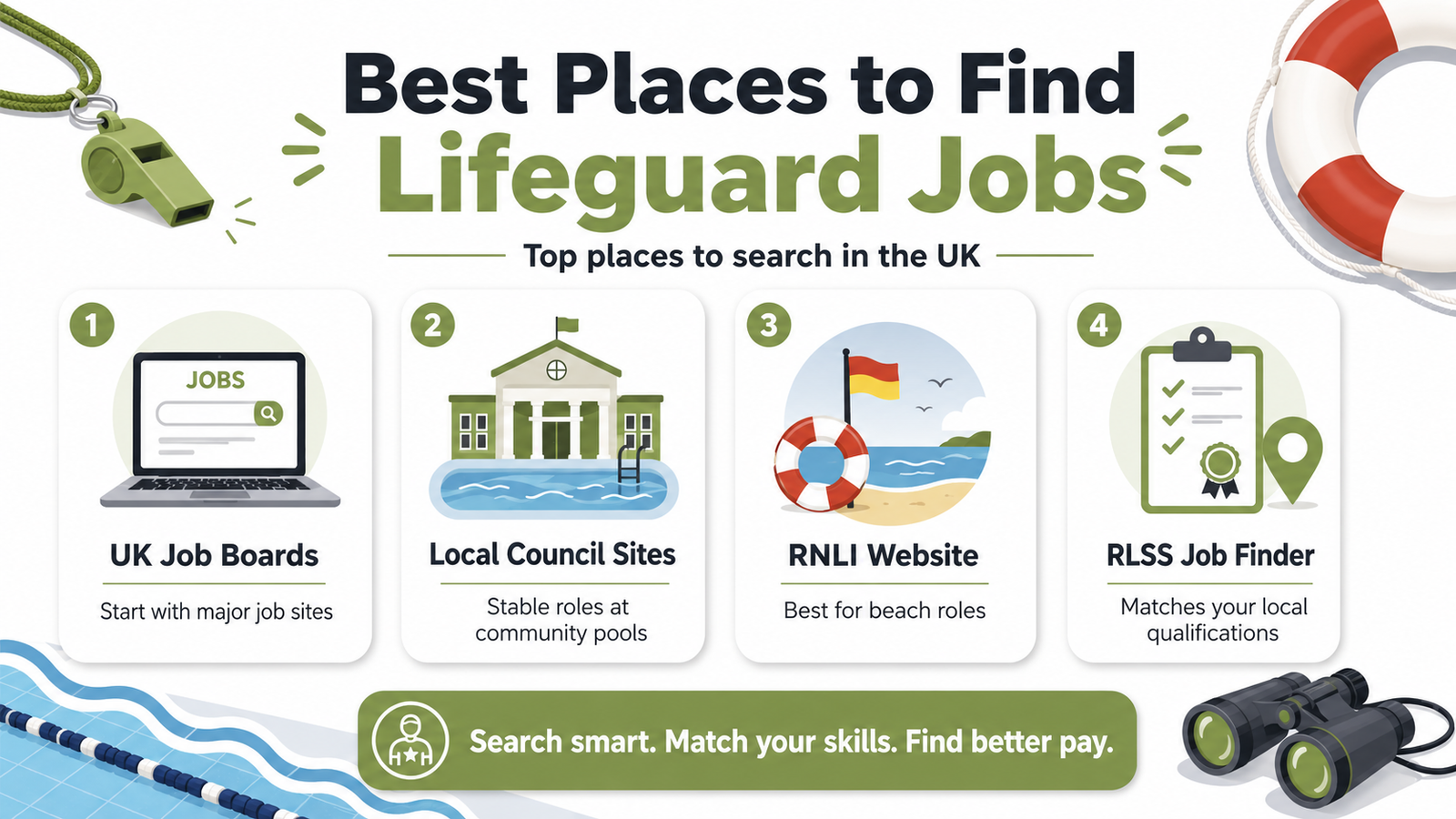
Finding the right job requires knowing where to look for listings. You should start by visiting major UK job boards online.
Actually, checking your local council’s official website is a very smart move. These portals list roles in community pools that offer very stable pay. For beach roles, the RNLI website is the only place to go. Finally, the RLSS job finder is a brilliant tool for certified lifeguards. It matches your specific qualifications with vacancies in your local area.
How can you Increase Your Lifeguard Earnings?
If you want a higher salary, you should think about upskilling. Combining your pool duties with swim teaching is very smart. Swim teachers in the UK often earn £15 to £20 per hour. Therefore, doing both roles can significantly increase your monthly take-home pay.
Specialisation is another great way to find better-paying roles. You could learn how to manage large water parks safely. Alternatively, you could train for open water safety roles. These specialised jobs often come with a much higher price tag.
Moreover, you can look at management pathways within the building. Most managers started their careers sitting on the high chair. By learning how the building works, you become more valuable. You could eventually manage the entire leisure centre one day.
- Get your basic NPLQ qualification first.
- Add a Level 2 Swim England teaching certificate.
- Volunteer for extra shifts to show your dedication.
- Apply for “Lead Lifeguard” roles after six months.
Consistency is key to getting raises in the fitness world. Show your boss that you are always on time. Reliability is often rewarded with better shifts and higher pay. In the UK, hard work is usually noticed by good managers.
Which Lifeguard Roles Pay the Most?
Private health clubs usually offer the highest rates for pool staff. You can earn more at premium gyms compared to local council leisure centres. Furthermore, high-end hotels often pay more for experienced team members. You should look for roles in large cities like London for higher wages.
Management positions also provide a significant income boost. You could progress from a pool attendant to a duty manager. This transition requires more responsibility but offers a much better salary.
Additionally, you might choose to specialise in open water safety. Beach roles with the RNLI involve rigorous training and offer competitive pay. You can also increase your earnings by teaching swimming lessons.
Employees with teaching qualifications are sometimes paid more by several establishments. As a result, dual-role employees continue to be the highest paid in the leisure sector. To get into the highest pay ranges, concentrate on obtaining additional credentials. This tactic guarantees that you will earn the highest salary in the industry.
Do Lifeguards Get Paid More on Weekends in the UK?
Many workers wonder about weekend rates. Most leisure centres require weekend cover. Employers often offer incentives for these shifts. However, many places now pay a flat rate.
The Shift Toward Flat Rates
Many large chains pay the same amount every day. This approach simplifies their payroll systems. Nevertheless, some staff still receive a premium for Saturday or Sunday work. You might earn a few extra pounds per hour. This depends entirely on your specific employment contract. Additionally, private clubs may offer higher rates to ensure full coverage.
Benefits of Working Weekends
Even without extra cash weekend work has benefits. These perks can help your career and your wallet:
- Managers appreciate your flexibility and reliability.
- Bank holidays usually offer double the normal rate.
- Shift patterns allow for quiet midweek time off.
Public sector roles sometimes include unsociable hours bonuses. Councils often follow national agreements for their staff. In contrast, small private pools might negotiate individual rates. Furthermore, you should check the policy on public holidays. These days, almost always provide much higher earnings.
Consequently, you can boost your monthly income significantly. Always read the fine print in your offer letter. Some venues trade extra pay for additional holiday time. This balance might suit your personal lifestyle better. Therefore you must compare various leisure companies carefully.
Higher rates usually apply once you exceed forty hours a week. Ask about weekend premiums during your initial interview. This clarity helps you choose the right workplace.
Conclusion on Lifeguard Jobs Pay
Lifeguarding is a fantastic job for newcomers to Britain. The pay is fair and follows the national living standards. While starting rates are modest the chance for growth is high. You can quickly move into teaching or management roles easily.
The average lifeguard salary is sufficient to sustain a modest lifestyle. You can increase your income by choosing the right location. Remember to look for employers that provide free training courses. This saves you money and ensures you get a job quickly.
Staying fit and alert is the most important part. If you enjoy the water, this career is very rewarding. You will meet many new friends at the local pool. Most importantly, you will keep your local community safe every day. Start your journey by finding a local NPLQ course today. Good luck with your new career in the United Kingdom!
FAQs
-
How much do UK lifeguards get paid?
- UK lifeguards typically earn between £11 and £15 per hour, depending on their experience, location, and employer.
-
Who is the highest paid lifeguard?
- There is no officially recognised highest-paid lifeguard. However, lifeguards in senior management, private resorts, or specialised rescue roles may earn more than standard lifeguards.
-
Is 22 too old to be a lifeguard?
- 22 is not too old to become a lifeguard. Many people start lifeguard training in their twenties or later and build successful careers in the field.

Lifeguard Course
Course Description :
- Certificate: Yes(Free)
- Accreditation: CPD Accredited
- Access: Lifetime