No products in the cart.
The Caldicott guidelines help keep private information safe. There are eight Caldicott Principles in England today. They guide health and care staff when they use personal information. This can include a person’s health, care, name and address. The principles show when staff can use or share this information.
The guidance started in 1997 with six principles. A seventh principle was added in 2013. The eighth principle came in 2020. It says organisations should tell people how they use their information. A Caldicott Guardian helps keep personal information safe. The principles also cover information about people who have died.
This guide explains all eight Caldicott rules and why they matter.
What are the Caldicott Principles?
The Caldicott guidelines are simple rules for keeping private information safe. They help health and care workers protect people’s details. They also show staff how to use and share this information safely. These rules apply across England. The National Data Guardian supports and looks after the principles.
Health and care organisations use these rules every day. Patients, service users and their families also have a part to play. Their views can help staff make safe choices. The rules protect privacy while allowing safe information sharing. This helps people get the right care and support.
How Did the Caldicott Principles Begin and Develop?
The Caldicott rules began in 1997. Dame Fiona Caldicott led a review of NHS patient information. The review created six rules to keep patient details safe. It also asked NHS groups to choose Caldicott Guardians. The rules changed as people used more information.
The seventh principle was added in 2013. It focused on sharing information safely. In 2020, an eighth principle was added. It asks organisations to tell people how they use private information. Today, there are eight Caldicott Principles.
What Information Do the Principles Cover?
The Caldicott privacy rules cover private details about people. This information can include a person’s name, home address and birth date. It also includes health problems and treatment details. NHS numbers also count as private information. Photos, videos and voice recordings can identify a person. Test results can also identify someone.
These rules can also cover some staff information. They apply when staff use or share private details. Staff may need to share information with another care service. The main goal is clear. Use information when it helps people. Keep their private details safe.
What are the 8 Caldicott Principles?
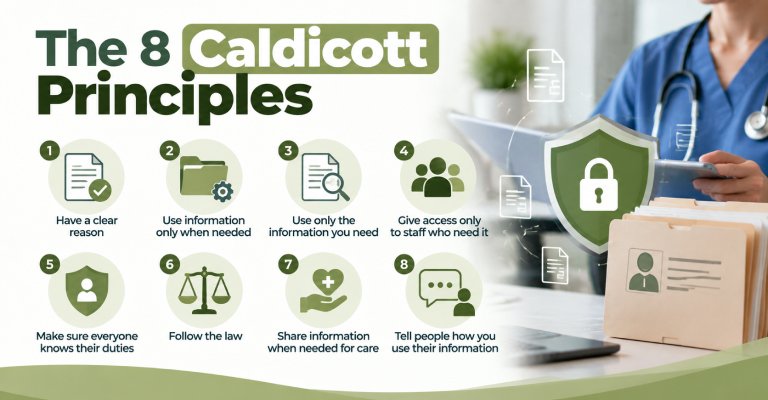
The 8 Caldicott guidelines help health and care staff handle private information safely. Each principle gives clear guidance on how staff should use or share information.
- Have a clear reason before using private information.
- Use information only when needed for that reason.
- Use only the information you need for the task.
- Give access only to staff who need it for their work.
- Make sure everyone knows their duties when handling information.
- Follow the law when using or sharing information.
- Share information when needed to give someone the right care.
- Tell people how you use their information and why you use it.
Principle 1: Have a clear reason
Caldicott Principle 1 says organisations must have a clear reason for using private information. They should check the reason before they use any information. They should also write down the reason and their decision.
Organisations should check ongoing uses from time to time. A Caldicott Guardian can help with these checks. For example, a hospital can use patient details to plan their care. A clear reason helps stop people from using information they do not need.
Principle 2: Use information only when needed
Caldicott Principle 2 says staff should use private information only when needed. They should ask if they need details that identify a person. They should also check if another option can do the same job.
This rule helps protect people’s private information. It also stops staff from collecting details without a real need. For example, a nurse needs a patient’s name to give medicine. The nurse does not need the patient’s home address for this task.
Principle 3: Use the minimum information needed
Caldicott Principle 3 says staff should only use the information they need. They should check every detail before they use it. Necessary information helps with the task, while minimum information keeps details to a low level.
Staff should leave out details that do not help. For example, a nurse needs a patient’s name and medicine details. The nurse does not need the patient’s job or family details. This simple step helps keep private information safe.
Principle 4: Give access only when needed
Caldicott Principle 4 says staff should only see the information they need. They should not see all patient details just because they have access. Organisations should control who can see each type of information.
For example, a nurse needs a patient’s treatment details. An office worker might only need their contact details. Giving each person the right information helps protect patient privacy.
Principle 5: Make sure staff know their duties
Everyone who uses private information must know how to protect it. This includes doctors, nurses, office staff and other workers. Clear training helps staff understand their duties and handle information safely.
Staff should also take care when talking about patient details. For example, they should not discuss a patient in a crowded place. Good training helps everyone protect private information every day.
Principle 6: Follow the law
Staff must follow the law when they use or share private information. This includes common law, data protection rules and other relevant laws. Staff should know the rules that apply to their work.
The Caldicott rules do not replace the law. Organisations also have their own information rules. These rules help staff use and share information safely and correctly.
Principle 7: Share information when needed for care
Keeping information private does not mean staff must always keep it secret. Staff can share the right information when it helps someone get safe care. They should follow their workplace and professional rules when they share information.
Safeguarding can also require staff to share information. For example, a doctor can share a patient’s health details with another doctor. This helps the care team give the right care and support.
Principle 8: Tell people how their information is used
The 8th Caldicott Principle came in December 2020. It asks organisations to tell people how and why they use their information. Clear details help patients understand what happens to their private information.
The principle also aims to avoid surprises. Patients should know their choices and when they need more information. A 2020 consultation received 282 responses. 84% of people supported the new principle.
What is a Caldicott Guardian?
A Caldicott Guardian is a mature person who keeps private information safe. They work in health and care services. Their job is to help staff use information in the right way. They also help staff share details safely and follow the law. Staff can ask a Guardian for help when they are unsure.
The Caldicott Guardian role started in 1997. It works closely with the Caldicott Principles. By December 2020, England had over 18,000 Guardians. The UK had over 22,000 Guardians in 2021. Later guidance asked more organisations to appoint a Guardian. This helped more services keep private information safe.
Who Should Follow the Caldicott Principles?
Health and social care services should follow the Caldicott guidelines. Staff who handle private details should follow them too. This includes doctors, nurses and care workers. Other staff should follow them when their work involves private information. Services that share these details should also follow the rules.
Patients and service users have a role too. Their views can help staff make safe choices. Family members and trusted people can help explain how staff use information. When a new or difficult choice comes up, a Caldicott Guardian can help. Relevant organisations should have a Guardian. This helps staff protect private details and use them safely.
Do The Caldicott Principles Apply to Deceased People?
Yes, the Caldicott rules can also cover information about people who have died. Data protection law protects living people, so it does not cover the dead. The Access to Health Records Act gives some people the right to see a dead person’s health records. Social care records do not have the same law.
People still need privacy after they die. Staff should keep their information safe and treat it with care. A Caldicott Guardian can help when staff are not sure what to share. They can help staff share the right details safely. Staff should not hide helpful information without a good reason.
What Do the Eight Caldicott Principles Help Organisations Achieve?
The eight Caldicott rules help organisations keep people’s information safe. They give staff clear rules for using private information. Staff can also share information when someone needs care. The rules help stop people from seeing information they do not need. Clear information can also help people trust health and care services.
- Better privacy: People’s private details stay safer.
- Clear choices: Staff know when they can use information.
- Safe access: Only the right staff can see the details.
- Safe sharing: Staff can share information when care needs it.
- More trust: People can understand how staff use their information.
What Should You Remember About the Caldicott Principles?
There are eight Caldicott rules for health and social care in England. They help staff keep people’s private information safe. At the same time, staff can share information when someone needs care. Staff should only use the information they really need.
Only people who need the information for work should access it. Everyone should know their duties and follow the law. The eighth principle helps people understand how organisations use their information. Patients should know how staff use their details. A Caldicott Guardian can help when staff face a difficult decision.
Final Thoughts
The Caldicott Principles help health and social care staff protect private information. They show staff when to use, share and protect people’s details. The eight principles also support safe information sharing when someone needs care. Staff should only access information they need for their work. Clear communication can help people understand how organisations use their details. A Caldicott Guardian can guide staff when difficult choices arise.
FAQs
1. Do the Caldicott Principles apply to deceased people?
- Yes, they can apply to information about people who have died. Staff should handle this information with care and respect.
2. What are the seven principles of care in the NHS?
- They include dignity, respect, compassion, communication, privacy, safety and person-centred care. These principles help staff give safe and caring support.
3. Does Caldicott have eight principles?
- Yes, Caldicott has eight principles. The eighth principle explains how organisations should tell people about their information.
4. What is Principle 7 of the Caldicott Principles?
- Principle 7 supports sharing information when someone needs care. Staff should share the right information with the right people.
5. What are the eight Caldicott Principles?
- The eight principles guide staff when they use, share or protect private information. They help protect privacy while supporting safe care.
6. What are the seven key principles of care?
- They include dignity, respect, compassion, communication, privacy, safety and person-centred care. They help workers provide safe and caring support.