No products in the cart.
Want to turn your cleaning skills into a business? Then learning how to start a cleaning business UK can help you take that first step. You do not need a large office or a huge team. You can start small, work locally and grow as more customers find you.
A successful cleaning business needs more than a mop and bucket. You need the right equipment, insurance, prices and business setup. You also need a simple plan to find your first customers. With good service and smart planning, you can build a trusted cleaning business and earn a steady income.
Let’s dive in and learn how to start your cleaning business step by step.
How to Start a Cleaning Business UK Step By Step?
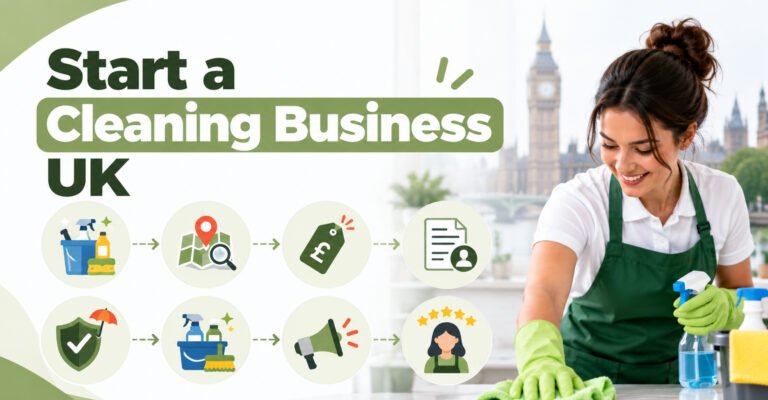
Starting a UK cleaning business can be easy. You can start small and grow over time. You do not need a big team or office to get started. Follow these simple steps to set up your cleaning business:
- Choose your services: Decide what type of cleaning you want to offer.
- Check your local market: Find out what cleaning services people need.
- Set your prices: Choose fair prices for your cleaning services.
- Choose your business type: Pick the right business structure for you.
- Get insurance: Protect yourself and your business from possible problems.
- Buy cleaning supplies: Get the tools and products you need.
- Promote your business: Use social media, websites and local adverts.
- Give good service: Keep your customers happy and build trust.
How Do You Choose a Cleaning Business Type?
Choose a cleaning service that matches your skills and goals. Domestic cleaning focuses on homes, including regular, deep and end-of-tenancy cleans. Commercial cleaning covers offices, shops, schools and other workplaces. Specialist cleaning includes carpets, ovens, upholstery, Airbnb, post-renovation and eco-cleaning.
Your service choice affects your tools, training, insurance and prices. It also decides which customers you can serve. If you are learning how to start a cleaning business, begin with one simple service. This keeps your work easier at first. As your business grows, you can add more services.
How Do You Research Your Local Cleaning Market?
Before starting a cleaning business UK, check what local people need. Search for nearby cleaning companies. Look at their services, prices, reviews and customers. Then, find a service they do not offer. You could offer end-of-tenancy, Airbnb, pet-friendly, eco-friendly or post-renovation cleaning.
Next, think about your customers. Do landlords need move-out cleaning? Do holiday homes need regular cleaning? You can also clean homes, offices or shops. Your area can affect your prices and travel costs. It can also affect how many customers you find. Good local research helps you choose the right service and customers.
How Do You Set Up a Cleaning Business Legally?
Setting up a cleaning business starts with a few simple steps. First, choose your business name. Then, choose to work as a sole trader or set up a limited company. You can run your cleaning business on your own without setting up a company. However, you usually need to register for Self Assessment if your business income goes over £1,000 in a tax year.
Keep clear records of your money, costs and sales. You should also check the VAT rules. The VAT registration limit is £90,000. You can also register for VAT below this amount if you choose. A limited company costs £100 to register online in 2026.
What Licence Do You Need to Start a Cleaning Business?
Most home cleaning businesses do not need a general cleaning licence. However, some cleaning jobs may need extra permits or registration. Waste removal is one important area to check. The rules can also change across the UK.
- Home cleaning: Usually does not need a cleaning licence.
- Taking away waste: May need to register as a waste carrier.
- England: Must follow Environment Agency waste rules.
- Scotland, Wales and Northern Ireland: Every region has its own waste rules.
- Hazardous waste: Special rules apply when handling or moving it.
- Specialist cleaning: Some jobs may need extra permits or local checks.
What Equipment Do You Need to Start Cleaning?
You do not need many tools to start cleaning. A basic set can cost around £50–£100. You will need basic tools like a vacuum, mop, bucket, cloths and sponges. You should also have cleaning sprays, disinfectant, gloves and a cleaning caddy. These simple tools can handle most everyday cleaning jobs.
If you are learning how to start my own cleaning business, do not buy every machine at once. Some special cleaning jobs need costly machines. You can rent them when needed. Your travel plans also matter. If you walk to jobs, carry only small tools. Commercial jobs may need a vehicle for bigger tools.
How Much Does It Cost to Start a Cleaning Business?
The cost depends on your cleaning service. Older estimates suggest under £200 or around £100 to £500. These are past figures, not exact current costs. Basic equipment may cost £50 to £100, while older figures suggest insurance at £5 to £10 a month.
You may also pay for cleaning supplies, travel and marketing. A home cleaner can start with less money. Commercial and specialist cleaning may cost more. A van or large machine can also raise costs. Start with the basics and add more as you grow.
How to Start a Cleaning Business UK and Get Clients?
Getting your first cleaning clients does not have to be hard. Start by telling people about your service. Use local Facebook groups, leaflets and online listings. Ask happy customers to recommend you. Local marketing can help more people find your business.
You can also contact landlords, Airbnb hosts, offices and local shops. Keep your prices clear and reply to customers quickly. Good service can bring repeat work and referrals. Start small, build trust and grow your client list over time.
What Insurance Does a Cleaning Business Need?
Insurance can protect your cleaning business from unexpected costs. Each type of insurance gives you different protection. You may need more cover as your business grows. Hiring workers also means you need extra insurance.
- Public liability insurance: Helps pay for injury or damage claims caused by your work.
- Employers’ Liability insurance: You need this when you hire staff. You must have at least £5 million cover.
- Tools insurance: Helps protect your cleaning tools if they are stolen or damaged.
- Personal accident insurance: Can help you if you get hurt at work.
- Vehicle insurance: Need business cover if you use your car for work.
- Extra insurance: You can add cover for other risks your business may face.
How Do You Price Cleaning Services in the UK?
You can charge by the hour or set one price for each job. Typical UK cleaning rates are around £15 to £20 per hour. London rates can be £22 to £27 per hour. Enterprise Nation gives a wider range of £12 to £25+ per hour. These are reference figures, not fixed 2026 rates.
A three-bedroom house may cost around £60. A two-bedroom end-of-tenancy clean may cost £120 to £180. Oven cleaning may cost £45 to £70. Your price can depend on the property size, condition, location, travel and cleaning time. You can also offer regular, deep and specialist cleaning packages.
How Do You Keep Cleaning Work Safe?
Cleaning work can involve chemicals, wet floors and heavy items. Keep chemicals safely stored and follow product labels. Use gloves and good airflow when cleaning. COSHH helps control risks from harmful cleaning products. Never mix cleaning chemicals, as this can create dangerous gases.
Clean spills quickly and mark wet floors clearly. Check electrical equipment before use and lift heavy items safely. Employers must assess risks from harmful substances. If you have five or more employees, record your main risk assessment findings.
How Do You Find Your First Cleaning Clients?
Start by finding customers close to where you live. Use local Facebook groups, Nextdoor, flyers and business cards. You can also share your services on WhatsApp and ask friends for referrals. Local events can help you meet new customers. Start with a small service area to save time and travel costs. Create a Google Business Profile and a simple website.
Add your services, location, contact details, prices and available times. Ask happy customers for reviews. 5 to 10 positive reviews can give new customers more confidence. You can also share before-and-after photos to show your work. As you grow, these steps can help you learn how to open a cleaning agency.
How Do You Grow From a Solo Cleaner to a Team?
A cleaning business can grow when you start getting more work. You may need help when admin takes too much time. New service requests can also show that your business is growing. Simple systems can help you manage more customers and workers.
- Check your workload: If you turn away jobs, you may need help.
- Reduce admin: Use simple tools for bookings, quotes and invoices.
- Choose workers: You can use subcontractors, casual workers or employees.
- Add services: Offer carpet, oven, Airbnb, deep or commercial cleaning.
- Manage workers: Handle payroll, training and supervision. You also need Employers’ Liability insurance.
- Keep records: Track bookings, invoices and customer details in one place.
What Should Your Cleaning Business Plan Include?
A simple plan can help you start your cleaning business. First, choose your services and target customers. Then, choose your work area and list the tools you need. Also, plan your prices, insurance and ways to find customers. This helps you start with a clear plan.
Next, list your regular costs, such as fuel, supplies, insurance and ads. Following that, work out how many jobs you need each week. Finally, keep your receipts and track your money. If you work from home, check the rules with your landlord, council and insurer.
Final Thoughts
How to start a cleaning business UK starts with a simple plan. Choose your services, set clear prices and get the right insurance. Then, find local customers and build good reviews. Keep track of your costs and earnings from the start. As your business grows, you can add new services and hire workers. With good planning, you can build a steady cleaning business.
FAQs
1. How much does it cost to start a cleaning business in the UK?
- Start with basic tools, insurance and simple marketing. Costs depend on your services and business size.
2. How much is a 1 hour clean?
- A one-hour clean can cost around £15–£20 in many parts of the UK. London rates can be higher.
3. What will a cleaner do in 3 hours?
- A cleaner can usually clean several rooms, dust surfaces, vacuum floors and clean bathrooms. The exact work depends on the property and cleaning service.
4. Is cleaning business profitable in the UK?
- Yes, a cleaning business can make a profit if you manage costs and get regular customers. Your profit depends on your prices, expenses and workload.
5. How long should a cleaner take to clean a 3 bedroom house?
- A regular clean for a three-bedroom house can take around 3–5 hours. The time depends on the house size and condition.
6. What type of cleaning makes the most money?
- Specialist services such as carpet, oven, deep and end-of-tenancy cleaning can charge more. However, earnings depend on demand, costs and local prices.