No products in the cart.
A sports first aid kit helps you instantly handle common injuries during sports and physical activities. It keeps useful first aid items ready when someone needs quick care. Cuts, bruises, sprains and strains can happen during training or matches. Therefore, every sports team, coach and sports venue should keep a suitable kit nearby.
A well-prepared kit helps you respond quickly when an injury happens. It also supports basic care for minor sports injuries. Different sports can need different first aid supplies. Knowing what to keep in your kit makes injury care easier. You can also learn how each item helps during common sports injuries.
What is a Sports First Aid Kit?
A sports first aid box contains basic supplies for treating common sports injuries. It helps coaches, players and staff give quick first aid during training, matches, PE lessons and events. For example, it can help with cuts, sprains, strains and minor eye injuries.
A general first aid kit covers everyday injuries, while a sports kit suits active settings. Therefore, a sports first aid box or sport first aid kit often includes cold packs, bandages, dressings, plasters and gloves. However, the contents should match the sport and its injury risks.
Why Do Sports Clubs Need First Aid Kits?
Sports can cause injuries during training, matches and other activities. Therefore, clubs should prepare before activities begin. Adults need 75 minutes of vigorous activity weekly, while children aged 5 to 18 need 60 minutes daily. Also, people aged 19 and under made up 47.4% of sports injury emergency attendances.
- Football: Contact, falls and sudden movements can cause injuries.
- Rugby union: Tackles and collisions can lead to sports injuries.
- Rugby league: Physical contact creates similar injury risks.
- Trampolining: Falls and awkward landings can cause injuries.
- Netball: Quick turns and jumps can cause injuries.
- Horse-riding: Falls can result in different types of injuries.
What Should a Sports First Aid Kit Contain?
A first aid kit items list should suit the sport, place and number of people. A standard sports kit contains 59 items. It includes 20 washproof plasters, 10 moist wipes, 12 safety pins, 2 × 20 ml eyewash pods, 1 instant cold pack and 2 personal protective packs. It also has dressings, an eye dressing, a triangular bandage, a conforming bandage and a crepe bandage.
The kit also includes microporous tape and low-adherent dressings. A face shield, foil blanket and guidance leaflet can also help. However, HSE says no fixed legal list suits every workplace kit. Therefore, choose items based on your sport, setting and injury risks.
Which Sports Need Special First Aid Supplies?
Different sports have different injury risks. Therefore, one first aid kit may not suit every sport. A sports first aid box should match the activity and its common injuries. The table below shows common needs across different sports.
|
Sport |
Common First Aid Needs |
|
Football |
Cuts, wounds, sprains, strains and eye injuries |
|
Rugby |
Contact injuries, skin wounds and blood injuries |
|
Netball |
Finger and soft tissue injuries |
|
Hockey |
Hand injuries, wounds and pitch-side incidents |
|
Cricket |
Finger injuries and general pitch-side care |
|
Outdoor sports |
Hiking, camping, climbing and skiing may need different supplies |
How Does a Football First Aid Kit Help?
A football first aid kit helps coaches and players handle common injuries quickly. It works well during training sessions and football matches. A compact kit is easy to carry and keep near the pitch. The supplied football kit measures 19 × 13 × 8 cm and comes in water-resistant storage. This makes it useful for outdoor football.
It contains 10 washproof plasters, 4 large plasters and 2 instant cold packs. It also has sterile dressings, a finger dressing, a triangular bandage and a cohesive bandage. Other items include zinc oxide tape, foil blanket, gloves, cleansing wipes and a mouth-to-mouth shield. Advanced and ultimate football kits offer larger options for bigger needs.
What Should a Rugby First Aid Kit Include?
Rugby involves strong contact, tackles and falls. Therefore, a rugby first aid kit needs supplies for wounds and support. The supplied rugby kit measures 36 × 28 × 16 cm and costs £28.54 ex-VAT. It suits rugby training and matches. Inside, it has 20 washproof plasters, 12 safety pins and 2 triangular bandages.
It also includes 3 crepe bandages, 2 low-adherent dressings, 2 eyewash pods and 2 pairs of gloves. Along with these, there is an instant cold pack, foil blanket and scissors. The kit also contains EAB tape (5 cm × 4.5 m), skin closure strips and cohesive bandages. The supplied source states that it follows RFU guidelines.
What Sports First Aid Kit Suits Schools and Clubs?
Schools need portable first aid supplies for PE lessons, playgrounds and sports fields. They also help during trips and off-site activities. Therefore, PE teachers and activity leaders need kits that are easy to carry. Clubs should also choose kits based on their activities and risks.
A personal sports safety kit suits officials who move around. Its water-resistant bum bag makes it easy to carry. For larger settings, the multi-purpose sports first aid box measures 20 × 32 × 22 cm and has 8 compartments. It suits schools, clubs, coaches, physiotherapists and event organisers. Keep the kit easy to reach during activities.
How Can You Give First Aid for Sports Injuries?
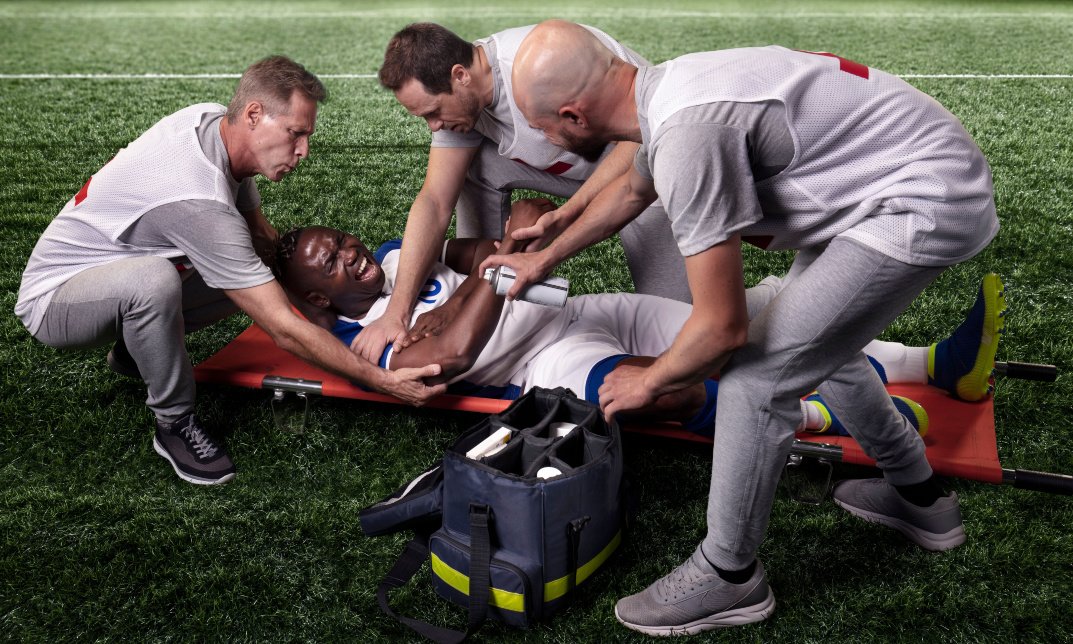
First aid for sports injuries means giving quick, basic care after an injury. First, stop the activity and check what happened. Then, use suitable first aid supplies to manage minor injuries. Sport England advises cleaning and covering cuts or grazes quickly.
- Cuts and grazes: Clean the wound and cover it with a suitable dressing.
- Bleeding: Apply gentle pressure and use gloves when blood is present.
- Sprains: Stop activity and support the injured area.
- Strains: Rest the affected area and avoid further activity.
- Eye contamination: Rinse the eye with clean water or suitable eyewash.
- Serious injuries: Seek medical assessment instead of relying on basic first aid.
How Does PRICE Help With Sprains and Strains?
The PRICE method can help with minor sprains and strains. It protects the injured area and helps reduce pain and swelling. Protection keeps the area safe, while Rest means stopping the activity. Ice can help reduce swelling. Apply it for about 15 minutes, or up to 20 minutes under NHS guidance. Repeat every 2 to 3 hours for the first few days.
Never put ice directly on the skin. Compression uses an elastic bandage or support around the injured area. Elevation means keeping the injured area raised when possible. These steps can help with minor injuries. However, seek medical help if the pain is severe or the injury looks serious.
What Should You Do About Sports Concussion?
A first aid kit cannot diagnose a concussion. After a head injury, watch for headache, dizziness, confusion, nausea or poor balance. If in doubt, sit them out. Remove anyone with a suspected concussion from play straight away. They should not return to sport within the first 24 hours.
Also, contact NHS 111 within 24 hours for advice. Let the person rest at first. Then, help them return to normal activities slowly. If symptoms last more than four weeks, they need healthcare advice. However, call 999 for serious signs, such as seizures, loss of consciousness or worsening symptoms.
What UK First Aid Rules Apply to Sports Clubs?
UK first aid rules mainly cover workplace duties. The Health and Safety (First-Aid) Regulations 1981 require employers to provide suitable first aid equipment and arrangements for employees. HSE says employers should complete a first-aid needs assessment.
This should consider hazards, staff numbers, activities and past accidents. However, HSE does not set one fixed list for every first aid kit. Sports clubs should also consider players, visitors and other users. Therefore, clubs should choose their kit based on their activities, risks and setting.
How Do You Choose the Right Sports First Aid Kit?
Choosing a sports first aid box depends on your activity and setting. Start by checking the sport, team size and venue. Then, think about training days, matches and travel needs. Also, consider your first aider’s skills and available storage space. These points can help you choose a kit that is easy to use.
- Small teams: A compact kit measuring 25 × 18 × 7 cm works well for travel and regular training.
- Rugby and contact sports: A larger kit measuring 36 × 28 × 16 cm can provide more space.
- Schools and larger venues: A multi-purpose kit measuring 20 × 32 × 22 cm may suit wider needs.
- Outdoor teams: Water-resistant storage helps protect the kit from moisture.
- Regular use: Refill packs make it easier to replace used supplies.
How Should You Store and Check a Sports First Aid Kit?
Keep your sports first aid box in a clear and easy-to-reach place. Make sure everyone knows where to find it. Before training or matches, check the kit and replace used items. Also, check packaging and expiry dates when needed. Keep sterile items sealed until use.
Keep clean supplies separate from used materials. Check that the kit has enough supplies for your group size. Refill packs can help keep your kit ready. The supplied source offers compact, rugby and multi-purpose refills. Their prices are £12.66, £25.37 and £31.08.
What is the Best Sports First Aid Kit for Your Needs?
The right sports medical kit depends on your activity and needs. Personal kits suit officials who move around. Small teams can use compact kits. Schools may need larger kits for PE and sports fields. Contact sports may need more wound support. Large clubs can choose kits with more space.
Outdoor teams may prefer portable, water-resistant kits. Prices in the supplied sources range from £7.22 to £107.94. However, price should not be your only concern. Check the contents, size, portability and sport-specific needs. Also, check if refill packs are available. Choose a kit that fits your activity, group size and storage space.
Final Thoughts
A sports first aid kit keeps essential supplies ready for common sports injuries. It helps coaches, players and staff give quick care when needed. A sports first aid box should include suitable items for cuts, sprains and minor injuries. Check your kit regularly and replace used or expired supplies. Keep it easy to reach during training, matches and other sports activities.
Ready to improve your sports first aid skills? Enrol in our Sports First Aid Course and learn how to respond to common sports injuries.
FAQs
1. What should be in a sports first aid kit?
- A sports first aid box should have plasters, bandages, gloves, wipes, tape, scissors, and cold packs. These items help treat minor sports injuries quickly.
2. What is the best sports first aid kit?
- The best sports first aid box has useful items for common sports injuries. Choose one that fits the sport, player numbers, and activity.
3. What are 15 items that should be included in a sports first aid kit?
- These include plasters, dressings, bandages, tape, gloves, wipes, scissors, tweezers, cold packs, antiseptic cream, foil blankets, triangular bandages, safety pins, eye pads, and a first aid guide.
4. What is basic sports first aid?
- Basic sports first aid means giving quick care after an injury. It can include cleaning wounds, covering cuts, using cold packs, and supporting injured areas.
5. What are the 12 common sports injuries?
- The 12 common sports injuries include sprains, strains, bruises, cuts, fractures, dislocations, cramps, blisters, concussion, tendon injuries, knee injuries, and shin splints.
6. What are 10 common first aid injuries?
- Ten common injuries include cuts, burns, bruises, sprains, strains, fractures, nosebleeds, blisters, minor eye injuries, and insect bites.
Sports First Aid Course
Course Description :
- Certificate: Yes(Free)
- Accreditation: CPD Accredited
- Access: Lifetime