No products in the cart.
Electrical faults can cause shocks, burns and fires. So, it is important to know what is PAT testing. PAT testing means Portable Appliance Testing. It involves checking electrical items to make sure they are safe to use. These checks can help find damage and faults before they cause harm.
PAT testing is useful in workplaces and rented homes. However, testing alone cannot keep every appliance safe. You should also look for visible damage before using electrical items. Regular checks can help reduce risks and protect people and property. When needed, a trained person should carry out the tests.
This guide explains what PAT testing is, how it works and why it is important.
What is PAT Testing and What Does it Do?
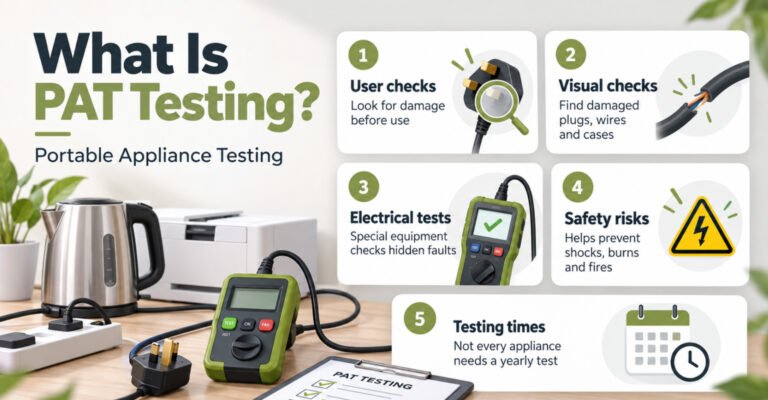
Electrical appliances can develop faults over time. These faults can create serious safety risks if you ignore them. PAT testing helps check whether electrical equipment remains safe to use. PAT stands for Portable Appliance Testing. So, what does PAT testing do? It uses different checks to find possible problems.
- User checks: Users look for damage before using an appliance.
- Visual checks: These checks can find damaged plugs, wires and cases.
- Electrical tests: Some hidden faults need special testing equipment.
- Safety risks: Faulty items can cause shocks, burns or electrical fires.
- Testing times: HSE does not require every appliance to get a yearly test.
What Does PAT Test Stand For in the UK?
PAT stands for Portable Appliance Testing. It describes checks on electrical equipment to make sure it is safe to use. People still use the term PAT across the UK. You may hear it at work, in training or when hiring an electrician. It is a simple term that most people understand.
Today, Electrical Equipment Testing (EET) can describe the process more widely. It can cover different types of electrical equipment, not just small portable items. The term also includes checking equipment while people use it. So, what is PAT testing? It is a familiar term for checking electrical equipment for safety.
Which Electrical Equipment Needs PAT Testing?
Many electrical items need regular safety checks. These include kettles, heaters, lamps, vacuum cleaners and drills. Computers, printers, microwaves and extension leads may also need checks. Big appliances like fridges and washing machines may also need safety checks. However, this does not mean every item needs a PAT test.
The type of equipment can change the type of check it needs. How people use the item also matters. Fixed electrical systems need different checks from portable items. Battery-powered items may not need the same checks. Items that stay connected to the mains may need other checks. So, PAT testing needs can vary between workplaces.
How Does PAT Testing Work?
PAT testing starts with a simple visual check. A worker looks for clear damage before using the item. A trained person can then check the plug, cable, case and connectors. They also look for burn marks, loose parts or signs of heat. These checks can find many common problems.
If needed, the equipment may also need an electrical test. This can check the earth connection, insulation and polarity. The tests depend on the type of equipment. Visual checks still matter, as electrical tests cannot find every fault. The right way to how to do PAT testing depends on the item, its use and its condition.
What is a PAT Tester and What Does it Check?
A PAT tester is a device that checks electrical equipment for safety. It can find faults that a visual check may miss. A trained person uses it after checking the item by sight. Different equipment may need different tests. These tests can help spot hidden electrical problems.
- Earth continuity: Checks whether the earth connection works properly.
- Insulation resistance: Makes sure electricity stays within the correct parts.
- Polarity: Confirms that wires connect in the correct way.
- Test results: Shows results that can help spot possible faults.
- Safe testing: Requires knowledge of the equipment and testing method.
- PAT equipment: A PAT tester runs tests that a normal multimeter cannot.
Who Can Do PAT Testing in the UK?
PAT testing does not always need an electrician. A trained worker can handle simple checks in a low-risk workplace. A worker should know how to spot damage and follow safe steps. Basic visual checks may be enough for some equipment. More detailed checks need better skills and suitable testing tools.
The person doing PAT testing must have the right training and knowledge. They also need enough experience for the task. An electrician may handle complex or high-risk electrical work. However, they are not needed for every PAT check. PAT testing requirements depend on the equipment, workplace and type of test.
Do You Need a PAT Testing Qualification?
You do not need a specific PAT testing qualification by law for every PAT test. Instead, you need the right skills for the work. This means having enough knowledge, training and experience to test equipment safely. Simple checks may need less training than complex electrical tests.
A PAT course can help you learn safe testing methods. It can also help you understand test results and spot faults. However, one course is not a legal requirement for everyone. The level of skill needed depends on the equipment and test. So, do you need a qualification to PAT test? Not always. You need suitable competence for the work you carry out.
What is the PAT Testing Qualification UK Route?
The PAT testing qualification UK route can help you learn safe testing skills. A good course covers visual checks, electrical tests, fault finding and test results. Course names and entry rules may vary between providers. A certificate can show your training but practical skills matter too. Broader electrical training can also help with more complex work.
- Visual checks: Learn how to spot damage and common faults.
- Electrical tests: Know basic tests for different equipment.
- Safe testing: Discover how to use test equipment safely.
- Fault finding: Learn how to find common electrical problems.
- Test results: Understand results and know what they mean.
How Often Should PAT Testing Be Done?
A PAT test does not have a fixed expiry time. UK guidance does not require every appliance to get a yearly test. Instead, the right testing time depends on the equipment and workplace. So, how long does PAT testing last can vary from one item to another. Several things can affect the testing time.
Equipment used often or moved regularly may need more checks. Busy, wet or dusty areas can also increase risk. Past faults may mean closer checks are needed. A vacuum used daily may need more attention than an office printer that rarely moves. These factors help set suitable PAT testing requirements.
How Long Does a PAT Test Last?
The time needed for a PAT test can vary from one appliance to another. A simple item may take only a short time to check and test. More complex equipment may need extra time. The tester should look at the appliance first. After that, they can choose the right test for the item.
A PAT result does not mean the appliance stays safe forever. Damage can happen after testing. Cables may wear out and plugs may become damaged. So, how long does a PAT test last depends on the equipment and test method. Regular checks can help find new problems early.
Is PAT Testing a Legal Requirement in the UK?
PAT testing is not required by law for every electrical item in the UK. However, businesses must keep electrical equipment safe. UK rules say employers must check and maintain equipment to help prevent harm. So, the main goal is to keep electrical items safe.
PAT testing requirements can change based on the workplace and the equipment. There is no rule that says every appliance needs a PAT test every year. A business should choose checks based on how the equipment is used and where it is used. PAT testing can be one part of a wider safety plan. Regular checks can also help find damage early.
What Happens if an Appliance Fails PAT Testing?
A failed PAT test means an appliance may not be safe to use. The problem may be easy to see or hidden inside the item. Knowing what PAT testing does helps explain why these checks matter. A failed appliance should not stay in use until someone checks the problem.
- Stop using it: Take the appliance out of use.
- Find the problem: Check for damaged cables, plugs or burn marks.
- Check test results: Look for faults found during electrical testing.
- Repair the item: A suitable person can fix it if possible.
- Test it again: Test the repaired item before using it.
- Replace it: Get a new one if repair is not safe.
What is a Portable Appliance Test Certificate?
A portable appliance test certificate is a record of electrical equipment checks. It can show which item was checked, when it was checked and the result. It may also include details about the tester. These records can help businesses keep track of their electrical equipment and safety checks.
UK law does not say businesses must keep PAT records or put labels on tested items. Still, these records can help track safety checks. A certificate also does not mean an appliance will always stay safe. An item can get damaged after testing. Checking the equipment often can help keep it safe
What PAT Testing Mistakes Should You Avoid?
PAT testing may seem simple but some mistakes can cause safety problems. Do not think every appliance needs a test every year. Also, do not rely only on testing. Regular visual checks are still important. A PAT testing qualification is not needed for every simple check. However, the person must have the right skills for the job.
Do not use the wrong testing equipment. Never keep a damaged appliance in use after it fails a test. A PAT label does not mean an item stays safe forever. Good PAT testing requirements should match the equipment and workplace. New equipment usually needs a simple visual check.
Final Thoughts
So, what is PAT testing? It is a way to check electrical items for safety. These checks can find damage and electrical faults. However, not every item needs a yearly test. The right checks depend on the equipment and workplace. Regular visual checks also help find new problems. If an item fails a test, stop using it until someone checks it. These simple steps can help keep people and electrical equipment safe.
Want to learn more about PAT testing and build useful testing skills? Join our PAT Testing Course and build your electrical knowledge.
FAQs about What is PAT Testing
1. Can you do a PAT test yourself?
- Yes, you can do some PAT checks yourself if you have the right skills. More detailed tests need proper training, knowledge and suitable equipment.
2. What will fail a PAT test?
- Damaged plugs, broken cables, burn marks or electrical faults can cause a failure. An appliance can also fail an electrical test.
3. Can any electrician do PAT testing?
- An electrician can carry out PAT testing if they have the right skills and knowledge. However, not every PAT check requires an electrician.
4. Does a new kettle need PAT testing?
- A new kettle does not always need a formal PAT test. A simple visual check can help confirm that it is safe to use.
5. How much do electricians charge for PAT testing?
- The price for PAT testing is different for each job. It can depend on how many appliances need testing and where they are located.
6. What appliances don’t need PAT testing?
- Battery-only items do not usually need the same checks as plug-in equipment. Fixed electrical equipment may also need different checks.
PAT Testing Course
Course Description :
- Certificate: Yes(Free)
- Accreditation: CPD Accredited
- Access: Lifetime