No products in the cart.
Sports coaching helps people learn sports skills and enjoy playing. It has an important role in schools, clubs and local areas. A sports coach teaches skills, helps players improve and builds confidence. Coaches also help players stay focused and work well with others.
A good coach needs clear communication, patience and good sports knowledge. Good planning also makes training simple and useful. Sports guidance can be a good career in the UK. You can start through courses, apprenticeships or other training. Pay and working hours can change by job and experience.
This guide covers the main duties, skills, benefits and career options.
What is Sports Coaching?
Sports coaching means helping people learn and improve sports skills. A coach teaches players how to move, train and play better. Coaching can help beginners, teams and skilled players. Sessions can happen alone or in groups. Coaches also set simple goals and check progress.
Sports guidance helps with sports training, fitness and better performance. It also encourages regular physical activity. The National Careers Service says sports coaches help people take part in sport and improve skills. Coaching can support children, young people and adults at different skill levels.
What is the Role of a Sports Coach?
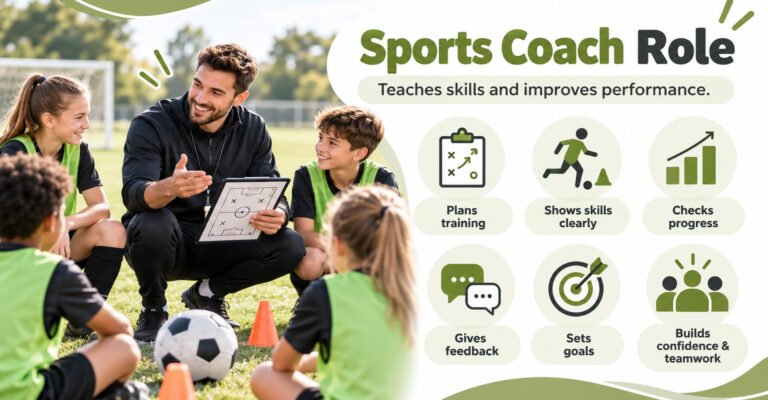
A sports coach helps players learn new skills and improve their performance. They plan training sessions based on players’ needs and abilities. Coaches teach skills, watch performance and give helpful feedback. They also help players set goals and prepare for games. A good coach keeps training safe, organised and enjoyable.
- Plans training sessions around player needs.
- Shows skills and explains activities clearly.
- Watches players and checks their progress.
- Gives simple feedback to help players improve.
- Helps players set goals for training and games.
- Builds confidence and encourages good teamwork.
What are the Responsibilities of a Sports Coach?
The responsibilities of a sports coach include planning and running safe training sessions. A coach teaches sports skills and demonstrates activities clearly. Coaches give useful feedback and help players improve their performance. Goal setting and progress checks also form part of regular training.
Coaches help players get ready for games and competitions. They change training to suit different ages and skill levels. At the same time, coaches keep each session safe and well organised. They may also help with sports events and keep simple training records. As a result, players can learn new skills, improve their game and stay motivated.
What Makes a Good Sports Coach?
A good sports coach needs strong communication skills. Clear instructions help players understand each activity. Listening skills also help coaches understand player needs. Patience, leadership and encouragement can build confidence. Good planning keeps each training session organised.
A good coach should respect different skills and abilities. Also, they should stay flexible when plans change. Confidence helps a coach lead players without being too strict. At the same time, good attention can help spot areas that need work. Basic computer skills can also help with planning and keeping records.
What Makes a Great Coach in Sport?
Great coaching starts with trust and a focus on long-term growth. A great coach gives positive feedback and helpful advice when players need to improve. Players also get chances to make decisions and take control of their progress. This approach can build confidence and independence.
Good coaching also supports wellbeing, not just sports performance. Everyone should get a fair chance to take part and improve. Coaches can check progress and see if their methods work. In schools, a whole-child approach supports cognitive, social, emotional and physical development. This helps young people grow through sport and beyond.
How Does Sports Coaching Benefit People?
Sports training helps people stay active and healthy. Regular training improves fitness, movement and sports skills. It can also build confidence and keep people motivated. Team sports help players make friends and work together. For children, coaching can also build healthy habits early in life.
- Better fitness: Regular activity improves movement, strength and fitness.
- Greater confidence: Learning new skills can build self-belief.
- Teamwork: Players learn to communicate and work well with others.
- Healthy habits: Training can support regular exercise and healthy routines.
- Personal growth: Players learn discipline, goal setting and resilience.
- Daily movement: In England, experts recommend that children and young people enjoy at least one hour of daily physical activity.
Where Can Sports Coaches Work?
Sports coaches can work in many places. Schools and colleges may need coaches for sports lessons and clubs. Sports clubs also hire coaches for football, cricket, basketball, swimming and athletics. Community sports programmes help local people stay active and learn new skills.
Coaches can also work in gyms, leisure centres and universities. Holiday clubs and youth groups may need coaches too. Some coaches train professional athletes and sports teams. The daily work can change from place to place. In the UK, sports mentoring often falls into three areas: school sport, community sport and high-performance sport.
How Does Sports Coaching Support School PE?
Sports guidance can help schools make PE lessons more active and useful. Coaches can teach movement skills, fitness, teamwork and sports skills. They can also help pupils prepare for friendly games and competitions. In England, PE is part of the National Curriculum.
Schools can also offer extra sports clubs after lessons. Swimming and water safety are important parts of PE. Pupils in England should learn to swim 25 metres. Coaches can work with teachers to plan lessons and check pupil progress. Sessions can also change to support pupils with different skills and needs.
What Skills and Qualifications Do Coaches Need?
Sports coaches need good teaching and communication skills. They should also know how to lead groups and help players improve. Coaches watch players and plan training sessions. People can enter coaching through college, university, apprenticeships, work experience or volunteering.
Sports courses and sports body qualifications can also help. First aid and safeguarding training help keep players safe. The Level 4 Sports Coach apprenticeship is another route. It usually takes 18 months, excluding the final assessment. It has three areas: High Performance Coach, Community Coach and School Coach.
How Can You Start a Sports Coaching Career?
Starting a sports coaching career can happen in different ways. You can study, get work experience or do an apprenticeship. Volunteering at a sports club can also help you learn. Working as an assistant coach lets you learn from others. With more experience, you can move into higher coaching roles.
- University: Study sports-related coaching, sports science or PE.
- College: Take a sports course to build basic skills.
- Apprenticeship: Learn coaching skills while gaining work experience.
- Work experience: Start as an assistant coach and learn on the job.
- Volunteering: Help at clubs, schools or community sports programmes.
- Sports bodies: Take sport-specific courses from recognised governing bodies.
How Important are Safeguarding and Safety?
Safety is very important in sports coaching. Coaches must keep children and players safe during training. Some jobs with children may need an enhanced DBS check. This helps employers check a person’s background. Coaches should follow safety and safeguarding rules.
Some jobs may also need first aid training. Staff should know what to do if something goes wrong. Coaches should check consent and emergency details when needed. They should use safe equipment and keep the training area safe. Good planning and clear rules help protect everyone.
What Can a Sports Coaching Career Offer?
A sports coaching career can offer different paths as you gain more experience. You can move into senior coaching jobs or work as a coach development officer. Some coaches work in schools, community sports or high-performance sports. You may also move into areas such as sports psychology or PE teaching.
Your pay can change as your role and experience grow. It can also depend on your working hours and type of job. Sports guidance can offer flexible working times, but some jobs include evenings and weekends. With the right skills and experience, you can build a long-term career in sport.
What Should You Look For in a Sports Coach?
When choosing a sports coach, check their skills, training and experience. Make sure they have the right qualifications for the sport and age group. Coaches working with children may need a DBS check and safeguarding training. First aid training can also be useful.
Safety matters too. Ask about the coach’s safety rules and policies. Freelance coaches should have public liability insurance. A good coach should communicate well and include everyone. They should also change activities to suit different skills and needs.
Final Thoughts
Sports coaching helps people learn skills, stay active and enjoy sport. A good coach can build confidence, teamwork and healthy habits. Coaching also offers different career paths in schools, clubs and community sports. With the right training and experience, you can grow your skills and take on new roles. Good sports guidance can make a real difference to players of all ages.
Want to start your sports coaching career? Join our Sports Coaching Course to learn the skills you need.
FAQs
1. What does a sports coach do?
- A sports coach teaches skills, plans training and helps players improve. They also give feedback, set goals and prepare players for games.
2. What qualifications do I need to do sports coaching?
- You can study sports training at college or university. You can also gain experience through courses, apprenticeships, volunteering and sport-specific training.
3. What are the four types of coaching?
- The four common types are directive, coaching, supporting and delegating. Each type uses a different way to guide and support players.
4. What is the 70/30 rule in coaching?
- The 70/30 rule means players spend about 70% of training doing activities. The coach uses the other 30% for teaching, advice and feedback.
5. What are 10 qualities of a good coach?
- Ten useful qualities include patience, communication, leadership, confidence, teamwork, organisation, listening, motivation, flexibility and respect.
6. What are the five C’s of coaching?
- The five C’s are competence, confidence, connection, character and caring. These qualities help coaches support players in sport and life.
Sports Coaching Course
Course Description :
- Certificate: Yes(Free)
- Accreditation: CPD Accredited
- Access: Lifetime