No products in the cart.
Could your home contain a hidden danger that you cannot see? Asbestos was widely used in UK buildings before it was banned in 1999. It can still be found in older homes, garages, roofs and floor tiles. If damaged or disturbed, it may release tiny fibres that can harm your health. The Health and Safety Executive states that asbestos-related diseases cause around 5,000 deaths each year in Great Britain. Therefore, knowing How to Test for Asbestos is important before you start repairs or home improvements. This guide explains safe testing methods, UK rules and when to contact a trained professional. Never cut, drill or break suspected materials to check them yourself.
How to Test for Asbestos in Your Home Safely?
If you think your home may contain asbestos, do not test it yourself. A trained professional can take a sample and send it to an accredited lab for testing. This helps you find out if asbestos is present without putting your health at risk.
Asbestos may be found in UK homes built or updated before 2000. Common places include:
- Roof sheets, gutters and old water tanks.
- Floor tiles and textured wall coatings, such as Artex.
- Pipe insulation, ceiling boards and wall panels.
However, you cannot confirm asbestos by sight alone. So, never cut, break, scrape, sand or drill a material you suspect contains it. These actions can release harmful fibres into the air.
If you find damaged material or plan home repairs, stop work and contact a trained asbestos surveyor. Choose a suitable professional to inspect the area and arrange safe testing. In the UK, you can check for accredited surveyors through the UKAS website.
How to Test for Asbestos?
You may see DIY kits in local hardware stores. Sometimes, you can find them for sale online too. These kits usually include gloves and a small bag. They tell you to cut a piece of the material. Then, you must mail it to a testing lab. While they seem cheap, they are often quite risky.
First, you have to touch the material yourself. This action is exactly what causes the dust to fly. Moreover, most people do not have professional safety suits. You might get tiny fibres on your regular clothes. Later, those fibres can spread to your sofa or bed. Another problem is the risk of cross-contamination. If you take two samples, you might mix them up. Consequently, the test results might be completely wrong.
There are also legal things to think about in Britain. Are you a landlord renting out a house? If so, you have many legal duties. The CAR 2012 regulations are very important UK laws. These rules say you must manage asbestos in your buildings. Simply using a DIY kit might not satisfy the law. For commercial properties, a professional survey is a strict requirement. It is always better to follow the official path. Staying legal keeps your bank account and health safe.
What is the Safest Way to Test for Asbestos?
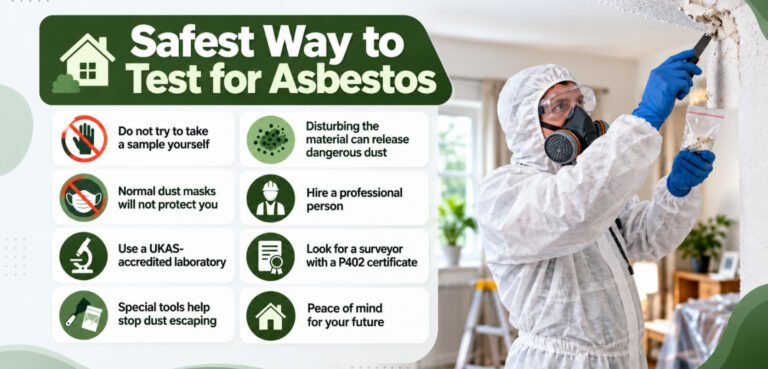
Safety should always be your first priority in a new home. You might feel tempted to take a sample yourself. Please, do not try to do this without help. Disturbing the material can release dangerous dust into your air. Without the right gear, you will breathe in those fibres. Normal dust masks from a shop will not protect you. Furthermore, you could accidentally spread the dust to every room.
In the United Kingdom, we have very high safety standards. The best way is to hire a professional person. These experts have special training to handle dangerous materials. They follow strict rules to keep your family safe. Specifically, you should look for a UKAS-accredited laboratory. UKAS stands for the United Kingdom Accreditation Service. They check that testing labs do their work perfectly.
When you hire a professional, they send a surveyor. Look for a person with a P402 certificate. This qualification means they are experts in surveying buildings. They know exactly where to look for hidden asbestos. Additionally, they use special tools to take samples safely. This process prevents any dust from escaping into your living room. Hiring an expert is the gold standard for UK residents. It gives you total peace of mind for your future.
Where is Asbestos Commonly Found in UK Properties?
Asbestos was used in many different parts of houses. It is helpful to know the common locations. On the outside of your home, look at the roof. Many old garages have corrugated roofing sheets made of asbestos. You might also find it in the soffits. These are the boards under the edges of your roof. Rainwater pipes and gutters often contained these fibres too.
Inside the house, the list is even longer. Many UK homes have “Artex” on the ceilings. This is a bumpy or patterned decorative coating. Before 1984, Artex almost always contained a bit of asbestos. You should also check your kitchen and bathroom floors. Old vinyl floor tiles are a very common hiding place. Even the glue under the tiles can be dangerous.
Check the area around your boiler or water heater. Builders used asbestos to wrap hot pipes for insulation. This is often called “lagging” in the UK. You might also find it in partition walls. Some fireplace surrounds were also made with this mineral. Essentially, you should be suspicious of any old material. If the building was made before 2000, stay alert.
- Exterior Locations: Garage roofs, soffit boards and drainage pipes.
- Interior Surfaces: Bumpy ceilings, floor tiles and wall panels.
- Heating Systems: Pipe insulation and boiler cupboard linings.
- Fire Protection: Panels behind fuses or near old fireplaces.
How Does Professional Asbestos Testing Work?
Professional asbestos testing checks if a material contains asbestos. A trained expert checks the area and takes a sample if needed. A lab then tests the sample. This helps you stay safe before repairs or home changes.
Step 1: Check the Suspected Material
First, an asbestos expert checks the material and its condition. They may look at floor tiles, roof sheets, ceiling coatings or pipe insulation. However, you cannot confirm asbestos by sight alone.
Step 2: Take a Sample Safely
Next a trained expert takes a small sample if needed. They use safe methods to limit the release of harmful fibres. Never take a sample yourself without the right training and tools.
Step 3: Test the Sample in a Lab
The expert sends the sample to a suitable lab. Lab staff use special tests to check for asbestos. They then share the results in a report.
Step 4: Read the Results and Take Action
The results help you decide what to do next. If the asbestos is in good condition, it may be safe to leave it alone. However, damaged material may need expert care.
You may also need an asbestos survey before major building work. So, follow expert advice and do not touch the material while you wait for the results.
How Much Does Professional Asbestos Testing Cost in the UK?
Pricing is an important factor for every new immigrant. You want to save money for your new life. However, safety is an investment that pays off later. Generally, testing a single sample is not very expensive. You might pay between £50 and £100 for one. This price usually includes the lab fee and the report.
If you need a full survey, the cost goes up. A small flat might cost around £200 to £300. For a large house, you could pay over £500. Prices can vary depending on where you live. For instance London prices are usually higher than Northern England. The number of samples also changes the final total price. If the surveyor finds many suspicious areas, they must test more.
You should also consider the type of survey. An R&D survey costs more than a Management survey. This is because it takes much more time to complete. The expert must be very careful and thorough. Always ask for a few different quotes from companies. Ensure the price includes the final UKAS certificate. This document is proof that your home was checked properly. It is a very valuable paper to keep safe.
Is Asbestos Testing a Legal Requirement in the UK?
Yes, testing is a legal rule for many buildings in the UK. If you own a shop, office, or school, you must check for asbestos. While homeowners usually don’t have to test for daily living, they must do it before starting big building works to keep everyone safe.
In the UK, there is a rule called the duty to manage. This means people in charge of business buildings must find any asbestos. Then, they have to keep a special list of where it is. This list helps keep workers safe from breathing in bad dust.
If you are a boss or own a building, you are responsible for this. You must make sure that any repairs do not stir up dangerous fibres. Because of this, you must have a clear plan to manage the risk.
There is a big difference between a home and a workplace. In your own house, the law is usually more relaxed. However, if you hire a builder to work on your home, the area becomes a workplace. Therefore, the law says it must be safe for them. This is why testing is often needed before big renovations.
What Should You Do if Your Test Result is Positive?
Finding asbestos in your home can feel very scary. Please, do not panic if the result is positive. Many UK homes contain this material without any issues. The most important rule is to leave it alone. If the material is not damaged, it is safe. It only becomes a danger when you break it.
After a positive test, create an asbestos register. This is just a simple list of where it is. You must show this list to anyone doing repairs. For example, tell your plumber or your electrician. This keeps them safe while they work in your home. Some people choose to use a method called encapsulation. This means covering the asbestos with a special thick paint. This seals the fibres inside so they cannot escape.
Sometimes, you might need to remove the material completely. This is necessary if it is badly broken or crumbling. For high-risk removal, you must use a licensed contractor. This includes things like pipe lagging or sprayed coatings. The HSE (Health and Safety Executive) sets these strict rules. Only experts with a special licence can do this work. They use tents and air filters to protect your street. Never try to throw asbestos in your regular bin. This is illegal and very dangerous for the bin workers.
Conclusion on How to Test for Asbestos
Knowing how to test for asbestos helps keep your home and family safe. Never cut, drill or break materials that may contain asbestos. Instead, ask a trained expert to check them. If asbestos is found, follow their advice to manage it safely. Also, learn the signs of asbestos before you begin any repair work. Want to learn more about asbestos safety? Join our Asbestos Awareness Training Course. This course helps you spot common asbestos risks and learn how to stay safe. Enrol today to build your asbestos safety knowledge.
FAQs
1. Is there an easy way to test for asbestos?
- Yes, you can use a professional asbestos testing service. They can safely collect a sample and test it in a lab.
2. What are the first signs of asbestos?
- Asbestos has no clear signs you can see or smell. Only proper testing can confirm its presence.
3. Is a little bit of asbestos OK?
- No amount of asbestos exposure is considered completely safe. Avoid disturbing materials that may contain asbestos.
4. What houses are most likely to have asbestos?
- In the UK, homes built or renovated before 2000 are more likely to contain asbestos materials.
5. Will 30 minutes of asbestos exposure hurt you?
- A single 30-minute exposure is generally less concerning than repeated exposure. However the risk depends on the amount of asbestos inhaled.
6. Can I do an asbestos test myself?
- You can buy testing kits, but collecting samples yourself can release harmful fibres. It is safer to use a trained professional.
7. What happens if I inhale a little asbestos?
- A small exposure does not mean you will become ill. However asbestos fibres can cause serious lung diseases often many years later.

Asbestos Awareness Training Course
Course Description :
- Certificate: Yes(Free)
- Accreditation: CPD Accredited
- Access: Lifetime