No products in the cart.
The construction industry in the UK is busier than ever in 2026, and many people want to know the average wage for bricklayers. With the government aiming to build thousands of new homes, the demand for skilled tradespeople has reached a record high. If you enjoy working outdoors and seeing a project grow from the ground up, bricklaying is a fantastic career choice. It offers not only job security but also some of the most competitive pay rates in the building trade. Because there are not enough workers to fill every role, companies are paying higher wages to attract the best talent. This means that even people with basic skills can find well-paid work on sites across the country.
Our guide explores the money you can earn from your first day as an apprentice to your senior years.
What Is the Average Wage for Bricklayer for Novices?
People just starting out in the building trade often begin as apprentices. An apprentice learns on a real building site while going to college once a week to get their qualifications. Most apprentices in the UK earn around £11,000 in their first year of training. This pay goes up as you pass your exams and get faster at laying bricks on the job. Many companies follow the national minimum wage rules for apprentices, which currently sit at £8 per hour for those in their first year. You earn money while you learn, so you do not have to worry about student loans or debt.
Once you finish your training and become a newly qualified worker, your pay jumps up quickly. A junior bricklayer often earns between £30,000 and £32,000 every year as they start working without a supervisor.
How Does Your Skill Level Change Your Pay?
Your experience has a massive impact on your yearly earnings. As you get better at the job, you can complete tasks faster and with fewer mistakes.
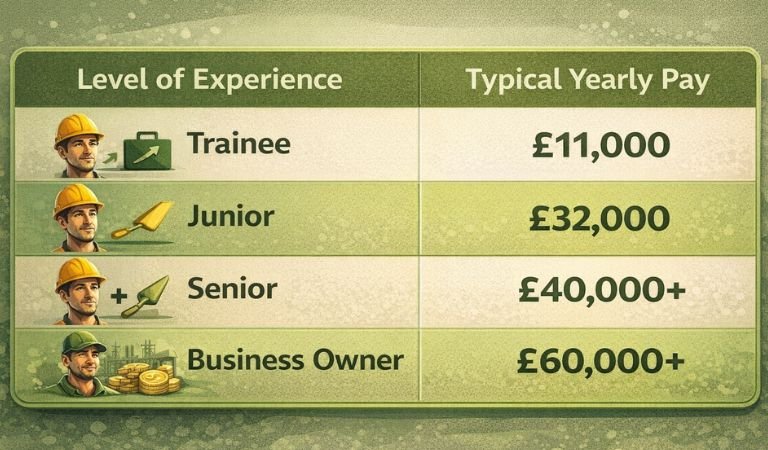
The table above shows how your earnings grow as you master the trade. Most workers start on a lower trainee wage while they learn the basics. Your pay almost triples as a junior because you work without constant supervision.
Where in the UK Can You Earn the Most Money?
Location plays a huge part in how much money you find in your pay packet. Some parts of the UK offer much higher rates than others because the cost of living varies.
London usually offers the highest wages because building there costs more, and projects are often very large. A senior bricklayer in the capital might earn over £50,000 every year. Cities like Birmingham and Manchester also have lots of building work, with wages often sitting between £33,000 and £37,000. In more rural areas or smaller towns, the pay might be slightly lower than in a big city. However, your rent and travel costs in those places are usually much cheaper. This means you might still save more money at the end of the month, even with a lower headline wage.
Why Does the Average Wage for Bricklayer Stay High?
The UK faces a massive shortage of homes, so the government wants to build thousands of new houses every year. Because there are not enough bricklayers to do all this work, companies must pay more to get the best staff for their sites. This high demand means that a skilled worker rarely struggles to find a job, even when other parts of the economy start to slow down. High wages stay in place because the building industry cannot function without the expert hands of a bricklayer to finish the walls.
Many older workers are also retiring from the trade, which leaves even more space for new people to join and earn good money. Since young people are not joining the building trades as fast as they used to, your skills become more valuable every single year. This keeps the average pay for bricklayer workers strong because the supply of labour is low while the need for new buildings remains very high. You can enjoy a sense of job security and high pay that many other careers simply cannot offer right now.
What Are the Main Tasks of a Bricklayer?
A bricklayer must follow a set of daily steps to make sure every wall is strong and safe. You start by looking at building plans to understand where the walls and windows go. Then mix the mortar to the right thickness so the bricks stay in place for a very long time. It is a job that needs a steady hand and a good eye for detail to keep everything straight.
- Reading and following technical building plans helps you avoid mistakes.
- Mixing mortar to the right strength ensures the walls stay firm.
- Laying bricks and blocks in perfectly straight lines requires a steady hand.
- Using tools like trowels, spirit levels, and power saws is a key skill.
- Keeping the building site tidy and safe protects everyone at work.
How Do You Become a Qualified Bricklayer?
Most people get their start by taking a Level Two or Level Three diploma at a local college. These courses teach you the basics of masonry and how to use your tools safely. You can also choose an apprenticeship, which allows you to work on a real site while you study. This path is very popular because you earn a wage while gaining the skills you need for a long career. Many workers find that having a Level Three qualification helps them move into senior roles or site management much faster.
Another way to prove your skills is by earning an NVQ. This qualification involves a professional visiting your site to watch you work and check your walls. Once you have this, you can apply for a CSCS card, which most big building companies ask for before they let you work. Having the right qualifications shows employers that you are a serious professional who follows all the safety rules. It also gives you the power to ask for a higher wage as you move from one job to another.
Which Types of Building Work Pay the Best?
Some types of building work offer much higher pay than others.
- Building luxury homes often pays more due to the high-quality needs.
- Working on large heritage sites requires special skills and brings better rates.
- Repairing industrial chimneys and tall towers offers a very high daily wage.
- Joining major government road or rail projects provides steady, well-paid work.
- Specialising in decorative stonework allows you to charge a premium for your time.
Commercial projects like new office blocks or large shopping centres usually have the biggest budgets for skilled staff. These sites often need people who can work fast while meeting strict safety rules. You might also find that working on complex civil engineering tasks, such as bridges or tunnels, brings in the best weekly earnings. These roles stay in high demand because they require a high level of technical knowledge.
How Can You Increase Your Earning Potential?
One of the best ways to earn more money is by learning how to handle decorative or complex brickwork. Most basic wall building pays a standard rate, but special skills like archway construction or heritage restoration allow you to charge a premium. You should also look into getting a Blue or Gold CSCS card, as these prove you have advanced technical knowledge. Enrolling in a professional Bricklaying Training Course can help you gain the confidence to take on bigger projects. Keeping your knowledge of current construction laws and safety standards fresh helps you become a key worker for any big building company. Many workers also find that moving into a site supervisor role or starting their own limited company leads to a much higher take-home pay.
Gaining more experience and faster working speeds will naturally help you to secure better contracts. Taking short courses on modern building methods can also give you an edge over other local tradespeople.
What Is the Future for Bricklayer Wages?
The future for bricklayer wages in the UK looks very bright as we move further into 2026. Experts believe that pay rates will continue to rise because the country still needs millions of new homes to meet the growing population. Since the government has promised to speed up building projects, firms will need to compete even harder to find reliable staff for their sites. This high demand puts you in a strong position to ask for better pay and benefits every time you start a new contract.
Technology is also helping to make the job more valuable rather than replacing the need for human hands. While some machines can help move heavy materials, the precision and skill of a human bricklayer are still needed for high-quality walls and complex designs. By staying up to date with modern building methods and safety rules, you ensure your services stay in high demand for years to come. This combination of a massive housing need and a shortage of skilled workers means your earning potential should stay high for the foreseeable future.
Final Thought
Building a career in bricklaying offers a strong financial future and excellent job security across the UK. As the demand for new homes grows, skilled workers can expect the average wage for bricklayer roles to stay high and competitive. Whether you are starting as an apprentice or running your own business, this trade provides a clear path to success. Your hard work helps build the nation while securing a stable income.
Frequently Asked Questions (FAQs)
1. How much should I pay a bricklayer per day?
- For a professional bricklayer in the UK, you should expect to pay a day rate between £240 and £320. This price usually covers an eight-hour shift. If you live in London or the South East, the cost often sits at the higher end of this scale. For very small jobs, some workers might charge a minimum half-day fee instead.
2. Can bricklayers make 100k?
- Yes, a bricklayer can earn £100,000 a year, but this is not typical for an average employee. To reach this amount, you usually need to be a self-employed business owner with a large team. Highly skilled experts who work in London or those who specialise in rare heritage restoration are the most likely to see these high earnings.
3. Can a bricklayer lay 1000 bricks a day?
- While most professionals lay between 400 and 600 bricks a day, hitting 1,000 is possible for a very fast and experienced worker. This usually happens on a long, straight wall where the builder does not have to stop for corners or windows. Having a labourer to mix mortar and move bricks also helps a worker reach this high number.
4. How much do UK bricklayers earn per brick?
- When working on price work, many bricklayers earn between £0.50 and £1 per brick. The rate depends on the type of project and the location of the site. Facing bricks pay more because they need extra care and a neat finish. Common bricks for internal walls pay a lower rate because the worker can lay them much faster.
5. What is the going rate for a self-employed bricklayer?
- A self-employed bricklayer usually charges between £32.50 and £40 per hour for smaller domestic jobs. If they take on a full project, they often give a day rate of around £260 to £320. These workers must pay for their own van, tools, and insurance, so their headline rate is higher than a standard employee wage.
6. Is a bricklayer a well paid job?
- Bricklaying is a well-paid trade compared to many other careers in the UK. A fully qualified worker often earns over £40,000, which is higher than the national average salary. Because there is a big shortage of skilled builders, wages stay strong, and there is plenty of work available for everyone.
7. What does a bricklayer charge per hour?
- The average hourly rate for a bricklayer in 2026 sits between £32 and £40. This rate can change based on where you live and the complexity of the work. Short repair jobs or emergency call-outs often cost more per hour than long-term building projects.
8. How many bricks should a bricklayer lay per hour?
- A professional bricklayer typically lays between 40 and 60 bricks every hour. A beginner or an apprentice might lay closer to 20 bricks as they focus on getting the lines straight. Speed comes with practice, and most workers find they get much faster after their first two years on the job.
9. How much is 1000 bricks in the UK?
- The cost for 1,000 bricks usually ranges from £650 to £1,500 for standard machine-made types. If you want high-quality facing bricks or handmade ones for a premium look, the price can rise to £3,500 or more. The price often changes based on the colour and the material used to make the bricks.

Bricklaying Training Course
Course Description :
- Certificate: Yes(Free)
- Accreditation: CPD Accredited
- Access: Lifetime