No products in the cart.
Every year, vehicles on worksites cause serious accidents. Because of blind spots, loud engines and tight spaces, drivers can easily make mistakes. In fact, about 16% of all workplace deaths in Great Britain happen when people are hit by moving vehicles. This highlights the importance of banksman hand signals on sites. They guide drivers clearly and help prevent accidents before they happen.
To do this effectively, a banksman uses standard hand signals without rushing or confusing the driver. They wear high-visibility clothing so drivers can spot them easily. At the same time, they follow safety rules and legal requirements. You need Level 1 Banksman training, good hand signals, and communication skills. What’s more? A CSCS card is mandatory. Next, pay ranges from around £20,000 up to £50,000. Moreover, here are clear ways to start this role and grow your career in site safety.
Let’s dive in and define banksman and explore banksman signals.
What is a Banksman?
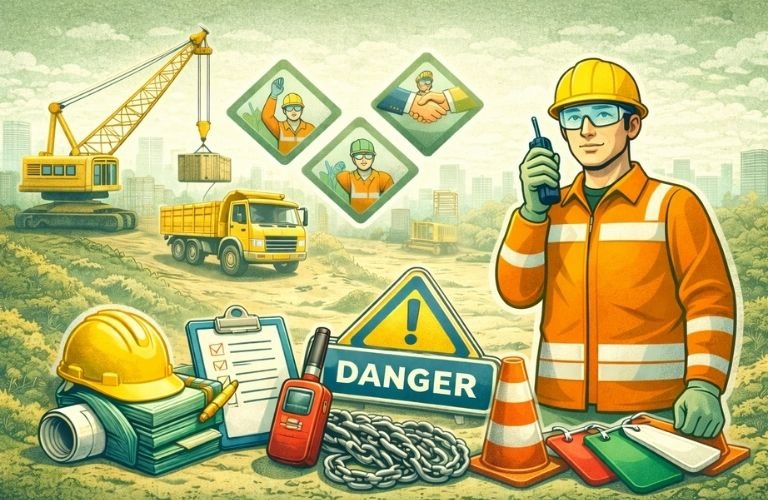
A banksman is a trained worker who guides vehicles and heavy machines on busy worksites. They help drivers move safely, especially in tight spaces or areas with poor visibility. To stay safe, a banksman stands away from blind spots and uses clear hand signals to guide the driver. They also use voice or radio instructions when needed to make sure drivers understand every move.
The site manager assigns a banksman wherever extra control is needed. That’s why banksmen are present on construction sites, warehouses, and other busy work areas. The role exists to prevent accidents, protect workers, and make sure safety rules are followed.
What Is the Meaning of Banksman in Safety?
A banksman does more than just guide vehicles on a worksite. First, they look ahead and check for any dangers to keep everyone safe. Every signal they give helps stop accidents and protect people’s lives.
Also, banksmen keep workers, machines, and buildings safe. They watch carefully and guide drivers step by step. As a result, mistakes and crashes can be avoided. That is why banksmen are an important part of a safe worksite.
How Do Safety Professionals Define Banksman?
Safety experts say a banksman acts as a driver’s eyes and helps prevent accidents. First, they plan how vehicles will move and check for any risks to keep drivers and workers safe. Also, banksmen are trained to spot dangers that drivers might miss, which helps prevent accidents.
In addition, they have the power to stop work straight away if there is danger. Their main job is to keep everyone safe, not to hurry the work. By directing vehicles and checking the area, banksmen prevent accidents on site.
What Does a Banksman Do on a Worksite?
Here’s what a banksman does to keep everyone safe:
- Look around and check for dangers, making sure no one is in the way.
- Plan the safest path for the vehicle to move.
- Agree on clear signals with the driver using hands or radio.
- Stand where the driver can always see them.
- Guide the vehicle carefully, especially when reversing or moving in tight spaces.
- Keep watching for people, other vehicles, and any new hazards.
- Stop the vehicle straight away if there is any danger.
- Make sure the move is finished safely, clear the area, and tell site managers about any problems.
What Types of Banksman Roles Exist on Different Sites?
Banksmen have different jobs, and each one keeps the site safe. First, a vehicle banksman guides trucks and machines around the worksite. At the same time, a traffic marshal controls entrances, exits, and vehicle movement to stop accidents. Meanwhile, a signaller helps with lifting work, making sure cranes and equipment move safely.
Each role focuses on what matters most. Vehicle banksmen watch every move carefully. In the same way, traffic marshals keep people and vehicles apart. Also, signalers make lifting work safe. Together, they keep the site safe, smooth and under control.
Why Are Banksman Hand Signals Essential in High-Risk Areas?
Here’s why signaller hand signals matter on site:
- Clear communication – Hand signals give drivers easy-to-follow instructions when it is too noisy to talk.
- Stop accidents – They help prevent collisions and keep workers, pedestrians, and machines safe.
- Reversing safety – Banksmen guide drivers when going backwards, which is one of the most dangerous moves on site.
- Watch blind spots – Big vehicles have areas the driver cannot see. Banksmen act as the driver’s eyes to spot dangers.
- Work in noise – Signals work even when voices or radios cannot be heard.
- Keep it simple – Standard hand signals make sure the driver and banksman understand each other and reduce mistakes.
- Keep work moving – Banksmen guide vehicles safely and prevent traffic or delays on site.
Which Laws and Regulations Govern Banksman Hand Signals?
Banksman hand signals follow safety rules to keep everyone on site safe. First, the Health and Safety (Signs and Signals) Regulations 1996 set standard hand signals so both drivers and banksmen know what to do. At the same time, the Health and Safety at Work Act makes sure employers and workers are responsible for keeping the site safe. Next, risk checks must be done to find hazards and plan safe movements. Because of this, using hand signals correctly prevents accidents and keeps work running safely while following the law.
What Are Banksman Signals and Why Must They Be Agreed in Advance?
Banksman signals are hand signs used to guide vehicles and machines safely on a worksite. First, it is important to agree on these signals before work starts. This makes sure the driver and the banksman both know what each sign means. Next, standard signals make communication fast and reduce mistakes. Sometimes, sites use special signals for unusual equipment or tricky areas. Otherwise, unclear or mixed signals can cause accidents, damage equipment or put people at risk. By using agreed signals, workers are protected and work flows easily.
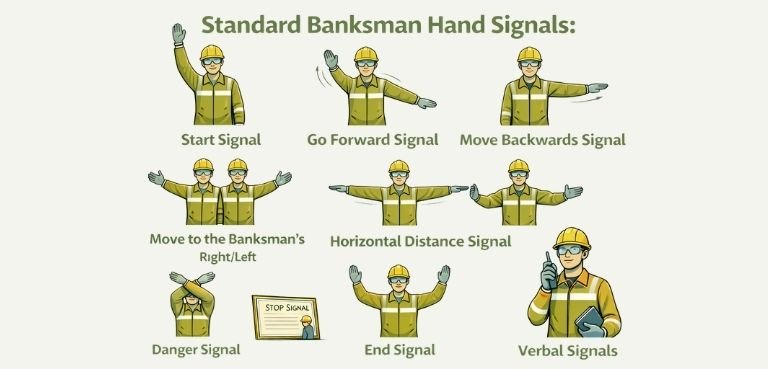
What Are the 9 Standard Banksman Hand Signals Used on Sites?
Start Signal
The start signal tells the driver when it is safe to move. First, it makes sure the driver is ready. Next, it checks that the area is clear and no one is in the way. This stops accidents at the start.
Move Forwards Signal
This signal guides the vehicle to move forward safely. It shows the correct direction and speed. By following it, the driver avoids hitting obstacles, equipment, or people.
Move Backwards Signal
The backwards signal helps when reversing. It shows the driver where blind spots are. At the same time, the banksman watches to make sure nothing is in the way.
Move to the Banksman’s Right Signal
This signal tells the driver to move to the right. It keeps the vehicle on the correct path. This prevents scraping walls, barriers, or equipment.
Move to the Banksman’s Left Signal
The left signal guides the vehicle safely to the left. It makes sure there is enough space from obstacles, other vehicles, and workers. This reduces the risk of accidents.
Horizontal Distance Signal
This signal shows the driver how much space is around the vehicle. It helps in tight areas or near walls and machines. By following it, collisions and damage are avoided.
Stop Signal
The stop signal tells the driver to halt safely. It is not the same as an emergency stop. It is used to pause the vehicle without creating sudden danger.
Danger Signal
The danger signal warns of immediate risk. The driver must stop straight away. It is used in emergencies when hazards appear suddenly.
End Signal
The end signal shows the manoeuvre is complete. It confirms the vehicle is safely in place. This allows workers and other vehicles to move safely and continue work.
When Are Verbal or Radio Signals Used Instead of Hand Signals?
Verbal or radio signals are used when hand signals are hard to see. For example, this can happen in fog, heavy rain, or at night. They are also needed for big vehicles or machines that are far away or hard to move. Also, loud noise on a busy site can make talking or shouting impossible. In these situations, radios help the driver get clear instructions. However, hand signals remain the main method because they are fast, simple, and easy to follow.
What Personal Protective Equipment Must a Banksman Wear?
A banksman must wear the right safety gear to stay safe on site. For example, bright high-visibility clothing helps drivers and other workers see them clearly. At the same time, hard hats, safety boots, and gloves protect against falling objects, slips, and machinery. Also, bright clothing makes hand signals easy for drivers to understand. By wearing the right PPE, banksmen stay visible and guide vehicles without danger.
What Training Is Needed to Become a Banksman?
To become a banksman, you need proper training to stay safe and work with confidence. First, awareness training teaches the basics of spotting hazards and following safety rules. Next, practical training shows how to use hand signals and guide vehicles safely. Then, site-specific training helps you understand the rules and risks of the workplace. Finally, refresher courses keep your skills up to date. With proper training, you can keep everyone safe and work moving safely.
Is a CSCS Card Required for Banksman Work?
A CSCS card is often needed for banksmen on UK construction sites. It proves you know health, safety and site rules. You get it by passing a simple health, safety, and environment test. Also, having the card helps you get work because most employers need it before letting workers on site. In short, a CSCS card shows you are trained, safe, and ready to work. It also gives you access to more job opportunities.
What Skills Are Required to Be an Effective Banksman?
Here’s what makes an effective banksman:
- Clear Communication: Use hand signals, radios, or simple words so the driver always knows what to do.
- Good Awareness: Watch out for dangers like moving vehicles, people, or uneven ground.
- Stay Calm: Keep calm and make safe choices, even when it is noisy or busy.
- Take Charge: Direct vehicles confidently and stop them immediately if there is danger.
- Pay Attention: Observe how vehicles move, where people are, and any hazards around.
- Work with Others: Cooperate with drivers, machine operators, and other workers to keep everyone safe.
- Fit and Active: Stand, walk, and move around the site safely for long periods.
How Much Does a Banksman Earn in the UK?
Banksmen in the UK earn good money, and their pay goes up as they gain experience. To start with, beginners usually earn £13 to £15 per hour. This is enough to start the job and learn the skills. After some experience, most banksmen earn £16.50 to £17.50 per hour, which is about £30,000 to £35,000 a year. On bigger sites or busy city projects, experienced banksmen can earn £18 to £20 per hour or more.
Pay also changes depending on the type of site, its location, and your skills. The more careful and skilled you are, the more money you can earn. Overall, being a banksman is a job that rewards safety, responsibility and experience.
Final Thoughts on Banksman Hand Signals
Banksman hand signals are one of the most important tools for keeping worksites safe. This role literally saves lives by guiding vehicles and machinery in high-risk areas. Clear training and simple, well-practised signals help drivers know exactly what to do. This reduces accidents and keeps everyone on-site safe.
It is also important to stay consistent. Always follow the same agreed signals, so all workers understand what is happening. Speed does not matter if it risks safety. Vehicle guidance hand signals are about focus, control, and protection. When done correctly, they keep people, machines, and the whole site safe.
FAQs about Banksman Hand Signals
1. What are the three main hand signals for a banksman?
- Start: Signal the driver to begin moving.
- Move Forward: Guide the vehicle forward safely.
- Stop: Tell the driver to stop immediately.
2. What are the five hand signals?
- Start – Begin moving.
- Move Forward – Go forward safely.
- Move Backwards – Reverse carefully.
- Stop – Halt the vehicle.
- Danger – Stop immediately due to risk.
3. What are the signals for lifting banksman?
- Raise Load – Signal to lift the load.
- Lower Load – Signal to lower the load.
- Move Left or Right – Guide the load’s direction.
- Stop – Halt lifting or movement.
- Emergency Stop – Stop immediately if there is danger.
4. At what point should a banksman and the operator agree on the hand signals they will be using?
- They must agree before work starts. This avoids confusion and ensures safety.
5. Do you put your hands at 10 and 2 or 9 and 3?
- 9 and 3 is correct. This is the safe hand position on the steering wheel.
6. What are the hand signal rules?
- Always use standardised, clear, and agreed signals.
- Keep eye contact with the driver.
- Stand in a safe position away from danger.
- Only signal when you are sure it is safe.
7. Is it 10 and 2 or 4 and 8?
- The safe positions are 9 and 3 or 8 and 4, depending on the vehicle and site guidance.
Level 3 Banksman Course
Course Description :
- Certificate: Yes(Free)
- Accreditation: CPD Accredited
- Access: Lifetime