No products in the cart.
Thinking about a bonfire? Can I burn garden waste? Yes, but only dry plant material is allowed. This includes dry leaves, twigs, and grass, which burn safely without causing smoke or pollution. However, you cannot burn household rubbish, plastics or treated wood. These create smoke, pollution, and health risks, and could lead to fines. For example, smoke can travel far and affect people with breathing problems. Also, always think about your neighbours and avoid burning on weekends or evenings. Check the weather, because wind can carry smoke into other gardens. If you cause a nuisance, the council can take action.
Bonfires should be small, controlled, and monitored at all times. Keep a bucket of water or a hose nearby in case flames spread. Never leave a fire unattended. Better alternatives exist. Composting your garden waste is great for plants and reduces pollution. You can also take it to local recycling centres or arrange a green waste collection with your council. These options are safer, eco-friendly and often free.
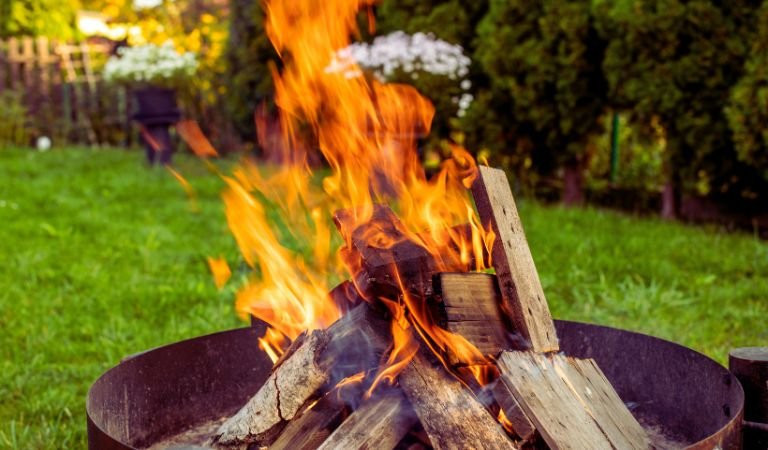
Let’s find out if you can burn garden waste safely, how to do it properly, and better yet, eco-friendly alternatives.
Is It Legal to Burn Garden Waste?
Many people wonder, “Can you burn garden waste?” The law is strict, but it allows some garden waste to be burnt safely. Garden waste includes leaves, grass, small branches, twigs and prunings. Do not burn rubbish, plastics, treated wood, or garden chemicals. They produce harmful smoke and can lead to fines or legal issues.
The rules come from the Environmental Protection Act 1990. It says smoke, smells, or fumes that bother neighbours or the community are illegal. Therefore, you must be careful when lighting a bonfire. Choose a dry, calm day to burn your garden waste. Have a fire extinguisher, a hose, or a bucket of water on hand. A fire should never be left unchecked. Also, burn only small amounts at a time to reduce smoke.
The difference is simple. Garden waste is natural and dry. Domestic or commercial waste includes rubbish, packaging, or chemicals. Only natural plant material can be burnt safely.
What You Can and Cannot Burn
What you burn matters when asking, “Can I burn garden waste in my area?” Let’s see what you can or cannot do.
To start with, safe materials you can burn:
- Dry plant material
- Grass clippings and leaves
- Small branches, twigs, and prunings
- These burn easily and produce very little smoke
On the other hand, materials you must not burn:
- Household rubbish
- Plastics, treated wood, paints, and foam
- Chemicals or garden waste with chemicals
- These create thick, harmful smoke and are illegal
In addition, the consequences of burning illegal materials:
- You can get a fine from the council
- Neighbours may complain about the smoke or smell
- Smoke can harm people with asthma, children or older adults
Remember these safety tips for burning garden waste:
- Burn small amounts at a time
- Keep a fire extinguisher, hose, or bucket of water close at hand.
- Never leave the fire unattended.
Using safe materials makes a big difference. A careful fire keeps your garden tidy, the air clean, and your neighbours happy.
Health and Environmental Concerns
Watch the smoke
- Smoke can travel far and cause bother for your neighbours.
- People with asthma, children, or older adults can find it hard to breathe.
- Even a small amount of smoke can irritate the eyes, throat, and lungs.
- Besides, smoke can make your clothes and hair smell bad.
Avoid harmful materials
- Never burn chemicals, paints, foam, treated wood, or plastics.
- These materials make dangerous fumes that pollute the air.
- They can hurt people, pets, and plants.
- For example, toxic fumes can settle on soil and water, making them unsafe.
Control your fire
- A bonfire can spread fast if you are not careful.
- Sparks can reach fences, gardens, or nearby buildings.
- Wildlife like birds, insects, and small animals can get hurt or lose their homes.
- Therefore, always keep your fire small and manageable.
Think about neighbours
- Smoke can cause strong smells that travel far.
- Neighbours may get upset or complain if the fire smells too much.
- In fact, repeated smoking can damage relationships with neighbours.
Stay safe
- Burn small amounts at a time.
- Keep a fire extinguisher, a hose, or a bucket of water close at hand.
- Never leave a fire unattended.
- Also, make sure pets and children stay away from the fire.
Protect health and nature
- Burn only safe garden materials like leaves, twigs and grass clippings.
- A controlled fire keeps your garden tidy, the air cleaner, and wildlife safe.
- Finally, think before you burn: a safe fire helps everyone enjoy your garden without worry.
Better Alternatives to Garden Bonfires
If you want to get rid of garden waste safely, there are better ways than a bonfire. These methods protect your health, your neighbours, and the environment.
- Take your burning rubbish in gardens to the local recycling or civic sites.
- Check if you need to book a day with your council.
- Recycle leaves, grass, small branches, and twigs.
- Use your council’s green bin or garden waste bag collection.
- Put leaves, grass, and small branches in these bins.
- Compost your garden waste at home.
- Turn leaves, grass, twigs, and vegetable scraps into compost.
- Compost helps make your soil rich and healthy.
- Avoid bonfires to reduce smoke and air pollution.
- Protect wildlife like birds, insects, and small animals.
- Keep your garden tidy, safe, and eco-friendly.
- Choose safe alternatives to avoid fines, complaints and fire risks.
Step-by-Step Guide for Safe Bonfires
When burning of garden waste, it is important to be safe. A little care keeps you, your neighbours, and wildlife happy.
- To start with, tell your neighbours before lighting the fire. They will appreciate the warning, and it avoids complaints. You could even pick a day that works for everyone.
- Next, choose a good time to burn. Pick dry, calm days and avoid windy weather. Burn during the day, not too early or late.
- After that, keep the fire away from buildings, fences, sheds, and trees. Sparks can travel far, so give your fire plenty of space.
- Remember, only burn dry plant material like leaves, grass, small branches and twigs. Do not burn garden rubbish, wet leaves, plastics, or treated wood. These make thick smoke and bad smells.
- Also, avoid burning when air pollution is high. Smoke can make the air worse and affect people with breathing problems.
- Finally, have safety tools nearby. Keep a bucket of water, a hose, or a fire extinguisher close. Never leave the fire alone.
By following those simple steps, you can enjoy your garden bonfire safely. A little planning keeps the fire fun, safe, and friendly for everyone.
Environmental Impact of Burning Garden Waste
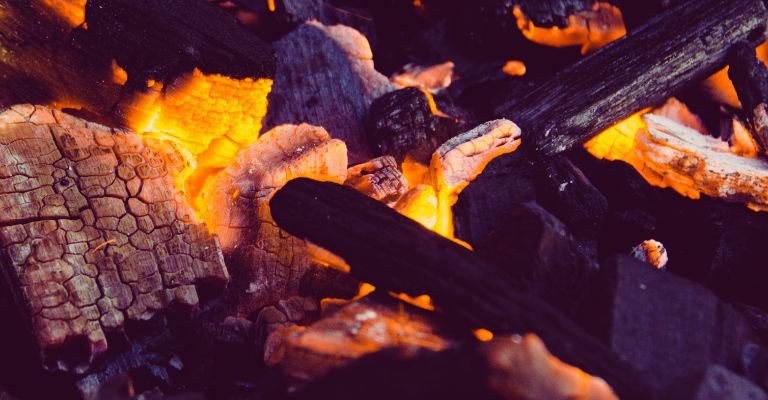
Burning garden waste can harm the planet more than you might think. It frees up carbon dioxide and other harmful gases, which add to climate change and make the air dirtier. Smoke can travel far and affect your neighbours and the local area.
Leaves, grass, and small branches have nutrients that help the soil grow healthy plants, but burning them destroys these useful nutrients. Without them, your garden soil becomes weaker, and plants may grow poorly. Composting these materials returns nutrients to the soil and keeps your garden healthy. Small animals, birds, and insects often use garden waste piles for shelter, so a bonfire can destroy their homes. Even insects that help flowers grow and pollinate can get hurt, which affects your garden and the environment.
Smoke from fires carries tiny particles that people can breathe in, even if the fire looks small. This can irritate eyes, throat, and lungs, especially for children, older adults or people with breathing problems. Burning garden waste can also make strong smells that travel far, and this can upset neighbours. Choosing safer methods, like composting, using green bins, or taking garden waste to council recycling sites, helps the planet and keeps your community safe.
Every small step counts. By burning less and composting more, you reduce pollution, protect wildlife and keep the soil healthy. A little care can make a big difference for your garden, your neighbours, and the planet.
Making a Bonfire Complaint
If a neighbour’s bonfire creates smoke or bad smells, you can take steps to protect yourself and your home.
- Talk politely to your neighbour. Explain how their fire affects you and suggest a safer way to burn garden waste.
- Keep a diary of the fire. Record the type of smoke, how long it burns, and the effects on you, so you have a clear record.
- Note the date and time of each fire. This helps show a pattern, which is useful if the problem continues.
- Try to contact your local council. Then give them your diary and explain the problem so they understand the situation clearly.
- The council can investigate and take action if the fire breaks the law. They may warn your neighbour or issue fines, and advise about safer alternatives.
- Stay calm and patient. Complaints can take time, but keeping records helps protect your health, your home, and your community.
Can I Burn Garden Waste: Commercial and Contractor Waste Fact
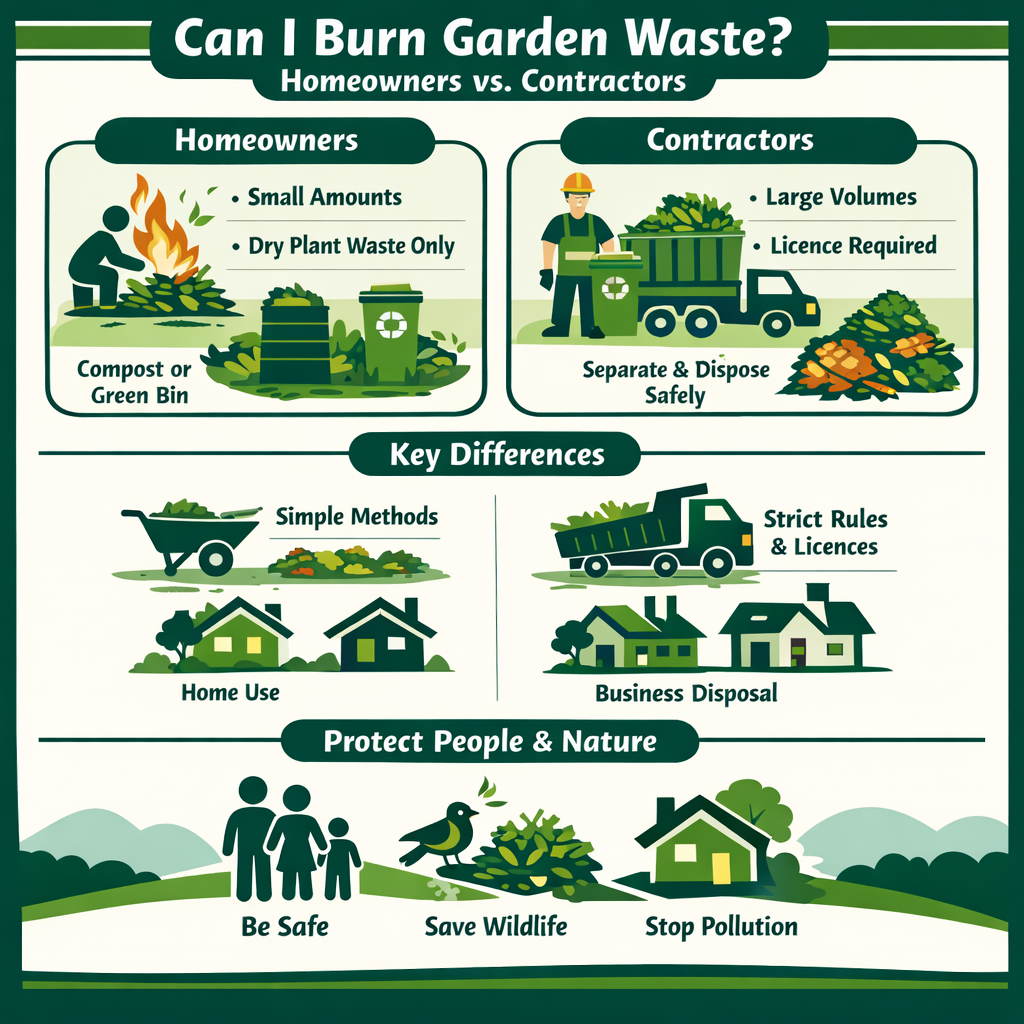
Garden waste rules are different for homeowners and contractors. Here’s a clear comparison:
Homeowners:
- It can burn small amounts of dry garden waste at home, which keeps it simple and safe.
- Only dry plant material is allowed, like leaves, grass and small branches.
- Must avoid smoke that affects neighbours or creates a nuisance.
- Can compost at home or take waste to the council green bin or recycling sites.
Contractors/Businesses:
- Cannot burn garden waste freely like homeowners, so they must follow strict laws and check local rules.
- Often, a licence or exemption from the Environment Agency is needed for safe disposal.
- Must separate garden waste from other rubbish, because mixed waste can create dangerous smoke and legal problems.
- Handle large amounts of waste, including grass clippings, hedge trimmings, leaves, and branches, which requires careful planning.
- Safe disposal protects workers, neighbours, wildlife and the environment.
Key Differences:
- Homeowners manage small amounts; contractors deal with larger volumes.
- Contractors need licences and must follow stricter rules, while homeowners can use simple methods like composting.
- Homeowners have simple choices, but contractors need to carefully consider safe disposal.
Following these rules keeps everyone safe, protects wildlife, and reduces complaints or fines. Contractors and homeowners can both care for the environment, but the approach is different.
Final Thought
Ultimately, burning garden debris shouldn’t ever feel hurried or negligent. Sometimes, a small fire may seem easy, but it can quickly cause smoke problems. Meanwhile, composting or using a green bin saves time and avoids trouble. Above all, clean air matters for children, older people and anyone with breathing problems. As a result, safer choices protect your health, your garden and your neighbours.
If you enjoy clear and friendly advice, take a look at our blog. We share simple guides that explain the rules, safety tips and eco-friendly options in easy words.
FAQ on Can I Burn Garden Waste?
1. How to burn garden waste safely?
- Burn only dry leaves, twigs, and small branches. Choose a calm day and keep water nearby.
2. Can you burn green waste in the UK?
- Yes, but only small amounts of dry garden waste. It must not cause smoke or disturb neighbours.
3. Is it okay to burn grass clippings?
- Yes, but only when dry. Wet grass creates thick smoke.
4. How do I report a neighbour burning rubbish in the UK?
- Contact your local council. Keep notes of dates, times, and smoke issues.
5. Can I burn private papers in my garden?
- Yes, in small amounts. Keep the fire controlled and avoid heavy smoke.
6. Can I burn garden waste in my area?
- Yes, you can burn dry garden waste like leaves, twigs, and grass. However, you must not burn rubbish, plastics, or treated wood, as this can cause pollution and fines.