No products in the cart.
Fire prohibition signs show where smoking, flames or other fire sources are not allowed. These signs help prevent fires in workplaces and public areas. These signs also remind people to follow important fire safety rules. As a result, everyone can understand which actions to avoid.
These signs use clear colours, shapes and symbols to share safety messages. Some signs warn people not to smoke or use flammable things. Others show fire equipment or emergency exits. By learning these signs, people can follow safety rules with confidence.
This guide explains fire prohibition symbols and what they mean.
What are Fire Prohibition Signs?
Fire prohibition signs tell people what they must not do in certain areas. These signs help prevent actions that could start or spread a fire. Common examples include the ‘No Smoking’ and ‘No Naked Flames’ signs. Most prohibition signs use red, white and black colours for clear warnings. They usually have a round shape with a red border and a diagonal line.
This design makes the message easy to spot and understand. The fire safety sign meaning helps people know which actions they must avoid. In UK workplaces, these signs form part of the wider safety sign system. However, signs support other fire safety measures and do not replace them.
Why are Fire Prohibition Signs Important?
Fire prohibition signs help people quickly understand unsafe actions in specific areas. Clear signs can reduce unsafe behaviour in workplaces and other buildings. They become especially important near flammable materials, fuels, gases and other fire risks. Areas that ban smoking or naked flames need clear warnings. Workers and visitors can recognise these signs without needing long instructions.
Good visibility also helps people notice the signs quickly. However, signs work alongside other workplace fire safety controls. HSE guidance says safety signs should stay clear and easy to read. It also warns against using too many signs. Therefore, businesses should use suitable signs with other fire safety measures.
What Do Fire Prohibition Signs Mean?
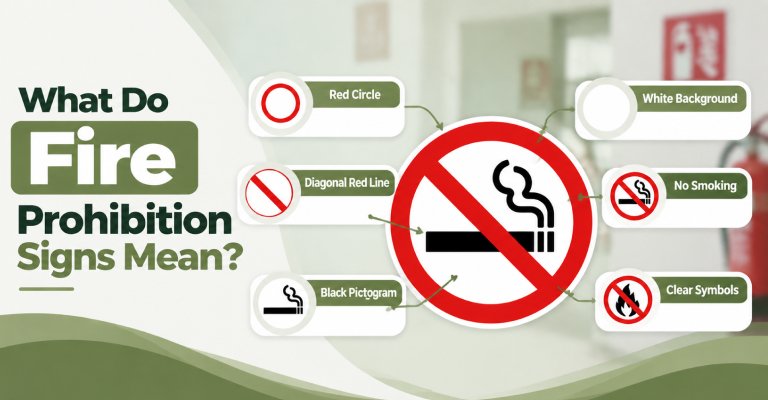
Fire prohibition signals use simple colours and symbols to show what people must not do. The fire safety sign meaning comes from the sign’s shape, colours and picture. Together, these features give a clear warning without using long words or instructions. As a result, workers and visitors can understand the message quickly.
- Red Circle: Shows that the sign bans a certain action.
- Diagonal Red Line: Crosses the picture to show that an action is not allowed.
- Black Pictogram: Shows the action that people must avoid.
- White Background: Makes the symbol clear and easy to spot.
- No Smoking: A crossed-out cigarette means smoking is not allowed.
- Clear Symbols: Simple pictures help people understand warnings at a quick glance.
What Colour are Fire Prohibition Signs?
Fire prohibition signals mainly use red, white and black. Each colour makes the warning clear and easy to understand. Red signs show that people must not take an action. It also highlights actions that could cause danger. The white background makes the sign easy to see. Black shows the action that people must avoid. Together, these colours make the warning simple and clear.
Fire prohibition labels differ from fire equipment signs. Prohibition signs tell people what they must not do. Equipment signs show where people can find fire equipment. So, what colour are fire equipment signs? They usually use red to show firefighting equipment. This helps people find the equipment quickly during an emergency.
What are the Most Common Fire Prohibition Signs?
Many workplaces use fire prohibition symbols to stop actions that could cause harm. Common examples include No Smoking and No Naked Flames. A no-smoking sign may appear near fuel or other flammable materials. It helps stop fires caused by cigarettes. No Naked Flames signs can appear near gases or flammable liquids.
No Smoking or Naked Flames combines both warnings in one sign. Do Not Extinguish With Water warns people not to use water on certain fires. No Unauthorised Access can also control entry into areas with fire risks. Each sign gives a clear warning about a specific danger.
Where Should Fire Prohibition Signs Be Used?
Fire warning signs belong in areas where certain actions could cause a fire. The location should match the fire risks in each area. Clear signs help workers and visitors spot warnings before taking action. Good placement also supports other workplace fire safety controls.
- Near Flammable Materials: Place signs where fuel, gas or chemicals could catch fire.
- Smoking Areas: Use ‘No Smoking’ signs where smoking could create a fire risk.
- Storage Areas: Place signs near stores that contain flammable goods or materials.
- Restricted Areas: Put signs at entrances where access or certain actions are banned.
- Visible Positions: Set up signs where workers and visitors can easily see them.
- Clear Information: Keep signs clear so they do not block other safety information.
How Do Fire Prohibition Signs Differ From Fire Equipment Signs?
Fire prohibition signs tell people what they must not do. They use red, white and black to show banned actions. In contrast, fire equipment signs show where people can find firefighting equipment. They mainly use red and white, so people can spot equipment easily. Therefore, the fire equipment signs colour differs from prohibition signs.
Other safety signs also use different colours and shapes. For example, warning signs use yellow and black to show hazards. Mandatory signs use blue and white to show actions people must take. Emergency escape signs use green and white to show safe escape routes. As a result, each colour helps people understand the message quickly.
What Colour Would You Expect Fire Equipment Signs To Be?
Fire equipment signs use red to show where firefighting equipment is. They usually have a white symbol on a red background. You may see them near fire extinguishers and hose reels. The red colour helps people spot the equipment quickly. Some signs also point to equipment that is out of sight.
Fire equipment signs differ from prohibition signs. Prohibition signs show actions that people must not take. Fire equipment signs show where people can find firefighting equipment. The fire equipment signs colour makes these signs easy to spot and understand.
What are the Main Categories of Fire Signage?
Fire signs help people understand safety messages quickly. Each type has a clear colour and symbol. Also, each sign has a different purpose. Prohibition signs use red to show actions people must not take. Warning signs use yellow to show danger or possible hazards. Mandatory signs use blue to show actions people must take.
Emergency escape signs use green to show safe escape routes. Firefighting equipment signs use red to show fire equipment. Supplementary signs give extra details about another safety sign. Together, these signs help people follow safety rules and stay safe.
How Do the Colours of Fire Safety Signs Help People?
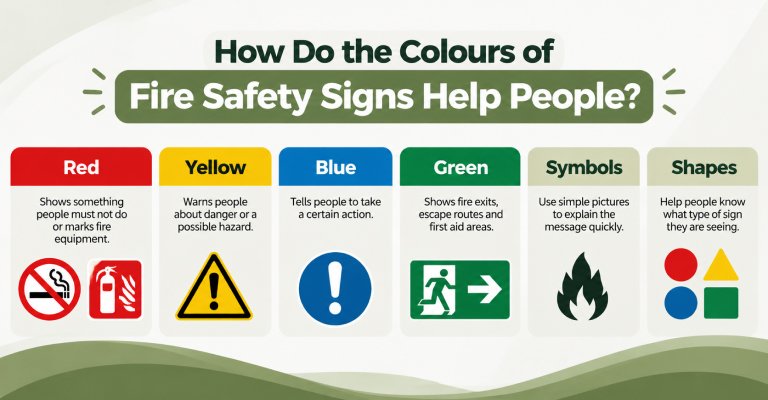
Colours help people spot fire safety signs quickly. Each colour tells people what the sign means. Also, shapes and symbols make the message easier to understand.
- Red: Shows something people must not do or marks fire equipment.
- Yellow: Warns people about danger or a possible hazard.
- Blue: Tells people to take a certain action.
- Green: Shows fire exits, escape routes and first aid areas.
- Symbols: Use simple pictures to explain the message quickly.
- Shapes: Help people know what type of sign they are seeing.
How Should Fire Prohibition Signs Be Displayed?
Fire prohibition symbols should stay clear, visible and easy to understand. Place them at a suitable height where people can see them easily. Keep a clear view so objects do not hide the signs. Good lighting also helps people spot signs in darker areas.
Keep signs clean so people can read them. Check them often for damage or fading. Replace signs that look old or broken. Use signs that stay clear in the place where you put them. Clear signs help people stay safe.
What Rules Apply to Fire Prohibition Signs in the UK?
The Health and Safety (Safety Signs and Signals) Regulations 1996 cover workplace safety signs in the UK. These rules help businesses use clear colours, shapes and symbols. Also, HSE guidance helps employers choose the right safety signs. However, employers should not rely on signs alone.
They should use signs when risks remain after other safety steps. In this way, signs can help workers understand safety messages quickly. Businesses should also keep signs clear and easy to see. Finally, employers should check the latest official guidance for their workplace.
How Can You Choose the Right Fire Prohibition Signs?
Start by checking the fire risk in the area. Identify the action that people need to stop. Then, choose the correct recognised sign for that risk. Check the sign’s colour and symbol before using it. Place the sign where workers and visitors can see it clearly.
Make sure people can see the signs, even in dark areas. Do not put too many signs in one place. Too many signs can confuse people. Keep each sign clean and easy to read. Fire prohibition signs are only one part of fire safety. Use them with other safety steps at work.
Final Thoughts
Fire prohibition signs show people what they must not do. Their colours, shapes and symbols make them easy to spot. Good placement helps workers and visitors see them quickly. However, signs are only one part of fire safety. Businesses should use the right signs in each area. They should also check signs often and keep them clear.
Want to build stronger fire safety skills? Explore our Level 2 Fire Safety Course and build useful workplace skills.
FAQs
1. What is a prohibition fire sign?
- A prohibition fire sign tells people what they must not do. Common examples include No Smoking and No Naked Flames.
2. What are the five fire indicators?
- The five main fire sign types include prohibition, warning, mandatory, emergency escape and firefighting equipment signs.
3. What are the regulations for fire signage in the UK?
- The Health and Safety (Safety Signs and Signals) Regulations 1996 cover safety signs in UK workplaces.
4. Can you give me an example of a prohibition sign?
- A No Smoking sign is a common prohibition sign. It tells people they must not smoke.
5. What does a prohibition sign look like in the UK?
- A UK prohibition sign has a red circle, a white background and a black symbol. A red diagonal line crosses the symbol.
6. What are 7 examples of a warning sign?
- Examples include fire, slippery floors, high voltage, flammable materials, toxic substances, wet floors and falling objects.

Level 2 Fire Safety Course
Course Description :
- Certificate: Yes(Free)
- Accreditation: CPD Accredited
- Access: Lifetime