No products in the cart.
HACCP, or Hazard Analysis and Critical Control Point, is a system to keep food safe. First, it helps businesses find and control germs, chemicals, and other dangers in food. Then, it guides them to prevent problems at every stage, not just to test the finished product. Also, about 71 % of food businesses in the UK get a 5‑star hygiene rating, which shows they follow good food safety rules. Overall, this careful approach shows the true HACCP meaning in food safety.
Now, let’s break it down step by step to understand how this system keeps food safe and prevents risks.
What is HACCP and Why Does it Matter in Food Safety?
HACCP is a system that helps keep food safe. It checks for dangers at every step, from raw ingredients to the food we eat. This way, businesses can prevent food problems before they reach customers.
Why HACCP Matters in Food Safety
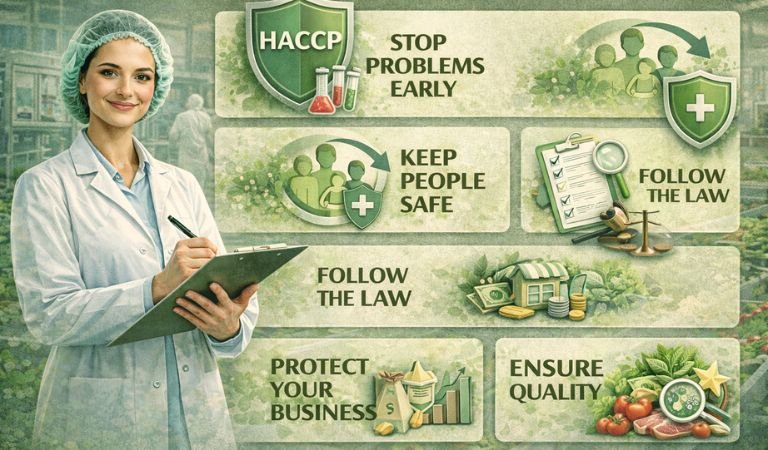
- Stop Problems Early: Firstly, HACCP checks for risks at important steps in food production. For example, it looks at cooking, storage, and handling. This way, businesses can stop hazards before the food reaches customers.
- Keep People Safe: Also, it protects people from bacteria, viruses, and allergens. This is especially important for children, elderly people, and anyone with weak immunity. In addition, good HACCP can prevent serious foodborne illnesses.
- Follow the Law: In the UK and EU, food businesses must use HACCP. Moreover, authorities check that businesses have proper food safety systems. Following the rules avoids fines and legal trouble.
- Protect Your Business: As a result, good HACCP prevents food problems. This means fewer product recalls, less waste, and a better brand reputation. Therefore, customers trust businesses that are careful about food safety.
- Ensure Quality: Finally, HACCP gives a clear plan to make food safe every time. It also helps businesses keep food fresh and high quality, which keeps customers happy and loyal.
Breakdown of the Acronym
Hazard: First, this means anything that could cause harm, like bacteria, chemicals, glass, or allergens.
Analysis: Next, it is finding and checking these risks to see which ones need control.
Critical Control Point (CCP): Finally, these are important steps in the process, like cooking or cooling, where hazards can be stopped, reduced, or made safe.
What a HACCP Plan Includes
A HACCP plan explains the dangers that could happen in your food process, from storage to serving. It shows how you keep those dangers under control, for example by checking temperatures, cleaning properly, or keeping foods separate.
It also tells what to do if something goes wrong and who is responsible for each step in the process. Finally, the plan explains how to record and check that your safety measures are working.
What Are the 7 Principles of HACCP?
Principle 1:
Conduct a hazard analysis – First, look for anything that could make food unsafe, like bacteria, chemicals, glass, or allergens. Also, check how likely these hazards are and how serious they could be. This helps you know which problems to focus on.
Principle 2:
Identify critical control points (CCPs) – Next, find the steps in your process where hazards can be controlled. For example, cooking, cooling, or using a metal detector. By controlling hazards here, you keep food safe.
Principle 3:
Set critical limits – Then, decide safe limits for each CCP, such as the correct temperature, time, or pH. These limits make sure food stays safe.
Principle 4:
Monitor CCPs – After that, check CCPs regularly. For instance, measure temperatures, check cooking times, or inspect equipment. This way, you can catch problems early.
Principle 5:
Take corrective actions – If something goes wrong, act immediately. For example, cook food longer, throw it away, or fix equipment. Doing this prevents unsafe food from reaching customers.
Principle 6:
Verify the system – In addition, test or check the system to make sure it works. This could include audits, inspections, or lab tests. Verification proves the plan keeps food safe.
Principle 7:
Keep records – Finally, write down all steps, checks, monitoring results, and actions taken. These records help you follow the plan and improve food safety over time.
How Does a HACCP Template Differ from a Professional Plan?
Think of HACCP like a recipe. You can list the ingredients, but making it work properly takes skill. A template can help, but it has limits. It does not know your kitchen, your team, your equipment, your delivery plan, or your allergen risks.
A professionally written HACCP, however:
- Fits your kitchen, menu, and how you work
- Includes the right risk checks for your setup
- Uses the correct words and format that inspectors recognise
- Links to your daily digital checks and records
- Is simple to follow, easy to train staff on, and easy to prove
In short, you could make it yourself, but a professional HACCP plan works better, faster, and meets all legal rules.
What Are the Benefits of HACCP?
HACCP helps businesses keep food safe and protects customers. It also makes operations smoother and builds trust.
Better Food Safety: First, it finds and stops risks like bacteria, chemicals, or bits of glass before they cause problems.
Follow the Law: Also, it helps your business meet food safety rules and avoid fines.
Save Money & Work Smarter: In addition, it reduces waste, lowers the chance of recalls, and makes work easier by checking risks at important steps.
Customer Trust & Reputation: Moreover, it shows customers you care about safety, which builds trust and brings more business.
Proof of Care: It also keeps records to show your business takes food safety seriously. This helps if there is a legal issue.
Better Management: Finally, it helps your team understand food safety and creates a strong safety culture.
What is HACCP Certification and How Can Businesses Get It?
HACCP certification shows that a business follows a proper food safety system. It proves that food is safe from the moment ingredients arrive until customers eat it. This helps protect both the customer and the business.
To get certified, a business first creates a HACCP plan that matches its kitchen, menu, equipment, and staff. For example, the plan will explain how to store raw meat safely, how to cook food at the right temperature, and how to check for allergens. Next, the business trains all staff to follow the plan correctly every day. Then, an accredited inspector visits the site to check that the plan is being used properly. If everything meets the rules, the business receives official certification.
This certification is important for many reasons. It builds customer trust because people feel safe eating your food. Also, it helps your business stay legal and avoid fines or penalties. Finally, it gives staff confidence and creates a strong food safety culture where everyone knows their role.
What Are Common Misunderstandings About HACCP?
Many people think HACCP is only for big factories. However, small cafes, restaurants, and food shops can use it too. Even a small takeaway can follow HACCP steps to stay safe.
Some believe HACCP replaces hygiene rules. In fact, it works together with hygiene practices. For example, washing hands, cleaning surfaces, and storing food at the right temperature are still essential. HACCP just adds a structured way to check risks.
Also, people sometimes think HACCP is too complicated or time-consuming. Actually, once you follow the steps, it becomes part of the daily routine. Overall, HACCP is about being careful, checking risks, keeping food safe, and protecting both your customers and your business.
What Are the Differences Between HACCP and Other Food Safety Systems?
- HACCP vs. Traditional Inspections: Traditional inspections check food after it is made. However, HACCP looks at risks during production. First, it finds hazards at important steps called Critical Control Points (CCPs). This way, problems can be stopped before they happen.
- HACCP vs. HARPC (FSMA): HACCP focuses on risks in the food process. Also, HARPC is broader and includes risks like intentional contamination, radiological hazards, and economic adulteration.
- HACCP vs. ISO 22000: HACCP makes sure food rules are followed. In addition, ISO 22000 is bigger. It includes HACCP but also covers quality, communication, and how the business is organised.
- HACCP vs. GMPs (Good Manufacturing Practices): GMPs are basic hygiene and cleaning rules. They must be done first. Then HACCP builds on them to control specific food safety risks.
How is HACCP Applied in Different Food Sectors?
HACCP works in many food businesses. Each one uses it in its own way to keep food safe every day.
Restaurants and Catering:
Firstly, restaurants use HACCP during daily cooking and serving. For example, staff check food temperatures and store items safely. Also, they keep raw and cooked food separate to avoid contamination. In addition, they clean surfaces and tools often. This way, they reduce risks and protect customers. Finally, these steps help build trust and keep people coming back.
Food Factories and Processing Plants:
Factories use HACCP in a more detailed and controlled way. Firstly, they check raw materials before production starts. Then, they control each step, like cooking, cooling, and packaging. Moreover, machines and sensors help track safety levels. Also, staff follow strict rules and check every day. This way, they manage large amounts of food safely. Finally, this system keeps quality high and consistent.
Supermarkets and Retail:
Shops use HACCP to keep food fresh and safe for customers. Firstly, they store food at the right temperature. For example, chilled and frozen foods stay in proper storage. Also, staff check expiry dates and remove unsafe items. In addition, they handle food carefully to avoid damage. This way, customers get safe and fresh products. Finally, good practices help build customer confidence.
What Are the Challenges in Implementing HACCP?
HACCP is very helpful, but it can feel difficult at first. Many businesses face some common challenges.
Cost and Training Issues:
Firstly, setting up HACCP can cost money. Businesses need tools, time, and proper training. Also, staff must learn new rules and follow them daily. In addition, training takes time and effort. However, this investment improves safety in the long run. Finally, trained staff work more confidently and correctly.
Resistance to Change:
Some people do not like new systems. Firstly, staff may feel unsure about new rules. Also, they may worry about extra work. However, clear training helps them understand the benefits. In addition, support from managers makes change easier. This way, teams slowly accept the system. Finally, they feel more comfortable and confident over time.
Complexity for Small Businesses:
Small businesses may find HACCP hard to manage. Firstly, they may have fewer staff and less time. Also, the system may seem confusing at the start. In addition, keeping records can feel like extra work. However, simple steps can make it easier to follow. This way, even small teams can manage HACCP well. Finally, support and guidance can make a big difference.
Final Words about HACCP Meaning in Food Safety
HACCP’s meaning in food safety is easy to understand. It helps you keep food safe every day. First, it helps you find risks early. Then, it helps you control them before they cause harm. Also, you protect your customers and your business. Your team knows what to do each day. In addition, customers feel safe and trust your food.
At first, HACCP may feel hard. However, it gets easier with time. Step by step, it becomes part of your daily work. As a result, your business becomes safer and stronger. In short, HACCP is a simple way to keep food safe and grow your business.
FAQs on HACCP Meaning in Food Safety
1. What is food safety in 2026?
Food safety means keeping food clean and safe to eat. It uses modern tools, strict rules, and better training. Also, businesses focus more on prevention, not just testing.
2. Is HACCP a legal requirement in the UK?
Yes, HACCP is a legal requirement in the UK. Food businesses must follow it to control risks. Also, the law asks them to keep proper safety records.
3. How to explain HACCP in an interview?
HACCP is a system to find and control food safety risks. It focuses on prevention at every stage. Also, it helps keep food safe from start to finish.
4. What are the 12 steps in HACCP?
The 12 steps include:
- Build a HACCP team
- Describe the product
- Identify use
- Create a flow diagram
- Check the flow diagram
- Do hazard analysis
- Find critical control points (CCPs)
- Set critical limits
- Monitor CCPs
- Take corrective action
- Verify system
- Keep records
5. What are the 5 hardest interview questions?
- Tell me about yourself
- What is your weakness?
- Why should we hire you?
- Tell me about a failure
- Where do you see yourself in 5 years?
6. What are the 7 steps of HACCP?
- Hazard analysis
- Identify CCPs
- Set limits
- Monitor
- Correct actions
- Verify
- Record keeping
7. What are the 7 steps of food safety?
- Personal hygiene
- Clean equipment
- Avoid cross-contamination
- Cook food well
- Store food safely
- Control temperature
- Use safe water and raw materials
8. What are common HACCP hazards?
- Biological: bacteria, viruses
- Chemical: cleaning products, pesticides
- Physical: glass, metal pieces
9. What are the 5 C’s of food safety?
- Cleaning
- Cooking
- Chilling
- Cross-contamination
- Control