No products in the cart.
Glasses used to be something people wore reluctantly. A necessity managed rather than a choice embraced. That has shifted considerably over the past decade or so, and the shift has been genuine rather than just a marketing narrative. The frames people choose today are as considered as any other part of how they put themselves together in the morning.
The reason is straightforward. Glasses sit at the centre of the face. They frame the eyes, define the upper half of the expression, and are present in virtually every interaction and photograph. Getting them right has a disproportionate effect on how a person reads to others and how they feel about their own appearance. Getting them wrong has an equally disproportionate effect in the other direction.
Why Frame Choice Matters More Than Most People Realise
The face is read in fractions of a second. The brain processes faces with extraordinary speed, picking up on proportions, symmetry, and visual balance before conscious thought has a chance to catch up. Glasses that complement the face work with that process. Glasses that fight against it create a subtle wrongness that most people cannot articulate but register nonetheless.
This is not about following rigid style rules. It is about understanding what is happening visually so the choice becomes informed rather than arbitrary. A well-chosen pair of eyeglasses does not just correct vision. It adds structure where the face needs it, softens where the features are strong, and draws attention toward the eyes in a way that flatters the overall composition.
The encouraging part is that the principles involved are genuinely simple once understood, and buying prescription glasses online has made exploring different frame styles more accessible than it has ever been.
Face Shape as a Starting Point
Face shape is the most reliable framework for narrowing down frame choices, not because it produces rigid answers but because it identifies which visual qualities a frame needs to bring and which ones it should avoid adding.
Round faces benefit from angular frames. A round face already has soft curves and roughly equal width and height. Adding more roundness reinforces that. Adding angularity creates contrast that defines the features and adds perceived length. Round glasses on a round face can work when handled with care, but rectangular or square frames are the more reliable starting point.
Square faces benefit from softer shapes. A strong jawline and broad forehead are striking features, but frames with sharp corners or very geometric lines can make an angular face read harder than it needs to. Round glasses suit square faces particularly well because the circular lens shape introduces softness that balances the natural angularity.
Oval faces are the most versatile. The balanced proportions of an oval face mean that most frame shapes work reasonably well. The only thing to avoid is frames that overwhelm the face through excessive size or that are so small they look lost. Oversized glasses, angular frames, round frames, and slim rectangular shapes all sit comfortably on an oval face.
Heart-shaped faces have width at the forehead and temples that tapers toward a narrower chin. Frames that do not add more visual weight to the upper face tend to work best. Thin metal frames, round glasses, and rimless or semi-rimless styles keep the upper face from feeling heavy.
Oblong faces have more length than width and benefit from frames that add horizontal visual weight. Oversized glasses and wide frames that extend close to the temples add width and break up the length in a way that creates more balanced proportions.
Round Glasses: A Style That Has Earned Its Place
Round glasses have been through several waves of popularity and have come out the other side as a genuine classic rather than a trend. The circular lens shape has roots in the early twentieth century and has been worn by enough interesting people across enough different eras that it carries genuine cultural weight without feeling like a costume.
For everyday wear, round glasses work best in two directions. Thin metal frames in gold, silver, or gunmetal read quietly intellectual and suit minimalist wardrobes particularly well. Thicker acetate round frames in tortoiseshell, black, or a muted colour read bolder and more deliberately styled, sitting naturally alongside contemporary casual dressing.
The face shape caveat is worth repeating here. Round glasses on an angular or square face create flattering contrast. Round glasses on a round face require more care, and a slightly oval or softened round shape often works better than a perfectly circular lens on rounder features.
Oversized Glasses: When Bigger Works Better
Oversized glasses have been a recurring presence in fashion for decades, and the reason they keep returning is that they genuinely work on a wide range of people when chosen correctly.
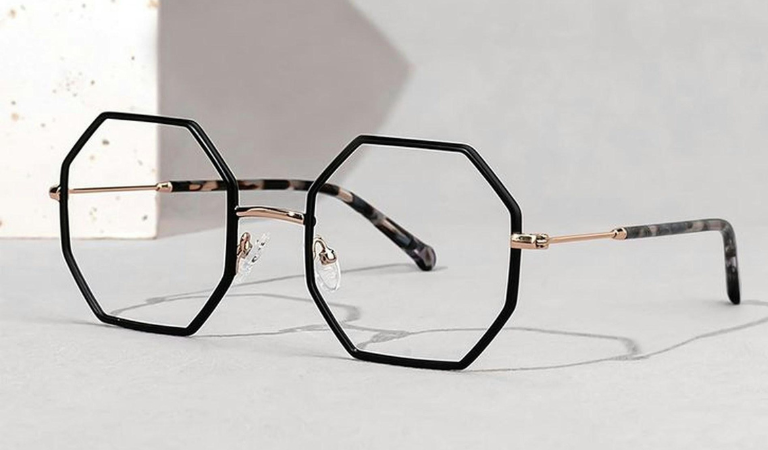
The practical appeal is coverage. A larger lens covers more of the face, which on oblong and oval faces creates a more balanced proportion. On heart-shaped faces, a large frame can create too much visual weight at the top of the face, which is already the wider end. Knowing your face shape before committing to an oversized frame prevents the most common mistake people make with this style.
The style appeal is confidence. Oversized glasses make a statement without requiring anything else in the outfit to work hard. A simple outfit anchored by a well-chosen large frame reads considered and deliberate in a way that smaller frames rarely achieve at the same volume.
Buying Glasses Online: What Has Changed
The experience of buying prescription glasses online has improved enormously. What used to feel like a leap of faith has become a much more manageable process, partly through better virtual try-on tools and partly through home trial programmes that let buyers assess frames in their own environment before committing.
Virtual try-on tools use the phone or laptop camera to overlay frames on a live image of the face. They are not perfect, particularly for assessing how a frame sits at the nose bridge or temples, but they are useful for eliminating obvious mismatches before narrowing down to a shortlist.
Home trial programmes, offered by a growing number of online eyewear retailers, send a selection of frames to try physically before any purchase is made. For prescription glasses in particular, where the investment is meaningful, this removes the most significant uncertainty that puts people off buying online.
A few things worth checking when buying prescription glasses online:
- Confirm the prescription is current, ideally from an eye test within the past two years
- Have the pupillary distance measurement available, as this determines how the optical centres of the lenses align with the eyes
- Check the retailer’s returns and remake policy before ordering, particularly for varifocal or complex prescriptions
- Read frame dimension measurements rather than relying on size descriptors, which vary between brands
Colour, Material, and the Details That Finish It Off
Frame colour is where personal style has the most room to move. The general guidance is that frame colour should complement skin tone and hair colour as much as face shape, but the honest truth is that the rules here are looser than the face shape guidance.
Warm skin tones tend to be flattered by warmer frame colours: tortoiseshell, gold, warm browns, and olive tones. Cooler skin tones tend to sit well with cooler frames: silver, black, navy, and grey. This is a starting point rather than a constraint, and plenty of the most striking frame combinations break these pairings intentionally.
Frame material affects both aesthetics and comfort over the course of a day. Acetate frames are warmer, available in a wider range of colours and patterns, and sit slightly heavier on the face. Metal frames are lighter, more minimalist in appearance, and better suited to extended wear without the nose bridge pressure that some acetate frames create after several hours.
A Final Thought
The right pair of glasses does not transform you into someone different. It clarifies who you already are. A frame that works with your face, suits your colouring, and fits your daily life sits on you in a way that feels inevitable rather than deliberate, which is the best outcome any accessory can produce.
Getting there is easier now than it has ever been, with the range available online and the tools to explore it from home. The investment in finding the right pair rather than settling for the nearest convenient one pays dividends every single day.