No products in the cart.
It often starts with a small moment that stays with you. You fix a bike for the first time. Or you enjoy the sound of an engine. Then your interest grows little by little. After that, you start thinking about it more seriously. You begin to ask how to turn this interest into a real job. That is where the question of how to become a motorcycle mechanic usually comes in.
From here, the path is simple. First, you can finish basic school education. Next, you can choose a college course, an apprenticeship, or learn in a garage with real bikes. You do not need a university degree for this job.
You need only bike repair skills, problem-solving, and good attention to detail. Most people become ready for work in 6 months to 3 years. It depends on the path you choose. In the UK, motorcycle mechanics earn around £18,000 to £30,000. With more experience, your pay can grow higher.
Now, let’s dive in and explore how to become a motorcycle mechanic in the UK step by step.
What Is a Motorcycle Mechanic?
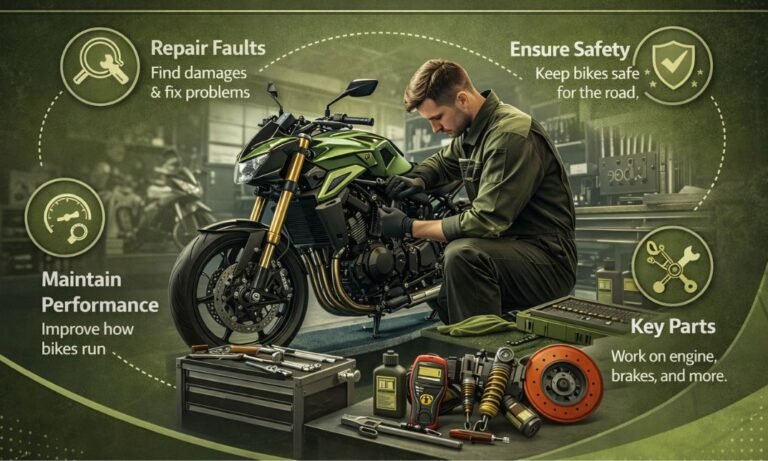
A motorcycle mechanic fixes bikes and keeps them safe for the road. They check faults, repair damage, and make sure every bike runs well.
First of all, their work focuses on repair, performance, and safety. They look for what is wrong. Then they fix it step by step. This helps riders stay safe on every journey. Next, they work on key parts like the engine, brakes, suspension and electrical system. Each part matters. If one part fails, the bike may not work properly. Also, this is a hands-on job. Mechanics spend most of their time in a workshop. They use tools and work directly on real motorcycles every day.
Because of this, they play an important role in transport. Many riders depend on them to keep bikes safe and ready for the road.
What Does a Motorcycle Mechanic Do Daily?
These are the main daily responsibilities of a motorcycle mechanic:
- Find problems in bikes: Use tools and simple checks to find faults fast. This helps understand what needs fixing without delay.
- Fix engines, brakes, and electrical parts: Repair the main parts of the bike. This brings the bike back to safe and smooth running.
- Replace worn or damaged parts: Take out old or broken parts and fit new ones. This keeps the bike working well and avoids future breakdowns.
- Do regular servicing and maintenance: Carry out routine service work. This helps stop bigger problems and keeps bikes in good condition.
- Carry out safety checks before road use: Check all key areas before the bike goes back on the road. Safety always stays the top focus.
- Talk with customers and explain issues: Speak in simple words so customers clearly understand the problem and repair needed.
- Keep records of repairs and service work: Write down all the work done. This helps track the bike’s history and future service needs.
- Follow workshop safety rules: Work in a safe and clean way. This keeps both the mechanic and workshop safe.
What Qualifications Do You Need to Become a Motorcycle Mechanic UK?
You do not need a university degree for this job. Many people start with a basic school education. GCSEs or an equivalent level are enough. Maths and Science help a lot. They make it easier to understand tools, numbers, and bike systems.
After that, you can move into formal training. First, a Level 2 Diploma in Motorcycle Maintenance builds your basic repair skills. Then a Level 3 Advanced Diploma helps you learn more advanced bike work. These steps prepare you for real workshop jobs.
Next, an apprenticeship is a strong option. You work in a real garage while you learn. You also earn money at the same time. This gives you real experience from day one. Later, you can move into an MOT tester role for career growth.
On top of that, you can choose UK vocational routes like NVQ, VRQ, or VCQ. These focus on hands-on skills. Employers like them because they show real work ability.
In the end, qualifications help you get better jobs and better pay. Now let’s move forward and explore the training paths in detail.
Essential Skills You Need to Become a Motorcycle Mechanic
These are the key skills you need for this job:
- Understand motorcycle systems: Know how engines, brakes, and electrical parts work. This helps you see how the bike runs as a whole.
- Solve problems quickly: Find faults and choose the right fix. This saves time and avoids bigger damage.
- Pay attention to small details: Small issues matter in repair work. One small mistake can lead to bigger trouble later.
- Speak clearly with customers: Explain problems in simple words. This helps customers understand what is wrong and what needs fixing.
- Good hand control: Use tools with steady hands and care. This keeps repair work safe and accurate.
- Manage time well: Work well in a busy workshop. Finish jobs on time without losing quality.
- Follow safety rules: Use tools the right way and stay alert. This keeps you and others safe.
- Keep learning new skills: Bikes change over time. You need to learn new systems and tools.
- Interest in motorcycles: A real passion helps you stay focused. It also helps you improve faster.
Training Routes to Start Your Motorcycle Mechanic Career
You don’t have just one way into this job. You can select a path that suits your schedule, cost, and learning speed
College Courses and Diplomas
College gives you a clear and guided start. First, you learn the simple theory step by step. Then you practice skills in real workshop settings. Most courses take 6 to 12 months. This route suits beginners who want strong basic skills and steady support.
Apprenticeships (Best Practical Route)
An apprenticeship puts you inside a working garage. You work on real motorcycles from the beginning. At the same time, you earn while you learn. This path usually takes 2 to 3 years. As a result, you gain real job skills and strong confidence.
On-the-Job Training and Online Learning
On-the-job training starts when you join a workshop as a trainee. First, you observe skilled mechanics at work. Then you slowly start helping with simple repair jobs. Your progress depends on daily practice and effort. Because of this, it can take longer, but you learn real skills that matter. Online courses also help you learn basic knowledge from home. This works well if you want flexible study or a career change.
How to Become a Motorcycle Mechanic Step-by-Step
You don’t become a full mechanic on day one. You build your skills step by step. Each stage makes you more ready for real work.
- Step 1 starts with basic motorcycle knowledge. First, you learn how a bike works in simple words. Then you learn the main parts like the engine, brakes, and wheels. This gives you a strong base.
- Step 2 is choosing your training route. After that, you pick college, apprenticeship, or online learning. Your choice depends on time, money, and your goal.
- Step 3 focuses on the Level 2 or Level 3 qualification. As a result, you gain proper skills that employers accept and trust.
- Step 4 is gaining real workshop experience. Next, you work on real bikes and real repair jobs. This helps you learn in real situations.
- Step 5 is learning tools and diagnostic equipment. Then you use tools to find faults and fix problems in bikes.
- Step 6 is applying for entry-level jobs. At this stage, you join a garage and start your first real job.
- Step 7 is improving your skills with extra training. After that, you can take MOT or advanced courses. This helps you earn more and grow faster.
- Step 8 is moving into higher roles or special areas. Finally, you can become a senior mechanic or focus on advanced repair work.
Choose your path based on time, budget and goals. This keeps your journey clear and easy to follow.
How Long Does It Take to Become a Motorcycle Mechanic?
The time to become a motorcycle mechanic is not the same for everyone. It depends on the path you choose and how fast you learn. First, diploma courses take around 6 months to 1 year. This gives you basic skills to start working in the trade. Next, apprenticeships take about 2 to 3 years. You learn in a real garage while working on real bikes every day.
After that, on-the-job learning usually takes 2 years or more. Your progress depends on practice and daily work in the workshop. Then, fast-track online learning takes around 3 to 6 months. This builds basic knowledge, but it does not give full job skills. Finally, advanced roles take around 4 to 7 years. You need time to build experience and handle more difficult repairs.
Overall, your learning speed and career goal decide your timeline. Some people move faster, while others take more time to grow.
Motorcycle Mechanic vs Motorcycle Technician – Key Differences
Both jobs belong to the same industry. However, the day-to-day work is not the same.
First, a motorcycle mechanic focuses on hands-on repair work. They fix engines, brakes, chains and other bike parts. They use simple hand tools and workshop tools every day. Next, a motorcycle technician works more with electronics and fault-finding. They use computers and software to check problems in modern bikes. This role fits better with newer bike technology. After that, workplaces also differ. Mechanics usually work in local garages. Technicians often work in dealerships or bigger service centres.
So, your choice depends on what you enjoy most. If you like hands-on work, this job may suit you. If you like computers and problem-solving, the technician path may suit you better.
Career Opportunities After Becoming a Motorcycle Mechanic
This job opens many paths in the UK motor trade. First, you usually start as a motorcycle mechanic, with pay around £22,000 to £30,000 per year. Next, you can move into a motorcycle technician role. Here, pay often rises to £25,000 to £38,000 per year as your skills improve.
After this, more choices open up. Some people become MOT testers. This role focuses on safety checks and usually pays £26,000 to £35,000 per year. Then, others move into workshop controller or supervisor roles. They manage the team and daily work. These roles often pay £30,000 to £45,000 per year. Also, some people go into custom motorcycle building. Pay depends on projects and skills. Many earn £25,000 to £50,000+ per year.
As you gain more experience, higher roles become possible. Some move into racing or MotoGP mechanic jobs. These can pay £30,000 to £60,000+ per year, but they are rare and hard to get. After that, some people open their own garage. Income can reach £30,000 to £70,000+ per year, depending on customers and location. Finally, others choose parts advisor or service advisor roles, usually earning £22,000 to £32,000 per year.
Tips to Become a Successful Motorcycle Mechanic
Here’s what helps you grow faster in this career:
- Start practising with basic tools so you understand how motorcycle parts work in real life
- Get real workshop experience early to build confidence with real repair work
- Learn new motorcycle technology often so you stay ready for modern bikes
- Improve customer communication so you can explain problems in simple, clear words
- Take extra certificates to grow your skills and improve job chances
- Build a strong network in the motor trade so you can find better work opportunities
- Stay updated with industry changes so you know what skills employers need next
Conclusion: Start Your Journey as a Motorcycle Mechanic Today
So, how to become a motorcycle mechanic? It starts with small and simple steps. First, you learn the basics. Then you build real skills through practice. Next, you choose a college course, an apprenticeship, or workshop training. Each path helps you move closer to real workshop work.
As you gain experience, your role grows step by step. You start with basic repairs. After that, you move into more complex jobs. Then you can become a technician, MOT tester, or even a workshop leader. Some people also move into special roles or open their own garage.
Finally, take your first step today. Pick your learning path and start building your skills. A strong career in the motor trade starts with one simple choice.
FAQs About How to Become a Motorcycle Mechanic
1. What qualifications do I need to be a motorcycle mechanic?
- You do not need top school results. Most people start with a Level 2 or Level 3 motor vehicle or motorcycle course. An apprenticeship also works well. Employers care more about practical skills and workshop experience.
2. How long does it take to learn motorcycle mechanics?
- Basic skills can take around 6 to 12 months. To become job-ready, most people need 2 to 3 years with training and hands-on workshop work.
3. How much do motorbike mechanics earn?
- In the UK, most motorbike mechanics earn around £22,000 to £38,000 per year. With more experience and skills, pay can go higher in specialist jobs.
4. How long does it take to become a motor mechanic?
- It usually takes 2 to 4 years. Apprenticeships take longer but give strong, real-world experience. Short courses are faster but give basic skills only.
5. Is 25 too old to become a mechanic?
- No, 25 is not too old. Many people start even later. If you learn step by step, you can still build a strong career.
6. What is the highest paid mechanic?
- High-paying roles include motorsport mechanics, race team technicians, and workshop managers. These jobs can pay £50,000+ per year.
7. Do mechanics make good money in the UK?
- Yes, they do. Entry pay starts modestly, but income grows with experience. Skilled mechanics and specialists can earn a strong and stable salary.
Motorcycle Mechanic Course
Course Description :
- Certificate: Yes(Free)
- Accreditation: CPD Accredited
- Access: Lifetime