No products in the cart.
Most households make coffee daily, and that adds up — millions of cups a day in the UK means a lot of spent grounds. The great thing is that learning how to dispose of coffee grounds is easy, safe, and lets you reuse them, too. The key rule: don’t wash them down the sink, and don’t let them clog your pipes. Coffee is a small daily joy, and I feel that. Yet those wet grounds can pile up faster than you expect. Once you know the basics, it becomes an easy routine to manage them.
In this blog, I’ll walk you through practical options that genuinely work. We’ll keep sinks happy and maybe help your garden too. So grab your mug, and let’s make cleanup feel effortless.
Why You Shouldn’t Throw Coffee Grounds Down the Sink
- Coffee grounds don’t dissolve—they behave more like grit.
- When they mix with grease/soap, they can build up and block kitchen pipes.
- Blocked drains = plumber call-out, which costs far more than just binning or composting them.
Binning or composting coffee grounds is much smarter than rinsing them down the drain. It might seem quick, but grounds act like sand and grab onto greasy residue. Over time, that sticky mix clogs pipes, causing slow drains, standing water, and bad smells.
Then comes the plumber—and a surprise bill you don’t want. Even disposals and macerators struggle with gritty bits. It’s not worth the risk for a few seconds of convenience. Instead, toss cooled grounds in the bin or compost. Your kitchen will run smoothly, and you’ll skip the stress entirely
How to Dispose of Coffee Grounds Properly

- Let the grounds cool.
- Scoop them into your food-waste caddy or into a compostable liner.
- If neither is available, bag them and put them in your general waste.
Letting coffee grounds cool first keeps your bin cleaner and stops leaks. Waiting a little now saves messy, wet liners later. Also, food-waste caddies are great for tidy, smell-free collection, and compostable liners make them easy to carry.
If your council doesn’t collect food waste, the general bin is fine—just tie the bag tight to keep moisture in. Wash your scoop or filter after to avoid leftover smells. These small steps make cleaning simple and easy. For espresso pucks, tap them gently into a lined container and wipe the portafilter before rinsing to catch any leftover bits.
Can You Put Coffee Grounds in the Bin?
- Yes — cooled coffee grounds can go in the general waste.
- It’s better to use food/organic waste if your council offers it, but landfill is fine in a pinch.
- Seal them or mix them with other waste to avoid smells.
The bin is always a safe backup when you need it. Life gets busy, and systems don’t always work perfectly. Just cool the coffee grounds before throwing them away—this stops melted liners and wet clumps. Seal them to reduce smells, especially in warm weather.
You can also wrap them in newspaper to soak up extra moisture. Mix grounds with dry rubbish if possible; this spreads them out and keeps the bin fresher. Most importantly, keep grounds out of drains. On collection day, make sure the lid closes properly. Your neighbours will thank you for a tidy, smell-free bin.
Can Coffee Grounds Go in Food Waste or Compost?
- Yes — coffee grounds are biodegradable and classed as food waste.
- They add a small amount of nitrogen to compost and help with texture.
- Balance them with “browns” (cardboard, dry leaves) so the pile doesn’t get too wet.
Yes, composting is the easiest choice for most homes. Your council probably treats grounds as normal kitchen scraps. They break down well and help other waste decompose. In compost, coffee grounds are green and full of nitrogen. This nitrogen feeds tiny microbes and helps compost faster. But balance is important. Add cardboard or dry leaves to keep the pile airy. This stops sludge and keeps smells away. Turn the pile sometimes to mix it and give it air. Over time, you’ll get dark, crumbly, rich compost. Unbleached coffee filters can go in, too, but check local rules if unsure.
How to Use Coffee Grounds in the Garden
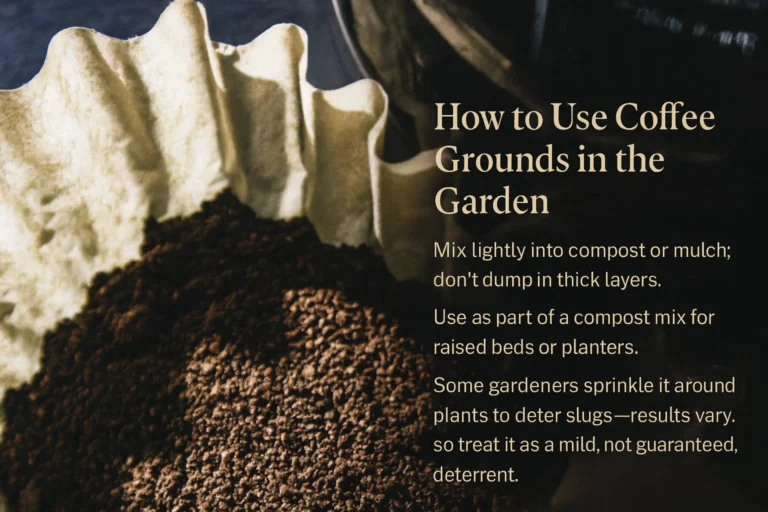
- Mix lightly into compost or mulch; don’t dump in thick layers.
- Use as part of a compost mix for raised beds or planters.
- Some gardeners sprinkle it around plants to deter slugs—results vary, so treat it as a mild, not guaranteed, deterrent.
Gardens like gentle care, not big piles. First, spread coffee grounds in thin layers so they mix in and break down slowly. Then, mix them with compost or dry leaves to share nutrients and keep the soil damp. In garden beds or pots, use just a little. Coffee grounds should help the mix, not take over. For slugs, every garden is different. Try a small sprinkle and see what happens. For better results, use coffee grounds with other barriers like crushed eggshells. Finally, mix with old leaves for a soft cover on the soil. Water gently so it settles without clumping.
Are Coffee Grounds Good for Plants?
- They’re okay in moderation.
- Fresh grounds are slightly acidic; composted grounds are more neutral.
- Best approach: put them through the compost first, then use the compost on beds and pots.
We all want happy plants with glossy leaves and growth. However, coffee grounds might be beneficial; moderation is crucial. Some plants prefer the slightly acidic nature of fresh grounds. On the other hand, too many can tip the balance in the wrong direction. For the majority of beds, composted grounds are simpler and safer. Composting softens acidity and unlocks gentle, slow-release nutrients. Your soil becomes fluffier, healthier, and more alive. Feed the soil first, and the plants will flourish. That approach gives steady results across seasons and weather. Patience here truly pays off with resilient, vibrant growth. Seedlings often prefer milder mixes with fully composted material. Established shrubs handle small amounts of fresh grounds better.
How to Reuse Coffee Grounds Around the House
- Dry them and use them as an odour absorber in the fridge/shoe cupboard.
- Mix with a little soap to make a gentle scrub for hands after gardening.
- Use in DIY body scrubs (test on a small area first).
Dried coffee grounds are small heroes for fresh spaces. Spread thin to dry in the air or a low oven. Once dry, they soak up smells cheaply. Use a bowl in the fridge or small sachets in shoes and gym bags.
For hands, they make a gentle scrub, rinse thoroughly, and if dry, moisturise. DIY scrubs are also nice, but patch test first. Avoid putting grounds in drains. Last but not least, label jars and refresh every few weeks to keep spaces smelling fresh.
To make the most of your coffee grounds, check out “Coffee Grounds Recycling: The Perfect Way”. It’s a simple, eco-friendly option that turns leftover grounds into something useful and sustainable.
Can Coffee Grounds Be Used for Cleaning?
- Yes — the gritty texture helps scrub stubborn pans or BBQ grills.
- Always rinse well, and don’t wash lots of grounds straight into the sink — wipe them into the bin first.
Stubborn pans often need a little extra scrubbing power. Grounds provide dirt without the use of harsh chemicals or powerful aromas. Apply sprinkles, gently scrub, and see the release of roasted pieces. They also aid in keeping wooden cutting boards fresher. They also help freshen wooden chopping boards before washing. After cleaning, wipe grounds into the bin with towels. Then rinse well, letting very few particles hit the drains. This habit keeps sinks healthy and plumbers far away. Use gloves if you have sensitive skin or cuts. For glassware, avoid grounds to prevent scratching delicate surfaces. Pair with hot water and soap for balanced cleaning power.
Are Coffee Pods and Grounds Recyclable?
- Grounds inside pods can be composted/food-wasted once removed.
- Aluminium or plastic pods depend on the brand: many offer take-back or drop-off schemes — check your brand’s recycling programme.
- If you can’t separate the grounds, use the brand’s own recycling route.
Coffee pods are super handy, but you need to think about what to do with them. The grounds inside are just like regular coffee. Also, recycling can be tricky since pods mix materials.
Luckily, lots of brands have recycling programmes—just check their website for drop-off spots or mail-back options. If you can, take out the grounds and recycle the pod separately. If not, just follow the brand’s scheme.
Every little bit helps. Follow your council’s rules for aluminium pods, and don’t forget to rinse refillable pods after each brew.
Final Thoughts
At the end of the day, it’s simple: cool them, compost them, or bin them — just don’t send them down the sink. Knowing how to dispose of coffee grounds properly is one of those small habits that really adds up over time. It saves your plumbing, helps the environment, and even gives you new ways to reuse something you’d normally throw away.
If you can divert just a few batches a week into compost or garden use, you’re already doing something great. You’re turning everyday waste into something useful, enriching your soil, and keeping drains flowing freely.
Coffee gives you energy in the morning — and with a little care, its leftovers can give a boost to your home and garden too. That’s a win for you, your wallet, and the planet.
Do you want to improve your coffee skills, by the way? Learn how to brew, serve, and enjoy coffee like a pro with the Barista and Coffee Making Course. It’s the perfect way to turn your love for coffee into real skills while staying eco-conscious with every cup.
FAQs
Is it okay to throw coffee grounds down the sink?
- No, coffee grounds can clog pipes and cause slow drains.
What is the easiest way to dispose of coffee grounds?
- Cool them and put them in the bin, compost, or food-waste caddy.
Can I put coffee grounds down the sink in the UK?
- It’s not recommended. They can mix with grease and block your pipes.
Can coffee grounds go in the general waste?
- Yes, cooled grounds can go in the general waste if composting isn’t available.
What happens if I flush coffee grounds down the toilet?
- They can stick to pipes, causing blockages and plumbing problems.
Where is the best place to dispose of used coffee grounds?
- Compost bins, food-waste caddies, or sealed general waste bags.
Why shouldn’t you put coffee grounds in the disposal?
- They are gritty and can damage or block the disposal.
What items should never go down a sink?
- Coffee grounds, grease, oil, eggshells, pasta, rice, and fibrous foods.
Why can’t you pour coffee down the drain?
- Liquid coffee is okay, but leftover grounds can stick and cause clogs.
What does putting coffee grounds around your house do?
- Dried grounds absorb odours and can freshen fridges, cupboards, and shoes.