No products in the cart.
Learning how to plumb a tub saves money and prevents future water problems. Also, proper plumbing keeps your bathroom safe and clean. Many beginners fear plumbing jobs at first because of a lack of proper plumbing knowledge. However, simple steps make the process much easier. You only need basic tools and careful planning before starting.
First, you must understand the tub drain and water supply lines. Next, you should measure pipes carefully before installation. A small mistake may cause leaks or poor drainage later. Therefore, good preparation helps you avoid expensive repairs. In this guide, you will learn simple tub plumbing steps clearly.
What is the First Step in How to Plumb a Tub?
The first step is planning for plumbing the tub properly. First, check where the drain and water lines will go. Then, measure the tub space carefully before buying any pipes. This step helps you avoid costly errors later.
Next, before starting the work, turn off the main water supply. After that, gather your tools and plumbing materials in one place. A clear work area also makes the job safer and faster. In addition, check the floor for damage or weak spots. Strong support keeps the tub stable for many years. Good planning always makes tub plumbing easier for beginners.
How to Plumb a Tub without Any Costly Mistakes?
Plumbing a tub may look hard at first. However, the right steps make the job simple. First, measure the space and pipes carefully. Then, check the drain position before fitting the tub. Small mistakes often cause leaks and water damage later. So, always tighten every pipe connection properly. Also, keep the drain line straight for smooth water flow.
Next, test the plumbing before closing the floor or wall area. This step helps you spot leaks early. In addition, use quality seals around the drain and pipes. Cheap parts often create problems after a few months. Finally, follow each step slowly and stay patient during the work.
What Tools Do You Need to Finish This Job?
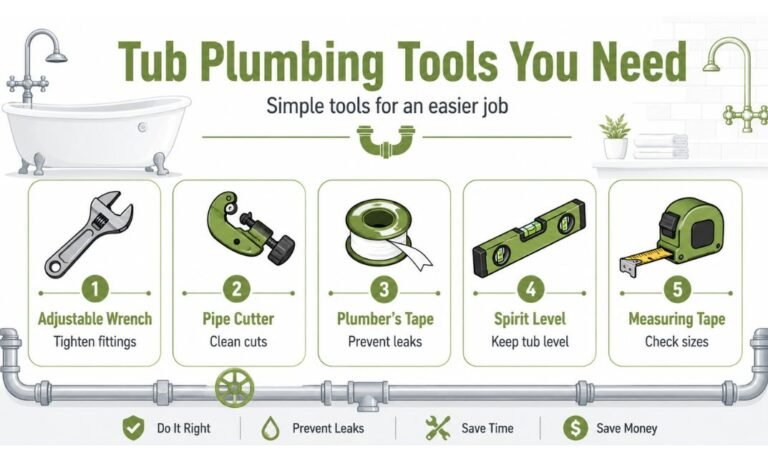
Before you start, gather the right plumbing tools first. This step makes the whole job easier and faster. Also, proper tools help you avoid mistakes during installation. Most tub plumbing tools stay simple and beginner-friendly. So, you can complete many tasks without professional experience.
- Adjustable wrench helps tighten and loosen pipe fittings safely.
- Pipe cutter gives smooth and clean cuts on plumbing pipes.
- Plumber’s tape helps stop small leaks around pipe connections.
- Spirit level keeps the bathtub straight and properly balanced.
- Measuring tape helps you check pipe and tub sizes correctly.
Why is a Bathtub Plumbing Installation Guide Very Helpful?
A bathtub plumbing installation guide helps you avoid costly mistakes during the job. First, it shows each step in the right order. So, beginners feel more confident while working on the tub. A good guide also explains which tools and pipes you need. As a result, you waste less time and money.
In addition, clear instructions help you prevent leaks and drainage problems later. You can also understand how water supply lines connect safely. Most importantly, a guide makes the whole process less stressful. Even small plumbing jobs become easier with proper direction. Therefore, many homeowners use plumbing guides before starting bathroom projects.
So, How to Plumb a Tub Step By Step?
Start by switching off the main water source. This increases your safety. Next, place the tub in its main position. Then check the drain alignment carefully. After that, connect the waste pipe and tub drain. Tighten all joints by hand first. Then use a wrench for a firm fit. Next, attach the overflow pipe to the tub. Make sure all seals sit properly.
Connect the hot and cold water lines. Keep pipes straight to avoid leaks. Finally, turn on the water slowly. Check every joint for leaks. Fix any drip before finishing the job.
How to Connect a Bathtub Drain to a Pipe Easily?
First, place the bathtub drain over the drain hole carefully. Next, connect the drain pipe under the tub. Make sure every pipeline joint is proper. Then, tighten all the connections. Do not tighten too hard or the pipe may crack. After that, add plumber’s putty around the drain edge. This step helps stop water leaks later.
Now, connect the waste pipe and main drain line. Also, check that the pipe slopes slightly downward. Good pipe slope helps to run the water smoothly. Then, turn on the water and test the drain carefully. Check the joints again. If any leaks appear, then tighten the joints again. Finally, clean the area and check everything once again.
How to Install Bathtub Plumbing Fittings Correctly?
Start by checking all bathtub plumbing fittings before installation. Then, place each fitting in the correct position carefully. Use plumber’s tape on threaded parts to stop water leaks. Next, tighten every connection firmly by hand first. After that, use a wrench for a secure fit. However, do not tighten too much. Over-tightening may crack the fittings later.
Connect the drain pipe and overflow pipe correctly. Ensure every pipeline connection is proper. Also, for smooth flow, maintain the water lines properly. Once everything fits well, turn on the water slowly. Then, check every joint for leaks carefully. Finally, fix any small leak if it appears.
Can You Handle Plumbing a Bath’s Waste and Overflow?
Handling a bath’s waste and overflow may look tricky at first. However, you can manage it with simple steps. First, you connect the waste pipe under the bath. This helps water flow out smoothly. Next, you fit the overflow pipe near the top of the tub. It stops water from spilling over the edge.
Then, you attach both parts tightly to avoid leaks. Also, check every connection before sealing. Water damage may eventually result from a loose joint. After that, check the water supply. Finally, if any leaks appear, fix them right away. With care and patience, you can do it safely.
Want to understand what plumbers actually do in real life? Read our full guide on What Does Plumbing Do and learn everything in simple steps.
Why Should You Follow a Bathpipe Installation Guide?
A bathpipe installation guide helps you work with clear steps. It keeps the process safe and easy. It also reduces stress during installation work.
- Helps you avoid common plumbing mistakes early.
- Shows correct pipe connections in a simple way.
- Reduces chances of water leaks after fitting.
- Guides you to pick the right tools quickly.
- Builds confidence to complete the job properly.
How to Manage Bathtub Water Supply Installation Today
Managing bathtub water supply installation begins with safety. First, turn off the main water line. Next, check the water line carefully. Then, measure the pipe length before cutting any pipes. After that, cut the pipes smoothly and carefully. Also, connect the pipe. Use strong seals to prevent leaks.
Make sure every pipe joint fits well. Now, turn on the water supply slowly and check it carefully. Check carefully where the main weak points are. If you see a problem, then fix it right away. Finally, test everything again.
How to Test Your Work for Leaks?
Get started by turning on the water supply slowly. Then check all pipe joints and connections. Look closely for any drops or wet spots. After that, fill the tub and watch the drain. Water should flow smoothly without any leaks. Also, run water for a few minutes to be sure.
Next, wipe each connection with a dry cloth. In this way you can prevent small leaks also. If you see water, tighten the fitting right away. Then test again to confirm the fix. Finally, check the area after 10 minutes. This simple step helps you avoid bigger water problems later.
How to Finish Your Bathroom Project Well?
Check every pipe and fitting first. Check that every connection is safe. Also, tighten the loose joints. Next, run water into the tub system. Watch the flow of water carefully. This helps you catch small problems early. After that, seal all gaps around the tub. Use waterproof silicone for a clean finish.
Then, clean the area properly. Remove dust, tools and extra materials. In addition, test the taps and drain again. Everything should work smoothly. Finally, step back and review your work. A neat finish gives your bathroom a safe and fresh look.
What are Common Mistakes to Avoid Today?
Many beginners make simple mistakes when plumbing a bathtub at home properly. These mistakes often cause leaks, damage and extra repair costs later. So, you must stay careful and plan each step before starting easily.
- Avoid using the wrong pipe size for your tub drainage system.
- Do not ignore proper sealing around joints and fittings.
- Avoid over-tightening connections because it can crack fittings easily during installation.
- Never skip checking for small leaks after installation work.
- Do not hurry into the process and follow each step carefully.
Career Paths in Learning to Plumb a Tub?
Learning to plumb a tub opens many job paths in plumbing. You can start as a plumbing helper. This role gives you hands-on experience. Next, you can move into an apprenticeship.
After that, you can work as a qualified plumber. You may install baths, sinks and full bathroom systems. Also, you can choose to work in home repairs or on building sites. Some plumbers even start their own small business. So, you can grow step by step with time and practice. In short, this skill builds a strong and steady career.
Final Thoughts
In short, learning how to plumb a tub takes a short period. You plan the pipe layout well. Then, you connect the drain and water lines properly. Also, you check every joint for leaks. Test the tub before finishing the job. So, take your time and work step by step. With practice, you can handle this task with confidence.
Looking for easy bathtub plumbing skills? Start learning with our Professional Online Plumbing Course.
FAQs
1. How should a bath be plumbed in?
- A bath should connect to water supply lines and a waste system with proper sealing to stop leaks.
2. Does a bathtub need a P-trap?
- Yes, a bathtub needs a P-trap to block bad smells from coming back through the drain.
3. What are common bathtub installation mistakes?
- Common mistakes include loose pipes, poor sealing and wrong slope on the waste pipe.
4. Can I install a bathtub myself?
- You can install it yourself if you have basic plumbing skills and the right tools.
5. How much do plumbers charge to install a bath?
- Plumbers usually charge between £150 and £500 depending on job size and location.