No products in the cart.
A kitchen sink can block at any time and slow down daily kitchen work. Many people search for how to unblock a kitchen sink drain when water stops flowing properly. Grease, food scraps and soap buildup are the main reasons behind this issue. As a result, the sink may smell bad or even fill with dirty water.
However, most small blockages are easy to fix at home without calling a plumber. With simple tools and basic methods, you can clear the drain quickly and bring back normal water flow. Hot water, a plunger or natural cleaning mixes often work well.
Now, let’s dive in and explore the simple steps to fix it.
Why is Your Kitchen Sink Draining So Slowly?
A slow kitchen sink drain can quickly turn into a daily headache. Most of the time, grease, oil and leftover food slowly build up inside the pipe. As a result, water cannot flow freely and starts to drain at a slow pace. Soap scum and small debris also add to the blockage over time.
In some cases, a partial clog forms deeper in the pipe and reduces water flow even more. You may also notice bad smells coming from the drain. The good news is that most of these issues are easy to fix with simple home methods and regular cleaning habits.
What Materials Do You Need from Your Kitchen?
Finding the right items before you start is very important. You should check your cupboards for some common household staples. First, grab a large plastic bucket to catch any drips. You will also need a pair of strong rubber gloves. These gloves keep your skin safe from germs and dirt. Then, find some baking soda and a bottle of vinegar.
Similarly, soda crystals are very effective for breaking down heavy fat. You might also want a small flashlight to see clearly. After that, lay down some old towels to protect your floor. Furthermore, a sponge and some soap will help with the cleanup. Having everything ready makes the work go very smoothly for you. Consequently, you can focus on fixing the sink without any interruptions.
Why Do Food Scraps Damage Your Plumbing?
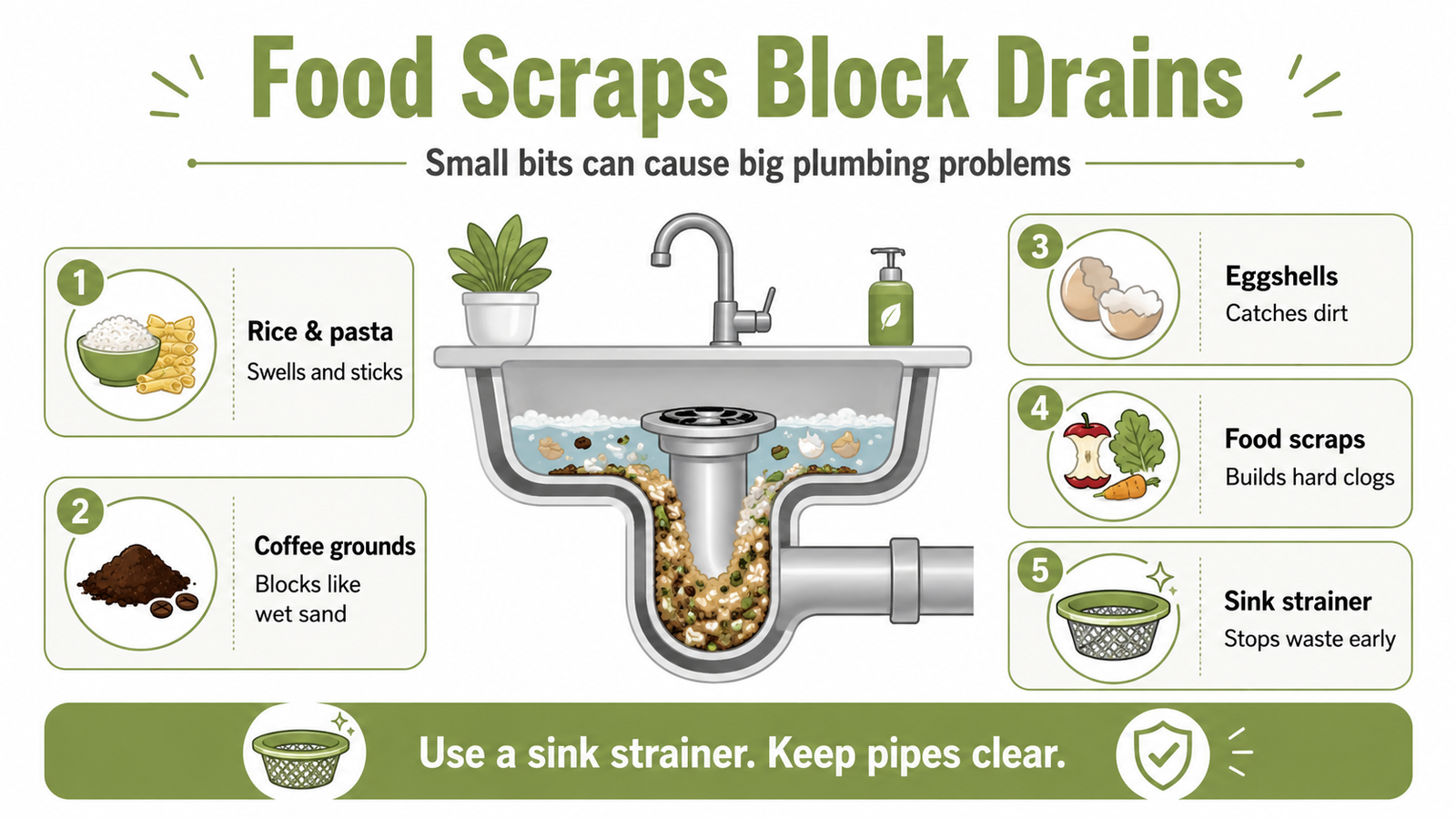
Small food scraps can slowly block your kitchen sink. Rice and pasta grow in water and stick inside pipes. Coffee grounds sit heavy and stop the water flow. Eggshells also catch dirt and make clogs worse. Over time, all these bits build hard blockages that stop drainage. A simple sink strainer can stop food from going down the drain. This helps keep your pipes clean and clear.
- Small food bits can cause big drain problems over time.
- Rice and pasta swell in water and turn sticky inside pipes.
- They trap other waste and slowly build blockages.
- Coffee grounds sit heavy and block water flow like wet sand.
- Eggshells catch hair and debris and make hard clogs.
- Food scraps slowly form solid blockages in pipes.
- Sink strainers help stop food waste from entering drains.
Can You Use a Natural Cleaning Mix?
Natural ingredients are very kind to your household plumbing pipes. First, put half a cup of baking soda. Then, add one-half cup of white vinegar immediately after. You will hear a loud fizzing sound inside the pipe. This reaction helps to lift the dirt from the walls. Next, let the mixture sit for about twenty minutes total.
This gives the bubbles time to break the stubborn clog. Afterwards, flush the drain with a kettle of hot water. This method is much safer than using strong shop acids. Furthermore, it leaves your kitchen smelling very fresh and clean. Therefore, many families prefer this eco-friendly way to work today.
Is it Easy to Remove the Pipe Trap?
The pipe trap is the curved section under your sink. This part is designed to catch heavy items and smells. First, place your bucket directly under the plastic pipe joints. Then, use your hands to unscrew the plastic round nuts. You will see some dirty water fall into the bucket. Next, remove the pipe and look for any stuck food.
Use an old brush to scrub the inside of it. This is usually where the biggest blockages hide and grow. Afterwards, check the rubber seals for any cracks or holes. Finally, put the pipe back and tighten the nuts firmly. This method is the most direct way to fix sinks. Consequently, your plumbing will work perfectly after this deep clean.
What are the Professional Costs for Plumbers?
Sometimes a kitchen sink blockage is too stubborn for DIY methods. In these cases, calling a professional plumber becomes the best option. In the UK, plumbing costs usually depend on the job type and location. Most standard visits fall within a common price range.
- Basic unblocking service costs around £50 to £150.
- An average plumber visit is usually about £80.
- London and big cities often charge higher rates.
- Plumbers first inspect the full drainage system.
- Special tools are used to clear tough blockages quickly.
Why are Emergency Fees Higher at Night?
Emergency plumbers are always available, even at night. But night calls usually cost more money. You may pay around £100 to £200 for urgent help. This price includes travel and overtime.
Before you call a plumber, look at the problem first. If water is not flooding, you can wait until morning. Daytime help usually costs less and saves money. Weekend visits are often more expensive than normal weekdays. Also, check your home insurance, as it may pay for emergency plumbing. So, a short wait can help you avoid extra cost.
How Does a Camera Help Find Problems?
A CCTV drain survey uses a tiny camera for inspection. This service is perfect for finding hidden pipe cracks today. Usually, this survey costs between £200 and £350 in the UK. First, the plumber feeds a flexible camera into the pipes. Then, they watch a screen to see the inside walls.
This helps them find tree roots or deep, solid blocks. Although it costs more, it finds the exact problem quickly. Next, you will receive a full report of your plumbing. This is a very smart move for older UK houses. Therefore, you will know exactly what to fix for good. It prevents you from wasting money on the wrong repairs. Consequently, your home will stay safe and dry for years.
Is High-Pressure Water Jetting Worth it?
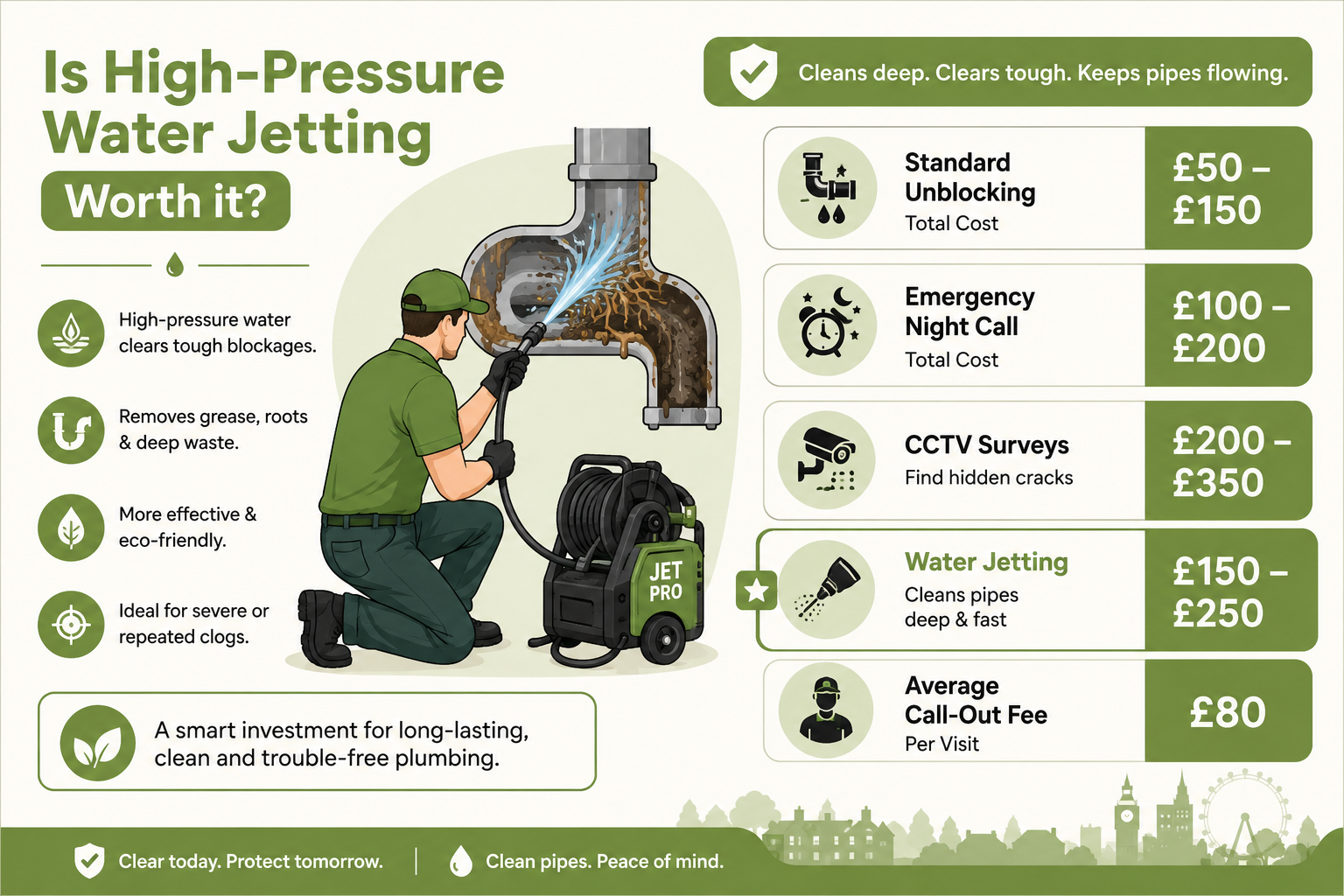
Water jetting uses high-pressure water to clear tough pipe blockages. It removes grease, roots and deep waste from drains. In the UK, it costs around £150 to £250. A plumber uses special equipment to blast and clean the pipes. This method is ideal for severe or repeated clogs. It is also more effective and eco-friendly than chemical cleaners.
- Standard unblocking fees range from £50 to £150 total.
- Emergency night calls cost between £100 and £200.
- CCTV surveys find hidden cracks for £200 to £350.
- Water jetting cleans pipes for £150 to £250 per visit.
- Plumbers charge an average of £80 for a call-out.
How Can You Prevent Future Blockages?
Prevention is the best way to keep your sink happy. First, buy a small sink strainer for your kitchen drain. This mesh tool catches food scraps before they enter pipes. Then, throw those scraps into your food waste bin daily. Additionally, never pour used cooking oil down the sinkhole.
Put the old oil into a jar instead today. Next, perform regular plumbing maintenance to keep things moving well. You should pour hot water down the sink every week. This simple habit stops grease from sticking to the pipe walls. Furthermore, tell everyone in your house about these simple rules. Consequently, your sink will stay clear for many years to come.
Where Can You Find Expert Help Today?
Finding expert plumbing help is easier than most people think. Many local plumbers in the UK offer fast and reliable services for blocked sinks and drainage issues. You can search online, check local directories or use trusted service apps to compare prices and reviews.
Most professionals provide same-day or emergency support if needed. Always look for qualified and insured plumbers to avoid poor workmanship. Also, ask for a clear quote before they start the job. This helps you avoid hidden costs. With the right expert, your kitchen sink problem can be fixed quickly, safely and without stress.
Final Thoughts
Overall, many kitchen sink clogs can be handled without expert help. Basic home steps like hot water, a vinegar mix or a plunger often work well. These blockages mostly form from grease and leftover food. Keeping the drain clean reduces the chance of repeat issues. If drainage does not improve, the problem is likely inside the pipe. Then a professional should check it.
FAQs
1. What is the best thing to unclog a kitchen sink drain?
- A plunger is often the best first tool for a blocked kitchen sink. It uses pressure to move food, grease and small waste through the pipe. If that does not work, try hot water, baking soda, vinegar, or cleaning the pipe trap.
2. Does Fairy Liquid unblock drains?
- Fairy Liquid can help with light grease in a kitchen sink. Mix it with hot water and pour it slowly into the drain. It may soften oily buildup. However, it will not clear a serious blockage or food stuck deep inside the pipe.
3. Does boiling water unblock a sink?
- Hot water can help remove light grease and soap buildup in a sink. It works well for small blockages. Still, boiling water is not safe for all pipes or sinks. Be careful if your plumbing is old or made of plastic.
4. What do I do if I can’t clear the clog?
- Stop using the sink if water is not draining. Try cleaning the pipe trap under the sink first. If the blockage stays, call a qualified plumber. A plumber can check the pipe, use proper tools and fix the problem safely.
5. Why pour salt down the drain every night?
- Some people use salt to reduce bad smells and loosen soft buildup. It may help when used with hot water. However, you do not need to do this every night. A sink strainer and weekly cleaning are better for preventing blockages.
Professional Online Plumbing Course
Course Description :
- Certificate: Yes(Free)
- Accreditation: CPD Accredited
- Access: Lifetime