No products in the cart.
Safeguarding is very important in the UK because it helps protect children and adults from harm, abuse, and neglect. The six key principles of safeguarding, included in the Care Act 2014, help protect adults who need care and support from abuse or neglect. These principles are empowerment, prevention, proportionality, protection, partnership, and accountability. The rules encourage people to work together, act fairly, and make clear decisions when responding to problems.
All UK companies must follow safeguarding laws to make sure that everyone is treated with dignity and honour. Reports from the care and education sectors show that thousands of safeguarding concerns are recorded every year, which shows why clear rules are needed. When people understand the key principles, they can act quickly and correctly if someone is in danger. This guide explains the rules in simple words so beginners and new workers can understand them easily.
What Does Safeguarding Actually Mean for Your Life?
Firstly, safeguarding means protecting your right to live safely and happily every day. Secondly, adults make sure no one hurts you, and everyone treats you with care and respect. In addition, teachers and carers check your health, safety, and daily needs regularly. Because of this, you can learn, grow, and feel confident in your daily life.
Moreover, safeguarding rules create strong safety around you at school, at home, and at work. For example, staff watch carefully to make sure no one faces harm or neglect. As a result, you can study, work, and live without fear or confusion. At the same time, these rules protect every person, no matter their age or background. If you ever feel worried, you should tell a teacher, doctor, or trusted adult quickly. Then, they listen to you and take action to keep you safe. Finally, safeguarding also protects your feelings, confidence, and mental health every day, so you never face problems alone.
What Are the Key Principles of Safeguarding in the UK?
In the UK, there are six main ideas used by all experts. These ideas ensure that every person receives the best possible care today. Firstly, we have empowerment, which means giving you a very strong voice. You should be able to make your own big life choices. Secondly, prevention is vital because it stops harm before it even starts. Adults put a lot of effort into making every student feel protected. Thirdly, proportionality means that helpers will only do what is really necessary. They want to respect your privacy while keeping you very safe always.
Furthermore, protection is the fourth idea, which focuses on giving urgent support. Professionals will help people who are in a very bad situation now. Fifthly, partnership means different groups work together to help you succeed. For example, your school might talk to a local family doctor. This teamwork ensures that you get the right kind of care. Lastly, accountability means that everyone is responsible for their own actions. If someone makes a mistake, they must explain what happened clearly.
- Empowerment helps you make your own choices about your life.
- Prevention stops bad things from happening to you in the future.
- Proportionality ensures that help is fair and matches the actual problem.
- Protection provides a safety net for people who are in danger.
- Partnership allows schools and doctors to work as one big team.
- Accountability means adults are honest about how they look after you.
How Does Empowerment Give You a Voice in School?
Empowerment is all about giving you the power to speak up loudly. Specifically, it means that your feelings and opinions really matter to adults. Teachers will ask what you think about your daily school life. You should feel confident when sharing your goals with other people. However, some people might feel shy when they first arrive here. Please remember that your voice is very important in this country. Consequently, people will listen to you with a lot of respect.
You can choose which sports you want to play after school. Moreover, you can decide which books you want to read for fun. This freedom helps you grow into a strong and happy adult. If you disagree with something, you can say it. Adults will explain things to you so you can understand them. Therefore, you are a partner in your own care and safety. Empowerment makes sure leaders always listen to you and never ignore your voice.
- You can choose your own creative hobbies and fun activities.
- You can be honest with your teachers about how you feel.
- Teachers will support your big career dreams for the future.
- You can say “no” if you feel unsafe or uncomfortable.
- People in the UK always respect and celebrate your culture.
Sharing your thoughts helps teachers know how to support you better. They want to hear about your culture and your favourite traditions. When you feel empowered, you feel like you truly belong here. This principle is a core part of the key concepts of safeguarding. It turns you from a passive student into an active leader. Your happiness is the most important goal for everyone at school. Never be afraid to tell someone how you really feel today.
Why Is Prevention Better Than a Cure for Problems?
Furthermore, the second principle of safeguarding is prevention. Prevention means stopping problems before they happen. Adults try to notice risks early so everyone can stay safe. For example, schools lock gates to keep strangers out, and teachers show students how to stay safe online. Because of this, students can focus on learning without fear.
Keeping people safe is a team effort in every school. Teachers check classrooms, playgrounds, and buildings to make sure nothing is dangerous. They also teach safety rules, like fire drills and road safety. When everyone knows what to do, accidents can be avoided easily. Prevention works like wearing a helmet, because it protects you before harm happens.
- Staff check the school to keep it safe.
- Lessons teach online and road safety.
- Teachers watch students to stop bullying.
- Schools give healthy food and safe spaces.
By stopping problems early, schools create a calm and secure place. Students can relax, learn, and enjoy time with friends while adults make sure everything stays safe.
What Does Proportionality Mean in Your Daily Life?
Sometimes people worry that helpers may control their whole lives. However, the rule of proportionality stops this from happening. It means the help you get should match the level of the problem. If the problem is small, the support will also be small. Experts try to help without disturbing your private family life. Because of this, you can trust that decisions will be fair and careful.
Helpers do not interfere unless it is really needed for safety. For example, small problems need simple advice, but serious problems need quick action. This rule makes sure your privacy stays protected. As a result, you can feel comfortable talking to teachers, carers, or social workers. They listen to your side before making any decision.
- Adults give help only when you need it.
- Support should match the size of the problem.
- Your privacy must always be respected.
This principle builds trust between you and adults. It makes sure you get the right help while still staying in control of your life.
How Does Protection Keep You from Serious Harm?
Protection is an important part of the British safety system. It helps people who are in danger, facing harm, or feeling unsafe. If someone is at risk, the police, teachers, and social workers act quickly to protect them. They make sure the person stays in a safe place and gets the right support. Everyone has the right to live without fear, and the law protects people from violence or neglect.
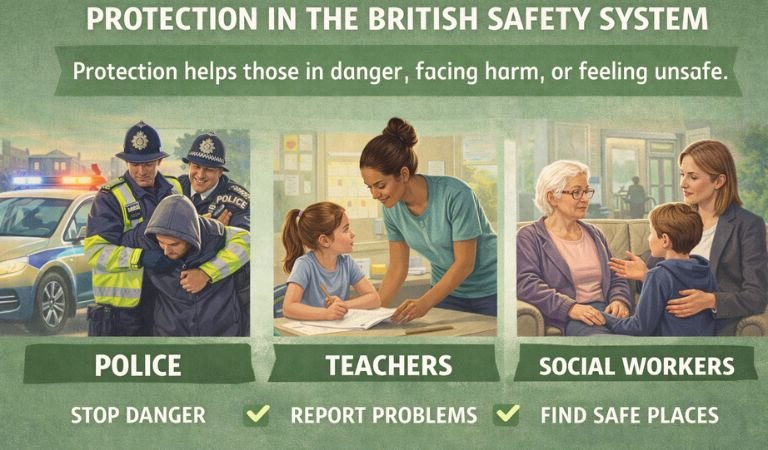
- Police help stop danger and keep people safe.
- Teachers watch students and report problems.
- Social workers give help and find safe places.
Protection means you never stay alone, and trained adults are always ready to keep you safe.
How Do Schools Use the Key Principles of Safeguarding?
Your school is a safe place where teachers and staff work hard to protect you every day. Every teacher has a duty to keep students safe at school. They check the playground, classrooms, and hallways to make sure nothing is dangerous. They also watch how students behave with each other and stop bullying quickly. Because of this, you can learn in a calm and happy environment.
Moreover, schools follow the primary principles of safeguarding to protect all students. Teachers have meetings to discuss how to keep everyone safe and supported. They keep your personal information securely and listen carefully if you have a worry. Teachers, school nurses, and other staff members are available for consultation at any time. They learn to help you, and they do not judge you.
Teachers always have a duty of care to look after students. Staff learn how to notice signs of sadness, stress, or danger early. Lessons also teach you how to stay safe online and in daily life. The school nurse checks your health, and teachers never allow bullying.
Everything in school, from safety rules to visitor checks, exists to protect you. Because of this, you can study, make friends, and enjoy school without fear, knowing adults care about your safety and future.
Who Can You Talk To If You Have a Worry?
Firstly, try to stay calm and take a slow breath. Then, find an adult you trust and feel comfortable talking to. You can speak to a teacher, coach, parent, or another school staff member. Tell them clearly what is worrying you, and they will listen carefully and try to help. You do not need to deal with problems alone.
In addition, many people are ready to support you when you feel upset or scared. For example, you can call Childline if you want to talk privately. They listen without judging and give helpful advice. Because of this, you may feel better after sharing your problem. Keeping worries inside can make you feel worse, so speaking up is always important.
You can speak with any trusted adult, such as the school nurse, a parent, a teacher, or a member of your family. Additionally, you may always get free, private assistance by calling Childline at 0800 1111. Finally, sharing a worry is the first step to solving a problem, and adults will help you stay safe, happy, and confident every day.
Final Thoughts on Staying Safe in the UK
In conclusion, this guide explained the key principles of safeguarding in the UK in simple and clear words for beginners and new immigrants. It showed what safeguarding means in daily life and why it is important in schools, homes, and workplaces. The blog also described the six main principles, which are empowerment, prevention, proportionality, protection, partnership, and accountability.
In addition, it explained how schools use these rules to keep students safe and who you can talk to when you feel worried. By understanding these principles, you can know your rights, stay safe, and feel more confident while living, studying, and growing in the UK.
Frequently Asked Questions (FAQs)
1. What are the 6 key principles of safeguarding?
- The 6 main principles of safeguarding are empowerment, prevention, proportionality, protection, partnership, and accountability.
2. What are the 4 P’s in safeguarding?
- The 4 P’s in safeguarding are prevention, protection, partnership, and proportionality, which help keep people safe from harm.
3. What are the key principles in relation to safeguarding?
- The basic principles of safeguarding focus on safety, respect, fairness, teamwork, and making sure people get the right support.
4. What are the 5 R’s of safeguarding?
- The 5 R’s of safeguarding usually mean recognise, respond, report, record, and refer when you see a safety concern.
5. What are the 6 R’s of safeguarding?
- The 6 R’s of safeguarding are recognise, respond, report, record, refer, and review to make sure problems are handled correctly.
6. What are the 4 C’s of safeguarding?
- The 4 C’s of safeguarding often mean care, communication, cooperation, and caution to keep people safe.
7. What are the 3 C’s of safeguarding?
- The 3 C’s of safeguarding are care, concern, and communication, which help protect people from harm.