No products in the cart.
Want to improve your skills but do not know where to start? A personal development plan template can make things easier. It helps you set clear goals and turn them into simple steps. You can use it to build skills, improve your work or reach personal goals. The right plan also shows how much you have improved over time.
Personal growth does not need to feel hard or confusing. You only need clear goals and a simple way to track them. A good plan helps you spot your strengths and areas that need work. It also keeps your progress organised and gives you something to work towards. With regular reviews, you can stay focused and keep moving forward.
What is a Personal Development Plan Template?
Personal development means improving your skills, knowledge, experience and confidence. A PDP is a written plan that helps you improve and reach your goals. In simple terms, the meaning of PDP is a plan for your personal growth. It asks three key questions: Where am I now? Where do I want to be? How will I get there?
Personal development plans can cover personal, academic or career goals. A template gives you a simple structure but no single format suits everyone. However, a professional development plan mainly focuses on work skills and career growth. In the UK, the National Careers Service supports career planning with skills checks, SMART goals and action plans.
Why Should You Use a Personal Development Plan?
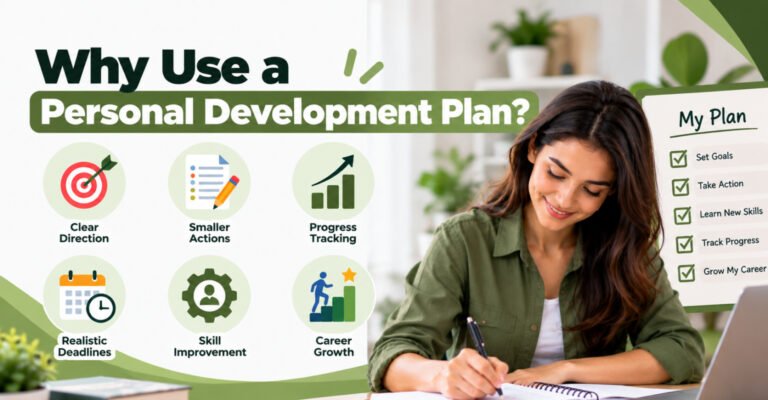
Personal development planning helps you turn your goals into clear actions. It gives you a simple way to manage personal growth and development. You can also use it for career development and learning goals. A clear plan helps you stay focused as your needs change.
- Clear direction: Set goals and understand what you want to achieve.
- Smaller actions: Break large goals into simple and manageable steps.
- Progress tracking: Record your achievements and check your progress.
- Realistic deadlines: Give each goal a clear and achievable time limit.
- Skill improvement: Spot skills that need more practice or learning.
- Career growth: Support better career choices and future progression.
How Do You Assess Your Current Skills?
Start by looking at what you already know and can do. Write down your strengths, skills, qualifications and experience. Then, think about areas where you need to improve. You can also ask managers, colleagues or mentors for feedback. This gives you a clear starting point for personal development planning.
Next, compare your current skills with the skills your future goals need. A skills gap analysis helps you find these gaps. After that, turn each gap into a clear area for learning or improvement. You can then add these areas to your personal growth and development plan.
How Do You Set SMART Development Goals?
SMART goals make your personal development plan template clear and easy to follow. SMART means Specific, Measurable, Achievable, Relevant and Time-bound. These five points help you set clear goals and check your progress. They also help you choose goals that fit your plans.
For example, Improve my communication skills is too unclear. A SMART goal is: Complete a communication course within three months. It tells you what to do and when to finish. This makes your PDP template easier to use and review. The National Careers Service and CIPD also support SMART goals.
What are the 7 Steps to Write a PDP?
A personal development planning process helps you turn your goals into simple actions. These seven steps show what to do from setting goals to checking your progress. They can also help you create clear and useful personal development plans. Here’s a simple look at each step:
- Set goals: Decide what you want to achieve.
- Prioritise goals: Choose which goals need your attention first.
- Set deadlines: Give each goal a clear finish date.
- Find threats and opportunities: Spot problems and useful chances.
- Build skills and knowledge: Choose what you need to learn.
- Use your support network: Get help from people around you.
- Measure progress: Check your results and make changes when needed.
How Do You Prioritise PDP Goals?
Start by breaking big goals into small steps. First, choose the step that needs attention. Then, focus on one goal at a time. Immediate goals take a few weeks. Short-term goals take 3–6 months. Long-term goals can take 1–5 years.
You can also use an Eisenhower Matrix to choose what comes first. Try to keep 2–4 active goals at once. This way, your PDP plan template stays simple and easy to follow. CIPD suggests having up to three development priorities at one time.
How Do You Turn Goals into an Action Plan?
Turn each goal into small steps that are easy to manage. Include the goal, action, support, milestone, deadline and status. This shows what you need to do and helps you track progress. Small steps also make big goals easier to reach.
You can learn through courses, online classes, work tasks or volunteering. You can also get help from a mentor or join a workshop. A PDP sample personal development plan can show how to use these steps. Keep your PDP sample simple and match it with your time and needs.
How Can You Handle PDP Barriers?
PDP barriers can make your goals harder to reach. A SWOT analysis can help you spot these problems early. Strengths are things that help you. Weaknesses are areas you need to improve. Opportunities are chances that can help you grow. Threats are things that can slow you down.
Common problems include lack of time, low motivation, putting things off, skill gaps, knowledge gaps, cost and work duties. An if-then plan can help you prepare. For example, if I am busy after work, then I will study at the weekend. In this way, this can make your example of personal development plan easier to follow.
What Should a Personal Development Plan Include?
A PDP template keeps your goals, actions and progress in one place. It also gives you a simple structure to plan your personal growth. A good PDP plan template should cover these seven main sections. Each section helps you plan, act and check your progress.
- Personal profile: Add your name, current role, date created and review date.
- Self-assessment: List your strengths and areas you need to improve.
- Goals: Add the goal category and what you want to achieve.
- Action plan: Write action steps, milestones, deadlines and status.
- Resources and support: List the resources and people who can help.
- SWOT analysis: Note your strengths, weaknesses, opportunities and threats.
- Progress review log: Add review notes and track your progress.
What is a Good PDP Example?
Sarah is 28 and works as a marketing executive. She has three years of experience. Her goal is to become a marketing manager within 18 months. To reach this goal, she will complete a Level 3 Leadership and Management course. She will also join two projects with other teams. Together, these steps will help her learn new skills.
Sarah will ask her manager and two senior workers for help and feedback. Then, she will set her goals for 2026. Also, Sara will meet her manager each month and go to two marketing events. Every Friday, Sarah will check how she is doing. This simple plan will help her stay on track and get closer to her career goal.
What is a PDP Example for a Career Change?
James is 35 and works as a secondary school teacher. He wants to work in company training. To reach his goal, he plans to complete the CIPD Level 3 Foundation Certificate. He will also gain experience through two freelance training projects. Then, he hopes to become a junior L&D coordinator. From February 2026 to January 2027, James will follow small steps to reach his goals.
He will join 2 L&D professional communities and listen to 2 L&D podcasts. He will review his plan on the first Sunday of each month. Also, he will build contacts and gain practical experience. This PDP plan sample shows how a personal growth plan template can support career change.
How Do You Review and Update a PDP?
Review your personal development plans regularly to keep them useful. A quick weekly check helps you see your progress. A monthly review helps you check your goals. Every quarter, take more time to think about your progress. Then, review the whole plan once a year.
Check your completed tasks, missed deadlines, new skills and skill gaps. Also, note any problems, useful support and new priorities. Then, set your next steps. A personal development plan template can make this easier. Your PDP can be 2–5 pages long. Even a 10–15 minute review can help you stay on track.
What Mistakes Should You Avoid in a PDP?
A good personal development plan template should be clear, realistic and easy to follow. Small mistakes can make personal development plans harder to use. But the right approach keeps your goals simple and useful. Here are five common mistakes to avoid:
- Vague goals: Use SMART goals with clear targets and deadlines.
- Too many goals: Keep your priorities small and manageable.
- Skipping self-assessment: Check your skills before setting new goals.
- Keeping it private: Discuss suitable goals with a manager or mentor.
- Focusing only on weaknesses: Build your strengths while working on skill gaps.
- Not updating the plan: Change your personal growth and development plan when your needs change.
What Resources Can Support Your Development Plan?
The right tools and support can help you reach your goals. Start by choosing what suits your needs. You can take courses, join online classes, attend workshops and read books. You can also listen to podcasts or take part in work projects. Also, mentors, volunteering and job shadowing can help you learn new skills.
In England, the Lifelong Learning Entitlement helps eligible learners study after age 18. Applications are planned from September 2026 for courses starting from January 2027. Also, CIPD suggests around 30 hours of planned learning each year. Add these activities to your personal growth plan template. Then, track your progress as you learn.
Final Thoughts
Overall, a personal development plan template helps you plan your growth. It helps you set goals, learn new skills and check your progress. Start small and check your plan often. Then, change your goals when your needs change. This way, your plan can help you learn, grow and move forward in your career.
Join in our Level 5 Personal Development Training Course and take the next step in your personal growth.
FAQs About the Personal Development Plan Template
1. What are the 5 components of a personal development plan?
- The five parts are goals, current skills, action steps, deadlines and progress checks. Together, they help you plan and track your growth.
2. How to write a personal development plan?
- Start by checking your current skills and choosing clear goals. Then, add actions, deadlines and ways to track your progress.
3. What are the 7 pillars of personal development?
- The seven pillars often include mental, physical, emotional, social, spiritual, financial and professional growth. These areas can help support balanced personal growth.
4. What is the 70:20:10 rule for personal development?
- The 70:20:10 rule focuses on learning through work, people and training. It suggests 70% practice, 20% learning from others and 10% formal study.
5. Can you give me some examples of personal growth plans?
- Examples include improving communication, learning a new skill or building confidence. Each plan should include a clear goal, actions and a deadline.
6. Is the 70 20 10 rule effective for everyone?
- The 70:20:10 rule can provide a useful learning structure. However, the best approach depends on your goals, needs and learning style.

Level 5 Personal Development Training Course
Course Description :
- Certificate: Yes(Free)
- Accreditation: CPD Accredited
- Access: Lifetime