No products in the cart.
Understanding the RIDDOR Meaning is essential for every business owner in the UK. This law ensures that managers report serious workplace accidents to the government. According to recent stats, over 561,000 workers suffer non-fatal injuries every year. Therefore, safety reps must know these rules to protect their teams.
Legal duties exist to keep everyone safe while they are working. Failing to maintain these rules can lead to very expensive fines. Consequently, managers must understand the reporting process to avoid legal trouble. This helpful article answers your big questions about staying safe and compliant.
When did RIDDOR Come into Force?
The first version of these rules arrived way back in 1985. Since then, the law has changed several times to stay very modern. These updates helped the UK become a world leader in workplace safety. Many other countries now look at our rules to improve their laws.
In the UK, these regulations changed how businesses think about danger. Managers started keeping better records of every single accident that happened. This shift in focus saved many lives across the whole country. Nowadays, the rules help the government find patterns in dangerous work. Consequently, workplaces are much safer now than they were forty years ago.
What Is the RIDDOR Meaning in UK Health and Safety Law?
What does RIDDOR stand for?
The acronym stands for Reporting of Injuries, Diseases and Dangerous Occurrences Regulations. It is a very long name for a very simple set of rules. Essentially, it tells you which bad events you must tell the government about. Using the RIDDOR reporting helps you remember your duty as a boss.
What is the legal meaning of RIDDOR?
It functions as a legal framework for reporting specific work-related incidents. You must send these reports to the Health and Safety Executive or local authorities. Specifically, the law defines exactly what counts as a reportable event. This ensures every company follows the same standards for workplace safety.
Why was RIDDOR introduced?
The main purpose was to improve data about accidents in the UK. By collecting this info, the government can prevent future injuries from happening. Moreover, it helps protect both the workers and the general public. Knowing where accidents happen allows inspectors to target the most dangerous jobs.
Which UK regulations currently govern RIDDOR?
The latest version of the law is known as RIDDOR 2013. These rules updated older versions to make reporting much easier for businesses. Currently, these regulations cover all work activities across England, Scotland, and Wales. You should always check for the most recent updates on the official website.
RIDDOR Reporting: Who Must Report and What Must Be Reported?
Q5: Who has a duty to report under RIDDOR?
Employers always have the primary duty to report any serious workplace accidents. Furthermore, self-employed people must report if an incident happens on their site. People in control of work premises also share this big responsibility. Always check if you are the “responsible person” in your specific situation.
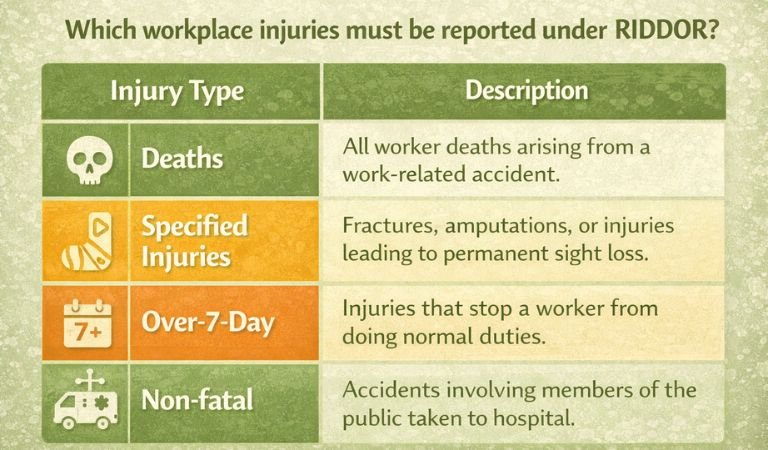
What types of injuries are reportable under RIDDOR?
What work-related diseases must be reported?
You must report certain diseases if a doctor says they were caused by work. Common examples include occupational cancers and various types of severe skin dermatitis. Additionally, carpal tunnel syndrome and occupational asthma are on the official list. Reporting these helps identify long-term health risks in specific industries.
What counts as a dangerous occurrence in RIDDOR?
These are “near-miss” events that could have caused very serious injury. In construction, a scaffolding collapse is a prime example of this. Manufacturing plants must report if a pressure system fails or explodes. Also, utility companies must report any major electrical short circuits or fires.
Are near misses reportable under RIDDOR?
Only certain types of near misses qualify as reportable dangerous occurrences. For instance, a falling tool that hits no one is not always reportable. However, if a crane collapses, you must report it even if nobody got hurt. Understanding the RIDDOR purpose helps you distinguish between minor and major misses.
Do incidents involving the public need to be reported?
Yes, you must report accidents where a non-worker is injured on-site. This applies to injuries in shops, schools, hospitals, or public parks. Specifically, the person must be taken directly to a hospital for treatment. If they just get a small scratch, you do not need to report.
Who Should Not Report?
An injured person (unless you are self-employed)
If you are an employee who got hurt, do not report it yourself. Your boss or manager is the person who must fill out the form. However, you should make sure your accident is written in the company book. Only self-employed people act as their own reporters for serious injuries.
A member of the public
Members of the public should never use the official online reporting system. If you see a danger, tell the manager of the shop or site. They will decide if the law requires them to send a report. Consequently, the system stays clear for those with a legal duty to report.
Others who do not have duties under RIDDOR
People like customers or visitors do not have duties under these specific rules. Even if you witness a major crash, you are not legally responsible for reporting. Instead, the person in charge of the land or business handles the paperwork. This keeps the data accurate and prevents the system from getting double reports.
How Do You Report Under RIDDOR in the UK?
How do you submit a RIDDOR report?
Most reports are sent using the official HSE online reporting forms. However, you can use the phone for fatal or very serious accidents. You will need to provide your business details and the accident location. Additionally, you must describe what happened and list the injuries clearly.
What are the time limits for reporting under RIDDOR?
For most accidents, you must send the report within ten days. If a worker is away for seven days, you have fifteen days. In contrast, fatal accidents and major injuries must be reported without any delay. Always act quickly to ensure you stay within the legal time limits.
What records must employers keep for RIDDOR?
You must keep a record of any reportable injury or disease. This record should stay in your files for at least three years. Usually, you can keep these records in a computer file or a notebook. Your records must include the date, time, and personal details of those involved.
What is the difference between an accident book and RIDDOR reports?
An accident book is for internal use to record every small bump. In contrast, RIDDOR is for serious events that the government needs to know. You might have fifty entries in your book but zero RIDDOR reports. Basically, one is for your records and the other is for the law.
What happens after you submit a RIDDOR report?
The government will look at your report to see if an investigation is needed. Sometimes, an inspector might visit your workplace to talk to the staff. They want to make sure you are doing everything to keep people safe. Most reports do not result in a visit, but you must be ready.
RIDDOR Compliance: Roles, Responsibilities and Common Mistakes
1. What are the responsibilities of employers under RIDDOR?
Employers must set up a clear system for workers to report injuries. You should provide proper training so everyone knows what to do during an emergency. Furthermore, managers must supervise the workplace to catch any potential dangers early. Keeping everyone informed is the best way to ensure total safety compliance.
2. What are common RIDDOR mistakes UK businesses make?
Many businesses fail by under-reporting incidents because they are afraid of inspections. Other companies over-report tiny scratches that do not actually need a government form. Moreover, missing the ten-day deadline is a very frequent and costly mistake. Incomplete forms can also slow down the process and cause extra questions.
3. What are the penalties for failing to comply with RIDDOR?
Ignoring your reporting duties can lead to massive fines from the court. In some serious cases, managers can even face prosecution and jail time. Beyond money, your business might suffer from a very bad public reputation. Therefore, the cost of following the rules is much lower than the penalty.
4. How can businesses ensure RIDDOR compliance?
Create a simple policy that explains the RIDDOR aims to all staff. Use checklists and templates to make the reporting process much faster and easier. Additionally, run regular audits to check if your accident book is up to date. This proactive approach helps you find gaps in your safety plans.
5. How does RIDDOR link with broader health and safety management?
Reporting data helps you improve your overall risk assessments for the future. If you see many trips in one area, you can fix the floor. Essentially, these reports act as a warning sign for your safety team. Using this information creates a culture of prevention rather than just reaction.
RIDDOR Meaning in Practice: Real-World UK Examples
Is this accident RIDDOR reportable? (Scenario examples)
Scenario one: A builder falls and breaks his arm on a Tuesday.
Answer: Yes, because a fracture is a specified injury under the law.
Scenario two: An office worker cuts their finger and uses a plaster.
Answer: No, this is a minor injury for the internal accident book only.
Does working from home fall under RIDDOR?
Yes, it can, but only if the accident is related to work. If a faulty work laptop shocks an employee, you must report it. However, if they trip over their own pet, it is not work-related. The RIDDOR report focuses on the “work” part of the home environment.
Are stress and mental health issues reportable under RIDDOR?
Usually, mental health issues like stress are not reportable under these rules. This is because it is hard to link them to one specific accident. However, if a violent attack at work causes post-traumatic stress, it might be. Always consult the official guidance if you are unsure about a mental health case.
Does RIDDOR apply to volunteers and contractors?
The rules apply to anyone working on your site, including dedicated volunteers. If a contractor gets hurt while working for you, a report is needed. Usually, the contractor’s own employer will handle the official reporting process. Nevertheless, you should still communicate with them to ensure the form is sent.
Where can I find official RIDDOR guidance?
The best place to look is the Health and Safety Executive (HSE) website. They provide free leaflets and detailed guides for every different industry type. You can also find Approved Codes of Practice that explain the law clearly. Reading these documents helps you stay updated on any new legal changes.
Conclusion
Understanding the RIDDOR Meaning is the first step toward a safer UK workplace. By following your core duties, you protect both your workers and your business. Accurate reporting helps the government make every job site in the country much safer. Therefore, always keep your records updated and train your managers on these important rules.
You should set up clear internal processes to handle any future accidents. Review your current safety procedures against the official RIDDOR requirements today. If you are ever unsure, consult the HSE guidance or talk to a professional. Taking action now prevents accidents and keeps your business running smoothly for years.
Frequently Asked Questions (FAQs)
1. What 5 things must be reported to RIDDOR?
- Deaths, specified injuries, over-7-day injuries, dangerous occurrences, and certain work-related diseases must be reported under Reporting of Injuries, Diseases and Dangerous Occurrences Regulations 2013.
2. What is an example of a RIDDOR?
- An example of a RIDDOR report is when a worker suffers a serious injury after falling from height at work.
3. What is a 7 day injury RIDDOR?
- A 7-day injury under RIDDOR is when a worker cannot perform normal duties for more than seven consecutive days due to a work-related injury.
4. What defines a RIDDOR?
- A RIDDOR incident is defined as a serious workplace injury, disease, or dangerous occurrence that must be legally reported.
5. Is a broken finger a RIDDOR?
- A broken finger is usually not reportable unless it causes more than seven days off work or meets other reporting criteria.
6. What are the 4 categories of injuries?
- The four categories are minor injuries, specified serious injuries, over-7-day injuries, and fatal injuries.

RIDDOR Training
Course Description :
- Certificate: Yes(Free)
- Accreditation: CPD Accredited
- Access: Lifetime