No products in the cart.
Two social workers. The same profession. Yet one earns £35,000, while another takes home over £55,000 before tax. Why such a difference? In the UK, social worker salary figures generally range from £32,000 for starters to £48,000 for experienced workers. However, NHS Band 6 roles in England pay £39,959–£48,117. Senior social workers in Newham can earn up to £55,323, while adult council social workers in London averaged £53,000 in 2025.
But which figures reflect your earning potential? This guide compares real council salaries, NHS pay bands, London earnings, agency rates and extra payments. You’ll also see how annual pay translates into monthly take-home income.
What Is the Average Social Worker Salary in the UK?
The UK average social worker salary ranges from £32,000 for new workers to £48,000 for experienced staff. However, actual earnings depend on the job role, experience and employer. For example, children’s social workers and adult social workers may earn different amounts. Pay can also change based on location and job grade. So, these figures give a general idea of earnings rather than the exact salary every social worker receives.
|
Social Worker Category |
Annual Salary |
Pay Type |
|
Starting to experienced |
£32,000–£48,000 |
Typical salary range |
|
Children’s social workers |
£47,200 |
Median salary |
|
Children’s case holders |
£41,800 |
Median salary |
|
Adult council social workers |
£45,300 |
Average full-time salary |
But why do these numbers differ? A median sits in the middle of all recorded salaries. A mean adds them together and divides by the staff count. Full-time equivalent or FTE, puts part-time pay onto a full-time basis. Also, a workforce figure can cover senior staff alongside newer employees. So £47,200 is not a fair guide to new starter pay.
Use the career guide to see the rough pay range. Then look up the council grade for your chosen job. The DfE’s official workforce figures show what full-time children’s staff earn in England. They leave agency workers out of the base pay data. Bear in mind, all those sums are before tax and other deductions. Your net pay will look different.
How Much Does a Newly Qualified Social Worker Earn?
New social workers do not get the same pay across the UK. In November 2026, Suffolk County Council offered £35,570 for a new children’s worker. That can rise to £38,510 after they complete ASYE. Newham Council lists £41,133 to £43,680 for newly qualified staff. But these are two council offers, not a UK pay scale. The gap comes from local grades and where each council sits.
ASYE stands for the Assessed and Supported Year in Employment. It gives new social workers extra help as they start their careers. This usually includes training, support from senior staff and time to build confidence. However, finishing ASYE does not mean every employer will offer the same pay rise. Suffolk offers a clear increase, while other councils may use different pay grades. So, always check the pay grade in the job advert. Two councils may offer the same job title but different starting salaries. One may also promise a pay rise after a review, while another may not. Make sure you understand the terms before accepting a job.
A job advert may not tell you everything at first. So, check the basic yearly pay, working hours and any promised pay rise. For example, a £38,000 job with a clear pay rise may be better than one with higher starting pay. Also, a London job may pay more, but rent and travel can cost more too. Most importantly, check what the employer promises in writing before accepting the job.
How Much Can Experienced and Senior Social Workers Earn?
Experienced social workers can earn over £50,000 in some UK councils. However, higher pay often means more duties. Senior social workers may deal with difficult cases, help other staff or lead teams. For example, Newham Council shows how pay grows as workers move into senior roles. Its pay grades also show the salary gap between experienced social workers and managers.
- Senior Social Worker: £52,194–£55,323 annually. Handles complex cases and supports less experienced colleagues.
- Practice Leader: £57,402–£60,573 annually. Supervises professional practice and helps teams maintain high standards.
- Service Manager: £67,194–£82,809 annually. Oversees services, manages staff and makes wider management decisions.
But do you need to become a manager to earn more? Not necessarily. Experienced workers can pursue specialist roles without taking full responsibility for managing a team. Still, salaries depend on how employers grade each position. These Newham figures are examples, not UK-wide averages. Also, Skills for Care found that adult social worker pay fell by 3.2% in real terms between 2016 and 2025. So, a higher salary does not always mean greater spending power.
How Much Do NHS Social Workers Earn Compared with Council Staff?
Social workers who work for the NHS in England can earn £39,959 to £64,750 across Bands 6 to 8a. However, your salary depends on your job grade. The NHS uses a pay system called Agenda for Change. This sets pay based on the duties and skills each job needs. The official 2026/27 pay rates show how salaries differ between qualified social workers and senior staff.
- Band 6: £39,959–£48,117 annually. Common for qualified social workers in NHS services.
- Band 7: £49,387–£56,515 annually. Covers certain specialist and senior positions with greater responsibilities.
- Band 8a: £57,528–£64,750 annually. Applies to some advanced leadership and management roles.
But what if a social worker works in a hospital? Their employer still decides how much they earn. NHS staff usually follow NHS pay rules. However, council social workers may work in the same hospital but receive council pay. Also, years of experience alone do not mean a worker will move to a higher NHS pay band. Each job has its own rules and needs. These salary figures cover England, so check the pay rates for other parts of the UK.
How Do Children’s, Adult and Mental Health Social Worker Salaries Compare?
Pay in children’s social work depends on the job grade. The Department for Education (DfE) shows a middle salary of £47,200 for full-time staff across all grades. Meanwhile, social workers who manage cases earned £41,800 in September 2025. But why is there a gap? The first figure also includes senior staff who earn more. So, it may not give a clear picture of what workers who handle cases every day earn.
Adult social work pay needs another measure. Skills for Care found mean FTE pay of £45,300 among adult council social workers in England. But this is not a direct match for the children’s median. The groups and methods differ. We cannot say children’s services always pay more by comparing those two numbers. A fair paycheck needs similar grades, hours and regions.
Mental health social worker pay is less simple to sum up nationally. Some staff work for councils, while others work for NHS trusts. Skilled workers can train as Approved Mental Health Professionals or AMHPs. Those duties may bring specialist posts or extra pay. Still, an AMHP qualification does not guarantee a particular band or wage. Check whether the post carries an allowance, a higher grade or both.
Do Social Workers Earn More in London Than Elsewhere in the UK?
London social workers often earn more than staff elsewhere in England. Skills for Care estimated £53,000 average FTE pay for adult council social workers in London in 2025. The South East figure was £46,100. In the East Midlands, it was £41,600. These figures come from the same survey. That makes regional pay easier to compare. They are averages, not pay offers for new starters.
But does more pay mean more money to spend? Not always. Housing, travel and childcare can cost more in London. A higher salary could still leave a worker with a tighter monthly budget. Personal accounts from UK social workers raise the same concern. But one person’s rent or lifestyle cannot show what everyone faces. Compare your likely expenses with the take-home pay of each actual offer.
Regional pay also varies across the UK. Skills for Care figures cover England, not the whole UK. Meanwhile, Careers Wales shows that social workers can earn around £37,000 to £48,000. Scotland and Northern Ireland have their own employers and pay rules. NHS pay bands also differ across these countries. So, a salary figure for England may not apply to the rest of the UK. Your location and job contract matter more than a single average salary.
How Does Agency Social Worker Pay Compare with Permanent Employment?
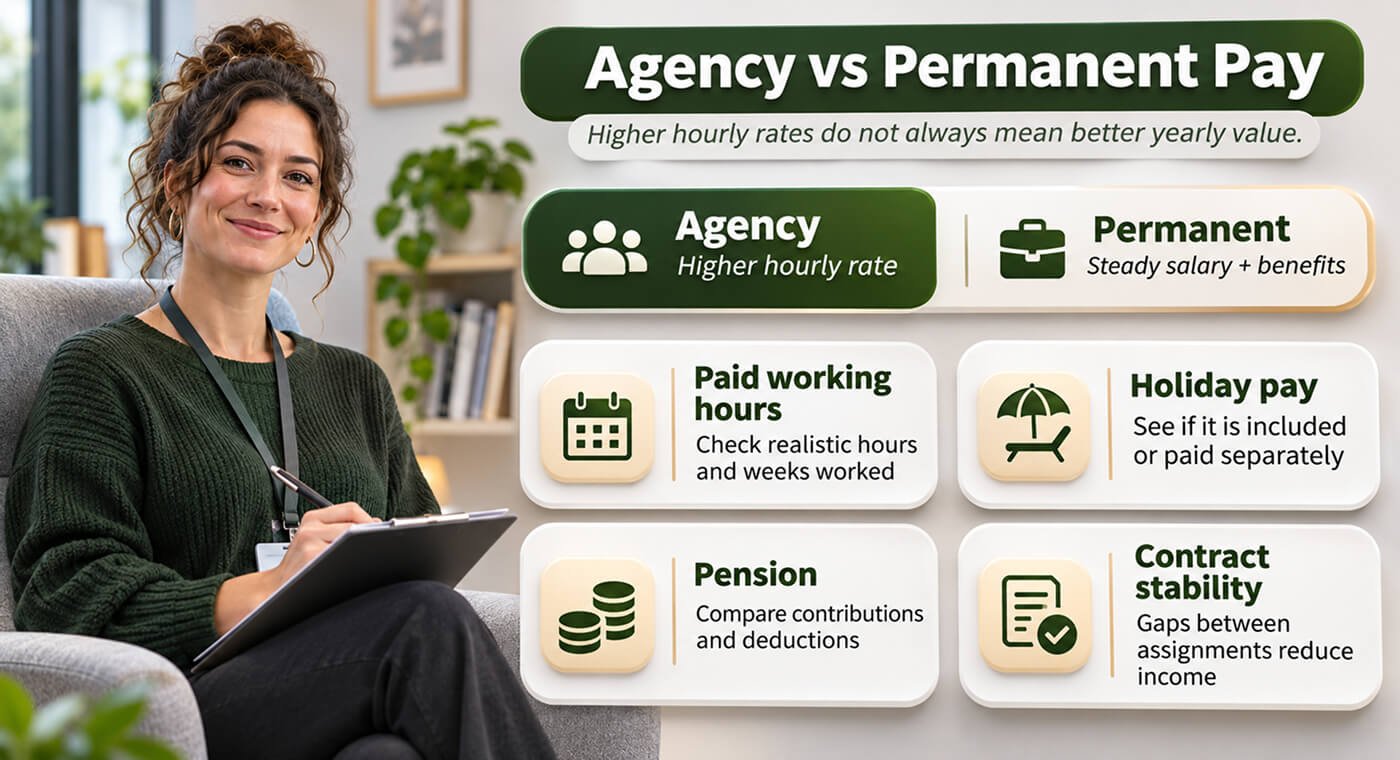
Agency social workers can earn higher hourly rates than permanent employees. However, their annual earnings depend on available assignments and paid working hours. A permanent role generally offers a steady salary alongside paid leave and pension benefits. Agency contracts can work differently, especially when assignments end unexpectedly. So, comparing hourly rates alone rarely shows which option offers better financial value.
- Paid working hours: Check how many hours and weeks you can realistically expect to work.
- Holiday pay: Find out whether the quoted rate accounts for holiday pay or pays it separately.
- Pension arrangements: Compare employer contributions and deductions under each contract.
- Contract stability: Consider unpaid gaps between assignments and how they affect annual earnings.
For example, you earn £35 per hour and work 35 hours a week. If you work 44 paid weeks, you could earn £53,900 before tax and other costs. However, losing five paid weeks would cut your earnings by £6,125. This is just an example, not the usual pay for agency social workers. Also, government agency price limits include costs beyond the worker’s wages. So, check your hourly pay, expected working weeks and contract terms before comparing job offers.
How Much Does a Social Worker Earn Per Month, Per Hour and After Tax?
A social worker’s monthly salary starts with the yearly gross pay. Someone earning £40,000 gets about £3,333 each month before deductions. At £35,000, monthly gross pay is about £2,917. At £50,000, it is about £4,167. But gross pay is not take-home pay. Income Tax, National Insurance and pension payments can make a clear difference. Student loan repayments may reduce the figure further.
How Much Would a Social Worker Take Home on £40,000 a Year?
In England, £40,000 leaves about £2,693 a month after Income Tax and National Insurance. This uses 2026/27 rates. It assumes the standard £12,570 Personal Allowance and one employment. Annual Income Tax comes to £5,486. Employee National Insurance comes to about £2,194. That leaves roughly £32,320 over the year. The estimate excludes pension and student loan deductions, so real take-home pay may be lower.
Why does this matter for NHS and council jobs? Two workers can earn £40,000 but receive different amounts after deductions. Pension schemes, tax codes and student loans can change their payslips. Scotland also has different income tax bands for employment income. Practically, use the same assumptions when comparing two offers. Otherwise, one estimate could look better simply because it leaves out a deduction.
How Do Hourly Pay and Part-Time Salaries Work?
Hourly pay depends on how many hours you work each week. For example, divide a £40,000 yearly salary by 52 weeks and 37 hours. This gives about £20.79 per hour. However, full-time NHS staff often work 37.5 hours a week, so their hourly pay will be slightly different. This calculation shows how much you earn for each hour in your contract. It does not include agency charges or extra pay for overtime.
Part-time pay often follows a pro-rata rule. For example, 60% of a £40,000 full-time post gives £24,000 gross yearly pay. The monthly gross amount would be £2,000. Still, your take-home share will not always match the same percentage. Tax rules can change the final result. Check whether the listed salary is full-time equivalent or the sum you will actually receive.
Which Allowances and Benefits Can Increase Your Social Worker Salary?
Social workers can earn extra money on top of their basic pay. Some councils offer extra payments to attract new staff or keep experienced workers. Others pay more for special duties, such as helping students learn or checking their work. NHS staff may also get extra pay for working in certain areas or shifts. However, these payments depend on the employer and the job role.
- Retention payments: Newham offers £5,000 yearly for eligible children’s roles. Suffolk offers up to £4,000 for certain fieldwork positions.
- Practice educator payments: Eligible Newham staff receive an extra £15 per placement day when supervising students.
- Practice assessor payments: Newham offers £400 for each qualifying assessment report.
- NHS allowances: Eligible staff can receive high-cost-area supplements or extra payments for certain working hours.
But here’s something worth checking. Does the advertised salary already contain these payments? If so, adding them again would give you the wrong total. Some incentives also depend on your grade, duties or length of service. For example, a £2,000 salary increase might look attractive. Yet stronger pension contributions, paid leave or bonus terms could change the comparison. Check the full package before accepting an offer.
Final Thoughts: What Social Worker Salary Should You Expect in the UK?
The highest salary you see online might not reflect what employers will offer you. A newly qualified council worker and an experienced NHS specialist have different pay opportunities. That’s why your social worker salary expectations should match your experience and the roles available to you.
Instead of looking only at average UK salaries, check current job offers in your chosen area. Look at the pay grades and the experience each job needs. This will help you understand how much you could earn and find better-paid jobs as you gain more experience.
FAQs About social worker salary
1. What Field of Social Work Pays the Most?
Senior management positions in children’s social services can offer some of the highest salaries. For example, Newham Council advertises service manager roles paying up to £82,809 annually. However, earnings depend more on seniority and employer than the field alone.
2. What Qualifications Do I Need to Be a Social Worker in the UK?
You need an approved social work degree, postgraduate qualification or qualifying degree apprenticeship. You must also register with the relevant regulator before practising, such as Social Work England in England.
3. Is Social Work a Stressful Job?
Social work can be stressful because of demanding caseloads, safeguarding decisions and emotional situations. However, good supervision, manageable workloads and supportive colleagues can make these challenges easier to handle.
4. Is It Worth Becoming a Social Worker?
Social work can offer meaningful work, career progression and opportunities to specialise. However, consider the emotional demands, working hours and salary before deciding whether the career suits you.
5. Why Do So Many Social Workers Quit?
Heavy workloads, emotional pressure and limited workplace support can contribute to social workers leaving their jobs. In England, children’s social work turnover reached 12% in 2025, although this does not mean everyone left the profession.
6. What Are Social Workers Not Allowed to Do?
Social workers cannot exploit clients, discriminate or share confidential information without a lawful reason. They must maintain professional boundaries and follow safeguarding duties and the standards of their professional regulator.