No products in the cart.
Teaching Assistants are the people who keep learning moving for every pupil. They’re the extra pair of hands, eyes, and heart in the classroom — helping lessons run smoothly, supporting children who need a little more time, and making sure every kid gets a fair shot at success. In this guide, we’ll walk through what being a TA really means day to day, where to find the best teaching assistant employment opportunity, what you need to apply, and how much you can expect to earn in 2025. We’ll also look at how you can grow your career — because for many people, becoming a TA is just the first step into a really rewarding journey in education.
One quick note before we start: most teaching assistant jobs are term-time only. That means your annual pay is pro-rata — worked out for the weeks you’re in school but usually spread evenly across the year. It’s a setup that suits lots of people, especially if you like having the school holidays off.
What Does a Teaching Assistant Do?
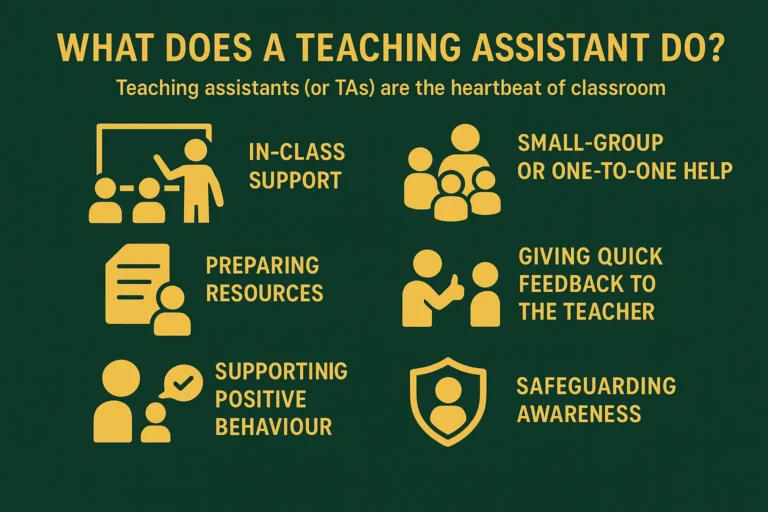
Teaching Assistants (or TAs) are the heartbeat of the classroom — they’re right there beside the teacher, making sure every lesson works for every pupil. Their days are busy, varied, and full of moments that really matter. Here’s what their role usually includes:
- In-class support: You’ll work alongside the teacher during lessons, helping pupils stay focused and understand what’s being taught. Sometimes that means quietly explaining a task, guiding a discussion, or keeping the class calm so learning can flow smoothly.
- Small-group or one-to-one help: Some pupils need a bit of extra support to keep up or build confidence. You might sit with a small group to help them practise reading or spend focused time with one pupil who has additional learning needs.
- Preparing resources: Before lessons start, TAs often help get things ready — printing worksheets, setting up equipment, or organising displays. It’s the behind-the-scenes work that helps lessons run without a hitch.
- Supporting positive behaviour: You’ll gently remind pupils of classroom rules, encourage good choices, and step in early when someone needs help to calm down or refocus. It’s all about building a safe, respectful environment where everyone can learn.
- Giving quick feedback to the teacher: Because you’re working so closely with the pupils, you’ll spot what’s working well and where someone might be struggling. Sharing that information helps the teacher plan the next steps and keep progress on track.
- Safeguarding awareness: Every TA plays a vital role in keeping children safe. You’ll follow the school’s safeguarding policy and know how to report concerns to the designated staff, such as the teacher or SENDCo (Special Educational Needs and Disabilities Coordinator).
Where Can You Work as a Teaching Assistant?
Teaching Assistants are needed in all kinds of schools and learning settings. That means you can choose an environment that fits your personality, interests, and long-term goals. Here’s a look at the main places you could work and how to start finding opportunities near you.
Primary Schools
In primary schools, you’ll help children build strong foundations in reading, writing, and maths. You’ll guide small groups, encourage confidence, and see progress happen right in front of you. It’s ideal if you enjoy variety, creativity, and hands-on learning.
Secondary Schools
If you like working with older students, secondary schools might be a better fit. You’ll support specific subjects, help pupils prepare for exams, and build relationships that make a real impact during their most important school years.
Special Schools and Alternative Provision
These settings support pupils who have additional needs or find mainstream classrooms challenging. The role can be emotionally demanding but deeply fulfilling — every step forward for a pupil feels meaningful.
Nurseries and EYFS Classes
If you love working with little ones, early-years education might be for you. You’ll help children settle into routines, learn through play, and discover their first big steps in communication and confidence.
Academies and Multi-Academy Trusts (MATs)
Many schools are part of larger academy groups, which can open doors to training, mentoring, and progression across different schools. These networks often offer shared professional development and long-term career pathways.
Finding TA Jobs Near You
You can apply directly through school websites, check your local council’s job pages, or use official sites like DfE Teaching Vacancies and DWP Find a job. Education recruitment agencies can also connect you with both temporary and permanent roles in your area.
Thinking Beyond the Classroom
Once you start as a Teaching Assistant, you’ll discover that your skills open up many other doors too — from mentoring and pastoral roles to specialist support and even training positions. If you’d like to explore what else your TA experience can lead to, visit WiseCampus.org.uk’s blog on other jobs teaching assistants can do for real examples and ideas to help you plan your next step.
Do You Need Qualifications to Apply?
There’s no national licence to become a Teaching Assistant, but most schools look for solid English and maths skills plus some relevant training.
|
Requirement |
Details |
|
Literacy & Numeracy |
GCSE English & Maths grade 4/C or above, or Functional Skills Level 2 |
|
Preferred Qualifications |
Level 2 or Level 3 Certificate in Supporting Teaching & Learning |
|
Apprenticeship Route |
Level 3 Teaching Assistant Apprenticeship (earn while you learn) |
|
Background Check |
Enhanced DBS required for all school-based roles |
|
Extra Tip |
Volunteering in a school helps your application stand out |
Most schools care as much about attitude and reliability as they do about certificates — show you’re ready to support pupils and learn on the job, and you’ll be off to a strong start.
How to Find the Best Teaching Assistant Employment Opportunity Near You
The best place to start your search is on official government job boards that specialise in education. The Department for Education’s Teaching Vacancies website lists up-to-date support-staff roles from schools across England, and you can set personalised job alerts by postcode so new opportunities come straight to your inbox. You’ll also find regular listings on the DWP’s Find a Job service, which includes hundreds of TA and classroom-support posts added every week.
Beyond those national sites, it’s always worth checking your local council’s job pages and the recruitment sections of Multi-Academy Trust (MAT) websites, as many schools only advertise there. Take a few minutes to compare pay grades, contract type, and whether roles are term-time only before applying — it helps you find a post that genuinely fits your schedule and career goals.
Can You Get a TA Job Without Experience?
Yes — many schools are open to new entrants, especially if you show enthusiasm and a willingness to learn. You can make your application stronger by spending a few days volunteering or observing in a local school, completing a short safeguarding course, and adding two reliable referees who can speak for your character and commitment. These small steps show schools that you’re serious about working with children and ready to grow in the role.
If you’d prefer to train while earning, the Level 3 Teaching Assistant Apprenticeship is a great route. It usually takes around 18 months, combining classroom work with structured training through providers such as Skills England or The Bedford College Group. It’s a practical, hands-on way to build experience and gain a nationally recognised qualification too.
How Much Do Teaching Assistants Earn?
Most Teaching Assistant roles follow local-government (NJC) pay scales. From 1 April 2025, pay rose by about 3.2%, with typical hourly rates (outside London) between £12.85 and £13.26 depending on grade. The National Living Wage for ages 21+ is £12.21/hr, so TA pay usually sits a little higher.
Because most jobs are term-time only, annual salaries are pro-rata — roughly £16,500 – £19,000 for full-time hours outside London, or more with London weighting. Pay is normally spread evenly across 12 months, so you receive a steady income through school holidays. Always check the SCP or grade in each advert for accuracy.
What Skills Help You Get Hired Faster?
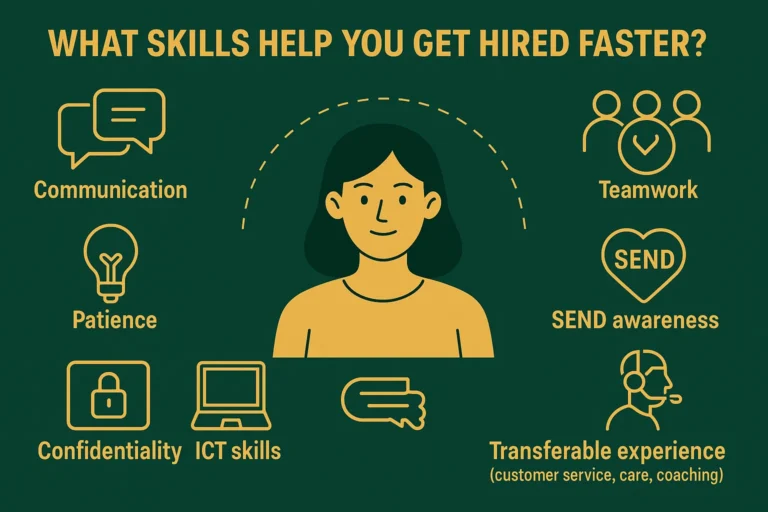
Schools look for people who can connect with pupils, stay calm under pressure, and work well as part of a team. The right mix of soft skills and practical awareness can make your application stand out straight away.
- Communication
- Patience
- Teamwork
- SEND awareness
- Behaviour management
- ICT skills
- Confidentiality
- Transferable experience (customer service, care, coaching)
Is There Career Growth for Teaching Assistants?
Teaching Assistants have plenty of room to grow. The role is often a stepping stone into higher-level positions or even full teacher training, depending on your interests and how far you want to go. With experience, training, and a willingness to take on more responsibility, you can move through several stages of progression — each bringing new challenges, skills, and better pay on the NJC spine.
Step 1: Teaching Assistant (TA)
Most people start here, supporting pupils in lessons and helping teachers manage day-to-day learning. This stage is all about building confidence, learning how classrooms run, and developing strong communication and organisational skills that will carry you through your career.
Step 2: Senior Teaching Assistant
Once you’ve gained experience, you can move into a senior role. Senior TAs often take more initiative — leading small group work, mentoring new staff, and helping with lesson resources or behaviour management. You start becoming a real bridge between the teaching team and support staff, playing a bigger part in planning and pupil progress.
Step 3: Higher Level Teaching Assistant (HLTA)
HLTAs are trained to lead learning under a teacher’s direction and can cover whole classes when needed. The step up to HLTA comes with extra training and a higher pay grade, as you’ll be trusted with more independence, lesson delivery, and pupil assessment. It’s a great choice for those who enjoy teaching but aren’t yet ready for full teacher training.
Step 4: Specialist Support Roles
After a few years in the classroom, some TAs move into specialist support areas such as ELSA (Emotional Literacy Support Assistant), behaviour support, or Speech and Language Therapy (SALT) assistance. These roles focus on deeper support for pupils who need extra help with emotions, behaviour, or communication. They often come with extra training and recognition, giving you a focused area of expertise within the school.
Step 5: Teacher Training
Many experienced TAs decide to take the next big step and train as teachers. You can do this through a PGCE or a teaching apprenticeship, building on your classroom experience to gain Qualified Teacher Status (QTS). It’s a natural progression for anyone who loves helping pupils learn and wants to lead their own class in the future.
Final Thoughts: Start Your Teaching Assistant Career Today
If you’re ready to start a career where every day makes a difference, becoming a Teaching Assistant is a brilliant first step. You’ll gain hands-on experience in the classroom, develop practical skills that schools value, and open doors to a wide range of roles in education.
To begin, make a simple action plan. Gather proof of your GCSEs or Functional Skills, start your DBS check, and explore your training options — such as a Level 2 or Level 3 qualification or the Level 3 Teaching Assistant apprenticeship if you want to earn while you learn. Volunteering in a local school is also a great way to build confidence and secure references.
When you’re ready to take that next step, you can train online through the WiseCampus Teaching Assistant Course. It’s designed to help you qualify quickly, gain recognised certification, and move straight into real classroom opportunities. Once your training and checks are complete, set job alerts on Teaching Vacancies and Find a job, then apply to a few local schools or Multi-Academy Trusts. The sooner you start, the sooner you’ll join a team that helps every pupil thrive.
Frequently Asked Questions (FAQs)
1. Is it difficult to get a teaching assistant job?
- Not usually. Many schools welcome new applicants, especially if you show enthusiasm, reliability, and some basic understanding of classroom support. Volunteering or completing a short safeguarding course can give you an edge.
2. What questions will I be asked in a teaching assistant interview?
- Expect questions about how you’d support pupils with different needs, manage behaviour calmly, and work as part of a team. Schools may also ask about safeguarding and confidentiality to check your awareness of pupil safety.
3. What are the qualities of a good TA?
- Good TAs are patient, adaptable, and kind. They communicate clearly, work well with others, stay calm under pressure, and always put pupils’ needs first.
4. What not to do as a teacher assistant?
- Avoid giving direct discipline or taking over teaching. Always follow school policy, keep information confidential, and communicate any concerns to the teacher or safeguarding lead.
5. What is the 70/30 rule in teaching?
- It’s the idea that pupils should do around 70% of the talking or work during lessons, while teachers guide and support about 30%. It encourages active learning.
6. Can a TA legally teach a class?
- A TA can lead a class only under a teacher’s direction or when trained as a Higher Level Teaching Assistant (HLTA). They can’t replace a qualified teacher.
7. Why are schools getting rid of TAs?
- Some schools reduce TA numbers due to funding pressures, but many are still hiring — especially in SEND and early-years support, where help is essential.
8. What are the disadvantages of being a teaching assistant?
- Pay is lower than teaching roles, and most contracts are term-time only. However, the shorter hours, holidays, and daily impact often make the job deeply rewarding.
9. What does Ofsted say about teaching assistants?
- Ofsted values effective TAs who actively support learning, encourage independence, and work closely with teachers. Their reports highlight that good support staff can make a clear difference to pupil progress.

Teaching Assistant Course
Course Description :
- Certificate: Yes(Free)
- Accreditation: CPD Accredited
- Access: Lifetime