No products in the cart.
This Thai massage description helps you understand the treatment before you book. Thai massage is not like a normal oil massage. Instead, it uses stretching, pressure, rocking and guided body movement on your body.
Compared to a soft relaxing massage, Thai massage feels more active. The therapist moves your body and guides you into gentle stretches. Pressure and movement work together to release tight muscles. After that, the body often feels lighter and more relaxed.
Many people now choose it for stress, body tightness and everyday tiredness. A 2025 industry report shows that around 11% of UK adults get a professional massage each year. That is about 5.9 million people. This shows steady demand across the country.
Overall, this guide keeps things simple and clear. It helps you understand Thai massage in a real and easy way before your first booking.
What is a Thai massage?
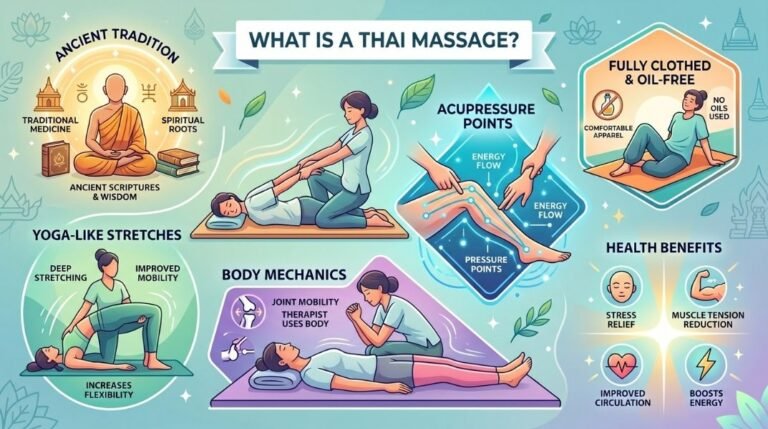
Thai massage is a traditional body treatment that uses pressure, stretching and slow movement to relax the body. The therapist uses steady hands and smooth movement to reduce muscle tightness.
During the session, you stay fully clothed. Thai massage does not use oil. Most sessions happen on a floor mat instead of a massage bed. This helps the therapist move your body with more control and care.
The therapist uses hands, thumbs, elbows, knees and sometimes feet. Each part works on different tight areas of the body. Compared to oil or Swedish massage, this style feels more active.
Also, many people call it assisted yoga. The therapist gently guides your body into stretch positions. These stretches help release tight muscles and improve movement.
In simple terms, a Thai massage is a clothed massage that mixes pressure, stretching and guided movement. It helps the body feel lighter, looser and more relaxed.
Thai Massage Description: How It Works?
Here are the key steps of a typical Thai massage session.
Before the Session
A Thai massage description always starts with a short chat. The therapist asks about pain, injuries, health problems and pressure level. This helps them plan a safe and comfortable session for you.
Starting the Massage
After that, you lie down on a firm mat or flat surface. You wear loose, comfortable clothes. Then the therapist starts with light pressure. This helps your body relax step by step.
Pressure and Stretching
Then the main part begins. The therapist presses tight areas in your body with steady hands. After that, they guide your body into slow stretches. It may feel like yoga. Still, the therapist moves your body for you.
Rocking and Pulling
At times, the therapist uses gentle rocking or soft pulling. This helps relax tight muscles and joints. It also keeps the session smooth and easy.
Ending the Session
At the end, the session slows down. The therapist finishes with calm and soft movements. After the session, you may feel light, relaxed and more open in your body. Some people also feel a bit sore.
Thai massage should feel strong, but never painful. So, speak up right away if the pressure feels too strong.
What Techniques Are Used in Thai Massage?
Here are the main techniques used in Thai massage.
- Assisted Stretching- The therapist gently moves the body into simple stretch positions. This improves flexibility and makes joints feel more mobile. It also reduces tightness in the body.
- Acupressure- The therapist presses certain points using thumbs or hands. This releases tight areas in the muscles. It also eases muscle tension.
- Compression- Steady pressure is applied to muscles. This allows the body to relax slowly. It can also support better blood flow.
- Rocking Movements- Slow rocking creates a calm rhythm in the body. It reduces stress and supports deep relaxation. It also loosens stiff areas.
- Sen Line Work- Thai massage follows the Sen lines in the body. These are traditional energy pathways in Thai therapy. Work along these lines supports balance and ease.
These techniques often combine in one session. This mix makes Thai massage active, deep and different from normal massage styles.
What are the Benefits of Thai Yoga Massage?
The benefits of Thai yoga massage include better relaxation, easier movement and general body comfort. Thai massage may reduce stress and ease muscle tightness. It supports overall wellbeing, but it should not replace medical care or a doctor’s advice.
Reduce Stress
Slow pressure, gentle stretching and a steady rhythm calm the body. Many people feel less stress after a session. The mind often feels calmer and more settled as well.
Help Muscle Tension
Thai massage works on tight muscles using pressure and movement. This suits people who sit for long hours or feel stiffness in the body. With regular sessions, muscles may feel less tight and looser.
Support Flexibility
Assisted stretching plays a key role in Thai massage. It may improve body movement over time. Simple daily actions like bending, walking and reaching can feel easier.
Help Back Discomfort
Some studies suggest Thai massage may help people with lower back pain that is not linked to serious disease. A study on long-term back pain showed reduced pain and less difficulty in movement. (NICE)
In the UK, NICE also says massage can be part of care. It should be used with exercise and active movement, not on its own.
Improve General Wellbeing
Thai massage mixes pressure, stretching and movement in one session. This often leaves the body feeling lighter and more relaxed. Many people also feel fresher and more comfortable after treatment.
What to Expect During a Thai Massage Session
A Thai massage session feels simple and calm from the start. Wear loose, comfortable clothes like a T-shirt and soft trousers. Traditional Thai massage does not use oil. The body stays fully dressed during the session.
Most sessions last 30, 60, 90, or 120 minutes. For beginners, 60 minutes works well. For a full-body session, 90 minutes gives more time for stretching and pressure work.
During the session, some areas may feel deep, especially where muscles are tight. Still, the pressure should never feel sharp or unsafe. A good therapist always changes the pressure based on comfort. After that, the body may feel light, relaxed, sleepy, or refreshed. Mild soreness can also happen. It feels like light exercise after stretching.
After the session, drink water to help the body recover. Also, take some rest if needed. Heavy exercise should be followed by a short time so the body can settle well.
Who Should Try or Avoid Thai Massage?
Who Should Try Thai Massage
Thai massage suits people who feel stiff, tight, or tired in the body. It also works well for people who sit for long hours or travel often. Many people choose it for deeper stretching and an active style of massage.
At the same time, it suits people who prefer a cloth treatment instead of an oil massage. People who do sports or physical work often use it for muscle recovery and better movement. It can also support stress relief and general body relaxation.
Also, no need to be flexible before trying it. A trained therapist adjusts pressure and stretching based on comfort and body condition.
Who Should Avoid Thai Massage
Some people should speak to a doctor before booking a session. This includes recent surgery or recent injury. It also includes serious spine problems, osteoporosis, heart disease, or high blood pressure. People with blood clot risk, open wounds, or cancer treatment should take extra care. Pregnancy also needs medical advice before trying Thai massage.
At the same time, NHS guidance says it is important to check safety before using complementary therapies, especially with health conditions.
Also, GOV.UK explains that massage and special treatment places may need local council licensing. So it is important to choose a clean, professional and properly run clinic.
What Are Thai Massage Types and UK Costs?
Thai massage comes in different styles. Each style focuses on a different need in the body.
- Traditional Thai Massage- Best for stretching, pressure and full body movement. It feels active and helps release tight muscles.
- Thai Oil Massage- Uses oil with soft, smooth strokes. It suits people who want deep relaxation and a calm feeling.
- Thai Foot Massage- Focuses on feet, ankles and lower legs. It works well after long walking or standing.
- Thai Herbal Compress Massage- Uses warm herbal packs on the body. It brings warmth and comfort and helps ease stiff muscles.
Now let’s look at the cost in the UK. Prices depend on city, clinic, experience and session length. A simple guide looks like this:
- 30 minutes: £35 to £45
- 60 minutes: £50 to £75
- 90 minutes: £80 to £105
- 120 minutes: £100 to £130
London and big cities usually cost more. Smaller towns often cost less.
Price matters but it should not be the only choice. Check reviews, cleanliness, therapist experience and clear service details before booking.
Final Thoughts
This Thai massage description gives a clear and simple view of Thai massage. It is a clothed, active treatment. It uses pressure, stretching, rocking and guided movement on the body. At the same time, it can help reduce stress, ease body stiffness, improve flexibility and support relaxation. The experience feels active, but still calm and comfortable.
Overall, this Thai massage description shows that Thai massage is more than simple relaxation. It is a hands-on body treatment that helps the body feel loose, calm and refreshed. For safety, always choose a trained therapist. Also, share any health issues before the session. If there is any medical condition, speak to a doctor before booking.
Want to know the real techniques behind Thai massage for pain relief? Join our Thai Massage Therapy & The Techniques for Pain Relief course and learn step by step.
FAQs
How would you describe a Thai massage?
- Thai massage is a body treatment that mixes stretching, pressure and slow movement. It feels active, not just relaxing. The therapist moves the body into gentle stretch positions to ease tight muscles.
What does a Thai full body massage include?
- It includes pressure on muscles, assisted stretching and slow body movements. The therapist works from feet to head to relax the whole body.
What massage is good for high cortisol levels?
- Gentle relaxing massages like Thai oil massage or light pressure styles may help reduce stress. Calm breathing and soft touch often help the body feel more relaxed.
Is Thai massage done with clothes on?
- Yes. Traditional Thai massage is done fully clothed. Loose and comfortable clothes work best.
What is a red flag in massage?
- Bad hygiene, no clear communication and ignoring comfort are warning signs. Pressure should never feel painful or unsafe.
What is a massage with climax?
- This refers to a sexual service. It is not part of professional Thai massage or any proper therapy.
Do guys get erect during a massage?
- Sometimes the body reacts naturally. It is normal and not controlled. A professional therapist ignores it and continues the treatment normally.