No products in the cart.
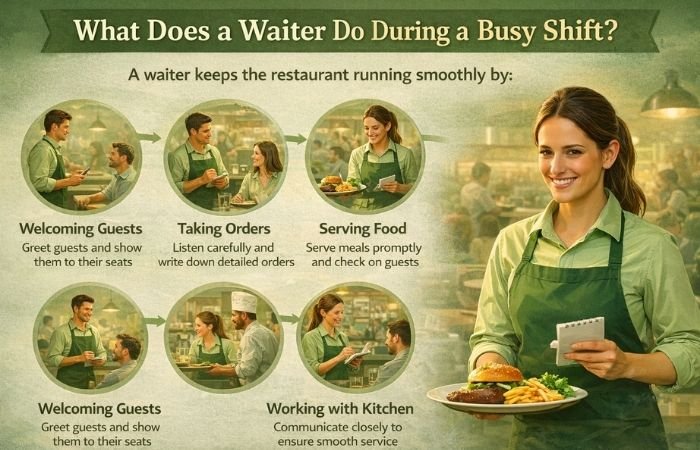
When you visit a restaurant, you expect friendly and smooth service. A waiter helps make that happen. They welcome guests, take orders, and serve food with care. Their role is simple, but it matters a lot for a good dining experience. In the middle of all this, many people ask what does a waiter do in a busy shift. They stay calm, listen carefully, and make sure every guest feels valued. At the same time, they work closely with the kitchen to keep everything running smoothly.
Let’s look step by step at how a waiter helps guests, serves food, and keeps the restaurant running smoothly.
What Is a Waiter?
A waiter is a person who helps make your meal nice and easy. First, they take your order. Then, they bring your food and drinks. They also check if you need anything else. Waiters work in many places, like restaurants, cafés, and hotels. For example, in a busy restaurant, they move fast to serve everyone on time.
Their role is very important because they connect the kitchen and the guests. Also, they answer questions and make sure everyone feels welcome. In the end, a good waiter can make your meal special.
How Much Do Waiters Earn?
Waiters in the UK earn different amounts. For example, most earn between £20,500 and £35,000 per year. Meanwhile, top earners in London can make up to £67,000. Also, tips and service charges often add extra money. However, pay depends on experience, location, and the type of restaurant. Finally, some jobs pay more in busy or fancy restaurants.
- Average Pay: Most waiters earn around £20,000–£30,000. For instance, some London jobs offer £31,000–£39,000.
- Starting Pay: Beginners may start around £20,400 per year. On the other hand, senior or skilled waiters earn more.
- Hourly Pay: The legal minimum for people aged 21+ is £12.71. In addition, tips can increase this a lot.
- London vs. Other Areas: London jobs usually pay more. Because of this, many waiters move to the city for higher pay.
- Tips and Bonuses: Many restaurants give extra money from service charges or tips. Therefore, total earnings can grow by thousands each year.
What Affects How Much Waiters Earn?
- Experience: Beginners earn less, while waiters with over 10 years’ experience earn more.
- Location: London pay is higher because the cost of living is higher.
- Type of Restaurant: Fancy or fine dining places often pay more and give bonuses. Also, popular restaurants can offer more hours.
- Hours Worked: Most waiters work 39–41 hours a week, and this usually includes evenings, weekends, and holidays.
- Skills: Waiters with extra skills, like wine knowledge or customer service awards, earn more. Finally, good performance can increase tips and bonuses.
What Does a Waiter Do on a Daily Basis?
In the UK in 2026, a waiter plays an important role in making every guest feel welcome. First, they greet customers with a smile and help them find a seat. Then, they take orders using tablets or POS systems, making sure to check for allergies or special requests.
During the meal, waiters serve food and drinks promptly. Also, they keep an eye on each table, ensuring guests are happy and comfortable. Meanwhile, they handle payments at the end, whether by card or cash, and provide receipts.
Waiters often work fast-paced shifts, including evenings and weekends. In addition, they prepare the dining area before service, cleaning tables, setting cutlery, and arranging chairs (mise-en-place). They also give menu advice and suggest specials to enhance the guest experience.
Key Daily Responsibilities
- Greeting & Seating: Welcome guests, offer menus, and explain daily specials.
- Taking Orders: Enter food and drink orders accurately using tablets or POS systems. Check for allergies.
- Service Delivery: Serve meals and drinks quickly, often managing several tables at once.
- Customer Care: Ensure guests are happy, handle complaints politely, and suggest extra items.
- Billing & Payments: Process card or cash payments and give receipts.
- Restaurant Maintenance: Clean tables, set them up for new guests, and keep the area tidy.
What Are the Main Duties of a Waiter?
A waiter has many important jobs every day. First, they give good customer service by welcoming guests with a smile and showing them to their table. They also tell guests about daily specials and new dishes.
They talk clearly with customers and answer questions about the menu. For example, they check for allergies and help guests choose meals they will enjoy. Then, they work closely with the kitchen to make sure orders are correct and served on time.
They keep tables clean and tidy, refill drinks, and make sure cutlery and napkins are ready. At the same time, they follow hygiene and safety rules to keep the dining area clean and safe. Being a waiter can be busy, but it is also rewarding. In the end, seeing happy guests enjoy their meal makes all the hard work worth it.
What Skills Does a Waiter Need?
Being a waiter is more than just serving food. They need several skills to do their job well:
- Good communication skills: Waiters talk clearly with customers and listen carefully. For example, they answer questions and explain menu items.
- Friendly attitude: Smiling and being polite help guests feel welcome. Also, it makes the dining experience more enjoyable.
- Strong memory: Remembering orders, table numbers, and special requests is very useful. Then, they can serve guests faster and avoid mistakes.
- Time management: Working quickly and efficiently keeps the service smooth. Meanwhile, it helps manage busy shifts without stress.
- Teamwork skills: Working well with kitchen staff and other team members is important. In addition, it makes the restaurant run smoothly.
- Problem-solving skills: Handling mistakes, like a missing dish or a wrong order, calmly keeps guests happy. Finally, it shows professionalism and care.
In the end, having these skills makes the job easier and more rewarding. Seeing happy guests is always the best part of being a waiter.
What Qualifications Do You Need to Be a Waiter?
Becoming a waiter is easier than many people think. First of all, most jobs do not need formal education. You do not need a degree, and anyone willing to learn can start working.
After that, you usually get basic training at work. This training teaches you how to take orders, serve food and drinks correctly, handle payments, and help guests politely. Besides, having some experience in customer service can be very useful. For example, it helps you talk confidently with guests, handle complaints calmly, and give good recommendations about the menu.
Also, being friendly, patient, and organised is just as important as any training. For example, knowing a little about food and drinks, like daily specials or popular dishes, can make guests feel more welcome and cared for. Finally, hard work pays off. Seeing happy guests enjoy their meal and leave smiling makes all the effort worth it.
What Are the Working Hours of a Waiter?
Being a waiter usually means working in shifts. First, you may start in the morning to help with breakfast or lunch. Next, you might work in the evening for dinner service. Also, weekends are often busy, so waiters usually work on Saturdays and Sundays too.
During busy times, the hours can be long. Meanwhile, waiters spend most of their shift standing and moving between tables and the kitchen. For example, during a busy lunch or dinner, they take orders, serve food, refill drinks, and check on customers all at the same time.
Being a waiter can be tiring, but it is also rewarding. Finally, seeing guests enjoy their meals and leave happy makes all the hard work worth it.
What Are Common Mistakes Waiters Should Avoid?
Being a waiter can be fun, but some mistakes make the job harder.
- Forgetting orders is a big problem, because it makes guests wait and feel unhappy.
- Being rude or impatient can upset customers, and it can spoil their meal.
- Ignoring guests is another mistake, so waiters should always check if they need anything.
- Poor time management can make the shift stressful, while other staff have to help.
At the same time, even small mistakes can teach lessons. Finally, staying calm, friendly, and organised helps guests feel happy and makes the job easier.
What Challenges Do Waiters Face?
Being a waiter can be fun, but it also has challenges. To begin with, dealing with difficult customers can be hard. Some guests may be impatient or unhappy, and waiters must stay polite and helpful.
After that, waiters often work under pressure. For instance, during busy lunch or dinner times, they must serve many guests quickly while keeping everything correct. On top of that, managing multiple tables at once can be stressful. They need to remember orders, check on guests, and make sure food comes on time.
At the same time, staying calm in a busy restaurant is very important. Taking a deep breath and focusing helps waiters handle any situation. In the end, even though the job is demanding, seeing happy guests makes all the hard work worth it.
What Is the Difference Between a Waiter and a Server?
In the UK in 2026, waiter, waitress, and server often mean the same job. They take orders, serve food and drinks, and make sure guests enjoy their meal.
- Server is a neutral word and common in modern or casual restaurants, while waiter or waitress is used in fancy or formal places. At the same time, the duties are similar.
- A server may also clear tables and take payments, whereas a waiter often focuses on personal service. However, sometimes the tasks are different.
- In upscale restaurants, a Head Waiter may take orders, and meanwhile, other staff serve food.
- Many job ads use the terms together because employers want staff who are friendly and know the menu well. Also, they want staff who can work quickly.
Common Responsibilities for Both Roles
- Greet guests and take orders, while making them feel welcome.
- Answer questions about the menu and ingredients, so guests can choose safely.
- Serve food and drinks, and check if guests need anything else.
- Clear tables and keep the area clean while getting it ready for new guests.
- Handle payments by cash or card, so the process is easy for guests.
What Career Growth Options Are Available for Waiters?
Being a waiter is a great start, and you can grow in many ways. Firstly, you can become a senior waiter, taking on more responsibilities and helping new staff. After that, some waiters move up to supervisor roles, managing shifts and making sure everything runs well.
Later, with experience, you might become a restaurant manager, leading the whole team. Also, working as a waiter can open doors to other hospitality careers, like hotels, catering, or event management. Moving up in your career feels exciting and shows how your effort really matters.
Final Words
A waiter does more than just bring food. First, they greet guests and take orders. They serve meals and make sure people are happy. Then, they solve problems and help the team. They also handle payments and keep tables clean. Finally, every job they do is important. So, next time you eat out, think about all they do. Knowing what does a waiter do helps you see how hard they work and how they make your meal nice and enjoyable.
FAQs About What a Waiter Does
1. What are the duties of a waiter?
- Waiters greet guests, take orders, serve food and drinks, handle payments, keep tables clean and ensure customers are happy.
2. What jobs are in demand in the UK in 2026?
- Healthcare workers, IT specialists, engineers, teachers, delivery drivers and hospitality staff are in high demand.
3. How many hours do waiters work in the UK?
- Most waiters work around 39–41 hours per week, often including evenings, weekends, and holidays.
4. What is the youngest age to be a waiter?
- The youngest age is usually 16, but rules may vary depending on the employer and type of work.
5. What are the jobs that are doomed in 2026?
- Some low-skill, routine jobs like cashiers, data entry clerks and postal workers may decline due to automation.
6. What are the 10 most stressful jobs in the UK?
- Jobs include doctors, nurses, teachers, paramedics, police officers, social workers, air traffic controllers, journalists, firefighters and retail managers.
7. How much is a waiter paid in the UK?
- Average pay is £20,500–£35,000 per year. Beginners start around £20,400, while top earners in London can reach £67,000, plus tips.
8. What skills do waiters need?
- Good communication, friendly attitude, memory, time management, teamwork, and problem-solving skills.
9. What do M&S pay per hour?
- M&S pays around £12.71 per hour for staff aged 21+, following the National Living Wage.