No products in the cart.
Have you ever heard the word RIDDOR? It may sound like a long, confusing acronym, but it matters a lot in UK workplaces. So, what’s the real impact? What does RIDDOR mean, and why is it important when someone gets hurt or a dangerous event happens at work?
RIDDOR stands for Reporting of Injuries, Diseases and Dangerous Occurrences Regulations 2013. Simply put, it is a law that makes sure serious work accidents, illnesses, or near-misses are reported to HSE or the local council. This means employers, some self-employed people, and those in charge of workplaces must follow the rules. Also, you must report incidents on time and keep clear records. If not, you could get fined or face legal action.
Now, let’s dive in and explore what is the meaning of RIDDOR and what employers must do to follow it.
What Does RIDDOR Mean?
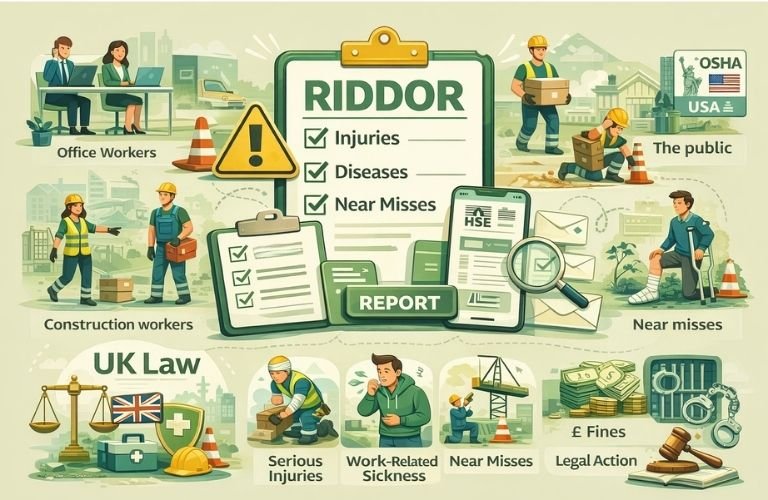
RIDDOR stands for Reporting of Injuries, Diseases and Dangerous Occurrences Regulations 2013. It is a UK law designed to make sure dangerous workplace accidents are reported. Many people don’t know that RIDDOR doesn’t only cover employees. It also covers self-employed people and accidents that involve members of the public.
The law is mandatory, not optional. This law makes sure workplace leaders report serious injuries, work-related sickness, and near-misses. If they break the law, authorities can fine them, take legal action, or even send them to jail in serious cases.
To compare, the US has a system called OSHA Recordables. But most US workplaces do not report accidents immediately. In the UK, RIDDOR requires fast reporting to HSE or local authorities. This helps prevent more accidents and keeps workplaces safer.
Most importantly, RIDDOR is about safety, not blame. Even if no one is at fault, a report may still be needed if the work activity caused or helped cause the incident.
What Is the Definition of RIDDOR in Simple Terms?
RIDDOR is a law that makes sure serious accidents, work illnesses, and dangerous events get reported. In simple words, it helps keep everyone at work safe by telling the authorities when something serious happens.
So, what’s the point of reporting? First, it notifies HSE or your local council about the event. Next, they can investigate and find out what went wrong. Finally, it helps prevent similar accidents from happening in the future.
You also need to know the meaning of these key words:
- Accident: A sudden event that causes harm.
- Incident: Any event that interrupts work, serious or not.
- Injury: Physical harm to a person.
- Dangerous occurrence: A close call or risky event that could have caused serious harm, even if no one was hurt.
Don’t forget: RIDDOR is only for serious events. In other words, small cuts, bumps, or minor injuries do not need reporting. The law is for accidents that could seriously affect people’s health or safety.
Why RIDDOR Is Important for Workplace Safety
Why reporting serious events is so important:
- Keeps everyone safe: RIDDOR makes sure serious accidents and dangerous events are reported. This way, people stay safer at work.
- Helps spot risks: Reporting incidents shows patterns of danger. So, authorities know where to focus to prevent accidents.
- Makes workplaces safer: When serious events are reported, employers fix hazards and improve safety. As a result, fewer accidents happen.
- Holds people responsible: Authorities can act if safety rules are ignored. This helps make work safer for everyone.
- Shows worldwide importance: Millions of workplace injuries happen every year. That’s why reporting serious events can stop similar accidents.
- Builds a safety culture: Recording incidents teaches workers to take safety seriously. In the end, it helps stop accidents before they happen.
Who Must Report Under RIDDOR?
Responsible Persons Defined
RIDDOR makes some people responsible for reporting serious accidents and dangerous events at work. First, employers must report when employees injure themselves or become sick because of work. Next, self-employed people must report if their work causes a serious accident or illness. Finally, anyone in charge of a workplace must report when an accident, disease, or dangerous event happens on their site.
Who Should Not Report?
Not everyone can report under RIDDOR. For example, injured workers cannot report unless they are self-employed. Also, visitors, customers, and anyone not responsible for the workplace cannot report.
What Employees Should Do Instead
If you see or experience a serious incident, first, tell your employer immediately. This is important because they have a legal duty to report it. However, if your employer does not take action, you can step in. In that case, you can report the incident directly to HSE so it is handled properly.
What Incidents Must Be Reported Under RIDDOR?
Here is a simple guide to the types of incidents you must report under RIDDOR. Knowing these types helps employers, managers, and workers follow the law correctly.
Work-Related Fatalities
You must report any death linked to work. For example, this includes deaths caused by violence at work, like fights or attacks on site. However, RIDDOR does not require you to report suicides. Timing does not matter. Even if the person dies days or weeks after the accident, you must still report it. Also, if broken equipment or other hazards hurt visitors or members of the public, you must report their deaths.
Specified Injuries to Workers
Some injuries are serious and must be reported by law. For example, this includes broken bones, but not fingers, thumbs, or toes, and amputations. It also covers permanent loss or reduction of sight, and crush injuries to the head or body. Also, serious burns covering 10% or more of the body and scalp that need hospital treatment must be reported by you. Other injuries to report include loss of consciousness and injuries in enclosed spaces, like hypothermia or heat illness.
Over-Seven-Day Injuries
If a worker cannot do their normal job for seven or more days in a row, you must report it by law. Remember, weekends and rest days count in this total. Also, over-three-day injuries are different because you only need to write them down and do not have to report them. Finally, you must send reports for over-seven-day injuries to the authorities within 15 days.
Injuries to Non-Workers
Sometimes, accidents happen to people who are not your staff, like customers, visitors, or contractors. In these situations, you must take the injured person straight to the hospital. Act fast and do not delay.
Also, if the accident happens in a hospital, there are special rules you must follow. So, you must report it correctly. This way, you keep people safe and follow the law.
Reportable Occupational Diseases
A doctor must confirm any work-related disease, and the person’s job must clearly cause the disease. For example, this includes carpal tunnel syndrome, hand-arm vibration syndrome, occupational dermatitis, occupational asthma, occupational cancers, and diseases caused by germs at work.
Also, reporting these diseases helps you find problems at work early. This way, you protect other workers and keep your workplace safe.
Dangerous Occurrences (Near-Miss Events)
RIDDOR also covers serious near misses, even if no one gets hurt. Because these events could have caused serious harm, it is important to report them. For example, falling lifting equipment, scaffold or building collapses, electrical fires or explosions, touching overhead power lines, release of dangerous chemicals, accidents with explosives, train crashes, and gas leaks all must be reported. Also, reporting these near misses helps stop future accidents and keeps everyone at work safe.
What Is a “Work-Related” Accident Under RIDDOR?
Ask one clear question first: was it connected to what they were doing?
A work-related accident happens when an injury or serious event occurs in someone’s job. The work must cause it or clearly help cause it. It does not matter who made a mistake. RIDDOR looks at the link to work, not blame.
So, how can you check if it is work-related? Look at these key points.
Key things to check:
- What task was the worker doing at that time
- How the work was planned and managed
- The tools, machines, or materials used
- The condition of the workplace, such as floors, lighting, or the building
First, check the task. Is the worker doing their job? Does the task carry any risk? Next, look at how the employer organised the work. Did the worker receive proper training? Do they have clear instructions? Is the job rushed or under pressure?
Then, check the equipment and materials. Did a broken machine, unsafe tool, or harmful substance play a role? Finally, look at the workplace itself. Wet floors, poor lighting, or damaged areas can all increase the danger of accidents.
Now remember this. Not every accident at work counts as work-related. If someone becomes ill because of a personal health problem and the job did not cause it, RIDDOR may not apply. Accidents are sudden events that happen at a specific time and place. Problems that develop slowly, like long-term back pain or repetitive strain, are not accidents. These fall under occupational disease rules instead. Understanding this difference helps you report correctly and prevent future harm.
Time Limits for Reporting RIDDOR Incidents
Reporting RIDDOR incidents on time is very important. If you delay, it can put workers in danger and cause trouble for your business. Here is an easy guide for each type of incident:
- Deaths and serious injuries – Report immediately. Call HSE or submit online as soon as it happens. Act quickly to keep everyone safe.
- Dangerous events (near misses) – Report without delay, even if no one is hurt. Reporting fast can stop another accident from happening.
- Injuries keeping a worker off work for more than 7 days – Report within 15 days. Remember, count weekends and rest days in the total.
- Work-related illnesses – Report once a doctor confirms it. Make sure the illness is linked to the job.
How to Report a RIDDOR Incident (Step-by-Step)
Here’s how to report a RIDDOR incident quickly and correctly:
- Check if it needs reporting – Only serious accidents, work-related illnesses, or dangerous events must be reported. If it is not serious, you do not need to report it.
- Find the responsible person – Identify who in your business should send the report. This makes sure someone acts straight away.
- Submit online via HSE – Use the HSE website. It is quick, simple, and keeps a clear record.
- Keep the confirmation – Always save proof that the report was sent. This helps if anyone checks later.
- Tell management – Inform your managers or safety officers straight away. This keeps everyone aware and helps stop future accidents.
- Know where to report – Depending on your business, send the report to HSE or your local authority. Reporting to the right place keeps your business legal and safe.
Record-Keeping Requirements Under RIDDOR
Keeping good records is a legal duty under RIDDOR. Here is how to do it correctly:
Write accurate records
- Make sure every reportable incident is clearly written. This keeps your business legal and organised.
Include all key details:
- Date and time of the incident
- The place where it happened
- Personal details of the people involved
- What happened
- Treatment given
- How you reported it
- Signature of the person responsible
Use the accident book (B1510)
Record small incidents here as a backup. It helps when reporting bigger incidents later.
Keep records safe
Store them securely and protect personal information.
Keep records for checks
Proper records make inspections easier and show your business follows the law. They also help stop future accidents.
RIDDOR vs Internal Accident Reporting: What’s the Difference?
Internal reporting is how your workplace keeps a record of accidents, injuries, and near misses. This helps managers spot dangers early and make the workplace safer. Near-miss logs are part of this. By writing down events where no one was hurt but could have been, you can stop serious accidents before they happen.
Not every accident at work must be reported under RIDDOR. Only serious injuries, work-related illnesses, or dangerous events need to be sent to HSE or your local council. Minor injuries or small incidents, however, stay in internal records. This helps your team see patterns and fix problems quickly.
Both systems work together to keep everyone safe. Mainly, internal reports cover all incidents, while RIDDOR only covers serious ones required by law.
What Happens If You Fail to Report Under RIDDOR?
Not reporting a RIDDOR incident can cause big problems for your business and your workers. Here’s what can happen:
- HSE investigation – Authorities will check why you didn’t report. This can cause delays and extra stress.
- Improvement or prohibition notices – HSE may order you to fix safety problems or stop work until it is safe.
- Fines – You could be made to pay money for not reporting.
- Criminal prosecution – Serious breaches can lead to legal action against the person responsible.
- Possible prison sentence – In some cases, people may even go to jail.
- Damage to reputation – Not reporting can hurt your company’s image and lose trust with clients and workers.
- Workers’ compensation claims – Failing to report may lead to legal claims from injured employees.
Final Thoughts on RIDDOR
So, what does Riddor mean? Simply, RIDDOR is more than a legal formality. It is a law that keeps your workplace safe. By reporting serious injuries, illnesses, and dangerous events quickly, you help spot risks early and stop accidents. Every employer, self-employed person, or workplace manager has a legal duty to follow it, so reporting on time is very important.
Also, following RIDDOR helps build a strong safety culture. When everyone takes reporting seriously, problems get fixed quickly and workers stay safe. In the end, reporting correctly doesn’t just follow the law; it saves lives, protects your business and keeps your workplace trusted and safe.
FAQs
What is the meaning of RIDDOR?
- RIDDOR stands for Reporting of Injuries, Diseases and Dangerous Occurrences Regulations 2013. It’s a UK law that makes sure serious workplace accidents, illnesses, and near misses get reported to HSE or the local authority.
What are the 7 categories of RIDDOR?
The main categories are:
- Work-related fatalities
- Specified injuries to workers
- Over-seven-day injuries
- Injuries to non-workers
- Reportable occupational diseases
- Dangerous occurrences (near misses)
- Gas incidents
What is exempt from RIDDOR?
- Some events don’t need reporting, like minor injuries, road traffic accidents on public roads, armed forces duties, medical or dental treatments, and incidents in civil aviation or nuclear sites.
What are the 8 types of reportable incidents?
Report these:
- Deaths
- Specified injuries
- Over-seven-day injuries
- Injuries to non-workers
- Occupational diseases
- Dangerous occurrences
- Gas incidents
- COVID-19-related work illness (if linked to work)
What are 5 examples of workplace incidents?
Examples include:
- Slips, trips, and falls
- Machinery accidents
- Chemical spills
- Scaffold collapses
- Electrical shocks
What is not a reportable incident?
- Small cuts, bruises, minor bumps, or anything that doesn’t seriously affect health. RIDDOR only covers serious events.
What 5 things must be reported to RIDDOR?
You must report:
- Deaths at work
- Major injuries
- Dangerous near misses
- Work-related diseases
- Gas-related incidents

RIDDOR Training
Course Description :
- Certificate: Yes(Free)
- Accreditation: CPD Accredited
- Access: Lifetime