No products in the cart.
People do not always need a lot of help to live well. The right support can make daily life easier and more manageable. It can also help people stay active, make choices and enjoy everyday life. This is exactly where a support worker can help someone live more independently. But how? What is a support worker and how can they help? A support worker helps people live more independently and make their own choices.
They also support people with disabilities, learning difficulties, mental health needs or other challenges. Support workers can work in homes, care homes, supported living services, hospitals or communities. Their duties depend on each person’s needs. They may help with personal care, meals, appointments, hobbies and daily tasks.
This guide explains support worker duties, skills, qualifications, training, salary and career options.
What is a support worker and what do they do?
A support worker helps people manage daily life and stay as independent as possible. They listen to what each person wants and needs. This is called person-centred support. It means putting the person at the centre of their support. A support worker may help someone with a disability, autism, learning difficulty or mental health need.
They can offer physical, emotional or practical support. Each person has different needs, so the support can change from person to person. Support workers do not always do everything for someone. Instead, they encourage people to make choices, build skills and do things for themselves.
What are the support worker duties and responsibilities?
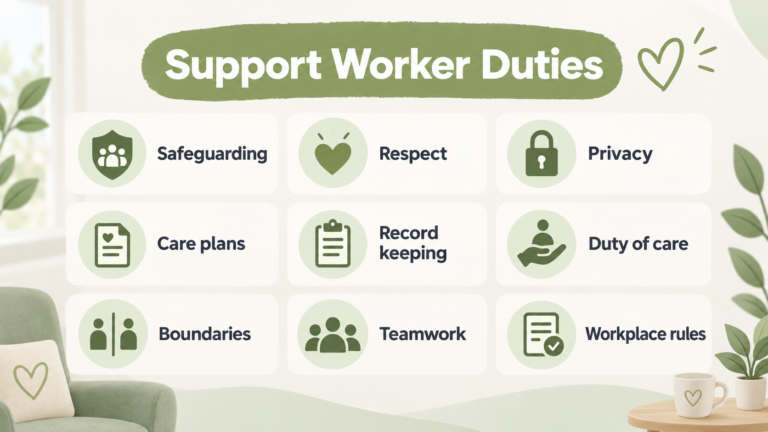
Support workers have important responsibilities beyond helping with daily tasks. They must protect people’s safety, rights, privacy and wellbeing. They should also respect each person’s choices and treat them with dignity. Key support worker duties and responsibilities are:
- Safeguarding: Notice and report abuse, neglect or other concerns.
- Respect: Treat everyone with dignity and respect.
- Privacy: Keep personal information safe and private.
- Care plans: Follow each person’s agreed support plan.
- Record keeping: Write clear and accurate notes about support.
- Duty of care: Take reasonable steps to keep people safe.
- Boundaries: Maintain a professional relationship with the people they support.
- Teamwork: Work well with families, colleagues and other professionals.
- Workplace rules: Follow policies, procedures and safety guidance.
Where can support workers work?
Support workers can work in many different places. Some work in people’s homes and help them live independently. Others work in supported living or residential care homes. Some roles support people with learning disabilities, autism or mental health needs. Workers can also support people through community services.
Support workers can also work in healthcare settings, including the NHS. These roles can include community care, primary care and hospitals. The workplace can change the type of support they provide. However, every setting focuses on safe, respectful and person-centred support.
What skills does a support worker need?
A good support worker needs skills that help them care for others. Empathy and patience help them understand how people feel. Good listening helps them understand what someone needs. Clear communication also helps them build trust and avoid confusion. Teamwork matters when they work with families, colleagues and other professionals.
Support workers should also stay organised and manage their time well. They need to solve problems calmly when things change. Being flexible helps them respond to different needs. Resilience helps them handle difficult situations. They should also treat everyone fairly and without judgement. Most importantly, they should stay willing to learn and improve their skills.
What support worker qualifications do you need?
You do not always need a qualification to become a support worker. Many employers look for good English, basic maths and a caring attitude. Some jobs also ask for GCSEs or similar qualifications. Others prefer a Health and Social Care course.
If you want to gain more skills, there are several course options. These include Level 2 or Level 3 courses, T Levels and BTECs. For adult social care, you can also take the Level 2 Adult Social Care Certificate. This is a recognised qualification based on the 16 Care Certificate standards. The Care Certificate itself is not a qualification. It sets out the key skills needed for care work.
How to become a support worker?
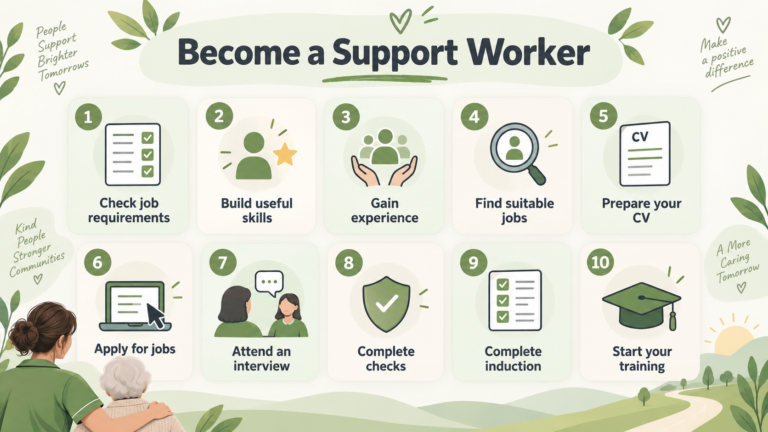
There is no single route to becoming a support worker. The steps can differ between employers and roles. However, most people follow a similar process from finding a suitable job to completing training. Here are the key steps to follow:
- Check job requirements: Look at what each employer asks for.
- Build useful skills: Improve your communication, listening and care skills.
- Gain experience: Try care work, volunteering or other people-focused roles.
- Find suitable jobs: Search for support worker vacancies that match your skills.
- Prepare your CV: Show your useful skills, experience and training.
- Apply for jobs: Complete the application and provide the required details.
- Attend an interview: Explain why you want to support others.
- Complete checks: You may need a DBS check before starting work.
- Complete induction: Learn about your workplace, role and responsibilities.
- Start your training: Complete any training your employer requires.
Can you become a support worker with no experience?
Yes, you can start some support worker jobs without care experience. Employers often value patience, kindness and good communication. Skills from customer service, teaching, childcare or other jobs can also help. Volunteering gives you another way to gain useful experience.
Many employers provide an induction when you start. The Care Certificate can also help beginners learn the basics of care. As you gain experience, you can build confidence and learn new skills. Further training can then help you move into senior or qualified support roles.
What training does a support worker need?
Support workers usually get training when they start a new job. This training helps them learn about their job and keep people safe. The 2025 Care Certificate has 16 standards. These standards cover key skills for care work. They include duty of care, good communication, person-centred support and safeguarding.
They also cover health and safety, infection control, learning disabilities, autism and keeping information safe. Some jobs need extra training too. This can include giving medicines, moving and handling or first aid. The training you need depends on your job and the people you support.
How much is a support worker salary?
A support worker salary can change based on the job, location and experience. The National Careers Service lists £20,000 for starters and £25,000 for experienced workers. These figures come from its care worker profile, where support worker is another job title. So, they do not show one fixed support worker salary.
Pay can also change for specialist support jobs. NHS healthcare support roles have their own pay levels. As you gain experience, you can move into senior or specialist roles. These jobs can offer better pay. Your employer, duties, skills and experience can all affect your earnings.
What hours and shifts do support workers work?
Support workers typically work 35 to 45 hours a week. Full-time, part-time and bank contracts are available. Shifts can include evenings, weekends and nights, depending on the service. Supported living services often need staff across the day and night, so shift cover is important. Some support worker roles use shifts such as:
- Early: 07:00–14:30
- Late: 14:30–22:00
- Long day: 07:00–22:00
- Night: 22:00–07:00
These are examples, not national rules. Your hours depend on your contract, workplace and the needs of the people you support.
What are family support worker qualifications?
Family support workers help children, parents and families. They help families deal with problems at home. They can also help children stay safe and well. Good speaking and listening skills are important. Workers also need to know how to keep children safe.
Useful courses include Health and Social Care, childcare and youth work. Working with children or families can also help. Each employer has their own job rules. Training and volunteer work can help you learn more. Family support workers can earn £24,000 to £36,000 a year.
What career progression can support workers expect?
Support work can give you many ways to grow. You can start as a Support Worker and build your skills through daily work.
Support Worker → Senior Support Worker → Team Leader → Manager
With more experience, you can move into Assistant Manager, Deputy Manager or Registered Manager roles. You can also choose a specialist support role if you enjoy helping a certain group of people.
The Level 2 Adult Social Care Certificate can strengthen your care knowledge. Gaining a Level 3 Diploma in Adult Care can lead to better career prospects. Level 4 and Level 5 leadership courses can prepare you for management jobs. With the right skills and training, support work can lead to a long-term career.
Final Thoughts on What is a Support Worker
So, what is a support worker really? It is someone who helps people live life on their own terms. The role goes beyond daily tasks. It gives people support while helping them keep their voice, choices and independence.
You do not need to have everything figured out before starting. Many people enter support work without previous care experience. The right attitude, useful skills and good training can help you build a strong foundation.
Over time, the role can become more than just a job. You can gain experience, take further training and move into senior, specialist or management positions. Most importantly, you can build a career where your work has a real impact on someone’s everyday life.
Ready to develop your support work skills? Take the next step with our Level 2 Support Work course.
FAQs
1. How much does a support worker get paid in the UK?
- Support workers can earn around £20,000 to £25,000 a year. Pay can vary with experience, location, employer and the type of support work.
2. What is the difference between a carer and a support worker?
- A carer often helps with personal care and daily needs. A support worker also helps people build skills, make choices and live more independently.
3. What qualifications do you need to become a support worker?
- You do not always need a formal qualification. Some employers accept beginners, while others ask for GCSEs or Health and Social Care qualifications.
4. What skills do support workers need?
- Support workers need patience, kindness, good communication, listening skills and teamwork. They also need to stay calm and respect each person’s needs.
5. Can I be a support worker without a degree?
- Yes, you can become a support worker without a degree. Many roles focus on your skills, attitude, experience and willingness to learn.
6. Is being a support worker stressful?
- Support work can feel challenging at times. Good training, teamwork and support from colleagues can help you manage difficult situations with confidence.

Level 2 Support Work Course
Course Description :
- Certificate: Yes(Free)
- Accreditation: CPD Accredited
- Access: Lifetime