No products in the cart.
A whistleblowing policy helps workers report problems at work in a safe way. This policy lets people speak up when they see things like unsafe work, fraud or illegal actions. It gives clear steps on how to report these issues. It also makes sure the person who reports is protected from unfair treatment or punishment. In simple words, what is a whistleblowing policy is a system that lets workers share concerns without fear and in a safe way.
It creates a safe space to share concerns without fear. In the UK financial sector, over 50% of whistleblowing cases are investigated or acted on. This means many reports are taken seriously. Authorities look into the problem and take action when needed.
In this guide, we will explain how it works and why every workplace needs it. This policy helps keep people safe, supports honesty, and builds trust at work.
What Is a Whistleblowing Policy and Why Is It Important?
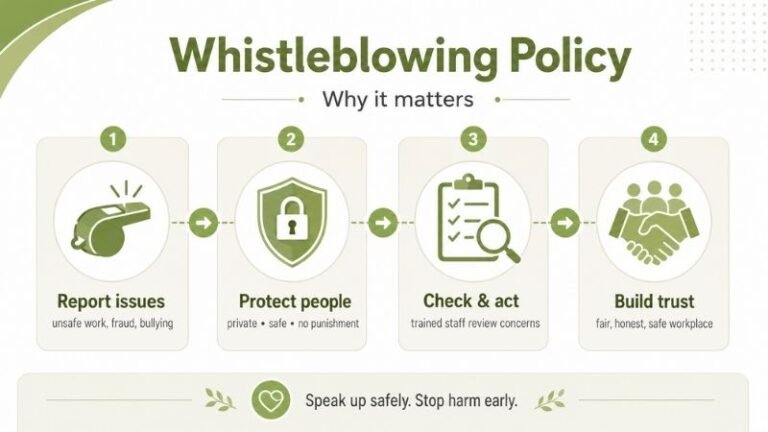
A whistleblowing policy is a simple system that helps workers report problems at work. People can speak up if they see unsafe work, fraud, bullying or illegal actions. It shows clear steps to report issues safely.
First, every organisation needs this policy. Problems can happen in any workplace. Without it, workers may stay quiet and problems can grow bigger. It also protects workers and the public. People should not feel scared or face punishment for speaking up. The policy keeps reports private and safe.
After someone reports a problem, trained staff check it and take action if needed. This helps fix issues quickly and stop harm. Most importantly, it builds trust at work. When workers feel safe, they share concerns easily. This makes the workplace fair, honest, and safe for everyone.
What Is Whistleblowing in Simple Terms?
Whistleblowing means speaking up when something is wrong at work. It happens when a worker reports serious problems like unsafe work, fraud, bullying or illegal actions. It is about doing the right thing, even if it feels difficult or scary.
For example, someone may report unsafe machines, stealing money, unsafe food handling, or serious bullying at work. These situations can harm people or break rules, so reporting them is important. A person should speak up when they see something that can hurt people, break the law, or create danger at work. It is better to report early than stay silent and let the problem grow.
A complaint is usually about small personal issues, like a rude comment or a small disagreement. Whistleblowing is different because it deals with serious problems that can affect many people, the company, or the public. So, whistleblowing is about safety, honesty and protecting people at work.
What Happens If a Whistleblower Is Wrong?
Strong whistleblowing laws in the UK help workers speak up when something is wrong at work. Under the Public Interest Disclosure Act 1998, a worker gets protection if they honestly believe the information is true and report it in the public interest. Even if the investigation finds no issue, they should not face unfair treatment.
However, this protection does not apply in every situation.
Key Outcomes for Wrong Whistleblowers:
- Honest belief: A worker stays protected if they report a concern in good faith, even if it turns out to be wrong.
- False reports: A person loses protection if they lie, make false claims on purpose, or try to harm others.
- Employer action: Employers can act when a report is clearly false or made to cause problems. This may include warnings or dismissal.
- Court decisions: If bad intent is proven in a tribunal, compensation can be reduced.
- Data issues: Using private information wrongly or breaking data rules can lead to legal action.
What Is Whistleblowing in Safeguarding?
Whistleblowing in safeguarding means speaking up when someone is not safe or is being harmed. It is about protecting children, adults and people who need extra care and support. First, whistleblowing plays a big role in keeping people safe. When a worker sees something wrong, they should report it straight away. Quick action can stop harm and protect lives.
For example, workers may notice abuse, neglect, or unsafe care. Abuse can be physical, emotional, or financial. Neglect means not giving proper care or support. These problems can happen in schools, hospitals, care homes, or other support services.
So, workers must speak up if they have concerns. They should not ignore warning signs. Reporting helps others take action and fix the problem. In schools, teachers and staff must protect children. In healthcare and social care, staff must protect patients and vulnerable adults. Everyone has a duty to keep people safe.
Most importantly, whistleblowing in safeguarding helps protect people who cannot protect themselves. It gives them safety, care and respect. It also helps build trust in services that people depend on every day.
What Is Whistleblowing in Care Settings?
Whistleblowing in care settings means speaking up when care is unsafe or not good. It helps protect people in care homes, nursing homes, and other care services. In care homes, staff may notice poor treatment or unsafe care. For example, residents may not get proper food, clean clothes, medicine, or respect. Sometimes, staff may also see neglect, rough handling, or unsafe living conditions. These problems can seriously harm people, so action is needed.
Care workers have a duty of care. This means they must always protect people’s safety, health and dignity. So, if they see something wrong, they should not ignore it or stay silent. Instead, they should report it to a manager, supervisor, or safeguarding lead.
Reporting concerns helps fix problems early. It also stops the same issues from happening again. Over time, it improves the quality of care. Most importantly, whistleblowing helps create a safe care environment. It builds trust between staff, service users, and families. People feel safer, respected and valued in their daily lives.
What Is Whistleblowing in Childcare?
Keeping children safe is the main aim of whistleblowing in childcare. It means speaking up when a child may be in danger in nurseries, schools, or childcare centres. Staff in childcare settings must act quickly when they see abuse, neglect, or unsafe behaviour. For example, a child may look scared, have unexplained injuries, poor hygiene, or sudden changes in behaviour. These signs should never be ignored. Quick action can stop serious harm.
People who work with children also have legal and moral duties. They must follow safeguarding rules and always put children first. Even small worries can be very important, so staff should always pay attention.
When childcare staff must report concerns:
- Signs of abuse or neglect
- A child looking scared, hurt, or quiet
- Unsafe or inappropriate behaviour from adults
- Breaking safety rules
- Anything that feels wrong or worrying
Not speaking up can put children in danger. So, reporting concerns is very important. A safe childcare setting helps children feel secure, happy and supported. It gives them a safe place to learn, grow, and enjoy their childhood.
How Does a Whistleblowing Policy Work?
A UK whistleblowing policy allows workers to report serious problems at work without fear of punishment. These problems can include fraud, unsafe working conditions, bullying, or illegal actions. The main law behind this protection is the Public Interest Disclosure Act 1998 (PIDA). It protects workers when they honestly believe the information is true and important for the public.
Who is protected:
This policy protects many types of workers. It includes full-time and part-time employees, trainees, agency workers and contractors. Protection starts from the first day of work, so even new staff are covered.
What can be reported:
Workers should report issues that affect safety, law, or public interest. This includes:
- Criminal activity or fraud
- Breaking legal rules or company law
- Unsafe or dangerous working conditions
- Risks to health and safety
- Harm to the environment
- Hiding any serious wrongdoing
These issues are not just personal complaints. They affect others, so they must be reported.
Internal reporting:
Workers should first report concerns inside their workplace. They can speak to a manager, supervisor, or a designated whistleblowing officer. Most companies have a clear process for this.
External reporting:
If internal reporting is not safe or if nothing changes, workers can report to outside bodies. These include regulators like the Health and Safety Executive or the Financial Conduct Authority.
Protection:
The law protects workers from unfair treatment. They should not face dismissal, bullying or loss of promotion because they spoke up. This gives people confidence to report problems.
Confidentiality:
Workers can ask to keep their identity private. In some cases, their name may need to be shared to properly investigate the issue. All reports are treated carefully and with respect.
What Are the Benefits of a Whistleblowing Policy?
A whistleblowing policy brings many good benefits to a workplace. It helps both workers and the organisation stay safe, fair, and honest. First of all, it helps stop problems early. When someone reports an issue quickly, the company can fix it before it becomes serious. As a result, it can prevent bigger risks later.
It also protects employees from harm. Workers feel safe to speak up without fear. This builds confidence and reduces stress at work. In fact, people work better when they feel safe. On top of that, it improves workplace culture. People trust each other more and feel comfortable sharing concerns. Moreover, it encourages open and honest communication. It builds accountability; also, everyone knows they must follow rules and take responsibility for their actions.
Key benefits:
- Stops serious problems early
- Helps fix issues before they grow
- Protects workers from harm and unfair treatment
- Makes employees feel safe to speak up
- Improves trust and teamwork at work
- Builds a positive and honest workplace culture
- Encourages people to follow rules properly
- Increases responsibility and accountability
Final Thoughts on Whistleblowing Policies
Whistleblowing means helping keep your workplace safe and fair. It gives a clear way to report problems without fear. Speaking up can feel difficult, but it is important. Honest reporting helps protect everyone at work and makes the team stronger and safer.
If you are nervous about making a mistake, check out the guide “What Happens if a Whistleblower is Wrong at Work or in Care Jobs“ on the Wise Campus website. It explains your rights and how legal protection works in simple steps.
Being informed helps you speak up with confidence. When everyone acts in good faith, it builds a culture of trust and keeps every employee safe.
FAQs
1. What is a whistleblower
A whistleblower is a person who reports wrongdoing at work. This can include fraud, unsafe work, abuse or illegal activity. They raise concerns to protect people and do the right thing.
2. If you’re treated unfairly after whistleblowing
You are legally protected in the UK. If you face bullying, dismissal or unfair treatment, you can report it. You may also take legal action for compensation.
3. What is the whistleblower policy in the UK?
The UK whistleblowing policy is based on the Public Interest Disclosure Act 1998 (PIDA). It protects workers who report serious concerns in good faith.
4. What are the three types of whistleblowing?
- Internal whistleblowing (within the organisation)
- External whistleblowing (to regulators or authorities)
- Anonymous whistleblowing (without sharing identity)
5. What is the purpose of a whistleblowing policy?
- It helps workers report concerns safely. It protects them from unfair treatment and helps fix problems early in the workplace.
6. Can I be sacked for whistleblowing?
No, you cannot be sacked for genuine whistleblowing. UK law protects you if you report concerns honestly and in the public interest.
7. What is an example of a whistleblower policy?
A company policy that allows staff to report wrongdoing to a manager or hotline ensures confidentiality and protects them from punishment.
8. What proof do you need as a whistleblower?
- To report a concern, you need honest belief and reasonable evidence, like emails, photos, or documents.

Whistleblower Training
Course Description :
- Certificate: Yes(Free)
- Accreditation: CPD Accredited
- Access: Lifetime