No products in the cart.
When you go to your job, you should always feel protected from harm. Because of this, it is important to understand what is riddor mean for your daily safety. The Health and Safety Executive’s (HSE) most recent statistics, about 680,000 workers sustained a non-fatal injury in 2024/25. This special law ensures that your boss tells the government when a serious accident happens at work. By doing this, the workplace becomes a much better environment for everyone to earn a living.
In addition, legal duties exist to keep everyone safe while they are working. While the name sounds a bit formal, the idea behind it is actually very friendly. It is simply about telling the right people when something goes wrong so it does not happen again. Consequently, this system helps keep you and your loved one out of danger every single day. Furthermore, this helpful article answers your big questions about staying safe and protected at your job.
What Is the Basic Definition of Workplace Safety Reporting?
In the UK, reporting is the primary way the government tracks how safe a job really is. Instead of just fixing a broken floor and moving on, bosses must create an official record of what happened. This process is essential because it helps the Health and Safety Executive (HSE) identify patterns in different industries. For example, if many people are slipping in kitchens, the safety experts can then create better rules for non-slip shoes to help everyone.
Furthermore, reporting acts as a legal link between your workplace and the national safety authorities. When an accident is reported, it creates a history that helps everyone learn from mistakes. This means your experience can actually help protect thousands of other people who do the same job. Therefore, reporting is not just about paperwork. Instead, it is a powerful tool that saves lives and stops more people from getting hurt across the country.
What Is RIDDOR Mean in Simple Terms for UK Residents?
In the UK, RIDDOR stands for the Reporting of Injuries, Diseases and Dangerous Occurrences Regulations. To make it easier to understand, here is how it works:
- A Safety Reporting Law: First and foremost, RIDDOR is a set of rules that tells bosses they must report serious workplace accidents to the government.
- Tracking Hazards: Furthermore, it covers more than just injuries; it also includes reporting work-related illnesses and “near-misses” where someone could have been badly hurt.
- The Goal of Prevention: The government can therefore learn how to make workplaces safer for everyone by reporting these incidents to the Health and Safety Executive (HSE).
- Legal Responsibility: Therefore, it is the job of the employer or the person in charge of the building to make sure these reports are sent off correctly.
- Keeping Workers Safe: Ultimately, the main reason for RIDDOR is to stop the same accidents from happening again, ensuring that every worker in the UK can do their job without being in danger.
Who Is Responsible for Making These Safety Reports?
Under UK law, specific people have the special job of telling the government when a serious accident happens. These people are officially called Responsible Persons, and it is their legal duty to make sure a report is sent.
- The Employer: Usually, the boss or company owner must report if a worker gets hurt.
- The Self-Employed: People who work for themselves must report their own serious accidents or illnesses.
- Premises Managers: Those in charge of a building report accidents that happen to visitors there.
- School Leaders: In schools, the headteacher or a designated safety officer handles the reporting.
- Gas Engineers: Special workers report dangerous gas leaks or faulty pipes to keep homes safe.
Because these are strict rules, the government can check if a workplace is following safety laws. Therefore, having one clear person in charge ensures that no accident is ignored or forgotten. Ultimately, this teamwork between bosses and the government helps keep every workplace and school in the UK much safer for everyone.
What Injuries Should You Tell the Government?
Some injuries are more serious than others. The law calls these ‘specified injuries’. Here are the main ones that your boss must report:
- Serious Fractures: This means any broken bone except for your fingers or toes.
- Crush Injuries: This happens if something very heavy falls on your arm or leg and hurts the inside.
- Loss of Sight: This includes any accident that causes damage to a worker’s eyes.
- Burns: A report is needed if a burn covers a large part of the body or causes organ damage.
What Is RIDDOR Mean for Your Daily Work Routine?
For your daily work routine, RIDDOR acts like a silent safety net that ensures your workplace stays as safe as possible. While you may not have to fill out the official forms yourself, the law means your boss must constantly check for hazards like slippery floors, broken ladders, or dangerous machinery. Because these rules exist, your company is more likely to give you the right safety gear and training to prevent accidents before they even happen.
If you do see a “near-miss” or a small accident, reporting it to your supervisor helps them follow these national regulations. This communication is crucial because it allows the “Responsible Person” to fix a problem before it causes a serious injury to you or a teammate. Ultimately, RIDDOR makes your daily routine better by turning every workplace into an environment where safety is the top priority for everyone.
What Does the Law Say About Reporting Occupational Diseases?
Some illnesses come from doing the same job for a long time. These are also part of the safety rules.
- Carpal Tunnel Syndrome: A form of pain in the wrist from doing the same movement many times.
- Occupational Asthma: These are breathing problems caused by inhaling dust or fumes at work.
- Severe Cramp: This refers to bad pain in the hand from constant typing or gripping tools.
- Skin Diseases: It involves conditions such as Dermatitis, which can come from cleaning products.
Because these health problems are linked to certain tasks, they must be officially reported to the government. This reporting helps experts understand which jobs are the most dangerous for our bodies over time. Consequently, companies can change how work is done, such as providing better gloves or masks to keep everyone healthy. By tracking these illnesses, the UK can ensure that working for a long time does not lead to permanent health issues for employees.
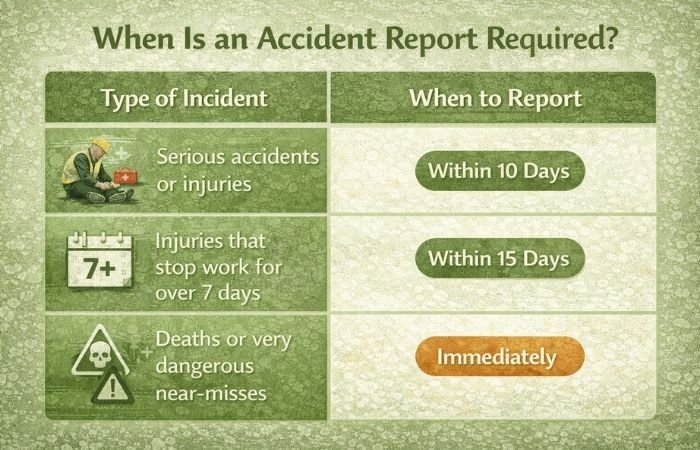
When Should You Report an Accident?
The law has different schedules for different types of accidents. This table shows how fast a report must be made.
Why Should International Workers Care About These Rules?
International workers should care about these rules known as RIDDOR because they guarantee that every person working in the UK has the same right to a safe environment. No matter where you are from, these laws exist to protect your health and ensure your employer treats your safety as a top priority.
- Equal Safety Rights: These rules apply to everyone working in the UK, ensuring international workers receive the same protection as local employees.
- Fair Treatment: Furthermore, RIDDOR makes sure that if you are injured or become ill because of your job, the incident is officially recorded and taken seriously.
- Language Support: Consequently, employers must provide safety information in a way you can understand, such as using simple English or visual signs.
- Preventing Future Harm: Therefore, by reporting accidents, you help the government find and fix dangerous habits in industries that hire many international staff.
- Legal Protection: Ultimately, knowing these rules helps you stand up for your rights and ensures you are not forced to work in conditions that could hurt you.
These regulations act as a global standard for safety, making sure that your experience working in the UK is productive and, most importantly, free from danger. Finally, this teamwork between you, your boss, and the government is what keeps the UK a world leader in workplace safety for people from every corner of the globe.
Where Can You Find the Official Forms to Report an Accident?
If an accident happens, there are a few places to find help. Your workplace should have these ready so that everyone knows what to do in an emergency.
- The Health and Safety Executive (HSE) website: This online portal has all the forms needed for different types of reports. Furthermore, it is the fastest way for a boss to send information directly to the government.
- The Incident Contact Centre: There is a phone number for the Incident Contact Centre for very bad accidents. In addition, this service is specifically for reporting serious or major incidents over the telephone.
- Workplace Accident Book: Every business should keep a Workplace Accident Book on the site. Consequently, even small injuries that do not go to the government are still written down locally to keep a clear history.
Knowing where to find these forms helps you act fast. As a result, you do not waste any time when a report is needed.
How Can Wise Campus Help You Learn More About Safety?
Wise Campus offers easy courses that explain all these UK laws. We want to help you feel confident at your job. Our lessons are perfect for people who are new to the country.
- Study at your own pace from your home.
- Get a certificate to show your boss you know the rules.
- Learn in simple English that is very easy to follow.
Final Thoughts
In conclusion, understanding what is riddor mean helps anyone working in the UK, from students to international professionals, stay informed. These regulations ensure that every workplace stays safe and that no accident is ignored. Furthermore, working with your boss and following these easy steps helps stop future accidents. Ultimately, these laws exist to protect your health and give you peace of mind every single day.
Frequently Asked Questions (FAQs)
1. What is RIDDOR in simple terms?
- RIDDOR is a UK law requiring employers to report serious workplace accidents, diseases, and dangerous near-misses to the Health and Safety Executive (HSE).
2. What 5 things must be reported to RIDDOR?
- You must report workplace deaths, specified serious injuries, over-seven-day injuries, occupational diseases (like asthma), and “dangerous occurrences” that could have caused significant harm.
3. What is the RIDDOR 3-day rule?
- If an accident stops someone from doing their normal work for over three days, it must be recorded locally, though it only becomes reportable after seven days.
4. What happens after a RIDDOR report?
- The HSE reviews the report to decide if an investigation is needed. They use the data to identify safety trends and prevent future workplace accidents.
5. What are the 4 categories of injuries?
- The primary categories include fatal injuries, specified injuries (like fractures), over-seven-day incapacitation injuries, and injuries to non-workers (members of the public) requiring hospital treatment.
6. Who is responsible for RIDDOR reporting?
- The “Responsible Person,” usually the employer, the self-employed, or the person in control of the premises, is legally required to submit the official report.
7. What are the 8 types of reportable incidents?
- These include fatalities, specified injuries, over-seven-day injuries, injuries to non-workers, occupational diseases, dangerous occurrences, gas incidents, and certain instances of workplace violence.
8. What are the four things you should avoid immediately after injury?
- You should generally avoid moving the injured person, ignoring the incident, failing to seek medical help, or altering the accident scene before it is documented.
9. How do I know if an accident has been reported to RIDDOR?
- You can check the company’s internal accident book. Employers should also provide a copy of the HSE confirmation form or a reference number upon request.

RIDDOR Training
Course Description :
- Certificate: Yes(Free)
- Accreditation: CPD Accredited
- Access: Lifetime