No products in the cart.
RIDDOR, known as the Reporting of Injuries, Diseases and Dangerous Occurrences Regulations, defines what is RIDDOR reportable under UK workplace health and safety law. This significant health and safety rule mandates that employers, independent contractors, and individuals in charge of a workplace notify the Health and Safety Executive (HSE) of specific major work-related accidents. These reportable incidents include deaths, major injuries, injuries that keep a worker off work for more than seven days, occupational diseases, and dangerous occurrences or near-miss accidents. These rules help the government track workplace accidents and improve safety standards in all industries, including construction, factories, and offices.
In this blog, we explain the RIDDOR rules simply and clearly so that new workers, migrants, and beginners can understand their rights. Our goal is to help you stay safe, follow UK workplace laws, and know what to do if an accident happens at work.
What Does RIDDOR Stand For?
The letters in RIDDOR stand for Reporting of Injuries, Diseases and Dangerous Occurrences Regulations. This UK health and safety law explains which types of workplace incidents must be reported to the authorities. These rules help the government monitor injuries, illnesses, and dangerous incidents that happen at work across the UK.
RIDDOR was created to make every workplace safer for employees, employers, and visitors. Under this law, companies must report serious accidents, major injuries, work-related diseases, and dangerous occurrences to the Health and Safety Executive (HSE). When these incidents are reported, safety experts can review the data and improve workplace rules to prevent future accidents.
Because of this system, workers in the UK are better protected, and employers are required to follow strict health and safety standards.
Why Does the Government Collect RIDDOR Reports?
The Health and Safety Executive (HSE) reviews every report submitted under RIDDOR to understand how workplace accidents happen in the UK. These reports help the government identify dangerous jobs, common injuries, and unsafe working conditions in different industries such as construction, factories, and warehouses.
For example, if many reports show workers falling from ladders or scaffolding, the HSE can create stricter safety rules to prevent future accidents. By collecting this information, the government improves workplace safety standards and makes sure employers follow health and safety laws.
As a result, workers are better protected, and companies must take safety seriously every day to avoid accidents and legal action.
What is RIDDOR Reportable in the UK Workplace?
Many people feel confused about which accidents they should tell the government about. However, the law provides a very clear list of things to report. Not every small cut or tiny bruise needs an official government form. Instead, the rules focus on serious injuries that change a person’s life. First, the accident must happen because of the work you do. Next, the accident must fall into a specific category of serious harm.
The main groups of accidents
The law divides reportable events into a few main groups for clarity. Below is a simple table to help you remember these different groups.
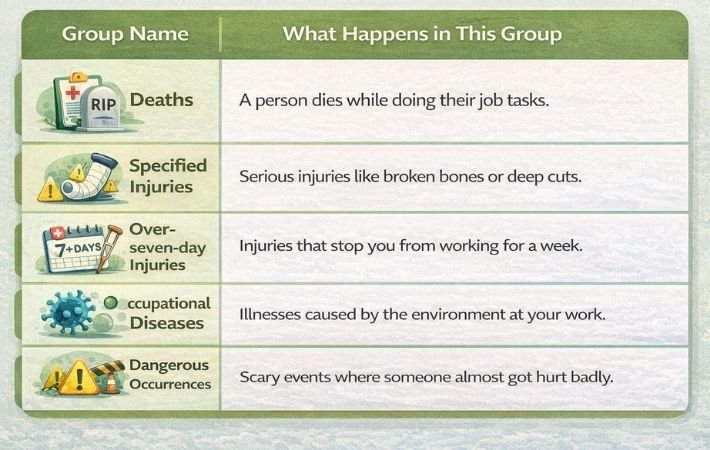
In addition to these, there are special rules for gas-related accidents. If you work with boilers or pipes, you must learn these rules. Furthermore, the “responsible person” at your job usually handles the actual paperwork.
Who Is Responsible for Making the Report?
In most cases, you do not need to fill out the forms yourself. Instead, your employer handles the official paperwork for the government authorities. Here are the key facts about who manages these important safety reports:
- Usually, your manager or the business owner must send the report.
- The UK law calls this individual the “responsible person” at your job.
- First, you must tell your boss immediately if you get hurt today.
- Afterwards, you should write the accident details in the company accident book.
- Then, your boss will decide if the injury is a reportable one.
- Because of this, you do not usually need to contact the government.
- However, self-employed workers must report their own serious workplace accidents themselves.
Why Does Reporting Help Your Workplace Stay Safe?
When a boss reports an accident, it shows they follow the law. Consequently, this action helps the company stay honest and care for all staff. Additionally, reporting allows the government to offer helpful advice to the business. Furthermore, an inspector might visit to check the machines and the floors. These experts want to ensure that no one else gets hurt later. Therefore, reporting is a very positive step for a healthy workplace today.
What Are the Rules About What is RIDDOR Reportable in the UK?
Knowing the specific injuries on the list helps you stay informed at work. Some injuries are very obvious and easy for anyone to identify quickly. For instance, a broken arm is always a very serious matter at work. Similarly, losing a finger while using a saw is a reportable event. The law calls these “specified injuries” because the list is very exact. Below, we describe these injuries so you can recognise them easily.
Serious Injuries You Must Report
- Any bone fracture or break, except for fingers and toes.
- Amputation, which means a person loses a whole body part.
- Any injury that causes a person to lose their sight.
- Serious burns that cover a large part of the skin.
- injuries from crushing that harm internal organs like the lungs.
- Losing consciousness because of a hit to the head.
- Injuries from working in small, tight spaces with no air.
- Scalping, where the skin pulls away from the head area.
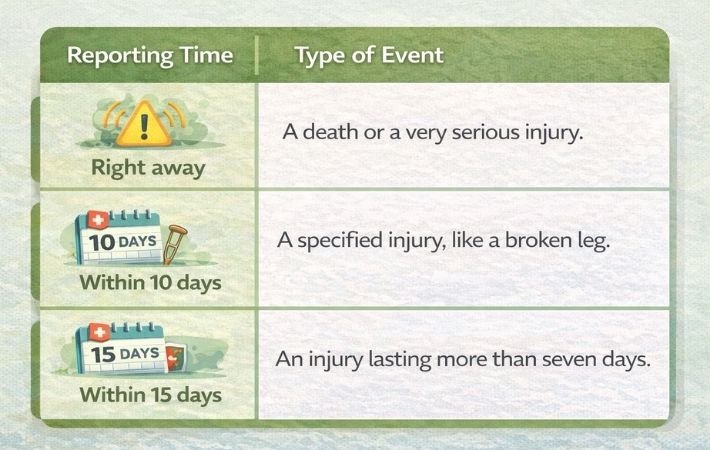
If any of these happen, the boss must act very quickly. They must send a report to the HSE within ten days. Because these are serious, the government needs to know about them fast. Consequently, the company might need to stop work while they investigate things.
The Seven-Day Injury Rule
Sometimes, an injury seems small at first but lasts a long time. If you cannot work for over seven days, it is reportable. You do not count the actual day the accident happened. For example, suppose you hurt your back on a busy Monday morning. If you still cannot work the following Tuesday, the boss must report it. In this situation, the manager has fifteen days to send the form. This rule ensures that the government tracks injuries that keep people home.
Dangerous Occurrences or Near Misses
We also have to talk about things that almost caused a disaster. These are called “dangerous occurrences” by the UK safety officials. Imagine a large piece of equipment falls but misses the workers. Even though no one felt pain, it is still a reportable event. This is because the situation was very dangerous for the whole team. For example, a crane collapsing is a very famous type of occurrence. Similarly, an explosion or a large fire must always be reported.
Occupational Diseases and Illnesses
Work can sometimes make you sick over a long period of time. These illnesses are called occupational diseases in the official safety handbook. If a doctor says your job caused the sickness, tell your boss. For instance, some people get asthma from breathing in bad wood dust. Others might get carpal tunnel syndrome from using vibrating tools daily. Because these are work-related, the boss must report them to the HSE. This helps the government improve workplace safety regulations for all future employees.
Gas Safety Incidents
Gas is very common in UK homes and many business buildings. Therefore, the government has very strict rules about gas-related accidents and leaks. If someone gets hurt by a gas leak, it is reportable. Also, if a gas worker finds a dangerous boiler, they must report it. This protects people from fires or dangerous carbon monoxide poisoning at work. Consequently, the UK remains one of the safest places for gas energy.
How Can You Stay Safe at Work Every Day?
You can help keep your workplace safe by following a few simple steps. By staying alert, you protect yourself and all your colleagues from harm. Here is how you can help every day:
- First, always wear your safety gear, like helmets or yellow vests.
- Next, look for warning signs on the walls or the floor.
- If you see something dangerous, tell your supervisor right away today.
- Because you are alert, you might prevent a very serious accident.
- Furthermore, always listen carefully during your safety training at the start.
- Finally, ask questions if you do not understand a specific safety rule.
What the HSE Does with Reports?
The HSE collects thousands of reports from across the whole country. They put all this information into a large computer database. Afterwards, they use the data to see which industries are dangerous. For example, they might notice that construction sites have many falls. Then, they can talk to construction bosses about better safety nets. This process makes the UK a world leader in worker protection.
What Are Your Rights as a Worker?
You have strong protections under the law while you work in Britain. Everyone will feel safe and at ease during their shifts thanks to these regulations.
- First, every worker in the UK has the legal right to be safe.
- Moreover, your boss cannot punish you for reporting a serious safety problem.
- Therefore, you should always speak up if you feel unsafe at work.
- Additionally, being honest helps every person stay healthy and keep their jobs.
What Should You Know as a New Worker?
Starting a new job in a new country is a very exciting journey. However, you might find the safety rules a bit confusing at first. Therefore, do not be afraid to ask your boss many simple questions. Ask them to show you the location of the accident book today. Because you know these things, you will feel much more confident. Most importantly, remember that your personal health is the most important thing.
- Furthermore, do not believe the myth that every small trip is reportable.
- In reality, only serious injuries or long absences count for official reports.
- Additionally, some people think only the big boss can report an accident.
- Actually, a safety officer or manager can help with the paperwork, too.
- Finally, reporting a problem will not make the whole company close down.
How the Reporting Process Works?
Most managers use the official HSE website to send their reports. They fill out an online form with all the accident details. The form asks for the date, time, and location of the event. It also asks what happened and what the person’s injuries were. If the accident is very serious, the boss can call. This allows the safety experts to advise over the phone. Consequently, the company can fix the problem as soon as possible.
Final Thoughts
We hope this guide helps you learn about UK safety rules. Staying safe at work is a team effort for everyone today. Therefore, you should always know what is RIDDOR reportable during your shifts. Consequently, you can help your boss keep the whole office safe. Furthermore, always report accidents to your manager as soon as possible. Finally, together we can make every workplace in the UK safe. Most importantly, your health is the top priority for every worker.
Frequently Asked Questions (FAQs)
1. What must be reported under RIDDOR?
- Serious workplace injuries, deaths, dangerous incidents, and work-related diseases must be reported under RIDDOR.
2. What is the meaning of RIDDOR?
- RIDDOR means Reporting of Injuries, Diseases and Dangerous Occurrences Regulations, which require employers to report serious workplace incidents.
3. What are the 8 types of reportable incidents?
- The main reportable incidents include death, major injuries, over-7-day injuries, work diseases, dangerous occurrences, gas incidents, injuries to non-workers, and occupational diseases.
4. How soon must a RIDDOR be reported?
- A RIDDOR report should be made immediately for serious incidents and within 10 days for most other reportable injuries.
5. Is RIDDOR for staff only?
- No, RIDDOR applies to employees, self-employed workers, and even members of the public affected by workplace accidents.
6. What is exempt from RIDDOR?
- Minor injuries, small cuts, and accidents that do not cause serious harm or time off work are usually exempt from RIDDOR.
7. What happens if you don’t report a RIDDOR?
- Failing to report a RIDDOR incident can lead to fines, legal action, or penalties from health and safety authorities.

RIDDOR Training
Course Description :
- Certificate: Yes(Free)
- Accreditation: CPD Accredited
- Access: Lifetime