

Working in construction, maintenance, or cleaning often involves risks that people may not notice at first. One of the most important safety concepts in these jobs is working at height. So, understanding safety rules is very important for every worker. What is the definition of working at height is a common question in workplace safety training. It means any task where a person could fall and get injured, no matter how high or low they are. It is not about a fixed height. Instead, it focuses on the risk of falling and possible harm.
In this guide, we will explain it in simple terms so you can clearly understand how it applies in real work situations.
Many people think working at height only means very tall places. That is not true. It can happen in many normal work situations.
Working at height means any situation where a person can fall and get injured. It is not about how high someone is. It is about the risk of falling and getting hurt.
Have you ever stood on a ladder and felt that small wobble? That moment already connects to what is the definition of working at height. Working at height means any job where a person can fall and get injured. It does not matter if the place looks high or low. The real focus stays on the risk of falling, not the exact height.
In simple everyday English, it means any task where a fall can cause harm. It could be working on a roof, using a ladder or even standing near an open edge. So, the danger often hides in plain sight.
This definition matters because it changes how people think about safety. First of all, it helps workers notice risks early. Then, it pushes them to take small but important safety steps. As a result, many accidents never happen. Most importantly, when people truly understand this idea, they do not take work lightly. Instead, they stay alert, careful, and more responsible at every step.
Falling from a height can cause serious injury. It can break bones or cause long-term damage. It can happen in a second. Unsafe equipment or unsafe surfaces increase the risk. A weak ladder or unstable platform can slip or break. That can lead to a serious accident very quickly. Poor training or no supervision also makes the situation worse. Workers may not know the right safety steps. Some people also rush and make mistakes when they feel pressure.
Bad weather conditions can create more danger during outdoor work. Strong wind can push a person off balance. Also, rain makes surfaces very slippery and hard to walk on. Working at height is always risky. One small mistake can change everything in seconds. Therefore, being careful, staying focused and following safety steps help save lives every day.
Employers must take full responsibility for worker safety. They must plan the job before any work starts. Safety must stay the top priority in every task. Risk assessments must happen before work begins. This means checking the area for dangers. It also helps choose safe methods to reduce risk.
Safe equipment must always be given and used. Also, workers need proper training before starting work. They must know how to use equipment safely at height. Therefore, health and safety rules must always be followed. These rules protect workers from harm. They also help stop accidents and legal problems.
Clear planning makes work safe and easy. Good supervision helps workers do the right thing. Regular checks keep equipment safe and working well. Strong safety habits protect lives every day.
Working at height needs full attention. A small mistake can lead to a serious fall. Safety habits make a big difference.
Different tools help workers stay safe at height. Each tool has a clear safety purpose.
Good equipment builds strong safety. It helps workers feel safe and confident at height.
You might think working at height only means scaling massive skyscrapers, but it actually happens in many everyday jobs! Honestly, it is easy to overlook the risks until you are staring down from a ladder.
Construction sites are the most obvious spots. Workers constantly navigate scaffolding and steep roofs where one tiny slip can change everything. Then you have roof repairs. Imagine balancing on a slick, slanted surface during a windy afternoon. It feels nerve-racking just thinking about it!
Even warehouses carry risks. Employees climb ladders daily to grab heavy boxes from high shelves. We also see brave window cleaners dangling from platforms and utility workers perched on top of towering poles to keep our internet running. These pros face gravity every single shift. This proves that height work happens everywhere, from the local grocery store to the tallest tower in town.
Safety gear is about more than just boring rules. It ensures everyone gets home safely to their families. These systems give workers the confidence to do their jobs without constant fear.
First, we have guardrails. Think of these as sturdy fences that keep you far away from a nasty drop. If things go wrong, safety nets act like a giant, soft catcher’s mitt below the workspace.
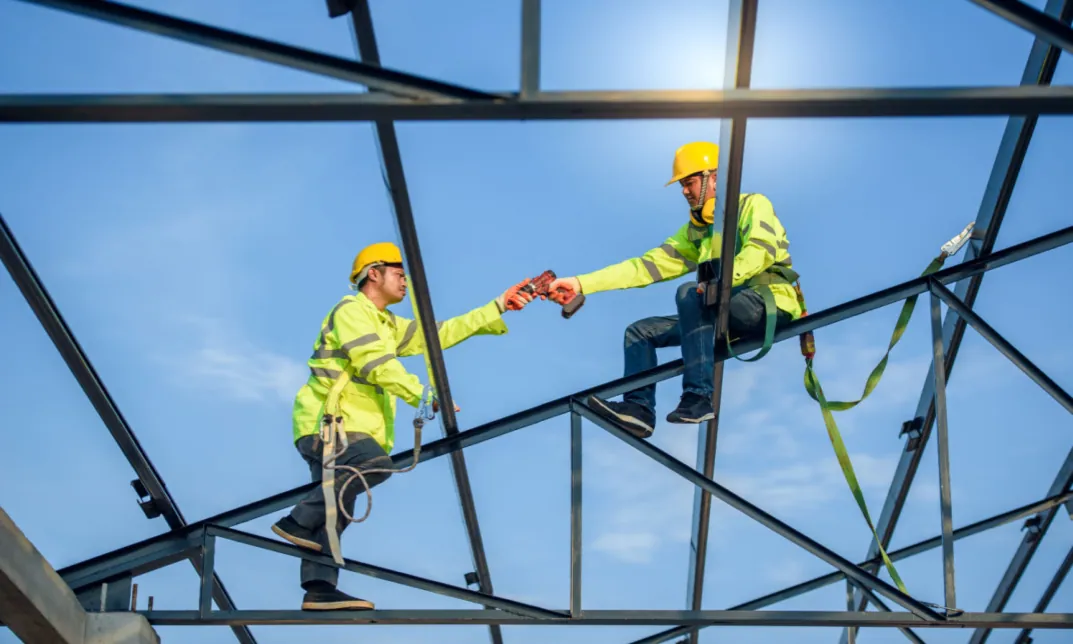
For high-stakes tasks, workers wear personal fall arrest systems. These harnesses and ropes literally grab you mid-air if you stumble! We also use work restraints. These act like a leash to stop you from reaching the dangerous edge in the first place. Everything connects to anchor points. These are super-strong bolts in the building that hold everything together. When these tools work as a team, they turn a high-risk environment into a much safer place to work.
Safety at height depends on everyone. It needs teamwork and care from all sides.
Strong teamwork makes work safer. When everyone takes responsibility, accidents go down and safety improves.
Working at height is part of many everyday jobs, but the risk is always real. It is not about how high you stand, but how easily a fall can happen. That is why safety should never be ignored. Small actions like wearing proper gear, checking equipment and staying focused can make a big difference. Everyone must take responsibility, from managers to workers on site. When people follow safety rules and support each other, accidents drop quickly. In the end, a careful mind and good habits at work help save lives and keep everyone safe every single day.
In the UK, working at height means any job where a person can fall and get injured. It includes working on ladders, roofs, platforms or near open edges or holes, even at low heights.
Working at height is any work where a fall could cause injury, no matter how high or low the person is.
Plan the work, use safe equipment, and avoid or reduce fall risks as much as possible.
Yes, but working at height is not only above 2 meters. Any height with fall risk counts.
There is no official 2.5 metre rule in UK law. Safety depends on risk, not a fixed height.
There is no safe maximum height without protection. Safety measures are needed whenever there is a fall risk.
There is no set distance. It is defined by the risk of falling and potential injury.
You must tie off whenever there is a risk of falling, even at low heights if the danger is present.

The difference between legislation and policy is mainly legal force. Legislation is law and can create binding duties. On the …

Are you looking to increase your earning potential in 2026? With the job market continuously evolving, mastering high-income skills is …

Have you ever wondered why security clearances can take so long to process? You usually need a security clearance if …

©Wise Campus. All rights reserved.