No products in the cart.
The NSPCC states that sexual abuse affects 1 in 20 children in the UK. Research also shows that most child abuse cases are never reported to authorities. As a result, the real number is likely much higher. This shows how silence can put children at risk. That is why whistleblowing in childcare becomes very important. But what is whistleblowing in childcare? It means speaking up when something is wrong in a childcare setting. This can happen in nurseries, schools, or early years centres. It may involve unsafe care, poor practice, or even illegal behaviour.
In simple words, whistleblowing in childcare means raising concerns to protect children. It is not about blaming someone. It is about keeping children safe and making sure everyone follows the right rules.
Now let’s dive in and explore what whistleblowing in childcare really means and how it helps protect children.
What Is Whistleblowing in Childcare? (Clear Definition Explained)
Whistleblowing in childcare means reporting issues when care or safety standards are not being followed for children. This can happen in a nursery, school, or early years centre. It may include unsafe care, poor practice, or anything that puts children at risk or breaks the law. This is the simple definition of whistleblowing in childcare.
In childcare, people also call this a public interest disclosure. It means you raise concerns to protect children, not for personal gain. In simple words, you speak up when a child may be in danger. This is the real meaning of childcare whistleblowing in everyday work.
Now the question is, who can raise a concern in childcare? Anyone who works with children can speak up. This includes staff, volunteers, trainees, and even former workers. So, if someone sees a serious problem, they should not stay silent.
When we talk about wrongdoing, it can take different forms. It may include unsafe care, poor supervision, neglect, signs of harm or breaking safeguarding rules. It can also include hiding problems instead of reporting them.
Whistleblowing is not the same as a personal complaint. Whistleblowing focuses on child safety and protecting others. A personal grievance deals with work issues like conflict, unfair treatment or workplace problems.
What Counts as Whistleblowing in Childcare Settings?
If something puts a child in danger, you must speak up. That is what issues require whistleblowing in childcare. It is not about small daily mistakes. It is about serious problems that can harm children.
Now let’s break it down with clear examples of whistleblowing in childcare:
- Safeguarding failures: A child shows signs of harm, but no one takes action. Or staff leave children without proper care or watch.
- Health and safety problems: Broken toys, unsafe rooms or poor cleaning that can lead to injury or sickness.
- Illegal or wrong behaviour: A staff member uses harsh punishment or hides a serious incident instead of reporting it.
- Data privacy issues: Someone shares a child’s personal details without permission.
- Bad staff behaviour: Shouting at children, threatening them, or acting in a way that makes them feel unsafe.
Now let’s look at a real-life example. A nursery worker sees a colleague leave young children alone in a room. This feels unsafe. It also puts children at risk. So, the worker reports it to the manager straight away. The manager checks the issue and takes action.
What Does NOT Count as Whistleblowing?
Not every complaint at work counts as whistleblowing. Many people mix this up. The idea of “whistleblowing vs grievance childcare” helps you understand the difference in a better way.
Whistleblowing always links to child safety or serious risk. It focuses on harm, danger or illegal actions. But a grievance is fully different. It stays around personal or work problems, not child safety.
Here are common examples that do NOT count as whistleblowing:
- Personal grievances: Bullying between staff, issues with a manager or pay-related problems.
- Workplace issues: Disagreements about shifts, breaks, workload, or job duties.
- Team issues: Small arguments or poor communication at work.
These issues still matter in the workplace. However, they do not involve child safety. So, they follow normal complaint or HR procedures, not whistleblowing routes.
Now let’s focus on the key difference between whistleblowing and grievance:
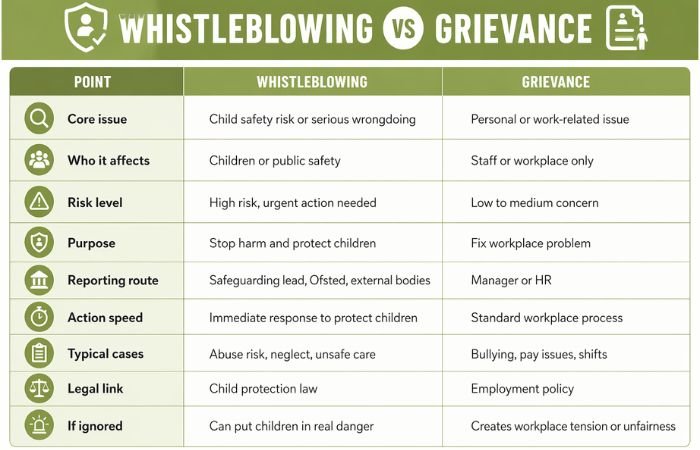
So always take a moment and think before you report. Does it affect a child’s safety or wellbeing? If yes, it is whistleblowing. If not, it is a grievance.
Why Is Whistleblowing Important in Childcare?
The importance of whistleblowing in childcare is very clear. To understand it better, let’s look at it in more detail:
- Protecting vulnerable children- It helps protect children who cannot always speak for themselves. Staff can spot early signs of risk. Then they can act before harm happens.
- Preventing abuse and neglect- This action brings hidden issues into the open. Once people know, they can respond quickly. This helps stop abuse or neglect from getting worse.
- Maintaining trust in childcare services- Parents feel more relaxed when they see open and honest practice. They know concerns will not be ignored. This builds trust in nurseries and schools.
- Improving workplace safety- This process highlights weak systems or poor habits. Staff can fix these issues early. The setting becomes safer each day.
- Staff wellbeing- A clear reporting culture helps staff feel safe to speak. They do not carry fear or stress. This supports a healthier workplace.
- Organisational reputation- Strong whistleblowing shows care and responsibility. It shows the setting takes safety seriously. This helps build a trusted name over time.
Overall, whistleblowing in childcare is not just about raising concerns. This approach builds a safe and honest place. In that kind of setting, children feel secure and staff feel respected.
What Are the Legal Requirements for Whistleblowing in Childcare? (UK Laws & EYFS 2025)
The whistleblowing law childcare UK gives clear rules to protect children and workers. It also helps staff speak up when they see serious problems like abuse, neglect or unsafe care.
To start with, the Public Interest Disclosure Act 1998 protects workers who report concerns in the right way. It means staff can speak up without fear of losing their job or getting unfair treatment. This also links with the Employment Rights Act 1996, which makes sure workers get fair treatment at work and protects their basic rights.
Now let’s look at EYFS whistleblowing requirements 2025. The Early Years Foundation Stage sets clear rules for all nurseries and childcare settings. Every setting must have a simple whistleblowing policy. Staff must know who to talk to and how to report a concern. Managers must also explain the process in a clear way and give basic training so staff feel ready to speak up.
On top of that, the law gives strong protection. Staff must not face punishment for reporting a real concern. This includes losing their job, getting fewer hours, or being treated badly at work. If this happens, the law allows them to take action.
How Does Whistleblowing Work in Childcare? (Step-by-Step Process)
The whistleblowing procedure in childcare gives staff a clear way to act when something does not feel right. Here are the key steps to follow:
Step 1: Spot the concern
To start, a staff member notices something unsafe or strange. It could be poor care, unsafe behaviour or signs that a child may be at risk. At this point, quick action is important.
Step 2: Write down the facts
After that, the staff member notes clear and simple details. They include dates, times, what happened and who was there. These facts help others understand the concern better.
Step 3: Report inside the setting
Then the staff member follows the process for reporting safeguarding concerns in childcare. They speak to the manager or the Designated Safeguarding Lead (DSL). They share all the facts, so the concern gets checked quickly.
Step 4: Report outside if needed
If nothing changes, the staff member will not ignore the issue. They report it outside the setting. This may include safeguarding services or official organisations.
Anonymous or confidential reporting
Staff can choose how to report. Anonymous reporting means no name is shared. Confidential reporting means only trusted people know who reported it. Both ways still make sure the concern is taken seriously.
Who Should You Report Concerns To? (Internal vs External Channels)
Staff need to know exactly who to speak to and act fast when something feels wrong in childcare. The whistleblowing contacts the childcare UK system gives clear steps so staff can raise concerns in the right way and help keep children safe.
To start with, staff should report inside the setting. They can speak to the manager, the safeguarding lead, or HR. These people must listen to concerns. They must also check the issue and take action quickly.
However, some problems do not get solved within the setting. At that point, staff should take it further. They can report childcare concerns to Ofsted, NSPCC, or contact local authorities. The NSPCC supports child safety and deals with serious concerns. Ofsted checks standards in childcare settings. In serious cases, the police may also get involved.
At this stage, moving outside the setting becomes necessary. Staff should escalate when no action happens after reporting inside. They should also escalate if they feel unsafe or fear punishment. This step helps make sure someone listens and acts.
In the end, both internal and external channels work together. They make sure concerns never get ignored. They also give staff the support to speak up without fear.
What Happens After You Blow the Whistle? (Investigation Process)
When someone raises a concern, the whistleblowing investigation childcare process starts straight away. The manager or safeguarding lead checks the report first. They go through the facts and see how serious the issue is. This helps them decide what to do next.
After that, they begin an investigation. Sometimes the setting deals with it inside. Other times, they bring in outside bodies like Ofsted, the NSPCC, or local authorities. This depends on how serious the concern is. During this stage, they keep details private. Only the right people see the information.
Then comes the result. The setting may take action to fix the problem. They may also change rules or policies so the same issue does not happen again. In serious cases, they send the matter to outside authorities for further action.
What Protection Do Whistleblowers Have?
Whistleblowers in childcare get strong protection under UK law. The main point is simple. If someone speaks up to protect children, the law protects them too. The whistleblower protection childcare rules make this clear for all staff.
To start with, the law protects staff from unfair treatment at work. This includes:
- Dismissal – no one can lose their job just for raising a concern in the right way
- Harassment – no one should face bullying, threats, or pressure at work
- Victimisation – no one should be treated badly for speaking up
These rules remove fear and help staff speak up with confidence.
On top of that, staff have legal rights if things go wrong. They can go to an employment tribunal. This is a legal process where a case is checked in a fair way. It helps staff challenge unfair treatment after whistleblowing.
What Challenges Do Staff Face When Whistleblowing?
Here are the common barriers staff face in real situations:
- Fear of retaliation – Staff often worry about their job. They may fear losing hours, getting pressure at work, or being treated badly after they report a concern.
- Workplace culture issues – In some places, staff do not feel listened to. They may think nothing will change, so they stay quiet.
- Lack of awareness or training – Some staff do not fully understand what to do. Without proper training, they feel unsure about the right steps.
- Concern about anonymity – Many staff worry that others will know they reported it. This fear can stop them from speaking up, even in serious cases.
In the end, these barriers to whistleblowing in childcare point to one clear need. Childcare settings must build trust with staff. They also need to give clear and simple training. At the same time, they must create a safe place where staff feel safe and confident to speak up.
How Can Childcare Settings Encourage Whistleblowing?
Childcare settings can protect children better when they build a strong safeguarding culture. It starts with a clear whistleblowing policy in childcare settings that everyone can follow easily. Staff should understand the policy in simple words. They should also know where to go when they have a concern.
To support this, training is very important. Staff need regular and simple training. This helps them understand how to report concerns with confidence. It also reduces confusion in real situations. On top of that, open communication makes a big difference. When staff feel listened to, they speak up more easily. They do not keep their concerns to themselves.
Leadership also plays a big role. Managers should encourage staff to raise concerns. They should listen carefully and take action when needed. This helps build trust in the team.
At the same time, transparency matters. Staff should see that concerns get taken seriously and handled properly. Just as important, childcare settings must create a non-punitive environment. This means staff do not face blame or punishment for speaking up in good faith.
Real-Life Example: How Whistleblowing Protects Children? (Case Insight)
A whistleblowing case in childcare shows how one report can make a big difference. This can happen in everyday settings like a nursery. In one case, a staff member noticed a serious problem. A colleague handled children roughly and did not follow safety rules. At first, others felt unsure about speaking up. Still, one staff member decided to report it.
After that, the staff member shared the concern with the safeguarding lead. The manager then started a full investigation. They checked CCTV, spoke to staff and looked at records. This helped them understand what was really happening.
As a result, they found unsafe practices that put children at risk. The nursery removed the staff member from duty and informed the right authorities. After this, they did not stop there. They improved training and made supervision stronger in all rooms.
If you were in that situation, would you know what to do? Our Whistleblower Training helps you know exactly what to do in real situations.
How to Whistleblow Effectively in Childcare?
Here are the key steps to follow:
- Stick to clear facts – say what you saw or heard. Keep it simple. Do not guess or assume.
- Report early – do not delay. Early action can help keep children safe.
- Use the correct process – follow your workplace policy. Speak to your manager or safeguarding lead.
- Keep written notes – write down dates, times, and key details. Good notes support your report.
- Ask if you are not sure – talk to a trusted colleague or safeguarding officer.
- Put the child first – focus on the child’s safety. Every action should protect them.
These steps help you whistleblow in childcare in a clear and responsible way.
Conclusion: Why Whistleblowing Is a Duty of Care in Childcare?
Whistleblowing is not about blaming anyone. It is about keeping children safe. That is the main duty of care in childcare.
So, what is whistleblowing in childcare settings? It means speaking up when something feels wrong, unsafe, or harmful. Also, it improves care for all children. The law also protects you when you report concerns in the right way. So you can speak up without fear.
At the same time, the process stays simple. Follow your workplace steps and report the concern to the right person as soon as you can. In the end, whistleblowing builds trust. It keeps children safe and supports better childcare every day.
FAQs About What Is Whistleblowing in Childcare
1. What is the definition of whistleblowing?
- Whistleblowing means speaking up when you see something wrong at work. You report unsafe, illegal, or harmful actions to protect others.
2. What is whistle blowing in safeguarding?
- In safeguarding, whistleblowing means reporting concerns that may harm children or vulnerable people. The main aim is to keep them safe.
3. What are examples of whistle blowing?
- You report things like abuse, neglect, unsafe care, fraud, or breaking rules. For example, a staff member hurting a child or ignoring safety steps.
4. What are the 5 conditions of whistleblowing?
- You must act in good faith, share true facts, report the right issue, use proper channels, and believe it is in the public interest.
5. What are the two types of whistleblowing?
- There are two types. Internal means you report inside your workplace. External means you report to outside bodies like regulators.
6. Where are all three whistleblowers?
- They can be inside the workplace, outside the organisation, or raise concerns publicly. Each depends on the situation and risk level.
7. Who qualifies as a whistleblower?
- Anyone who reports wrongdoing at work can be a whistleblower. This includes employees, trainees, volunteers, and agency staff.

Whistleblower Training
Course Description :
- Certificate: Yes(Free)
- Accreditation: CPD Accredited
- Access: Lifetime